Articles on trading system automation in MQL5

Read articles on the trading systems with a wide variety of ideas at the core. Learn how to use statistical methods and patterns on candlestick charts, how to filter signals and where to use semaphore indicators.
The MQL5 Wizard will help you create robots without programming to quickly check your trading ideas. Use the Wizard to learn about genetic algorithms.
Add a new article

You are missing trading opportunities:
- Free trading apps
- Over 8,000 signals for copying
- Economic news for exploring financial markets
Registration
Log in
You agree to website policy and terms of use
If you do not have an account, please register


MQL5 Trading Tools (Part 33): Building a Rich Content Markup Documentation System for MQL5 Programs
We extend the Part 9 setup wizard to build a canvas-based, in-chart documentation system for MetaTrader 5. The panel is tabbed and scrollable, supports inline styling, images, and interactive controls, and renders with supersampled anti-aliasing. The result is a reusable engine that any MQL5 program can embed to deliver self-contained documentation directly on the chart.


Automating Chart Patterns in MQL5 (Part 2): The Double Top and Double Bottom
We build a robust MQL5 detector for double tops and double bottoms that first confirms the H4 trend, then validates six conditions (point equality, neckline placement, ordering, width, height, and ATR‑based tolerances). The neckline break is timed on the chart's timeframe, and a three-state machine ensures each pattern trades once. The measured‑move target translates structure into clear exits.


Reimagining Classic Strategies (Part 22): Ensemble Mean Reverting Strategy
This article will illustrate to the reader how to implement a mean-reverting strategy for the EURUSD pair. The strategy follows contrarian trading rules. Our strategy implements a weekly moving average channel, with one moving average on the high-price feed and the latter on the low-price feed. We enter short positions when the price falls beneath the low moving average and long positions when the price rises above the high moving average. Additionally, we will export daily market data to build a simple ONNX model of the market to provide an additional filter for our entries. This provides the reader with a reproducible template for strategy development and backtesting.


MQL5 Wizard Techniques you should know (14): Multi Objective Timeseries Forecasting with STF
Spatial Temporal Fusion which is using both ‘space’ and time metrics in modelling data is primarily useful in remote-sensing, and a host of other visual based activities in gaining a better understanding of our surroundings. Thanks to a published paper, we take a novel approach in using it by examining its potential to traders.


Implementing a Breakeven Mechanism in MQL5 (Part 2): ATR- and RRR-Based Breakeven
This article completes the implementation of ATR- and RRRR-based breakeven mechanisms in MQL5 and develops, from scratch, a class that makes it easy to switch breakeven modes without having to enter the parameters again. To evaluate the effectiveness of each breakeven type, several backtests are run, analyzing their advantages and disadvantages in the context of algorithmic trading.


Neuro-Structural Trading Engine — NSTE (Part II): Jardine's Gate Six-Gate Quantum Filter
This article introduces Jardine's Gate, a six-gate orthogonal signal filter for MetaTrader 5 that validates LSTM predictions across entropy, expert interference, confidence, regime-adjusted probability, trend direction, and consecutive-loss kill switch dimensions. Out of 43,200 raw signals per month, only 127 pass all six gates. Readers get the complete QuantumEdgeFilter MQL5 class, threshold calibration logic, and gate performance analytics.


Neural network trading EA based on PatchTST
The article presents the revolutionary architecture of PatchTST, a tailored transformer for financial time series analysis that breaks market data into 16-bar patches for efficient processing. We will discuss the full implementation of a trading robot in MQL5 covering everything from mathematical fundamentals and data structures to a ready-made EA with risk management and continuous learning systems.


News Trading Made Easy (Part 4): Performance Enhancement
This article will dive into methods to improve the expert's runtime in the strategy tester, the code will be written to divide news event times into hourly categories. These news event times will be accessed within their specified hour. This ensures that the EA can efficiently manage event-driven trades in both high and low-volatility environments.


Neural Networks in Trading: Two-Dimensional Connection Space Models (Chimera)
In this article, we will explore the innovative Chimera framework: a two-dimensional state-space model that uses neural networks to analyze multivariate time series. This method offers high accuracy with low computational cost, outperforming traditional approaches and Transformer architectures.


MQL5 Trading Toolkit (Part 5): Expanding the History Management EX5 Library with Position Functions
Discover how to create exportable EX5 functions to efficiently query and save historical position data. In this step-by-step guide, we will expand the History Management EX5 library by developing modules that retrieve key properties of the most recently closed position. These include net profit, trade duration, pip-based stop loss, take profit, profit values, and various other important details.


Automating Trading Strategies in MQL5 (Part 53): Double Top and Double Bottom Reversal Model
We build an MQL5 program that detects and trades Double Top and Double Bottom patterns from confirmed swing pivots with rule-based logic. The detector matches peaks within a tolerance, derives the neckline, and applies leg-balance and spacing filters to reject weak shapes. It supports entry on a neckline break or an optional pullback, with a stop beyond the extreme and targets by measured move or reward-to-risk.


RiskGate: Centralized Risk Management for Multiple EAs
Many MetaTrader 5 setups run several EAs on one account, so risk gets fragmented and correlated exposure slips through. The article introduces RiskGate, a centralized Service that evaluates EA intents account‑wide: EAs send a JSON signal, the Service returns approved, lot and reason. You will see the client/server wiring, example rules (daily loss, exposure and correlation caps), unit‑tested handler design, and an EA example. The result is consistent portfolio‑level risk with simpler EAs.


MQL5 Wizard Techniques you should know (Part 20): Symbolic Regression
Symbolic Regression is a form of regression that starts with minimal to no assumptions on what the underlying model that maps the sets of data under study would look like. Even though it can be implemented by Bayesian Methods or Neural Networks, we look at how an implementation with Genetic Algorithms can help customize an expert signal class usable in the MQL5 wizard.


Meta-Labeling the Classics (Part 2): Filtering and Sizing ADX Trades
The DI crossover often triggers in ranges where +DI and -DI oscillate without persistence. We build a two-layer hybrid: Optuna's TPE optimizes a regime gate over ADXR threshold, DI lookback, and minimum DI separation to maximize signal precision on a held-out window, then a Random Forest uses eleven ADX-derived features to accept or scale entries via afml.bet_sizing. The result filters ranging-market bursts and calibrates position size on EURUSD H1.


MQL5 Bootstrap (III): Simplified Functions for Working with News
This article presents a unified news model and a set of reusable MQL5 classes for working with the MetaTrader 5 Economic Calendar. You will retrieve, filter, and cache events by time, currency, country, and importance using a single interface across three providers: built-in calendar, CSV, and SQLite. The framework supports export/import, next/previous event lookup, and reliable strategy‑tester backtesting without changing trading logic.


Building a Trade Analytics System (Part 2): How to Capture Closed Trades and Send JSON in MQL5
We build a lightweight bridge that captures closed trades in MetaTrader 5 and sends them to an external backend over HTTP as JSON. It uses OnTradeTransaction for event detection, reads details from deal history, assembles a JSON payload, and posts it via WebRequest. A local Flask API is used to test the flow, delivering a working path to move trade data outside the terminal.


A Generic Object Pool in MQL5: Eliminating Heap Fragmentation in High-Frequency Indicators
High-frequency MQL5 indicators that instantiate objects on every tick accumulate allocation overhead and timing jitter in OnCalculate(). This article constructs a generic templated object pool using a free-list index array, delivering O(1) Acquire() and Release() operations. The design includes double-release protection, strict separation of payload state from pool metadata in Reset(), and a fixed-capacity free list with no heap fallback. A dual-path custom indicator benchmark measures per-tick overhead difference using GetMicrosecondCount().


Engineering Trading Discipline into Code (Part 4): Enforcing Trading Hours and News Disabling in MQL5
An MQL5 control system that blocks orders outside scheduled trading hours and during scheduled news releases, converting time rules into executable restrictions. It combines a permissions management mechanism, a transaction-level expert advisor, and a visual dashboard for real-time status and upcoming restrictions. Configuration is accomplished using editable files, with caching and a CSV audit log for traceability.


Formulating Dynamic Multi-Pair EA (Part 10): Asymmetric Stop-Loss Logic Based on Pair-Specific Volatility Signatures
The EA learns each symbol's volatility profile before trading by processing 1000 bars and summarizing candle ranges, bodies and wicks, noise ratio, trend runs, pullback size, and true‑range dispersion. A classifier assigns regime and structure labels per pair. The stop‑loss optimizer maps those labels to a symbol‑specific ATR multiplier, and the risk module sizes lots to maintain constant percentage risk.


N-BEATS Network-Based Forex EA
Implementation of the N-BEATS architecture for Forex trading in MetaTrader 5 with quantile forecasting and adaptive risk management. The architecture is adapted through bilinear normalization and specialized loss functions for financial data. Backtesting on 2025 data shows inability to generate profits, confirming the gap between theoretical achievements and practical trading performance.

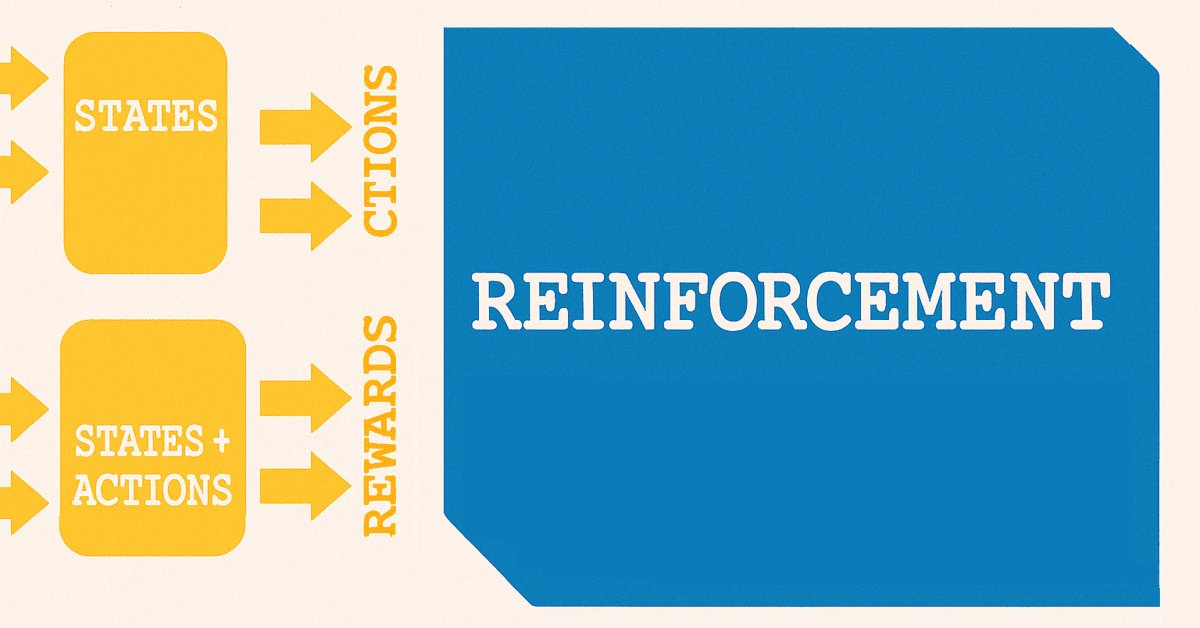
MQL5 Wizard Techniques you should know (Part 60): Inference Learning (Wasserstein-VAE) with Moving Average and Stochastic Oscillator Patterns
We wrap our look into the complementary pairing of the MA & Stochastic oscillator by examining what role inference-learning can play in a post supervised-learning & reinforcement-learning situation. There are clearly a multitude of ways one can choose to go about inference learning in this case, our approach, however, is to use variational auto encoders. We explore this in python before exporting our trained model by ONNX for use in a wizard assembled Expert Advisor in MetaTrader.


Neural Networks in Trading: LSTM Optimization for Multivariate Time Series Forecasting (Final Part)
We continue to implement the DA-CG-LSTM framework, which offers innovative methods for time series analysis and forecasting. The use of CG-LSTM and dual attention allows for more accurate detection of both long-term and short-term dependencies in data, which is particularly useful for working with financial markets.


From Novice to Expert: Weekend Gap Size Effect Research Using MQL5 and Python
The article provides a practical research setup for weekend gap analysis: MQL5 extracts precise pip‑based gaps and tracks fills, while Python performs statistical testing and visualization. You will compute fill rates by gap buckets, model fill probability with logistic regression, and assess time-to-fill via Kaplan–Meier curves. All steps are configurable and reproducible for EURUSD, GBPUSD, USDJPY and beyond.


Building Your Personal Expert Advisor (Part 1): From Fragile Script to Working EA
This article focuses on EA architecture rather than signal design. Starting with a flawed Moving Average crossover EA, we add new‑bar detection to prevent duplicate entries, Magic Number and position awareness, ATR‑based risk levels, and data and trade result validation, along with basic safeguards. You obtain a practical base to build and test advanced systems.


Neural networks made easy (Part 63): Unsupervised Pretraining for Decision Transformer (PDT)
We continue to discuss the family of Decision Transformer methods. From previous article, we have already noticed that training the transformer underlying the architecture of these methods is a rather complex task and requires a large labeled dataset for training. In this article we will look at an algorithm for using unlabeled trajectories for preliminary model training.


Measuring What Matters (Part 3): The Reconstruction Engine — Validating Risk Footprints with Matrix Algebra
This article performs a numerical verification of MQL5 eigendecomposition for a covariance matrix using the spectral theorem A = V Λ Vᵀ. It reconstructs the matrix with Diag(), Transpose(), and MatMul(), computes the residual and its Frobenius norm, and shows that deviations remain at floating‑point precision, with results printed to the Experts journal.


Neural Networks in Trading: Actor—Director—Critic
We invite you to explore the Actor-Director-Critic framework, which combines hierarchical learning and a multi-component architecture for creating adaptive trading strategies. In this article, we take a detailed look at how using the Director to classify the Actor's actions helps to effectively optimize trading decisions and improve the robustness of models in financial market conditions.


Developing a Replay System (Part 52): Things Get Complicated (IV)
In this article, we will change the mouse pointer to enable the interaction with the control indicator to ensure reliable and stable operation.


MQL5 Wizard Techniques you should know (Part 35): Support Vector Regression
Support Vector Regression is an idealistic way of finding a function or ‘hyper-plane’ that best describes the relationship between two sets of data. We attempt to exploit this in time series forecasting within custom classes of the MQL5 wizard.


Encoding Candlestick Patterns (Part 3): Frequency Analysis for Single Candlestick Type Structure
This article introduces a frequency-analysis framework for encoded candlestick patterns in MQL5. By transforming candlesticks into alphabetic symbols, historical price action can be analyzed as a statistical sequence rather than a visual chart. Using GBPUSD and Gold across multiple timeframes, the study examines the occurrence frequency of individual candlestick types, identifies dominant market structures, and reveals the symmetry between bullish and bearish price movements. The results establish a quantitative foundation for pattern discovery and prepare the way for analyzing multi-candlestick sequences and their predictive potential in algorithmic trading systems.


Category Theory in MQL5 (Part 11): Graphs
This article is a continuation in a series that look at Category Theory implementation in MQL5. In here we examine how Graph-Theory could be integrated with monoids and other data structures when developing a close-out strategy to a trading system.


Risk Manager for Trading Robots (Part I): Risk Control Include File for Expert Advisors
Trading is characterized by high demands on risk management discipline. The article presents an analysis of the main reasons for traders' failures and proposes a technical solution in the form of the CEnhancedRiskManager class for the MQL5 platform. It includes practical testing on an aggressive grid EA.


Neural Networks in Trading: The Temporal Query Model (TQNet)
The TQNet framework opens up new possibilities for modeling and forecasting financial time series by combining modularity, flexibility, and high performance. The article explores the possibility of implementing complex mechanisms for handling global correlations, including advanced parameter initialization methods.


Feature Engineering for ML (Part 5): Microstructural Features in Python
This article implements the Chapter 19 microstructure suite in afml.features.microstructure and explains a two-layer design for OHLCV-only and tick-augmented workflows. We cover Roll and Corwin–Schultz spread/volatility, Kyle's, Amihud's, and Hasbrouck's lambdas, VPIN, and bar‑level imbalance features, all in Numba‑accelerated kernels. A single np.searchsorted pass resolves bar boundaries, enabling prange parallelization and producing a bar‑indexed feature matrix ready for downstream ML models.


Building a Modular Fair Value Gap (FVG) Detection Engine in MQL5
This article introduces a modular Fair Value Gap (FVG) detection engine for MQL5 packaged as a reusable include class, it evaluates imbalance zones on closed bars, applies a Simple True Range average filter to eliminate low-volatility noise, and supports wick-touch and close-through mitigation. A companion diagnostic indicator plots active gaps, and an Expert Advisor template demonstrates automated pullback entries with new-bar execution controls.


Evaluating the Quality of Forex Spread Trading Based on Seasonal Factors in MetaTrader 5
The article examines the quality of a seasonal trading approach on a daily timeframe, both for individual symbols and for spreads. Particular attention is paid to identifying recurring monthly cycles and the possibilities of their application in trading within the current year.


Arithmetic Optimization Algorithm (AOA): From AOA to SOA (Simple Optimization Algorithm)
In this article, we present the Arithmetic Optimization Algorithm (AOA) based on simple arithmetic operations: addition, subtraction, multiplication and division. These basic mathematical operations serve as the foundation for finding optimal solutions to various problems.


Artificial Showering Algorithm (ASHA)
The article presents the Artificial Showering Algorithm (ASHA), a new metaheuristic method developed for solving general optimization problems. Based on simulation of water flow and accumulation processes, this algorithm constructs the concept of an ideal field, in which each unit of resource (water) is called upon to find an optimal solution. We will find out how ASHA adapts flow and accumulation principles to efficiently allocate resources in a search space, and see its implementation and test results.


Graph Theory: Network Flow of Commodities (Ford-Fulkerson Algorithm), Used as a Liquidity-Capacity Engine
The article presents an MQL5 Expert Advisor that adapts the Ford–Fulkerson max-flow method into a liquidity-capacity filter. Market structures—Swing Highs/Lows, Fair Value Gaps, Order Blocks, and Liquidity Pools—form a directed graph with edge capacities from volume, price reaction, distance, and structure quality. Maximum flow qualifies ICT setups, filters weak paths, and drives dynamic position sizing for a consistent, two-stage decision process.


Backtracking Search Algorithm (BSA)
What if an optimization algorithm could remember its past journeys and use that memory to find better solutions? BSA does just that – balancing exploration with revisiting the tried and true. In this article, we reveal the secrets of the algorithm. A simple idea, minimum parameters and a stable result.