Trade Journal Box MT4

Every trader knows they should keep a journal. Almost nobody does -- because the journal lives in a spreadsheet somewhere else, and after a losing trade the last thing you want is to open another program and fill in forms. Trade Journal Box fixes the real problem: it puts the journal ON the chart, where the trade just happened, one click away -- and it is built natively for MetaTrader 4.

It is a non-trading utility indicator that watches your positions and journals them for you:

Automatic chart screenshots. The moment an order opens, and the moment it closes, Trade Journal Box captures the chart -- optionally with entry and exit arrows drawn on the shot. Weeks later you do not just read that you went long, you SEE the exact chart you traded.

Click-and-type notes, right there. The on-chart panel has two fields that matter: Reason (why you entered) -- filled while the trade is live, when you still remember; and Lesson (after close) -- filled when the result is in. Click the field, type, hit Save note to attach it to the trade. No dialogs, no other windows. (Notes take standard English characters -- a deliberate choice that keeps the journal file clean and portable on MT4.)

Emotion tags -- the discipline layer. Five one-click buttons: Calm, Confident, Fear, Greed, Revenge. Tag the state you traded in and it is stored with the trade. After a few weeks, pick an emotion in the report filter and the summary bar and charts recalculate for just those trades, so you can compare your Calm trades with your Revenge trades side by side -- something a manual spreadsheet only gives you if you build and maintain it yourself.

Reports you can read. One button generates an HTML report (open in any browser, print to PDF with Ctrl+P) and a CSV export -- entries, exits, profit, emotion, reason/lesson and the screenshots, in one table. The Extra settings panel filters the report: This chart only or All symbols, plus date-range spinners. The journal itself is a plain CSV under MQL4/Files -- yours, readable, portable.

Report metrics that show discipline, not only profit. The summary adds the payoff ratio (average win / average loss), the longest losing streak, how many trades reached their target (TP), and a discipline scatter plot: every closed trade as R, its result divided by the risk to your entry stop. A close worse than -1.1R is marked with a white-ringed red dot; the marker shows the measured result only, not its cause (gaps, slippage, costs or a moved stop can also push a close past -1.1R). Entry SL and TP are recorded when a position opens, trades without a stop are left out of the scatter, and every figure recalculates with the symbol and date filters.

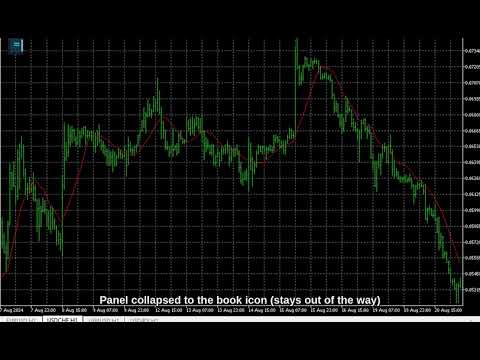
Stays out of your way. The panel collapses to a small book icon when you do not need it. It never trades, never touches your orders, and coexists with any EA running on the same account. Everything is pure MQL4 -- zero DLLs, zero external dependencies, nothing leaves your terminal.

Three themes (Night Cyan, Graphite Gold, Clean Light), draggable panel, configurable corner and width.

Why you will like it

  • You will actually use it. The journal is one click away, on the chart, at the moment of the trade -- not a spreadsheet you open "later".
  • Auto screenshots on open and close, with optional entry/exit arrows -- visual memory of every trade.
  • Reason and Lesson fields -- capture the why before you forget it and the takeaway after the close.
  • Five emotion tags including Revenge -- see your discipline in the data, not in your memory of it.
  • HTML + CSV reports with symbol scope and date filters; the journal is a plain CSV you own.
  • Discipline in numbers: payoff ratio, longest losing streak, TP hit rate and an R-scatter that marks closes worse than -1.1R of the entry risk.
  • Safe by design. Does not trade, coexists with your EAs, all data stays local, no DLLs.

How to use

  • Attach Trade Journal Box to the chart you trade from (one instance journals the whole account if you enable All symbols).
  • Trade as usual -- screenshots happen automatically on open and close.
  • While the trade is live, click Reason and type why you entered; tag the emotion with one click.
  • After the close, add the Lesson and hit Save note.
  • Any time: press the HTML or CSV button for the full report; use Extra settings for scope and date filters.

From the makers of the free Live Tuning family (CCI, RSI, Bollinger and more classic indicators with on-chart live sliders) -- same brand, same rule: transparent tools that respect your workflow.

Tip: If the panel ever looks transparent, your chart has "Chart on foreground" enabled (F8 -> Common) and the candles are drawn over it. The utility deliberately respects your chart settings and never changes them -- untick the option and the panel renders solid.

Self-contained, no DLLs. Works on any symbol and timeframe. It does not trade for you -- it is a journaling tool; keeping a journal supports discipline but does not by itself guarantee any trading result.
More from author
Every trader knows the ritual: open the indicator settings, change a number, click OK, squint at the chart, decide it is wrong, open settings again. The Envelopes have a special version of this problem: the deviation percent is the most symbol-dependent number in the classic toolbox. The 0.10% default that looks reasonable on one pair is invisible on gold and absurd on an index -- yet most traders set it once and never touch it again, because every attempt costs a dialog roundtrip. Envelopes Liv
FREE
Description tab. Másold be ezt a teljes szöveget (angol, ember-hangvétel, nincs AI-klisé): --- The Fractal Alligator Scanner combines two classic tools that traders have used for years: swing fractals and Bill Williams' Alligator. It does the watching for you and keeps the chart clean. What it draws: - An up arrow above every confirmed swing high and a down arrow below every confirmed swing low. A fractal is only marked once the bars to its right have closed, so the arrows do not repaint. - Th
FREE
Every trader knows the ritual: open the indicator settings, change a number, click OK, squint at the chart, decide it is wrong, open settings again. OsMA -- the Moving Average of Oscillator, the MACD histogram on its own -- carries the same three numbers as the MACD, so it costs you the same three dialog trips every time you want to test a different combination. OsMA Live Tuner ends that. It is the OsMA histogram (MACD line minus its signal line) that you tune directly on the chart, live . A sma
FREE
Every trader knows the ritual: open the indicator settings, change a number, click OK, squint at the chart, decide it is wrong, open settings again. The MACD gives you three numbers to argue about at once -- Fast, Slow and Signal -- and the standard 12/26/9 is a convention, not a law. MACD Live Tuner ends the ritual. It is a MACD that you tune directly on the chart, live , in its own window. A small panel sits on your chart with sliders for the Fast EMA period, the Slow EMA period and the Signal
FREE
Every trader knows the ritual: open the indicator settings, change a number, click OK, squint at the chart, decide it is wrong, open settings again. The Money Flow Index has only one number to set -- the period -- but that single trip through the dialog still costs you the same squint-and-guess cycle every time you want to compare 14 against a shorter or longer read on your own symbol. MFI Live Tuner ends that. It is a Money Flow Index that you tune directly on the chart, live . A small panel si
FREE
Every trader knows the ritual: open the indicator settings, change a number, click OK, squint at the chart, decide it is wrong, open settings again. If you trade on MetaTrader 4, you have done it for years -- and the MACD gives you three numbers to argue about at once, Fast, Slow and Signal, with the standard 12/26/9 as a convention, not a law. MACD Live Tuner ends the ritual. It is a MACD that you tune directly on the chart, live , in its own window. A small panel sits on your chart with slider
FREE
Every trader knows the ritual: open the indicator settings, change a number, click OK, squint at the chart, decide it is wrong, open settings again. The Money Flow Index has only one number to set -- the period -- but that single trip through the dialog still costs you the same squint-and-guess cycle every time you want to compare 14 against a shorter or longer read on your own symbol. MFI Live Tuner ends that. It is a Money Flow Index that you tune directly on the chart, live . A small panel si
FREE
Every trader knows the ritual: open the indicator settings, change a number, click OK, squint at the chart, decide it is wrong, open settings again. The Relative Vigor Index has only one number to set -- the period -- but that single trip through the dialog still costs you the same squint-and-guess cycle every time you want to compare 10 against 14 on your own symbol. RVI Live Tuner ends that. It is the classic two-line RVI (RVI and its Signal) that you tune directly on the chart, live . A small
FREE
Every trader knows the ritual: open the indicator settings, change a number, click OK, squint at the chart, decide it is wrong, open settings again. The Alligator is the most expensive indicator in the classic toolbox to tune this way: three lines, each with a period AND a forward shift -- six numbers, and the settings dialog makes you commit to all six blind. Alligator Live Tuner ends that. It is the full Bill Williams Alligator -- Jaw, Teeth and Lips as three smoothed moving averages of the me
FREE
Have you ever compared your MetaTrader 4 ADX against the values in a book or another platform and wondered why they disagree? There is a reason. MT4's built-in ADX uses exponential smoothing -- it is not the formula Welles Wilder published, and unlike MetaTrader 5, MT4 has no separate "ADX Wilder" to fall back on. ADX Live Tuner fixes that: it is the textbook Wilder ADX, on MetaTrader 4, with the Live Tuning workflow on top. It is a full three-line ADX (+DI, -DI and the ADX line) that you tune d
FREE
Every trader knows the ritual: open the indicator settings, change a number, click OK, squint at the chart, decide it is wrong, open settings again. OsMA -- the Moving Average of Oscillator, the MACD histogram on its own -- carries the same three numbers as the MACD, so it costs you the same three dialog trips every time you want to test a different combination. OsMA Live Tuner ends that. It is the OsMA histogram (MACD line minus its signal line) that you tune directly on the chart, live . A sma
FREE
Have you ever noticed that the ADX on your chart does not match the numbers in the books? There is a reason. The standard built-in ADX uses exponential smoothing -- the true Wilder-smoothed version, the one Welles Wilder actually published, ships only as a separate indicator that most traders never load. ADX Live Tuner gives you the textbook Wilder ADX by default, and adds the Live Tuning workflow on top. It is a full three-line ADX (+DI, -DI and the ADX line) that you tune directly on the chart
FREE
Every trader knows the ritual: open the indicator settings, change a number, click OK, squint at the chart, decide it is wrong, open settings again. And no indicator suffers more dialog roundtrips than the RSI — period 14 or 9? Levels at 70/30 or 80/20? RSI Live Tuner ends the ritual. It is a Relative Strength Index that you tune directly on the chart, live . A small panel sits on your chart with sliders for the RSI period and both levels. Drag a slider and the indicator recalculates and redraws
FREE
Every trader knows the ritual: open the indicator settings, change a number, click OK, squint at the chart, decide it is wrong, open settings again, change it back. CCI Live Tuner ends that. It is a Commodity Channel Index that you tune directly on the chart, live . A small panel sits on your chart with sliders for the CCI period and both level lines. Drag a slider and the indicator recalculates and redraws instantly, in the background, while you watch. When it looks right, you are done — no dia
FREE
Every trader knows the ritual: open the indicator settings, change a number, click OK, squint at the chart, decide it is wrong, open settings again. With Bollinger Bands the number that matters most -- the deviation multiplier -- is exactly the one nobody experiments with, because every attempt costs a dialog roundtrip. Bollinger Live Tuner ends that. It is a full Bollinger Bands indicator that you tune directly on the chart, live -- and this time the tuning happens right on the candles, because
FREE
Every trader knows the ritual: open the indicator settings, change a number, click OK, squint at the chart, decide it is wrong, open settings again. The Stochastic makes it worse than any other oscillator -- three periods and two levels means five numbers to get right, and every combination costs you another trip through the dialog. Stochastic Live Tuner ends that. It is the classic two-line slow Stochastic (%K and %D) that you tune directly on the chart, live . A small panel sits on your chart
FREE
Every trader knows the ritual: open the indicator settings, change a number, click OK, squint at the chart, decide it is wrong, open settings again. If you trade on MetaTrader 4, you have done it for years — and no indicator collects more dialog roundtrips than the RSI. Period 14 or 9? Levels at 70/30 or 80/20? RSI Live Tuner ends the ritual. It is a Relative Strength Index that you tune directly on the chart, live . A small panel sits on your chart with sliders for the RSI period and both level
FREE
Every trader knows the ritual: open the indicator settings, change a number, click OK, squint at the chart, decide it is wrong, open settings again. WPR Live Tuner ends that. It is a Williams %R that you tune directly on the chart, live . A small panel sits on your chart with sliders for the %R period and the two levels. Drag a slider and the indicator recalculates and redraws instantly, while you watch. When it looks right, you are done -- no dialog, no OK button. Optional MA signal line. Switc
FREE
Every trader knows the ritual: open the indicator settings, change a number, click OK, squint at the chart, decide it is wrong, open settings again. Standard Deviation has only one number to set -- the period -- but that single trip through the dialog still costs you the same squint-and-guess cycle every time you want to compare 20 against a shorter or longer read of volatility on your own symbol. StdDev Live Tuner ends that. It is a Standard Deviation that you tune directly on the chart, live ,
FREE
Every trader knows the ritual: open the indicator settings, change a number, click OK, squint at the chart, decide it is wrong, open settings again. If you trade on MetaTrader 4, you have done it a thousand times. WPR Live Tuner ends that. It is a Williams %R that you tune directly on the chart, live . A small panel sits on your chart with sliders for the %R period and the two levels. Drag a slider and the indicator recalculates and redraws instantly, while you watch. When it looks right, you ar
FREE
Every trader knows the ritual: open the indicator settings, change a number, click OK, squint at the chart, decide it is wrong, open settings again. The DeMarker is the quiet overbought/oversold gauge that most traders never touch -- it sits on the default 0.30/0.70 forever, because testing anything else costs a dialog roundtrip per attempt. DeMarker Live Tuner ends that. It is a DeMarker that you tune directly on the chart, live . A small panel sits on your chart with sliders for the DeM period
FREE
Every trader knows the ritual: open the indicator settings, change a number, click OK, squint at the chart, decide it is wrong, open settings again. The Momentum has an extra problem on top: it ships with no meaningful levels at all. The 100 line is the only anchor, and everyone just eyeballs how far above or below is "far enough". Momentum Live Tuner ends both problems. It is a Momentum that you tune directly on the chart, live . A small panel sits on your chart with sliders for the period and
FREE
Every trader knows the ritual: open the indicator settings, change a number, click OK, squint at the chart, decide it is wrong, open settings again. The Force Index has only one number to set -- the period -- but that single trip through the dialog still costs you the same squint-and-guess cycle every time you want to compare 13 against 2 or 100 on your own symbol. Force Index Live Tuner ends that. It is a Force Index that you tune directly on the chart, live , in its own window. A small panel s
FREE
Every trader knows the ritual: open the indicator settings, change a number, click OK, squint at the chart, decide it is wrong, open settings again. If you trade on MetaTrader 4, you have done it for years -- and the Stochastic makes it worse than any other oscillator: three periods and two levels means five numbers to get right, and every combination costs you another trip through the dialog. Stochastic Live Tuner ends that. It is the classic two-line slow Stochastic (%K and %D) that you tune d
FREE
Every trader knows the ritual: open the indicator settings, change a number, click OK, squint at the chart, decide it is wrong, open settings again. If you trade on MetaTrader 4, you have done it for years -- and with Bollinger Bands the number that matters most, the deviation multiplier, is exactly the one nobody experiments with, because every attempt costs a dialog roundtrip. Bollinger Live Tuner ends that. It is a full Bollinger Bands indicator that you tune directly on the chart, live -- an
FREE
Every trader knows the ritual: open the indicator settings, change a number, click OK, squint at the chart, decide it is wrong, open settings again. If you trade on MetaTrader 4, you have done it for years -- and the Alligator is the most expensive indicator in the classic toolbox to tune this way: three lines, each with a period AND a forward shift -- six numbers, and the settings dialog makes you commit to all six blind. Alligator Live Tuner ends that. It is the full Bill Williams Alligator --
FREE
Every trader knows the ritual: open the indicator settings, change a number, click OK, squint at the chart, decide it is wrong, open settings again, change it back. If you trade on MetaTrader 4, you have done this ritual for years. CCI Live Tuner ends it. It is a Commodity Channel Index that you tune directly on the chart, live . A small panel sits on your chart with sliders for the CCI period and both level lines. Drag a slider and the indicator recalculates and redraws instantly, in the backgr
FREE
Every trader knows the ritual: open the indicator settings, change a number, click OK, squint at the chart, decide it is wrong, open settings again. The Relative Vigor Index has only one number to set -- the period -- but that single trip through the dialog still costs you the same squint-and-guess cycle every time you want to compare 10 against 14 on your own symbol. RVI Live Tuner ends that. It is the classic two-line RVI (RVI and its Signal) that you tune directly on the chart, live . A small
FREE
Every trader knows the ritual: open the indicator settings, change a number, click OK, squint at the chart, decide it is wrong, open settings again. If you trade on MetaTrader 4, you have done it for years -- and the DeMarker is the quiet overbought/oversold gauge that most traders never touch: it sits on the default 0.30/0.70 forever, because testing anything else costs a dialog roundtrip per attempt. DeMarker Live Tuner ends that. It is a DeMarker that you tune directly on the chart, live . A
FREE
Every trader knows the ritual: open the indicator settings, change a number, click OK, squint at the chart, decide it is wrong, open settings again. The Force Index has only one number to set -- the period -- but that single trip through the dialog still costs you the same squint-and-guess cycle every time you want to compare 13 against 2 or 100 on your own symbol. Force Index Live Tuner ends that. It is a Force Index that you tune directly on the chart, live , in its own window. A small panel s
FREE
Filter:
No reviews
Reply to review