The core difference between these two approaches lies in how they manage floating drawdown, with the FJ Universe Yield Machine acting as a prime example of an isolated recovery system. By sizing each trade based on a private wealth index rather than total account equity, this tool allows traders to compare how grid vs dca recovery logic impacts their specific portfolio stability. Understanding these mechanics is essential for any trader looking to automate their strategy without risking account-wide margin collapse.
Situations where this comparison helps
- You want to know if your current account size can handle the floating drawdown of a recovery ladder.
- You are deciding between running multiple independent robots or one complex grid system.
- You need to verify if your broker's swap and spread costs will erode your recovery profit margins.
- You want to transition from manual trading to a system that handles position averaging automatically.

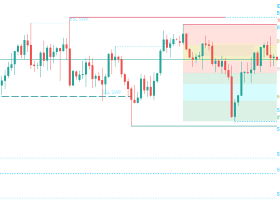
The FJ Universe Yield Machine dashboard showing individual slot isolation and recovery settings on a MetaTrader 5 chart

FJ Universe Yield Machine in MetaTrader 5, screenshot 2
The Mechanics of Recovery Systems
Recovery systems operate on the principle of averaging, where new positions are opened at better prices if the initial entry moves against you. Unlike a standard grid that might use fixed lot sizes, a sophisticated recovery system adjusts the size of subsequent orders based on the specific slot's floating profit and loss. This is the logic used by the FJ Universe Yield Machine to ensure that one currency pair does not inadvertently influence the risk profile of another.
Why settings vary by symbol and broker
Every symbol has a unique volatility profile and average true range, which directly dictates how far apart your recovery steps should be. A setting that works perfectly on EURUSD may trigger too frequently on a more volatile pair like GBPJPY, leading to an oversized basket. Furthermore, your broker's specific swap rates and execution spreads act as a constant tax on your recovery cycles, meaning you must test these inputs on the exact account conditions you intend to use.
Practical Benefits for Your Trading Routine
By shifting to an isolated recovery model, you gain granular control over your automated portfolio and reduce the psychological burden of managing multiple open positions.
- Isolated risk management: Each currency pair operates with its own private book, preventing one losing trade from triggering a margin call across your entire account.
- Consistent trade sizing: By ignoring account-wide equity, your robot calculates order sizes based only on the current slot, ensuring stable leverage.
- Reduced monitoring time: The on-chart dashboard provides a clear view of your active basket, allowing you to assess status without checking your full account history.
- Flexible pair selection: You can deploy the strategy on multiple major pairs simultaneously, knowing that the long and short books are sized independently.
- Simplified recovery cycles: The system calculates weighted average entry prices, making it easier to determine your target profit exit for the entire basket.
Steps to Evaluate Your Strategy This Week
To determine if this approach fits your risk tolerance, follow these steps in your MetaTrader 5 Strategy Tester:
- Download the FJ Universe Yield Machine and attach it to a demo account to observe the dashboard behavior in real-time.
- Run a full real-tick backtest covering at least 12 months, including a period of high market volatility to see how the system handles deep drawdowns.
- Check the report for the max drawdown and longest losing streak to see if these figures breach your personal risk floor.
- Verify the total trade count during the test period to ensure the frequency of cycles matches your expectations for market exposure.
- Apply these settings to a VPS to ensure 24/7 connectivity, which is vital for a system that manages active recovery baskets.
- Set a calendar reminder for a monthly review date to compare your backtest results with your actual forward-tested demo performance.
Tips from Experienced Traders
- Always prioritize liquidity by sticking to major currency pairs where spreads are tight and execution is reliable.
- Remember that swap costs accumulate during long-held drawdowns, so factor these into your long-term profit targets.
- Start with a very small lot size to observe how the recovery ladder builds before increasing your position scale.
- Use a demo account for at least one full month to gain a feel for how the robot behaves during both trending and ranging market phases.
- Keep your account risk within a range that allows you to sleep soundly even when the basket is in a temporary negative state.
Questions traders ask about recovery EAs
Does the robot close trades if the market keeps moving against me?
The system is designed to hold floating drawdown until the market mean-reverts to the basket's weighted average entry point. It does not use traditional stop-losses, so it is vital to size your positions conservatively to avoid hitting margin limits during extended moves.
Can I run this alongside other manual trades?
Yes, because the system uses slot isolation, it ignores your manual trades and other robots on the same account. It only calculates sizing based on its own internal book, ensuring your manual positions do not interfere with the recovery logic.
How do I know if my account size is sufficient?
The only way to confirm this is through rigorous backtesting on your specific broker's data. If your backtest shows a maximum drawdown that would deplete a significant portion of your capital, you must adjust your lot sizes down until the risk profile aligns with your account floor.
Takeaways for Your Automated Portfolio
- Recovery systems require a patient mindset as they are designed to hold positions through temporary market fluctuations.
- Slot isolation is the most effective way to run multiple strategies without cross-contamination of risk.
- Backtesting is not an indicator of future performance, but it is the best tool for understanding how your settings handle historical volatility.
- Always consult the FJUNIVERSE seller page on MQL5 for documentation updates and community discussions regarding optimal setup configurations.
How have you adjusted your own risk management settings when moving from manual trading to an automated recovery system?
Related reading on this blog
- How to run multiple recovery Expert Advisors on one MetaTrader 5 account
- How to automate EURUSD trading strategies in MetaTrader 5
- How to backtest the FJ Universe HFT Turbo EA
About FJUNIVERSE: We build and run automated strategies for MetaTrader 5 and share what we learn at FJUNIVERSE.COM. Every product mentioned above is listed on our MQL5 seller page. Trading involves risk. Nothing here is investment advice, and past results describe the past only.