
Product Development Update
Today, Burning Grid has reached a milestone that seemed almost impossible when this project began:
The High Risk live signal has passed 1,000% growth.
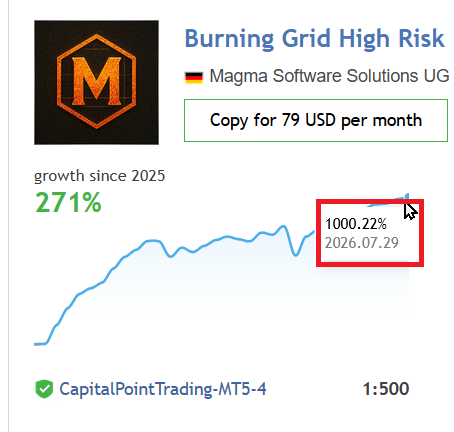
It took less than fifteen months of live trading, continuous development, difficult market phases, successful recoveries and thousands of real trades to reach this point.
For me, however, this milestone is about much more than a percentage.
It is the result of an idea that many people initially believed could not work.
Some said:
“You will never build a consistently profitable Expert Advisor.”
Others predicted:
“The signals will collapse after a few months.”
And many traders were convinced that grid-based trading would inevitably end with a margin call:
“All grid systems look good until the account finally crashes.”
I understood the skepticism.
Grid trading has earned a bad reputation for a reason. Many systems rely on uncontrolled position expansion, increasing lot sizes, unlimited recovery attempts and the assumption that the market will eventually reverse.
Burning Grid was created to challenge exactly that approach.
The Original Idea
The goal was never to build another EA that generates a smooth-looking balance curve by hiding an ever-growing floating loss.
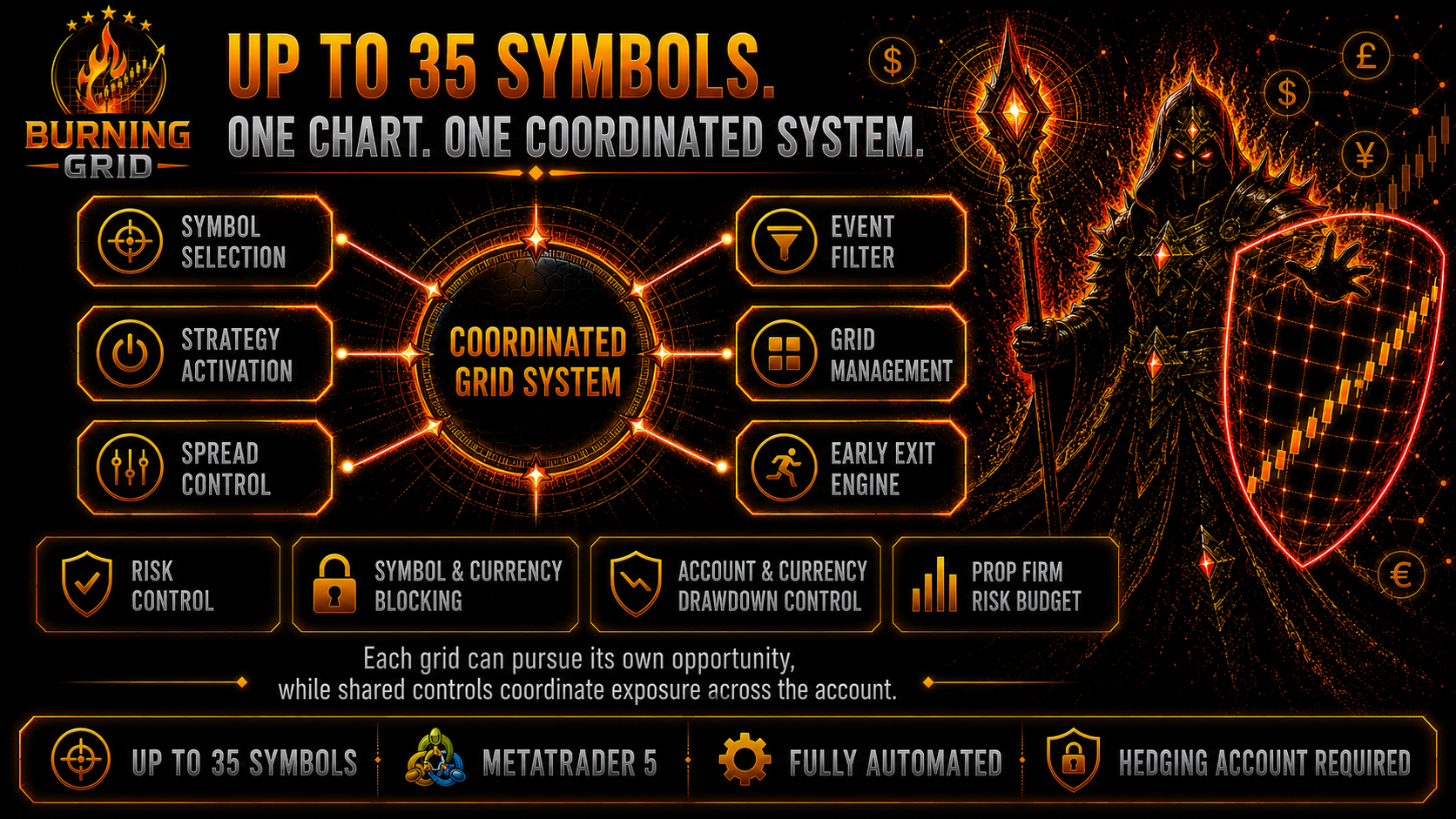
The goal was to create a structured, portfolio-based grid system with clearly defined boundaries.
From the beginning, Burning Grid was built around several core principles:
- No Martingale
- Fixed maximum grid depth
- Defined strategy endpoints
- Controlled risk for every individual strategy
- No endless recovery attempts
- A diversified portfolio instead of relying on one single setup
Burning Grid combines more than 200 independent strategies across numerous currency pairs.
Each strategy has its own market conditions, entry logic, grid structure and exit rules. A single strategy may lose, but the system does not depend on every strategy being successful.
The portfolio as a whole is what matters.
That distinction became increasingly important during the following months.
Starting With Only €500
The public signals originally started with only €500.
This was never the recommended capital for normal live operation. For Regular Mode, I recommend approximately $10,000 or more.
The small starting balance was chosen to demonstrate the behavior of the system under demanding conditions.
Naturally, using such a small account amplifies both sides of the result:
- Percentage growth becomes significantly higher.
- Percentage drawdown also becomes significantly higher.
- Broker minimum lot sizes have a much greater impact.
- Individual strategy closures are more visible in the account statistics.
The 1,000% milestone must therefore be understood in this context.
It is an extraordinary result, but it was achieved on a deliberately aggressive High Risk signal running with capital far below the normal recommendation.
It is not a promise of what every user should expect.
It is a transparent live demonstration of what the system has achieved.
Here is the Link to the High Risk live signal:
https://www.mql5.com/en/signals/2308454
The First Months: Rapid Growth and the First Real Tests
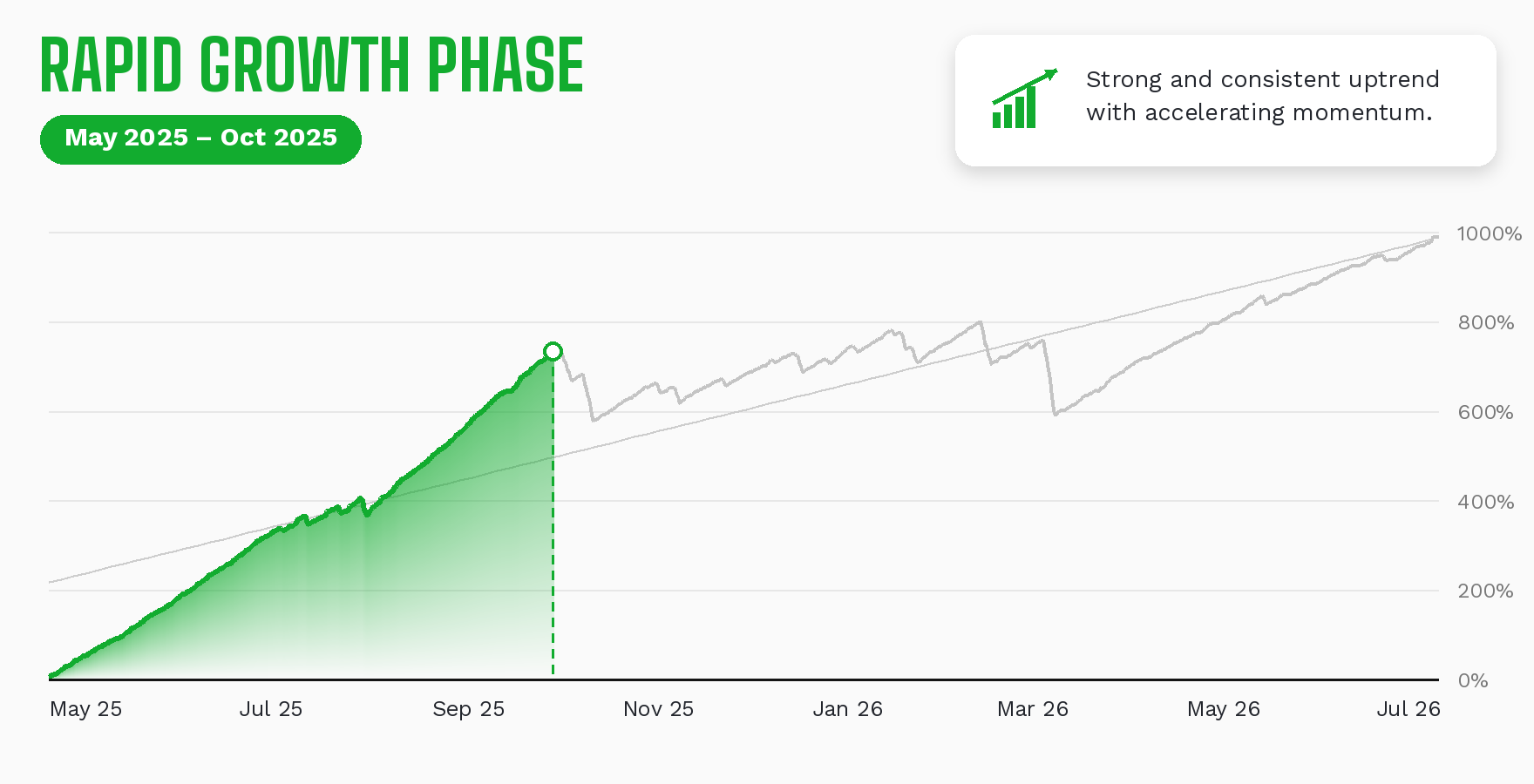
The early months showed the potential of the portfolio very quickly.
The three public signals — Low Risk, Medium Risk and High Risk — began separating according to their intended configurations.
The Low Risk profile allows up to two strategies per symbol to run in parallel.
Medium Risk increases this to four strategies.
High Risk can run up to six strategies per symbol.
More parallel strategies create more trading opportunities and greater diversification, but they also increase exposure.
Over time, this produced the expected performance hierarchy: High Risk generated the strongest growth, followed by Medium Risk and Low Risk.
But the journey was not a straight line.
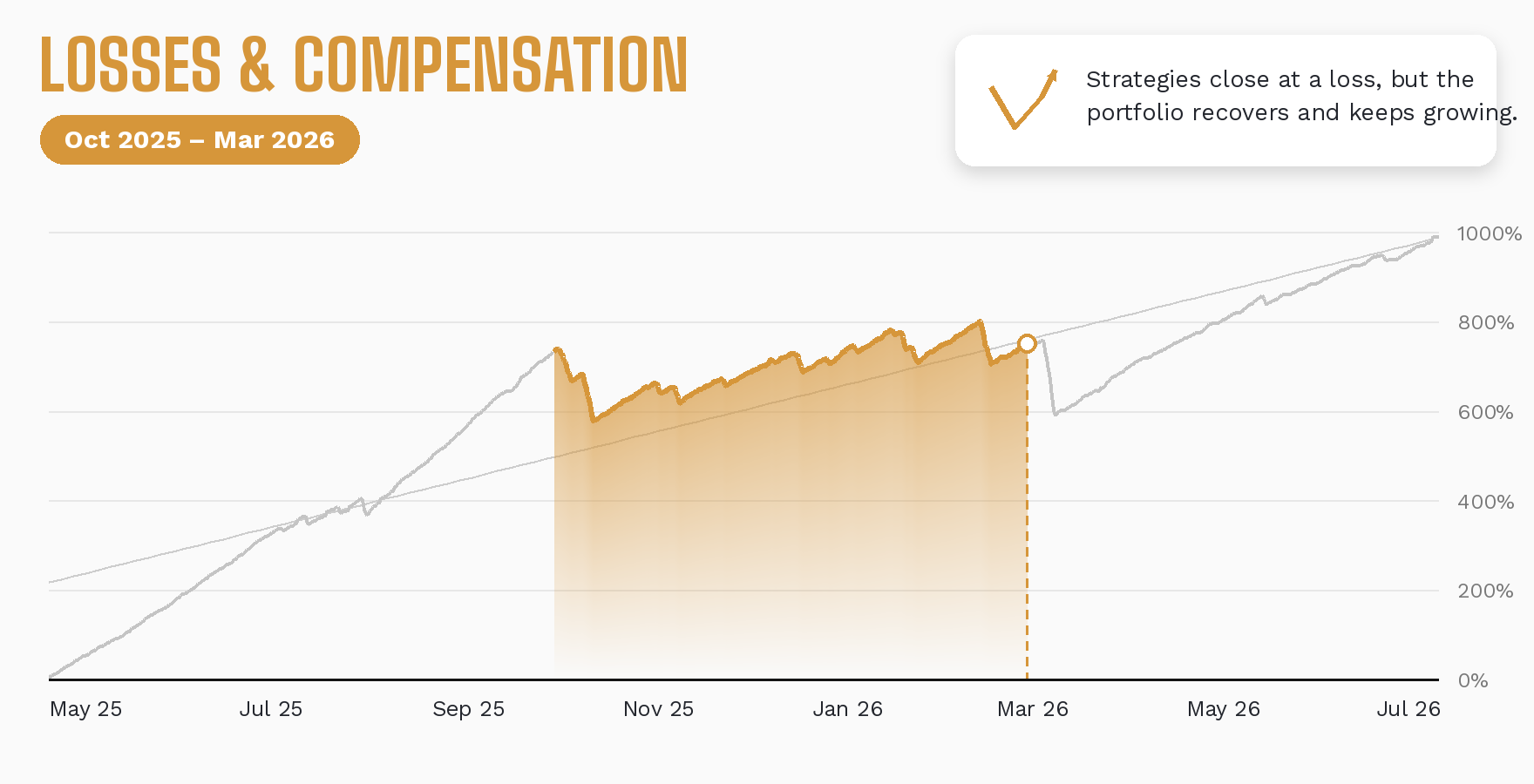
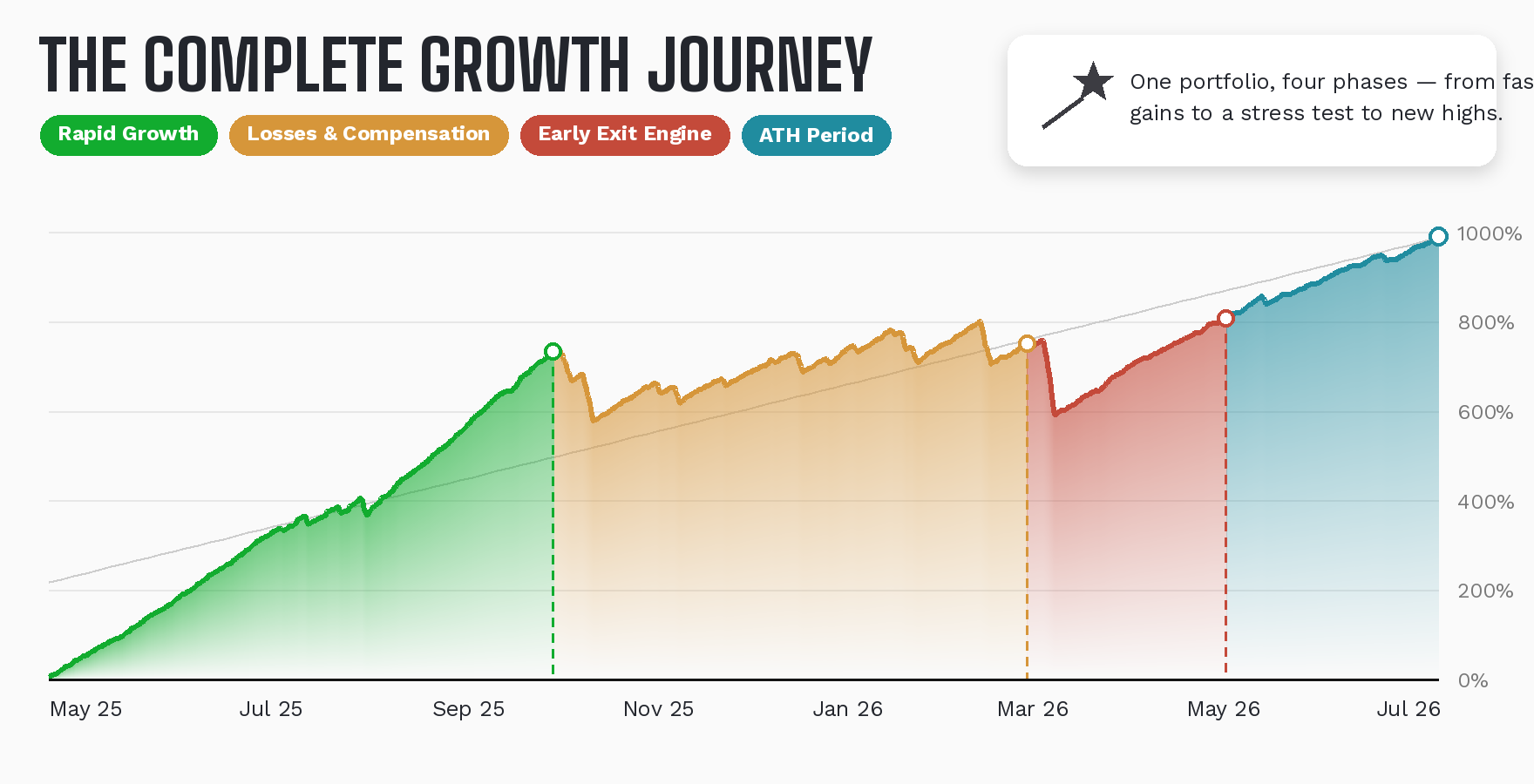
During September and October 2025, Burning Grid entered its first extended difficult phase. Market structures were unfavorable for several active strategies, and some grids reached their defined endpoints.
Losses were realized.
The balance curves slowed down.
The signals entered what I described at the time as a “dry period.”
This was one of the first moments when the original criticism returned:
Would the signals recover, or was this the beginning of the collapse many people had predicted?
The answer became visible in November.
The portfolio compensated for the realized losses, the signals returned to growth, and the turnaround was completed without hiding losses in endlessly expanding grids.
Planned Endpoints Are Not System Failures
One of the most important differences between Burning Grid and many conventional grid systems is that a strategy is allowed to end with a loss.
When a complete grid reaches its maximum defined depth, the strategy has reached its planned endpoint. The positions are closed, the loss is realized, and the capital becomes available again.
This is intentional.
The alternative would be to continue adding positions indefinitely and hope for a reversal.
That may postpone the visible loss, but it also creates the type of uncontrolled exposure that eventually destroys many grid accounts.
Burning Grid does not attempt to save every individual strategy at any cost.
A strategy may end.
The portfolio continues.
February 2026 demonstrated this clearly. Across the three profiles, one, two and three strategies respectively reached their planned endpoints.
Nevertheless, every profile completed the month with a positive result.
The losses of individual strategies were compensated for by the remaining portfolio.
The Early Exit Engine
The next major step in the development of Burning Grid was the Early Exit Engine.
The Early Exit Engine is different from the normal endpoint of an eight-level grid.
It does not simply wait until a strategy reaches its maximum grid depth.
Instead, it evaluates whether the market environment has changed significantly for an active strategy. When the original statistical conditions have deteriorated sufficiently, the engine can close the strategy early.
This prevents capital from remaining tied up in a setup whose probability of recovery has weakened.
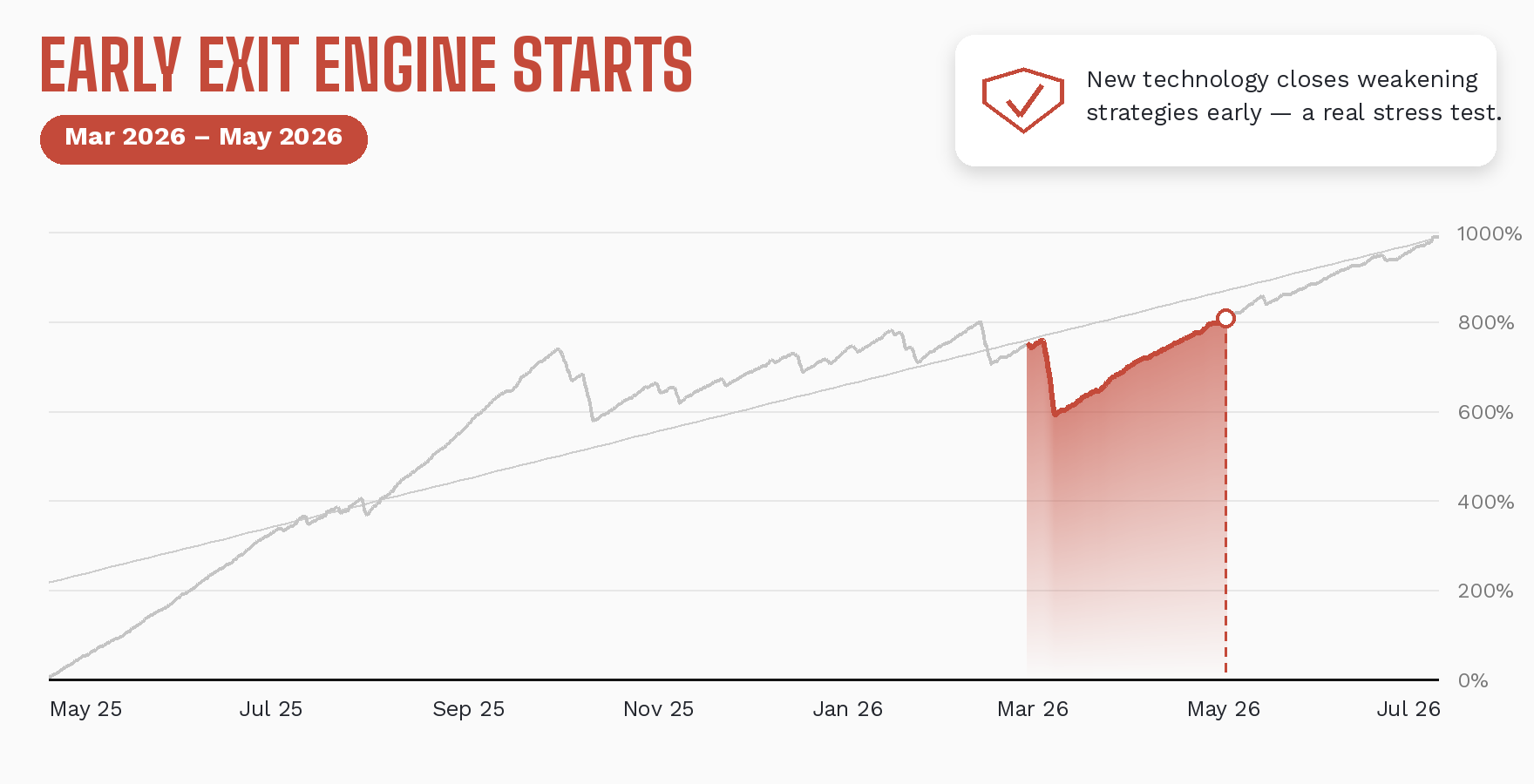
March 2026 became one of the most demanding live tests of this technology.
Because of the market constellation, the Early Exit Engine closed eleven strategies at a loss on the High Risk signal alone.
Eleven controlled losses in one month could easily have been interpreted as a disaster.
Instead, the system reduced exposure, released capital and continued operating.
The account survived the period without the uncontrolled escalation traditionally associated with grid systems.
That month was not attractive from a short-term performance perspective, but it was extremely valuable from a development and risk-management perspective.
The engine did exactly what it had been designed to do.
From Difficult Markets to New All-Time Highs
The following months showed why evaluating an automated portfolio based on one isolated period can be misleading.
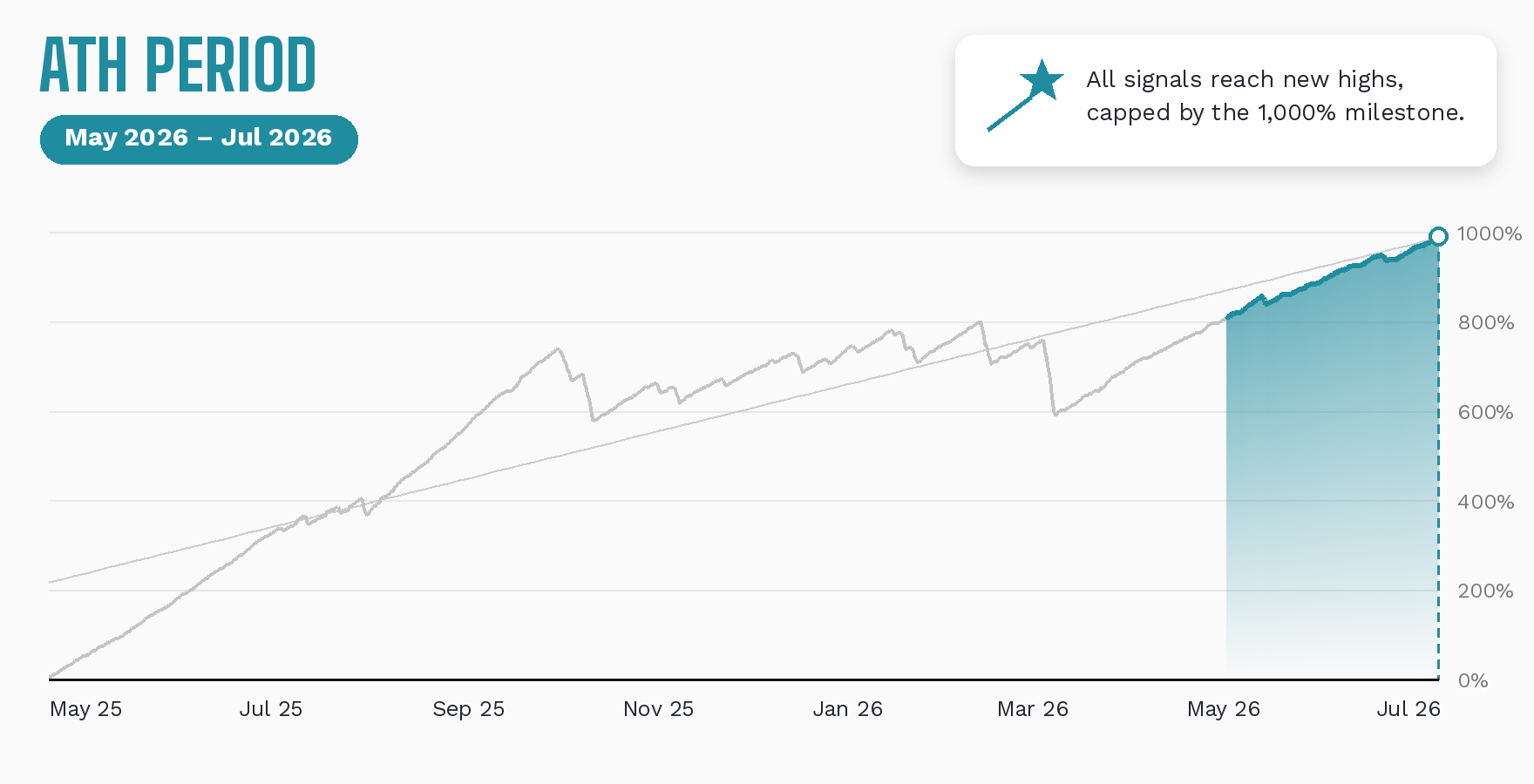
In May 2026, market conditions improved significantly.
No strategies ended with losses on the public signals. The portfolios generated a steady sequence of profitable closures, and all three signals reached new all-time highs.
By that stage, the High Risk signal had already moved beyond 900% growth in the MetaTrader signal statistics.
June then brought the typical summer slowdown.
Trading activity decreased, opportunities became less frequent, and three strategies in each risk profile were closed by the Early Exit Engine as the market environment changed.
Despite this:
- Low Risk finished the month in profit.
- Medium Risk finished the month in profit.
- High Risk finished the month in profit.
- All three signals reached another new all-time high on June 23.
Shortly afterward, the High Risk signal continued its journey and finally crossed the 1,000% growth milestone.
The milestone discussed in this article refers specifically to the growth value displayed by the official MetaTrader signal.
Burning Grid Did Not Stop Evolving
The EA that has now reached 1,000% growth is no longer identical to the version released almost fifteen months ago.
Burning Grid has been continuously expanded based on live experience and feedback from the user community.
Important additions have included:
Prop Firm and Small Account Modes
Dedicated operating modes were introduced to simplify the configuration for prop-firm accounts and smaller account balances.
Auto Mode later removed the need for separate Small Account set files and allowed Burning Grid to manage the transition automatically.
When the account grows beyond the relevant threshold, the system can switch to Regular Mode.
Symbol and Currency Blocking
A community-requested blocker was added to prevent multiple strategies with the same symbol or underlying currency exposure from becoming active simultaneously.
This provides an additional way to control concentration risk.
Balance- and Equity-Based Protection
Users can choose whether drawdown protection and risk calculations are based on account balance or account equity.
This provides more precise control over how floating profit and loss affect the system’s risk decisions.
Faster Backtesting
The backtesting engine was repeatedly optimized.
Later updates also brought Auto Mode testing much closer to the speed of the Regular and Small Account modes.
This made strategy selection and configuration significantly faster.
Stacked Mode
Some brokers limit the total number of open positions.
Stacked Mode introduced the option to manage a complete strategy through one combined position instead of maintaining a separate position for every grid level.
Burning Grid continues tracking the internal strategy state even when the broker only sees one aggregated position.
Parallel Mode
Parallel Mode allows buy and sell trades belonging to the same strategy framework to operate simultaneously.
Previously, only one direction could be active at a time.
This increases flexibility and can improve both capital efficiency and drawdown behavior.
The Early Exit Engine
The Early Exit Engine transformed Burning Grid from a system that only managed predefined grid endpoints into a more adaptive portfolio engine capable of responding to structural market changes.
Many of these developments came directly from suggestions made by members of the Burning Grid community.
The system’s development has never been a closed process.
User feedback, broker limitations, prop-firm requirements and real live-trading behavior have all influenced the roadmap.
Want to Understand How Burning Grid Works?
The 1,000% milestone is the result of much more than simply opening additional positions when the market moves against a trade.
Burning Grid was designed as a portfolio of independent, strictly limited strategies with controlled risk, adaptive strategy selection and clearly defined exit mechanisms.
In the Burning Grid Explained video series, I take a closer look at the concepts behind the system, including why grid trading is not automatically dangerous and how Burning Grid differs from traditional unlimited recovery systems.
Burning Grid Explained Youtube series:
The development of all three live signals is also documented in regular monthly performance reports.
These videos cover monthly profits, drawdowns, strategy endpoints, Early Exit events, changing market conditions and new all-time highs.
Watch the monthly Burning Grid performance reports on YouTube:
Celebrate 1,000% Growth With 20% Off
Reaching 1,000% growth is an important moment in the history of Burning Grid — and I want to celebrate it together with the community.
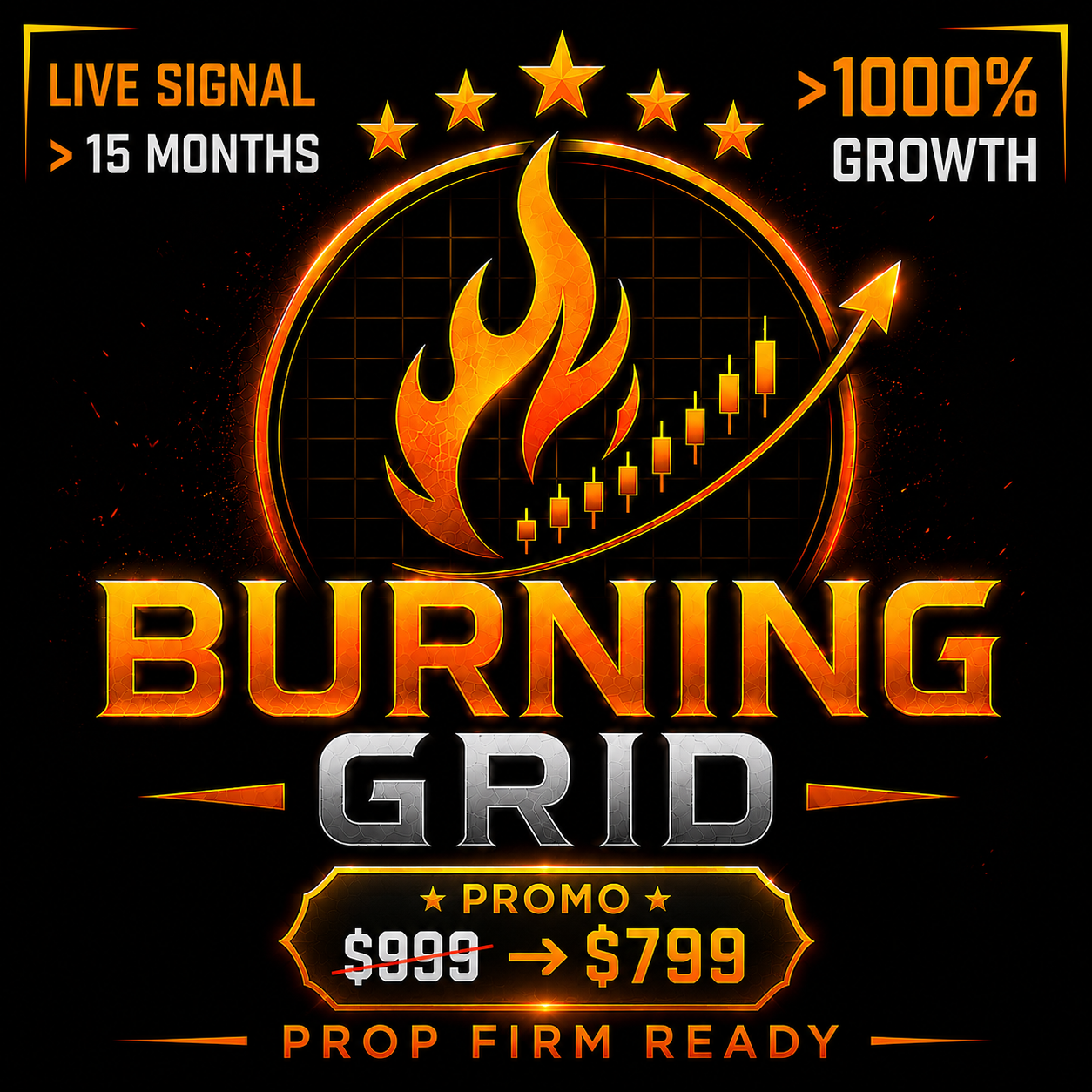
For this occasion, Burning Grid is available with a special 20% discount:
$799 instead of $999
This promotion is an invitation to become part of the next chapter of the Burning Grid journey.
The first 1,000% are now part of the live signal history. New users now have the opportunity to join the community, explore the system and follow its future development.
Get Burning Grid in the MetaTrader Market:
https://www.mql5.com/en/market/product/135273
What 1,000% Does — and Does Not — Prove
Reaching 1,000% growth does not mean Burning Grid is risk-free.
It does not mean that every month will be profitable.
It does not mean there will never be another difficult phase.
There will be losing strategies.
There will be drawdowns.
There will be market environments in which the system struggles and the Early Exit Engine must close multiple strategies.
Past performance also cannot guarantee future results.
What this milestone does demonstrate is that Burning Grid has survived almost fifteen months of changing real-market conditions without suffering the rapid collapse many people predicted.
It has traded through:
- Strong directional trends
- Sideways markets
- High-volatility periods
- Low-liquidity summer conditions
- Holiday pauses
- Multiple planned strategy endpoints
- Numerous Early Exit interventions
- Long recovery phases
- New all-time highs
And throughout those phases, the system has continued to evolve.
Why I Am Proud
I am proud of reaching 1,000% growth.
But I am even more proud of how the result was achieved.
Not by hiding losses.
Not by increasing lot sizes without limits.
Not by pretending that losing strategies do not exist.
Burning Grid reached this milestone while accepting controlled losses, closing strategies when necessary and continuously adapting the portfolio.
Some people said I would never build a profitable EA.
Others said the signals would collapse quickly.
And many said grid-based trading was simply too dangerous to survive in the long term.
Burning Grid has not made grid trading risk-free.
But it has shown that grid trading can be structured differently.
With fixed boundaries, diversified strategies, adaptive exits and continuous development, a grid-based portfolio does not have to follow the path of unlimited averaging and eventual account destruction.
Almost fifteen months ago, 1,000% growth was only an ambitious idea.
Today, it is part of the live trading history.
Thank you to everyone who supported the project, tested new versions, reported problems, suggested features and became part of the Burning Grid community.
This milestone belongs to all of us.
The first 1,000% are complete.
Now it is time to celebrate — and to see where the next chapter takes us.
Join the party. Join the community. Let’s keep burning grids. 🔥
Risk warning: This article documents historical performance and product development. It is not financial or investment advice. Trading leveraged products involves a substantial risk of loss, and past performance does not guarantee future results.