
Financial markets may appear chaotic at first glance, but beneath the constant fluctuations lies a repeating pattern of behavior known as market structure. For algorithmic traders and system developers, understanding market structure is one of the most important elements in designing robust trading systems. Rather than reacting to random price movements, structured strategies aim to identify how price behaves within trends, pullbacks, and consolidations.
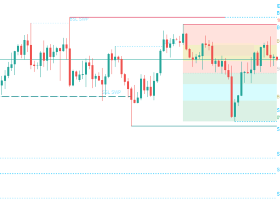
At its core, market structure refers to the relationship between highs, lows, and the directional movement of price over time. In trending environments, price tends to form a sequence of higher highs and higher lows in an uptrend, or lower highs and lower lows in a downtrend. These repeating formations are not accidental. They represent the continuous interaction between buyers and sellers as liquidity flows through the market.
For algorithmic trading systems, this structural information becomes extremely valuable. Instead of making decisions based solely on indicators, a well-designed trading algorithm can analyze how price behaves within the broader context of the market. For example, identifying the transition from consolidation to expansion can provide insight into potential breakout opportunities. Similarly, recognizing retracements within a strong trend allows a system to position itself for continuation rather than attempting to predict reversals.
Another important aspect of market structure is timing and filtering. Markets move through different phases—accumulation, expansion, retracement, and distribution. Trading algorithms that incorporate structural awareness can adapt to these phases by avoiding entries during unfavorable conditions. This helps reduce unnecessary exposure and improves the overall stability of the system.
In addition, market structure helps define logical areas for risk management. Because price movements follow structural patterns, certain levels become natural points for stop-loss placement or trade invalidation. A trading system that respects these structural boundaries can maintain disciplined risk control while allowing profitable trades enough room to develop.
However, incorporating market structure into algorithmic trading is not as simple as recognizing patterns visually on a chart. Developers must translate these concepts into clear mathematical rules that an algorithm can execute consistently. This often involves combining structural analysis with filters such as volatility measurements, spread conditions, session timing, and risk management protocols.
Ultimately, successful algorithmic trading systems rely on more than just entry signals. They require a framework that respects how markets actually move. Market structure provides that framework by organizing price behavior into understandable and repeatable patterns. When combined with disciplined risk management and robust system design, it becomes a powerful foundation for automated trading.
For traders interested in a professionally engineered automated trading system built with structured logic and advanced risk controls, you can explore Ashinton Smart Ultra Pro on the MQL5 Market:
By AshintonForex.com