Articles on manual and algorithmic trading in MetaTrader 5

This category features articles on all aspects of trading - from manual to fully automatic trading, from Expert Advisor ideas to trading robot creation using the MQL5 Wizard. Position management, processing of trade events and money management - these integral parts of trading are covered in theses articles.
Learn how to copy trading signals and how to provide around-the-clock operation of Expert Advisors, how to create a trading robot and how to run MetaTrader on Linux and MacOS, what social trading is and how to order a trading robot.
Add a new article

You are missing trading opportunities:
- Free trading apps
- Over 8,000 signals for copying
- Economic news for exploring financial markets
Registration
Log in
You agree to website policy and terms of use
If you do not have an account, please register


Price Action Analysis Toolkit Development (Part 8): Metrics Board
As one of the most powerful Price Action analysis toolkits, the Metrics Board is designed to streamline market analysis by instantly providing essential market metrics with just a click of a button. Each button serves a specific function, whether it’s analyzing high/low trends, volume, or other key indicators. This tool delivers accurate, real-time data when you need it most. Let’s dive deeper into its features in this article.


Design Patterns in software development and MQL5 (Part 2): Structural Patterns
In this article, we will continue our articles about Design Patterns after learning how much this topic is more important for us as developers to develop extendable, reliable applications not only by the MQL5 programming language but others as well. We will learn about another type of Design Patterns which is the structural one to learn how to design systems by using what we have as classes to form larger structures.


Developing a multi-currency Expert Advisor (Part 6): Automating the selection of an instance group
After optimizing the trading strategy, we receive sets of parameters. We can use them to create several instances of trading strategies combined in one EA. Previously, we did this manually. Here we will try to automate this process.


Archery Algorithm (AA)
The article takes a detailed look at the archery-inspired optimization algorithm, with an emphasis on using the roulette method as a mechanism for selecting promising areas for "arrows". The method allows evaluating the quality of solutions and selecting the most promising positions for further study.


Market Reactions and Trading Strategies in Response to Dividend Announcements: Evaluating the Efficient Market Hypothesis in Stock Trading
In this article, we will analyse the impact of dividend announcements on stock market returns and see how investors can earn more returns than those offered by the market when they expect a company to announce dividends. In doing so, we will also check the validity of the Efficient Market Hypothesis in the context of the Indian Stock Market.


Data Science and Machine Learning (Part 20): Algorithmic Trading Insights, A Faceoff Between LDA and PCA in MQL5
Uncover the secrets behind these powerful dimensionality reduction techniques as we dissect their applications within the MQL5 trading environment. Delve into the nuances of Linear Discriminant Analysis (LDA) and Principal Component Analysis (PCA), gaining a profound understanding of their impact on strategy development and market analysis.


The Power of MetaTrader 5: From Step-by-Step Debugging to EX5 Protection in a Unified Environment
This article examines a comprehensive approach to developing trading algorithms: from project setup and logic debugging to protecting the finished product. We will explore MetaEditor's built-in tools, including step-by-step debugging using real ticks, performance profiling, and direct integration with C++ DLLs to speed up calculations. The article also explains how to protect intellectual property using MQL5 Cloud Protector. The application of the described techniques will transform Expert Advisor development from a chaotic search for solutions into a systematic process, significantly reducing the time required to develop a strategy.


From Novice to Expert: Animated News Headline Using MQL5 (X)—Multiple Symbol Chart View for News Trading
Today we will develop a multi-chart view system using chart objects. The goal is to enhance news trading by applying MQL5 algorithms that help reduce trader reaction time during periods of high volatility, such as major news releases. In this case, we provide traders with an integrated way to monitor multiple major symbols within a single all-in-one news trading tool. Our work is continuously advancing with the News Headline EA, which now features a growing set of functions that add real value both for traders using fully automated systems and for those who prefer manual trading assisted by algorithms. Explore more knowledge, insights, and practical ideas by clicking through and joining this discussion.


Developing a multi-currency Expert Advisor (Part 16): Impact of different quote histories on test results
The EA under development is expected to show good results when trading with different brokers. But for now we have been using quotes from a MetaQuotes demo account to perform tests. Let's see if our EA is ready to work on a trading account with different quotes compared to those used during testing and optimization.


MQL5 Wizard Techniques you should know (Part 69): Using Patterns of SAR and the RVI
The Parabolic-SAR (SAR) and the Relative Vigour Index (RVI) are another pair of indicators that could be used in conjunction within an MQL5 Expert Advisor. This indicator pair, like those we’ve covered in the past, is also complementary since SAR defines the trend while RVI checks momentum. As usual, we use the MQL5 wizard to build and test any potential this indicator pairing may have.


The MQL5 Standard Library Explorer (Part 7): Interactive Position Labeling with CCanvas
In this article, we explore how to build a position information visualization tool using the MQL5 Standard Library’s CCanvas. This project strengthens your skills in working with library modules while providing traders with a practical tool to visualize and interact with open positions directly on a live chart. Join the discussion to learn more.


Developing a multi-currency Expert Advisor (Part 15): Preparing EA for real trading
As we gradually approach to obtaining a ready-made EA, we need to pay attention to issues that seem secondary at the stage of testing a trading strategy, but become important when moving on to real trading.

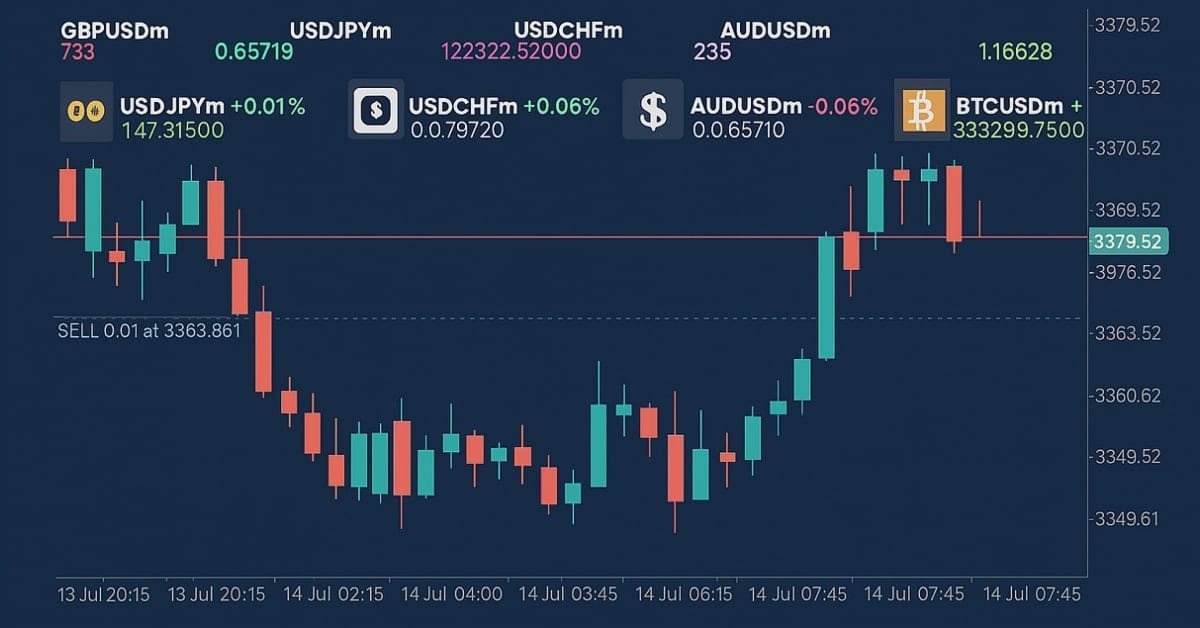
MQL5 Trading Tools (Part 5): Creating a Rolling Ticker Tape for Real-Time Symbol Monitoring
In this article, we develop a rolling ticker tape in MQL5 for real-time monitoring of multiple symbols, displaying bid prices, spreads, and daily percentage changes with scrolling effects. We implement customizable fonts, colors, and scroll speeds to highlight price movements and trends effectively.


Using the MQL5 Economic Calendar for News Filter (Part 4): Accurate Backtesting with Static Data
This article implements a static, CSV-based news source for the Strategy Tester, so historical economic news events can be preloaded and queried during backtesting. It replaces live calendar calls in tester mode with a fast in-memory search, preserves the live logic for trading, and delivers deterministic, repeatable results with explicit control over included events, enabling reliable validation of news-aware filters, stop suspension, and trade-blocking rules.


MQL5 Trading Tools (Part 31): Creating an Interactive Tools Palette in MQL5
We turn the Tools Palette sidebar from a static shell into an interactive MQL5 system. The article implements flyout menus per category, a chart event handler, a multi-click drawing engine (one-, two-, and three-click tools), and mouse interactions including drag, bottom-edge resize, scrolling, hover states, and live theme toggling. You will be able to select a tool and place chart objects directly from the palette for analysis


Optimizing Trend Strength: Trading in Trend Direction and Strength
This is a specialized trend-following EA that makes both short and long-term analyses, trading decisions, and executions based on the overall trend and its strength. This article will explore in detail an EA that is specifically designed for traders who are patient, disciplined, and focused enough to only execute trades and hold their positions only when trading with strength and in the trend direction without changing their bias frequently, especially against the trend, until take-profit targets are hit.


Developing a Replay System — Market simulation (Part 11): Birth of the SIMULATOR (I)
In order to use the data that forms the bars, we must abandon replay and start developing a simulator. We will use 1 minute bars because they offer the least amount of difficulty.


Trading with the MQL5 Economic Calendar (Part 8): Optimizing News-Driven Backtesting with Smart Event Filtering and Targeted Logs
In this article, we optimize our economic calendar with smart event filtering and targeted logging for faster, clearer backtesting in live and offline modes. We streamline event processing and focus logs on critical trade and dashboard events, enhancing strategy visualization. These improvements enable seamless testing and refinement of news-driven trading strategies.


MQL5 Trading Tools (Part 9): Developing a First Run User Setup Wizard for Expert Advisors with Scrollable Guide
In this article, we develop an MQL5 First Run User Setup Wizard for Expert Advisors, featuring a scrollable guide with an interactive dashboard, dynamic text formatting, and visual controls like buttons and a checkbox allowing users to navigate instructions and configure trading parameters efficiently. Users of the program get to have insight of what the program is all about and what to do on the first run, more like an orientation model.


Creating Custom Indicators in MQL5 (Part 3): Multi-Gauge Enhancements with Sector and Round Styles
In this article, we enhance the gauge-based indicator in MQL5 to support multiple oscillators, allowing user selection through an enumeration for single or combined displays. We introduce sector and round gauge styles via derived classes from a base gauge framework, improving case rendering with arcs, lines, and polygons for a more refined visual appearance.


Developing a Replay System — Market simulation (Part 14): Birth of the SIMULATOR (IV)
In this article we will continue the simulator development stage. this time we will see how to effectively create a RANDOM WALK type movement. This type of movement is very intriguing because it forms the basis of everything that happens in the capital market. In addition, we will begin to understand some concepts that are fundamental to those conducting market analysis.


Developing A Swing Entries Monitoring (EA)
As the year approaches its end, long-term traders often reflect on market history to analyze its behavior and trends, aiming to project potential future movements. In this article, we will explore the development of a long-term entry monitoring Expert Advisor (EA) using MQL5. The objective is to address the challenge of missed long-term trading opportunities caused by manual trading and the absence of automated monitoring systems. We'll use one of the most prominently traded pairs as an example to strategize and develop our solution effectively.


Hidden Markov Models in Machine Learning-Based Trading Systems
Hidden Markov Models (HMMs) are a powerful class of probabilistic models designed to analyze sequential data, where observed events depend on some sequence of unobserved (hidden) states that form a Markov process. The main assumptions of HMM include the Markov property for hidden states, meaning that the probability of transition to the next state depends only on the current state, and the independence of observations given knowledge of the current hidden state.


Developing Market Entropy Indicator: Trading System Based on Information Theory
This article explores the development of a Market Entropy Indicator based on principles from Information Theory to measure the uncertainty and information content within financial markets. By applying concepts such as Shannon Entropy to price movements, the indicator quantifies whether the market is structured (trending), transitioning, or chaotic.


Trading with the MQL5 Economic Calendar (Part 3): Adding Currency, Importance, and Time Filters
In this article, we implement filters in the MQL5 Economic Calendar dashboard to refine news event displays by currency, importance, and time. We first establish filter criteria for each category and then integrate these into the dashboard to display only relevant events. Finally, we ensure each filter dynamically updates to provide traders with focused, real-time economic insights.


Integrate Your Own LLM into EA (Part 5): Develop and Test Trading Strategy with LLMs (II)-LoRA-Tuning
With the rapid development of artificial intelligence today, language models (LLMs) are an important part of artificial intelligence, so we should think about how to integrate powerful LLMs into our algorithmic trading. For most people, it is difficult to fine-tune these powerful models according to their needs, deploy them locally, and then apply them to algorithmic trading. This series of articles will take a step-by-step approach to achieve this goal.


Data Science and Machine Learning (Part 16): A Refreshing Look at Decision Trees
Dive into the intricate world of decision trees in the latest installment of our Data Science and Machine Learning series. Tailored for traders seeking strategic insights, this article serves as a comprehensive recap, shedding light on the powerful role decision trees play in the analysis of market trends. Explore the roots and branches of these algorithmic trees, unlocking their potential to enhance your trading decisions. Join us for a refreshing perspective on decision trees and discover how they can be your allies in navigating the complexities of financial markets.


Developing a multi-currency Expert Advisor (Part 18): Automating group selection considering forward period
Let's continue to automate the steps we previously performed manually. This time we will return to the automation of the second stage, that is, the selection of the optimal group of single instances of trading strategies, supplementing it with the ability to take into account the results of instances in the forward period.

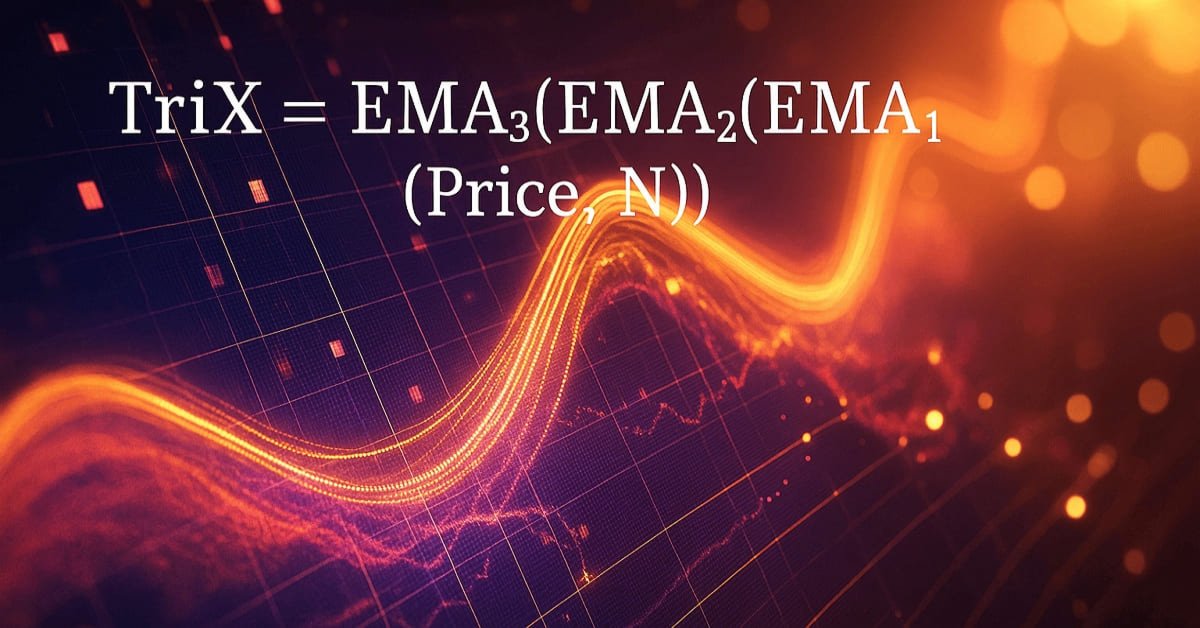
MQL5 Wizard Techniques you should know (Part 67): Using Patterns of TRIX and the Williams Percent Range
The Triple Exponential Moving Average Oscillator (TRIX) and the Williams Percentage Range Oscillator are another pair of indicators that could be used in conjunction within an MQL5 Expert Advisor. This indicator pair, like those we’ve covered recently, is also complementary given that TRIX defines the trend while Williams Percent Range affirms support and Resistance levels. As always, we use the MQL5 wizard to prototype any potential these two may have.


Creating a Trading Administrator Panel in MQL5 (Part IX): Code Organization (V): AnalyticsPanel Class
In this discussion, we explore how to retrieve real-time market data and trading account information, perform various calculations, and display the results on a custom panel. To achieve this, we will dive deeper into developing an AnalyticsPanel class that encapsulates all these features, including panel creation. This effort is part of our ongoing expansion of the New Admin Panel EA, introducing advanced functionalities using modular design principles and best practices for code organization.


Example of Stochastic Optimization and Optimal Control
This Expert Advisor, named SMOC (likely standing for Stochastic Model Optimal Control), is a simple example of an advanced algorithmic trading system for MetaTrader 5. It uses a combination of technical indicators, model predictive control, and dynamic risk management to make trading decisions. The EA incorporates adaptive parameters, volatility-based position sizing, and trend analysis to optimize its performance across varying market conditions.


Developing a Replay System — Market simulation (Part 24): FOREX (V)
Today we will remove a limitation that has been preventing simulations based on the Last price and will introduce a new entry point specifically for this type of simulation. The entire operating mechanism will be based on the principles of the forex market. The main difference in this procedure is the separation of Bid and Last simulations. However, it is important to note that the methodology used to randomize the time and adjust it to be compatible with the C_Replay class remains identical in both simulations. This is good because changes in one mode lead to automatic improvements in the other, especially when it comes to handling time between ticks.


From Novice to Expert: Animated News Headline Using MQL5 (VIII) — Quick Trade Buttons for News Trading
While algorithmic trading systems manage automated operations, many news traders and scalpers prefer active control during high-impact news events and fast-paced market conditions, requiring rapid order execution and management. This underscores the need for intuitive front-end tools that integrate real-time news feeds, economic calendar data, indicator insights, AI-driven analytics, and responsive trading controls.


Developing a Replay System — Market simulation (Part 13): Birth of the SIMULATOR (III)
Here we will simplify a few elements related to the work in the next article. I'll also explain how you can visualize what the simulator generates in terms of randomness.


MQL5 Trading Tools (Part 12): Enhancing the Correlation Matrix Dashboard with Interactivity
In this article, we enhance the correlation matrix dashboard in MQL5 with interactive features like panel dragging, minimizing/maximizing, hover effects on buttons and timeframes, and mouse event handling for improved user experience. We add sorting of symbols by average correlation strength in ascending/descending modes, toggle between correlation and p-value views, and incorporate light/dark theme switching with dynamic color updates.


Optimizing Liquidity Raids: Mastering the Difference Between Liquidity Raids and Market Structure Shifts
This is an article about a specialized trend-following EA that aims to clearly elaborate how to utilize trading setups after liquidity raids. This article will explore in detail an EA that is specifically designed for traders who are keen on optimizing and utilizing liquidity raids and purges as entry criteria for their trades and trading decisions. It will also explore how to correctly differentiate between liquidity raids and market structure shifts and how to validate and utilize each of them when they occur, thus trying to mitigate losses that occur from traders confusing the two.


Eagle Strategy (ES)
Eagle Strategy is an algorithm that mimics the eagle's two-phase hunting strategy: global search via Levy flights using Mantegna method, alternating with intense local exploitation using the firefly algorithm, a mathematically sound approach to balancing exploration and exploitation, and a bioinspired concept that combines two natural phenomena into a single computational method.


Automating Classic Market Methods in MQL5 (Part 3): Stan Weinstein Stage Analysis
This article presents a complete Expert Advisor built around Stan Weinstein's Stage Analysis method. The EA classifies the market into one of four stages using the 30-week moving average slope and position and volume behavior, then trades only Stage 2 breakouts long and Stage 4 breakdowns short. It explains each stage, how to detect it programmatically, and why the method's discipline—trading only in the correct stage—is what produces the edge.


Data label for time series mining (Part 4):Interpretability Decomposition Using Label Data
This series of articles introduces several time series labeling methods, which can create data that meets most artificial intelligence models, and targeted data labeling according to needs can make the trained artificial intelligence model more in line with the expected design, improve the accuracy of our model, and even help the model make a qualitative leap!


Digital Signal Processing for Traders (Part 2): The Dominant Cycle, MAMA, and a Regime-Switching Expert Advisor
In Part 2 we measure the market's dominant cycle using Ehlers' Hilbert-transform homodyne discriminator and wrap it as an indicator. We then build the MESA Adaptive Moving Average (MAMA) and its follower FAMA from that phase information. Finally, we combine MAMA/FAMA with the Even Better Sinewave to form a regime-switching Expert Advisor and test it on EURUSD in the Strategy Tester, giving you a complete, reproducible MQL5 implementation.