Orvanthys US100
- 专家
- 版本: 1.6
- 激活: 15

Orvanthys US100
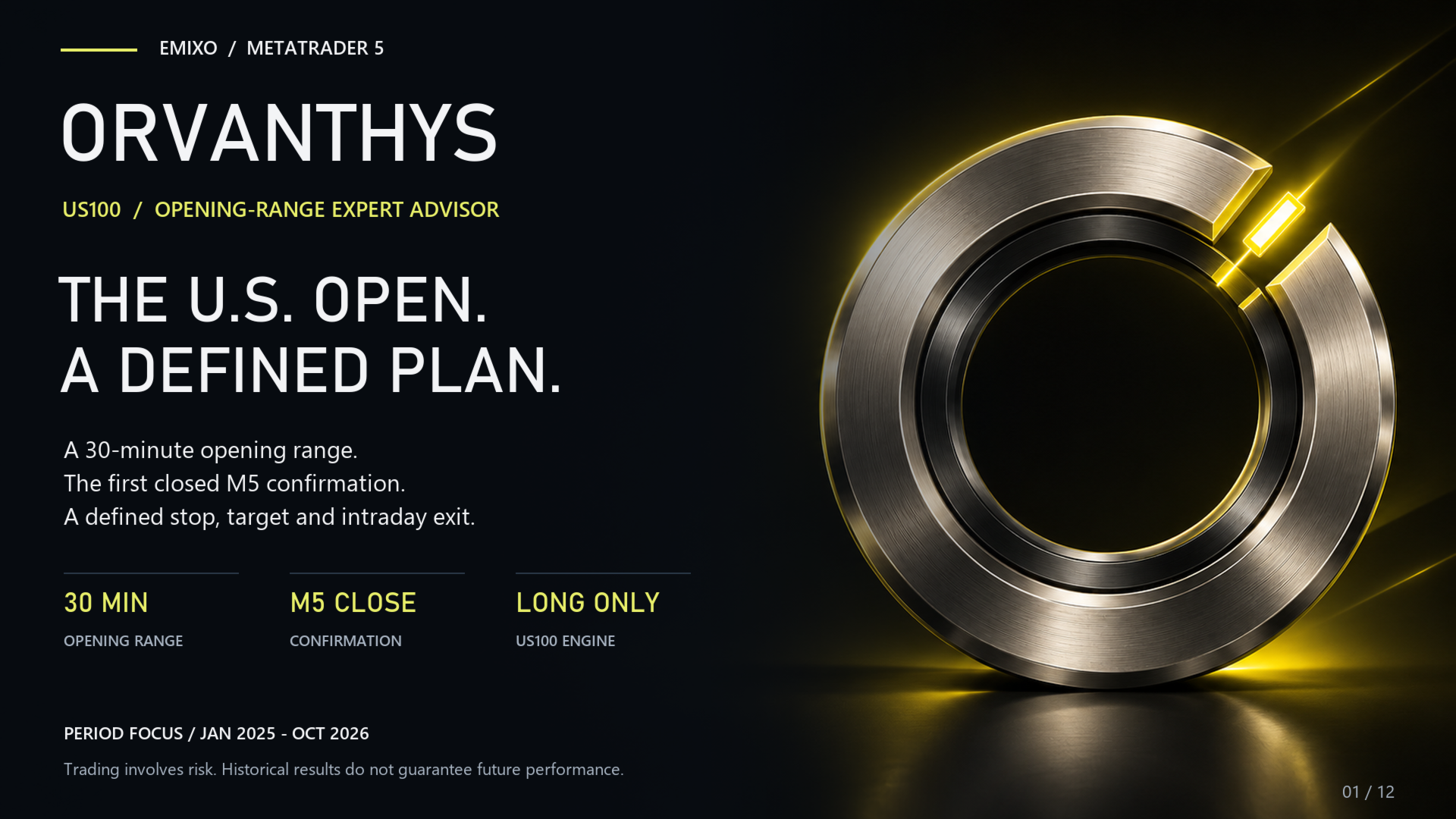
The US open. A thirty-minute range. An M5 confirmation.
ORVANTHYS applies Opening Range logic to US100. It builds the initial US cash-session range and looks for a long entry on the method's first qualifying confirmation, with a defined stop, target and intraday exit.
The trading approach
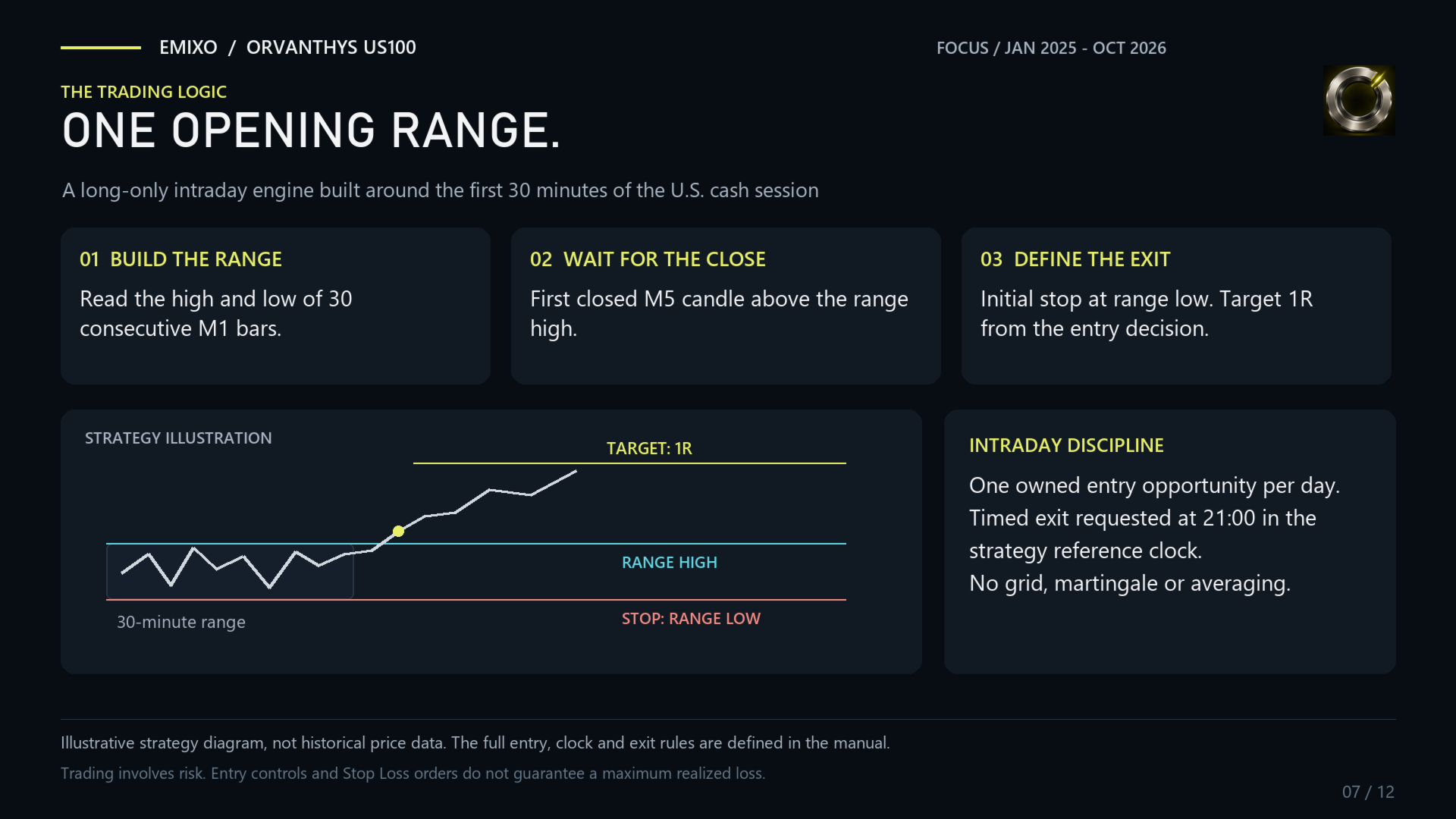
The engine records the first 30 minutes' high and low. The range must meet the 0.85% opening-price limit, and entry requires the first closed M5 candle above its high. The initial stop is at the range low, the target is 1R from the entry decision and the timed exit is at 21:00 on the reference clock.
What Orvanthys offers
- A readable price-based plan. Range, confirmation, stop and target follow a precise sequence.
- One owned opportunity per day. The method selects the first eligible confirmation rather than multiplying attempts.
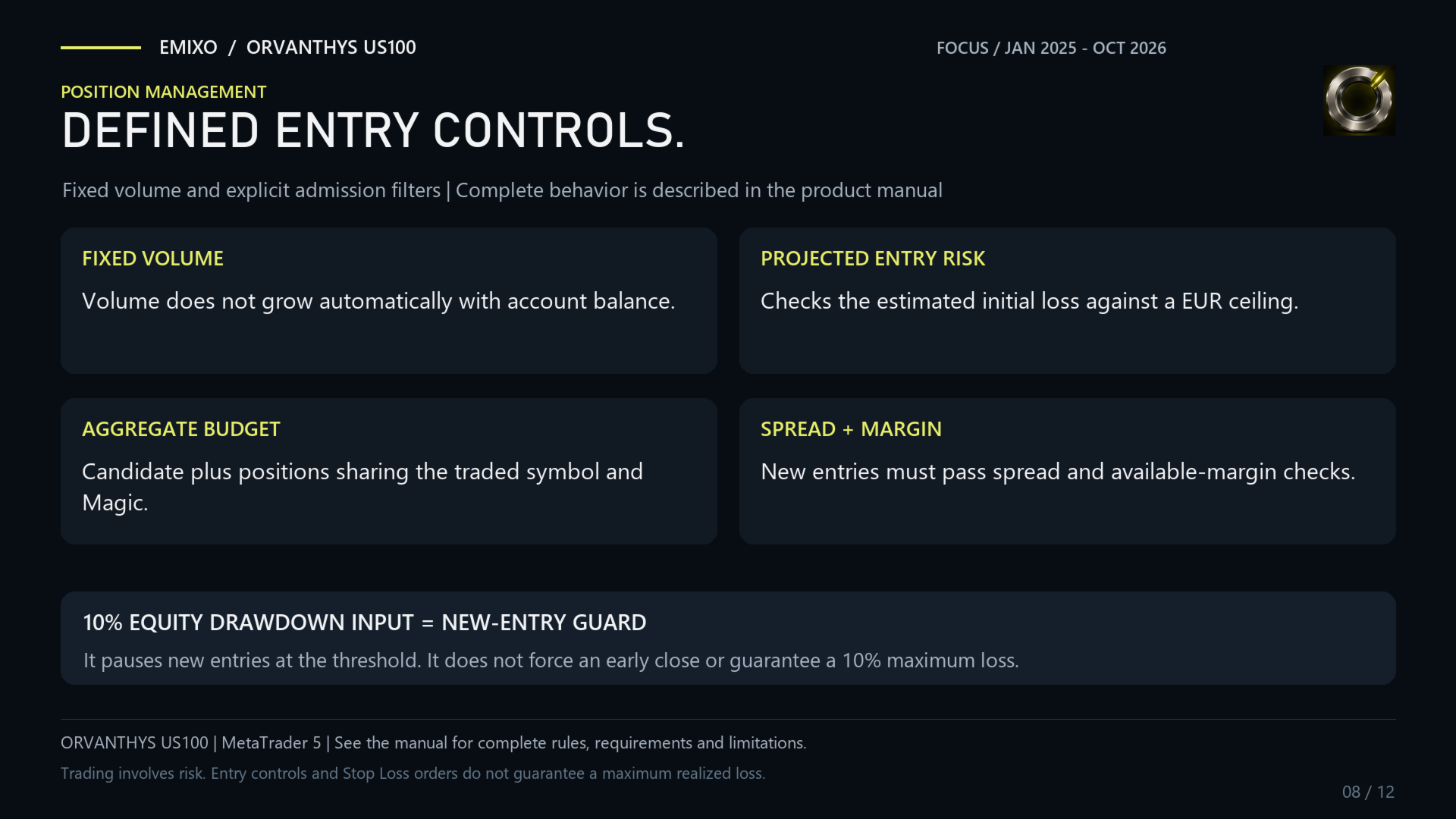
- Fixed volume and separate controls. Lots, initial risk, own aggregate budget and the drawdown entry filter are configurable.
- Built-in calendar and management. The product applies filters for nonregular sessions and the specified FOMC dates.
Your settings
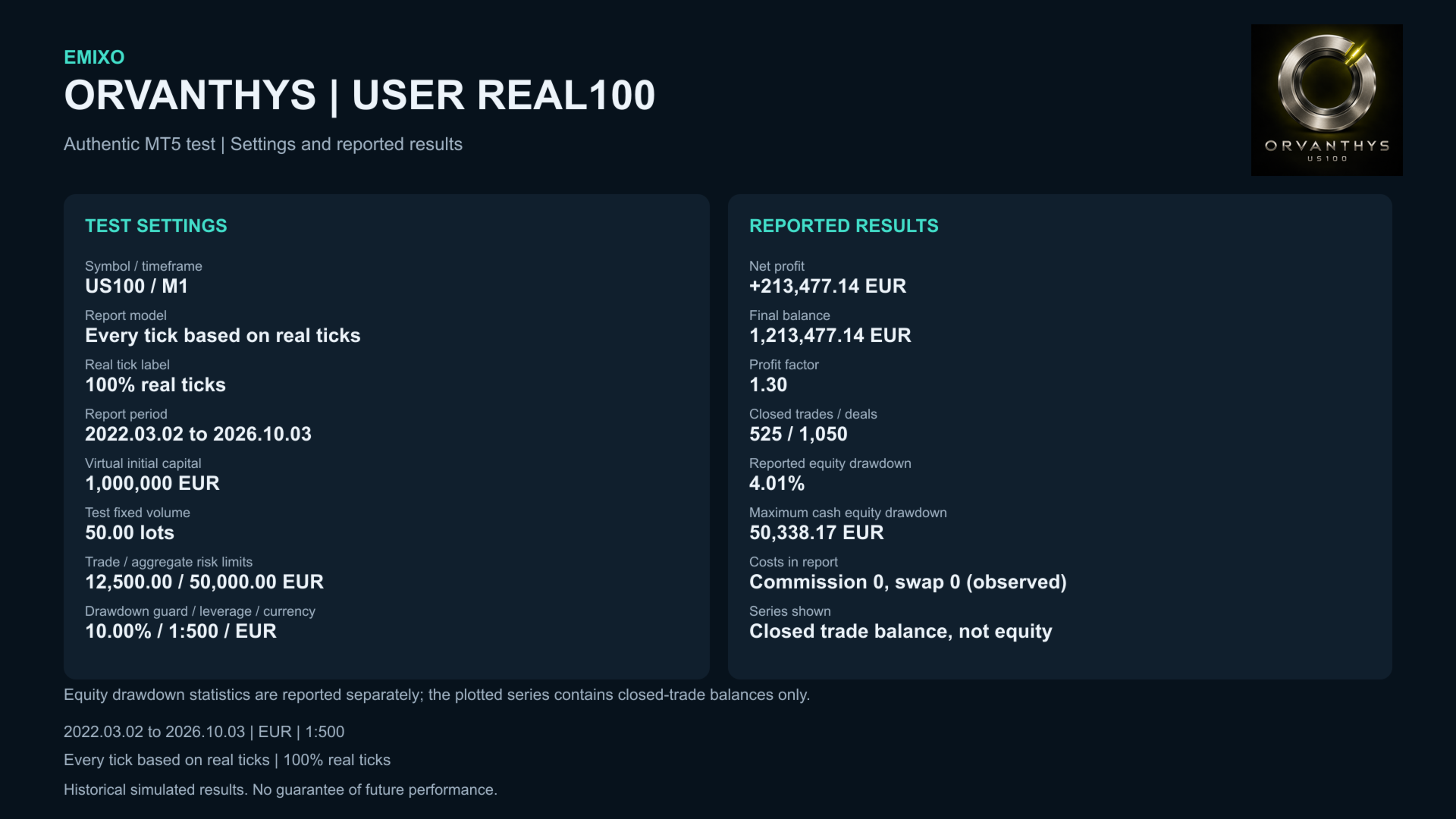
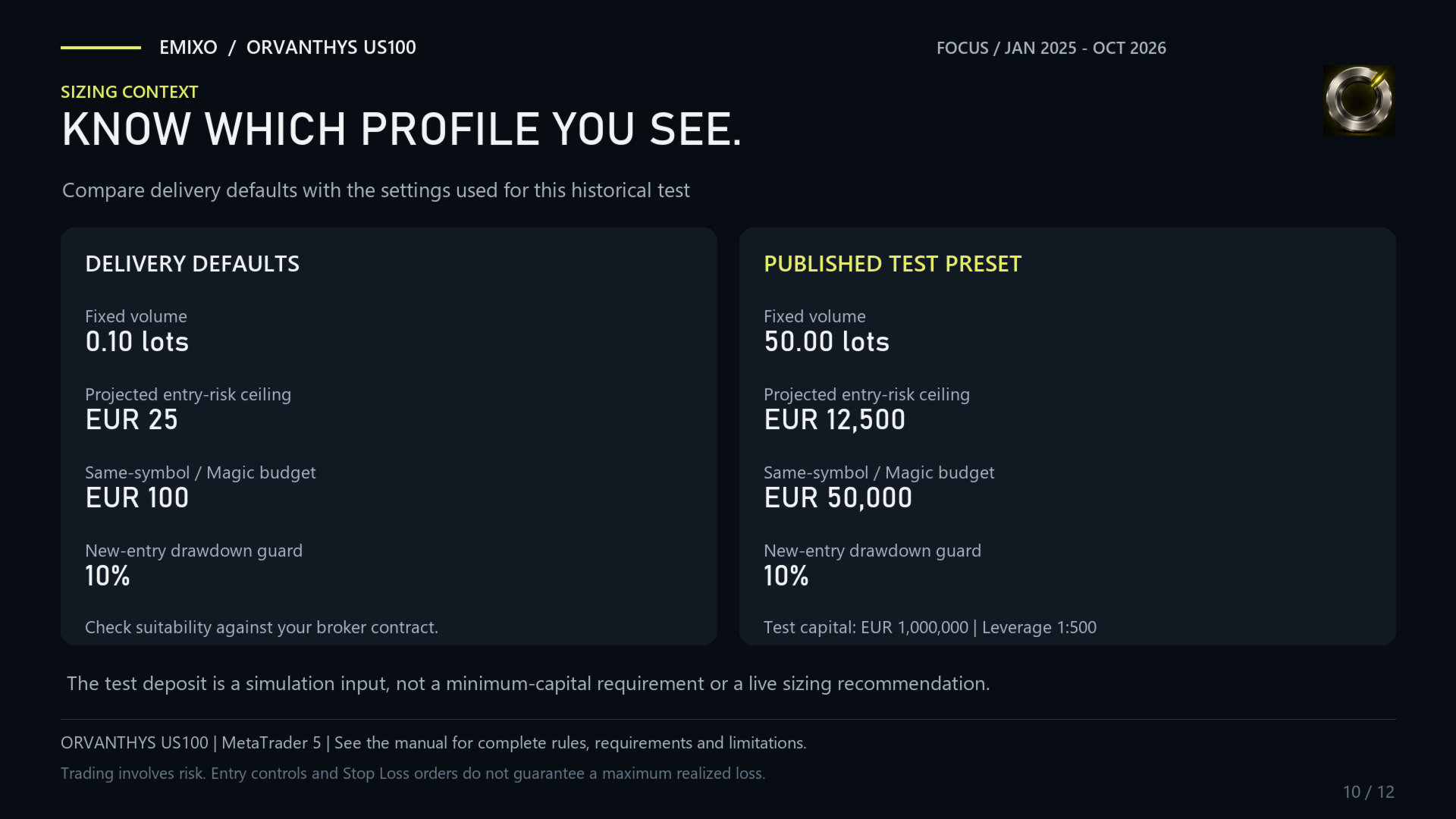
Defaults use 0.10 lots, a EUR 25 initial budget and a EUR 100 own aggregate budget. The 10% drawdown filter gates new entries relative to the account equity peak; it is not a maximum-loss guarantee.
Reference setup
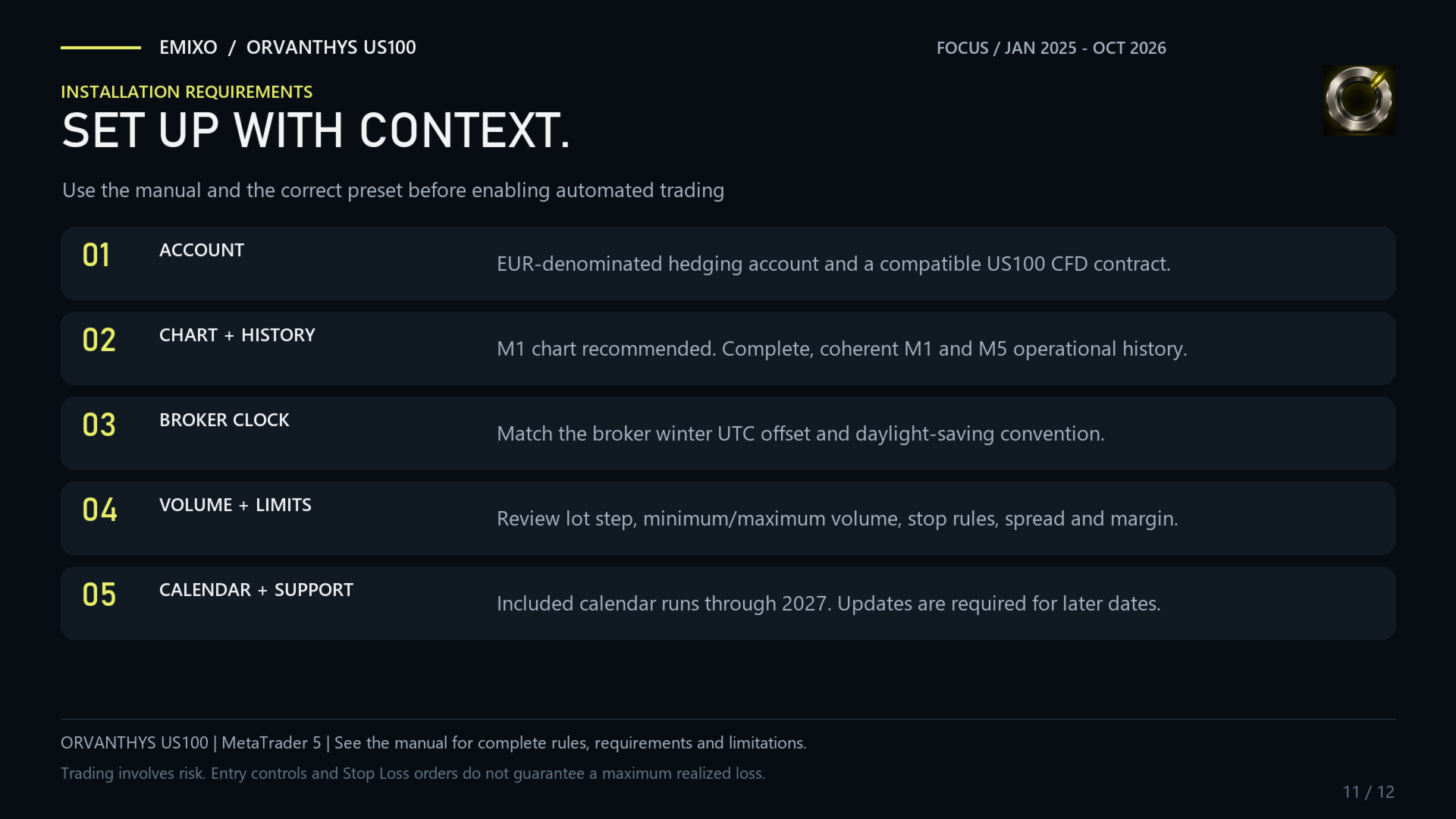
An EUR hedging account, compatible US100 contract and M1/M5 history are required; M1 is the recommended chart. Configure the broker clock. This build's calendar covers through 2027; new entries from 2028 require an update with verified dates.
Examine the plan with your broker
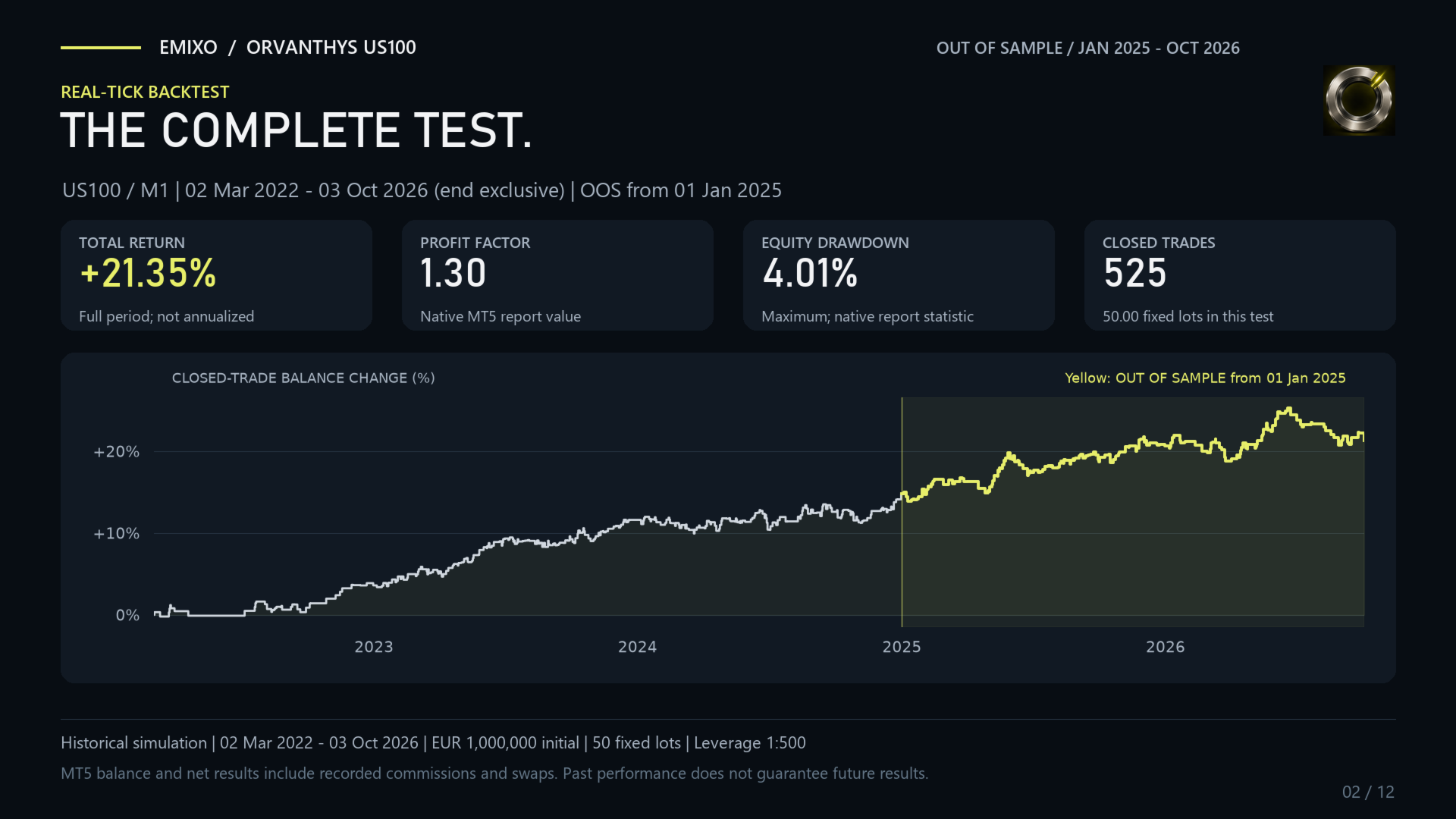
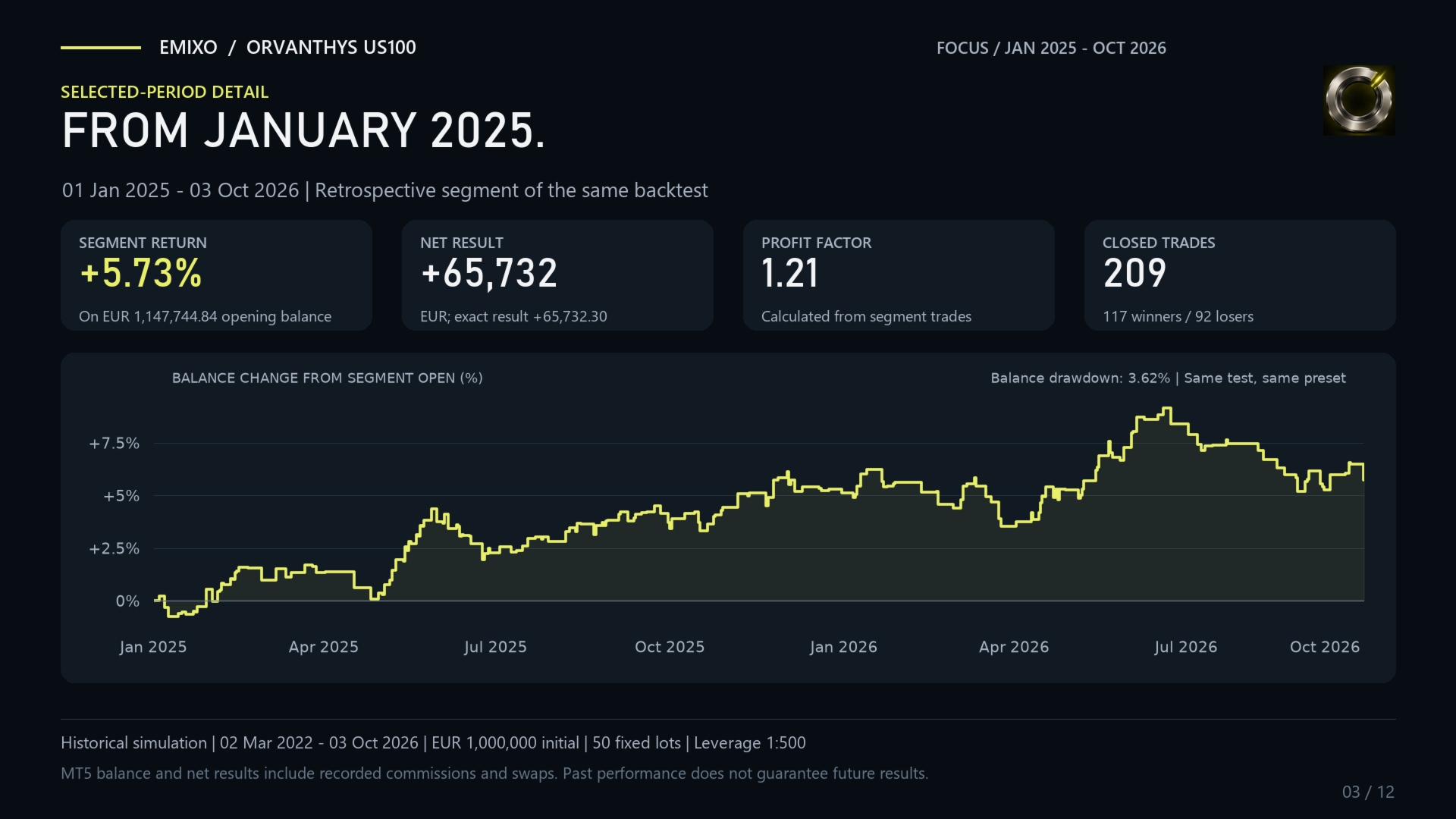
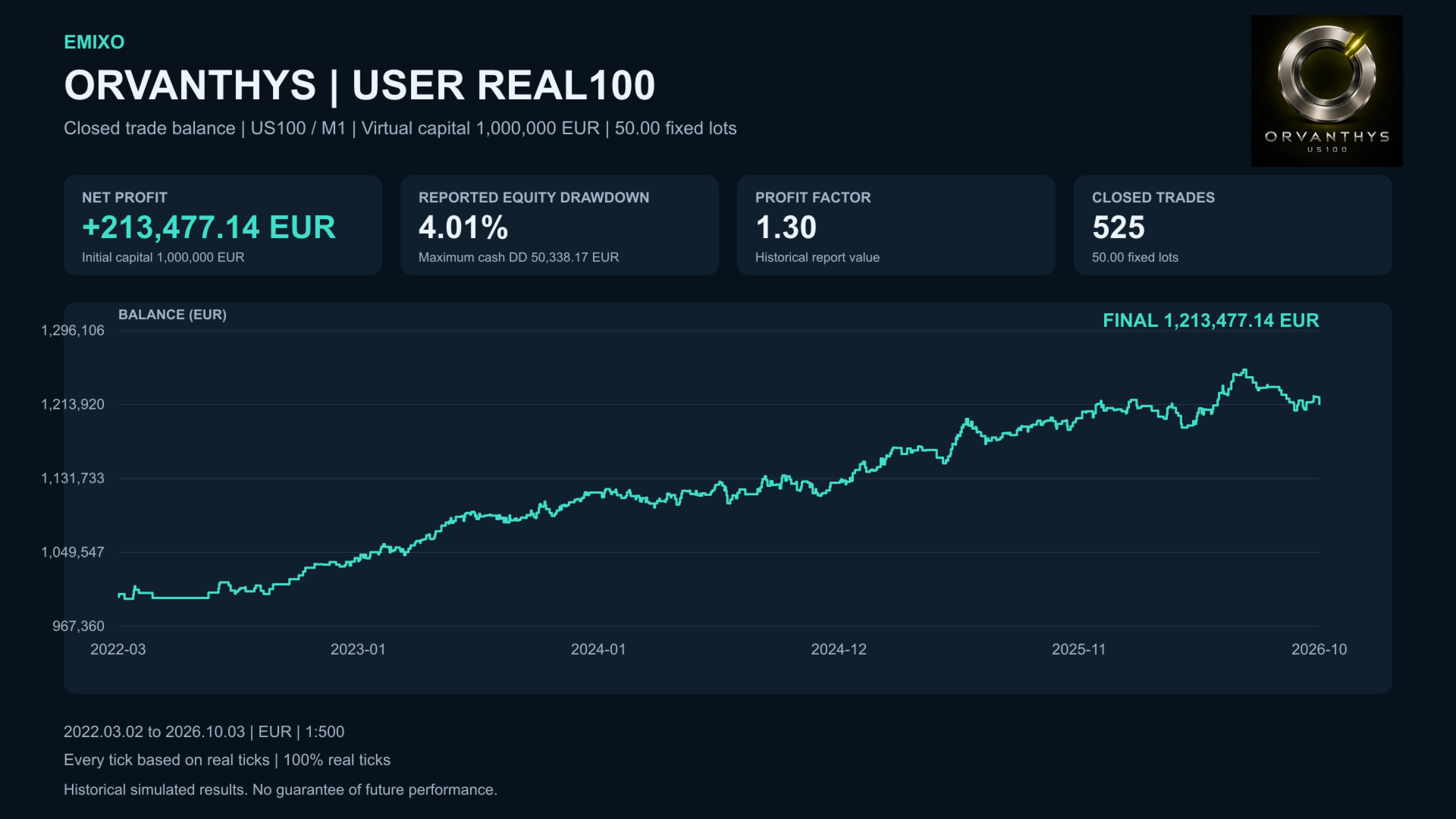
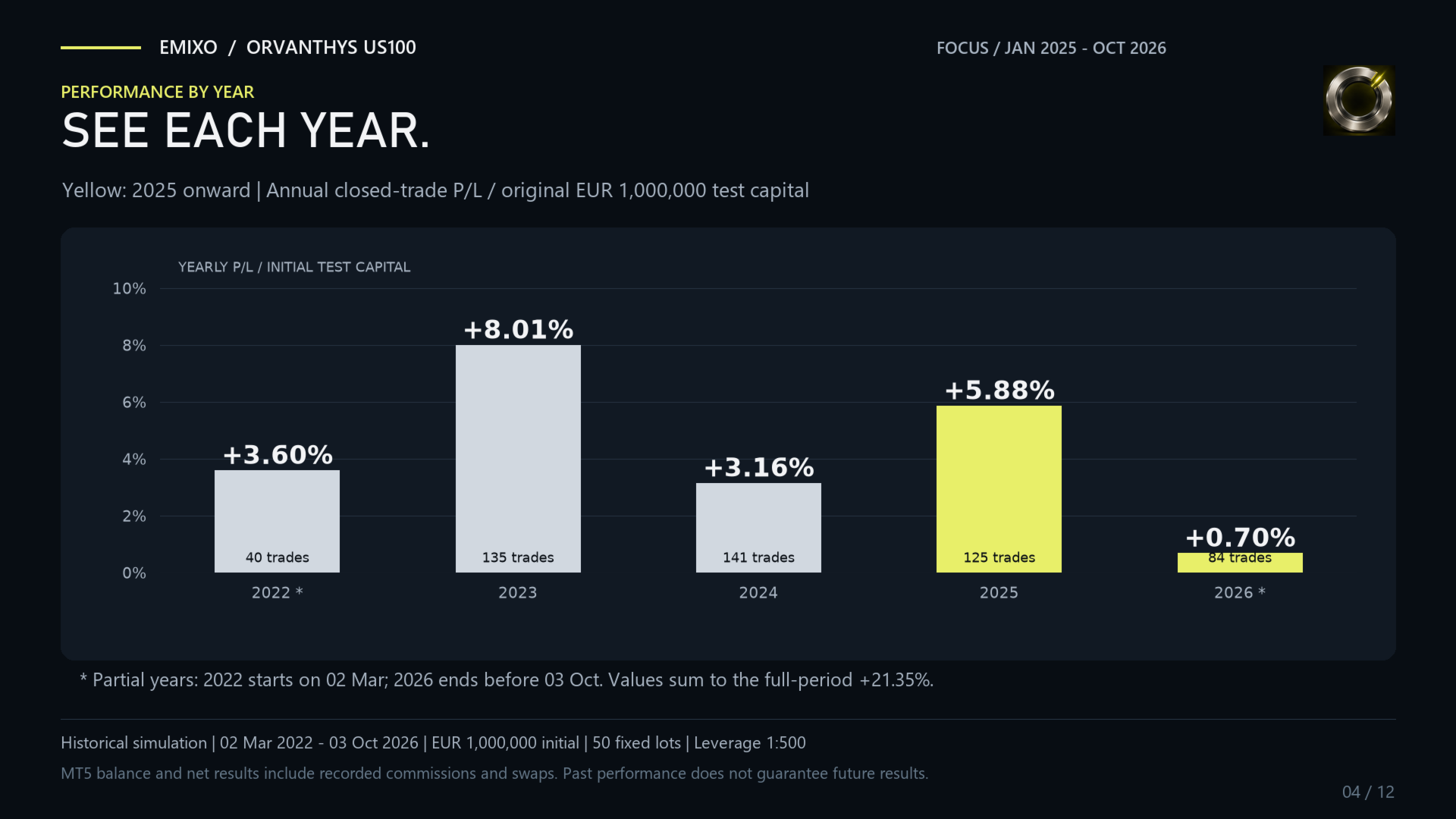
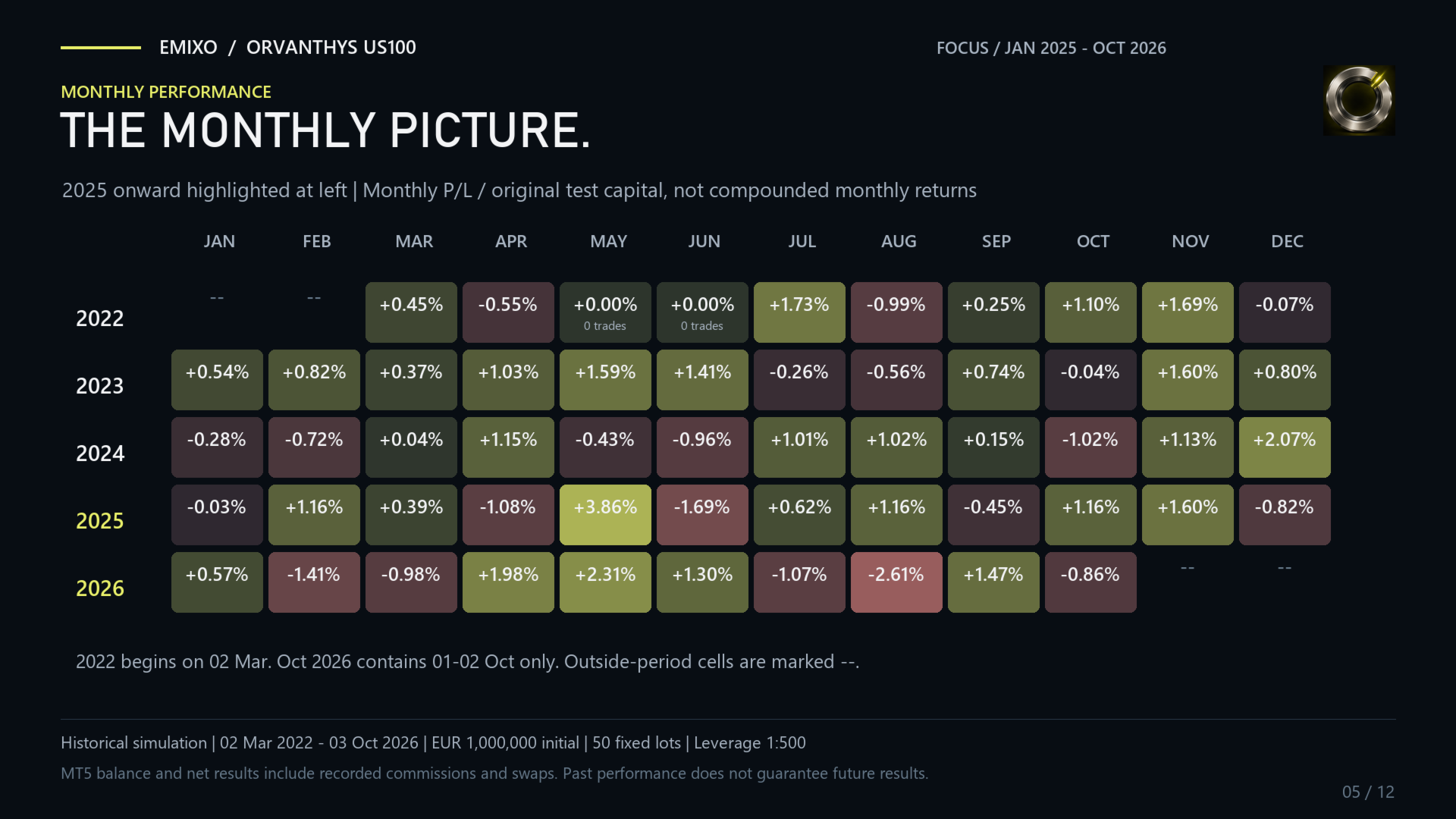
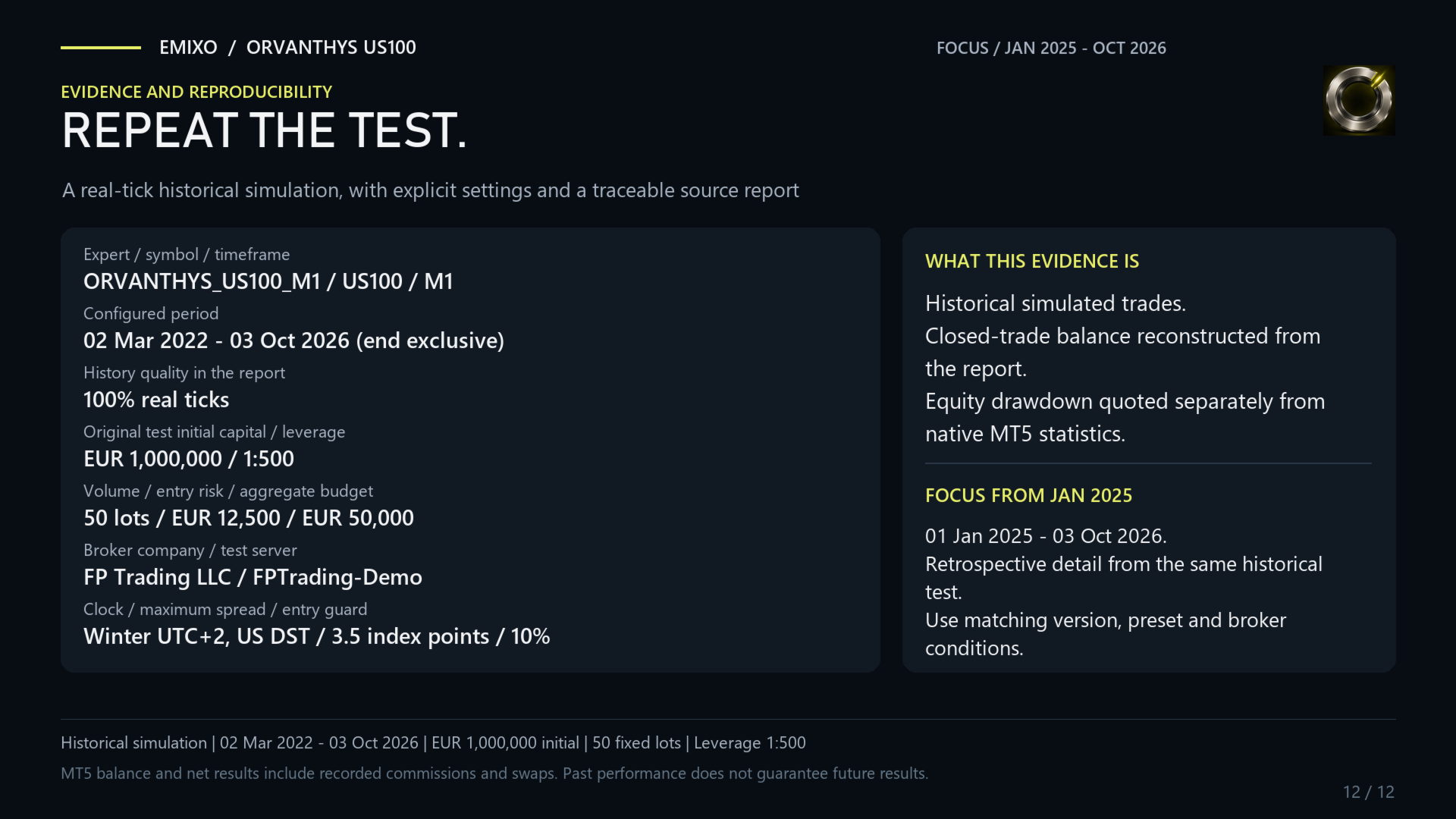
The gallery illustrates the range, confirmation and historical behaviour. Compare the report's period, capital and preset with the configuration you intend to use.
Getting started
Use the Market demo in the Strategy Tester to examine entries and exits with your broker's data. Before operational use, check the configuration on a demo account. For setup questions, contact the seller through MQL5 messages or product comments.
Trading involves a risk of loss. Backtests are historical simulations, not live results or forecasts. Spreads, costs and execution can change outcomes; stops and operating limits do not guarantee a maximum loss.