
Entry smc model back to basic MT4
- Indicateurs
-
Minh Truong Pham
 Hello, my name is Pham and I am a programmer and trader! At here, I create amazing forex indicators and expert advisors for Metatrader.
I will try:
+ Provide best tools base on my 5 years experience as a trader and 10 years as a programmer. - Version: 3.1
- Mise à jour: 21 août 2026
- Activations: 5
Wyckoff sweep and order block detector
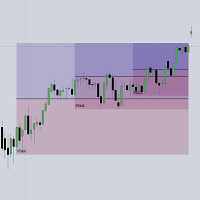
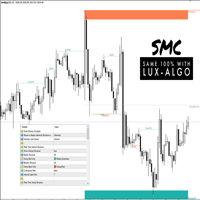
I got tired of marking the same structure by hand every morning, so I wrote this. It looks for one thing only: the Wyckoff sequence that ends with a liquidity sweep and a pullback into the order block that started the move. When all the pieces line up, it draws them and tells you.
That's the whole job. It doesn't predict, it doesn't score setups out of ten, and it won't tell you how much to risk. It marks structure that's already there and saves you the eye strain.
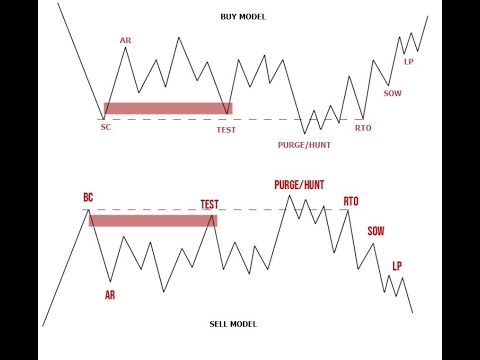
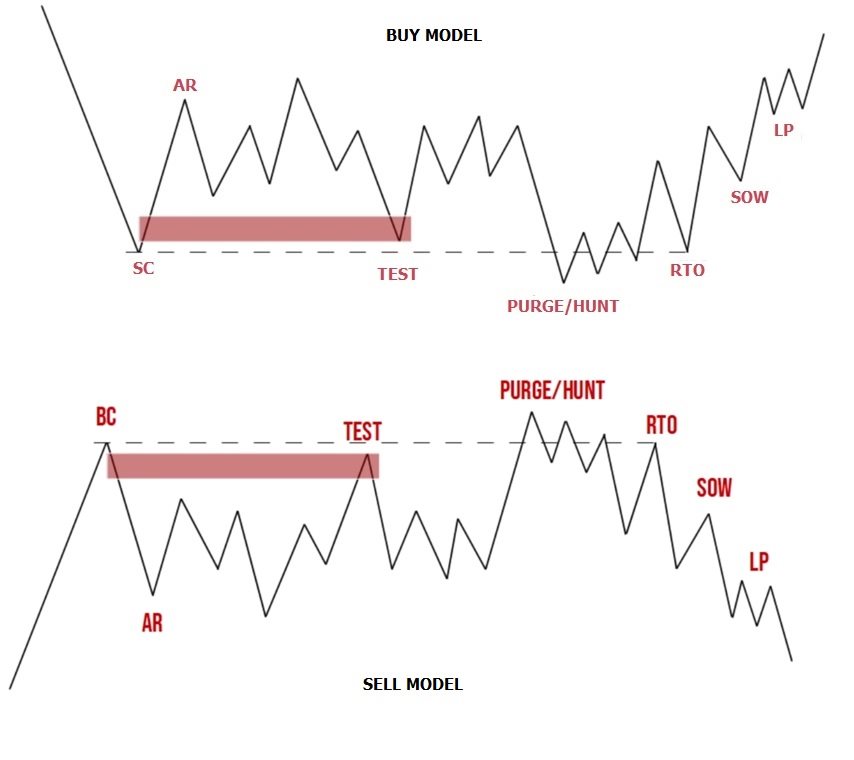
The sequence it looks for
Take a bearish case. The bullish one is the same thing upside down.
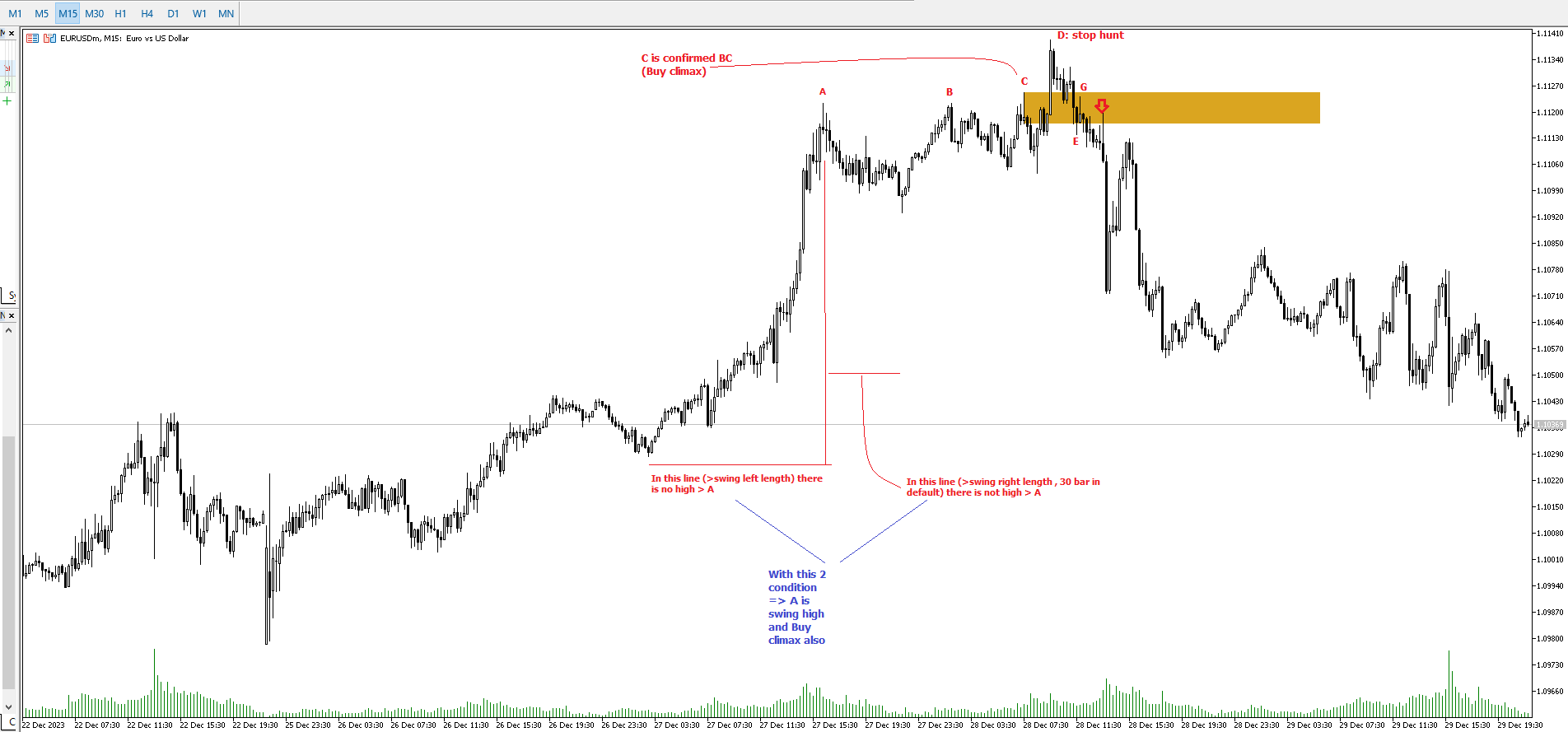
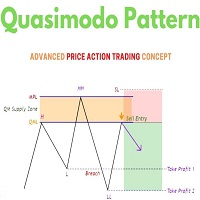
Buy Climax (BC). A sharp push up on heavy volume that runs out of buyers. This becomes the anchor for everything else, and the indicator picks it from the swing zigzag.
Automatic Reaction (AR). Price falls away from the climax on its own, without needing bad news. The low of that drop is the AR.
Secondary test. Price comes back up toward the climax but can't get there. A lower high. If the market were still strong, it would have made a new one.
Hunt / Purge. Now price does break above the climax, briefly. This is the part most people get wrong, because it looks like a breakout. It's usually stops being collected before the real move.
Displacement. After the sweep, price has to break down through the order block with intent. No displacement, no model. The indicator waits for this before it draws anything.
Return to origin (RTO). Price climbs back into the order block and closes below it. That's the signal bar, and it's where the arrow and the alert come from.
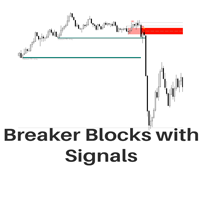
The order block itself is the last opposite-colour candle at the climax. On the chart it's the shaded box that keeps stretching to the right while the model is still alive.
What changed in 3.0
This is a bigger update than the version number suggests. Some of it is new features, some of it is me fixing things I should have caught earlier.
Signal history is visible now. In 2.0 the indicator reused one set of chart objects, so you only ever saw the most recent model. Every earlier setup got overwritten. That's gone. Each model now keeps its own drawings and the last 20 stay on the chart, greyed out once they're voided. You can finally scroll back and check the thing yourself, which is what people kept asking for.
It publishes buffers. The MT5 build had no indicator buffers at all, which meant iCustom returned nothing and you couldn't build anything on top of it. That's fixed, and both platforms now expose the same layout, so one EA reads either one:
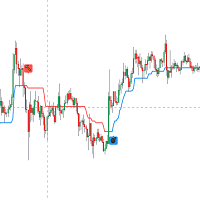
Buffer Contents 0 Signal: 1 buy, 2 sell, 0 none 1 Entry price 2 Stop loss 3 Target 1 4 Target 2 5, 6 The buy and sell arrows drawn on the chart
If you're already reading buffers 0 to 4 from the MT4 build, nothing changes for you. Target 2 was never actually filled in before, though. It is now.
Order block minimum size. If the candle at the climax happens to be a doji, the old code would build an order block a fraction of a pip tall, and then both the entry trigger and the invalidation would fire on noise. I've seen one that was 0.4 pip. There's now a minimum height, set as a multiple of ATR so it travels between symbols.
Stop placement is fixed. On sell models the buffer was being subtracted instead of added, which put the stop slightly under the sweep high rather than above it. Buy models were always correct. Sorry about that one.
Stops and targets on every model. The old build only filled them in for a model that formed on the very last bar, so historical setups showed nothing. All models get them now.
Higher timeframe bias filter. Off by default. Turn it on and signals against the higher timeframe EMA get blocked, with a counter on the panel so you can see how many. It reads closed higher timeframe bars only, so it doesn't repaint.
On-chart report. Counts confirmed setups, RTO signals, voided models, and how many reached target versus stop. If a bar touches both in the same candle it counts the stop, so the number leans pessimistic on purpose.
Multi timeframe panel. Optional. Shows what state the model is in on three timeframes at once.
Legacy switch. If you've been running 2.0 and want your charts to look exactly like before, tick "Legacy behaviour". I checked this against the old build bar by bar and the output matches.
One setting is gone: the old AR height filter. I measured it and it made results worse, so I retired it rather than leave a knob that quietly hurts you.
How often it fires
Running the detection over EURUSD H1 from 2015 to 2026 (72,169 bars) it confirmed 406 models, and 184 of those went on to produce an RTO signal. So on H1 you're looking at somewhere around fifteen signals a year on one symbol. The order block filter in 3.0 cuts that down further.
Look, that's thin. It's a swing structure on an hourly chart, and if you want something that fires every session this isn't it. Run it across several symbols, or drop to M15, if you need more.
I'm deliberately not putting profit numbers here. The signals feed into whatever you do next, and I have no idea how you manage a trade, so any equity curve I showed you would be measuring my exit rules and not this indicator.
Settings that actually matter
Swing length left / right. This sets what counts as a swing point, and it decides where BC and SC land. 60 and 30 are what I use. Bigger numbers mean fewer, larger structures.
Internal length left / right. This defines the small pivots inside the consolidation, used to find the secondary test and to confirm displacement. 2 and 1 by default.
Medium length left / right. Only used by the New method, to find the climax on a shorter zigzag than the swing one.
Method. Classic anchors the sweep to the bar you're on. New anchors it to a confirmed swing pivot, which is steadier. Both runs the two together and that's the default now.
Sizing mode. Points or ATR. ATR is better if you run more than one symbol.
Everything else is colours, text size and alerts.
What it won't do
It only detects this one structure. If the market is trending cleanly with no sweep, you'll get nothing for weeks, and that's correct behaviour rather than a fault.
It also has no opinion about context. A textbook sell model can form in the middle of a strong uptrend and the indicator will draw it happily, because the structure is genuinely there. That's what the higher timeframe filter is for, and it's why I'd turn it on before trading anything mechanically.
Fair warning on the report panel too: with a small number of settled signals the hit rate bounces around a lot. Don't read anything into the first ten.
A few questions I get
Why is my chart empty when I first attach it? It needs history. The default lookback is 1000 bars and the swing settings need a few hundred more on top. Scroll back once to pull the data in.
Can I run it on M5? You can. I wouldn't, at least not with the default lengths, because the swing settings are sized for something slower. Drop them if you try it.
Does it repaint? Models are evaluated on closed bars. A model at state 0 can still be replaced by a deeper sweep on the same climax, but once it's confirmed it stays put, and 3.0 no longer wipes a confirmed model when a new candidate shows up. That was a real problem in 2.0.
Does it work on indices and metals? The structure appears everywhere. Use ATR sizing mode and retune the swing lengths, because what works on EURUSD H1 won't transfer as is.
Notes
The basic pattern shows up on every timeframe and it reflects a trend, so don't panic if a signal appeared a few bars ago and you missed it. Wait for structure to pull back and take the next one.
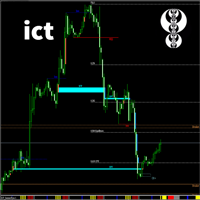
ICT's market maker models follow the same skeleton, so if that's your framework the same marks apply.
Detailed write-up of the theory at here.
*** Note
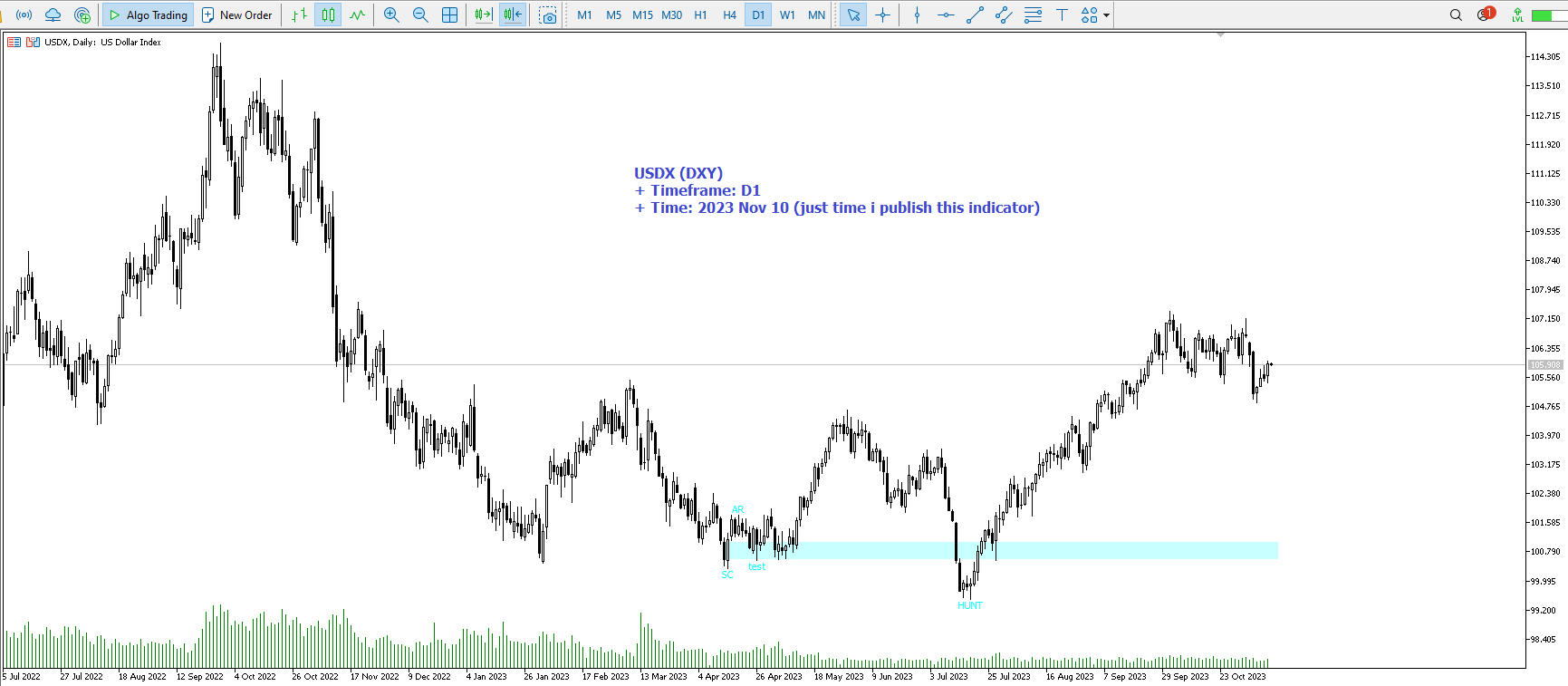
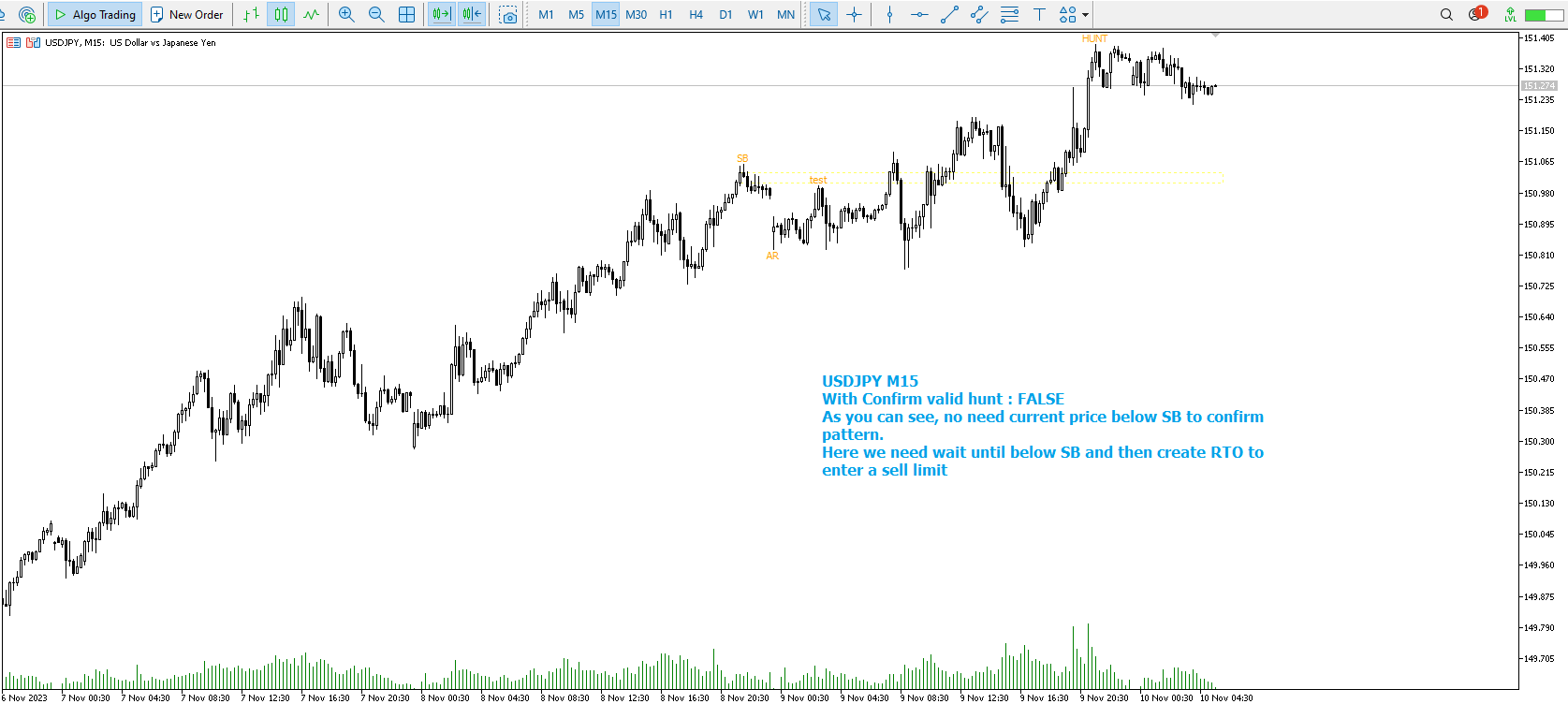
This version of SMC back to basic need a highest/lowest point in swing (atlest 60 bar leftside and 30 bar at rightside) to confirm this is Buy/Sell climax. And then need confirm model ( test, stop hunt, rto) to make signal when price retest RTO. So this indicator not provide signal everytime . But signal is not buy/sell entry only , it also tell us trend also. Please watch this video to more detail
*** Frequently Asked Questions
Why nothing show on chart when i load inidicator?
https://www.youtube.com/watch?v=hW-KHHvUCWI
How i build signal scan system with this indicator?














































more than great