

What Happens When a Gold Breakout System Is Forced to Wait?
An evidence-led look inside Ratio X Swing Breakout: confirmed H1 structure, buffered stop entries, independent strategy modules, and what three 18-month XAUUSD backtests reveal about the real cost of increasing risk.
Most breakout systems begin with a deceptively simple idea: buy above resistance and sell below support. The difficult part is deciding what qualifies as a level, how far price must move beyond it, and how much evidence is required before capital is exposed.
A swing high can be touched without being broken. A pending order can be technically valid but still sit inside spread noise. A strategy can produce a spectacular balance curve while quietly losing risk efficiency. These are not minor implementation details. They are the system.
Ratio X Swing Breakout was built around one question:
What changes when an XAUUSD Expert Advisor is designed to wait for movement beyond confirmed structure instead of reacting to the level itself?
This article explains that design, the controls surrounding it, and the conclusions that can and cannot be drawn from its current MetaTrader 5 backtest evidence.
1. A Price Touch Is Not a Confirmed Breakout
The EA continuously calculates on the H1 timeframe, using closed candles rather than an unfinished bar. It searches for confirmed swing highs and swing lows, then evaluates whether the structure is sufficiently recent, separated, and prominent relative to current volatility.
When a valid level is found, the system does not place an order directly on that level. It calculates a breakout buffer using strategy parameters, ATR-based volatility, current spread, tick size, and the broker's minimum stop distance. A Buy Stop is placed above a qualifying swing high or a Sell Stop below a qualifying swing low.
The logic can be summarized as follows:
- Read completed H1 candles.
- Confirm a swing high or swing low.
- Reject stale, weak, or structurally invalid levels.
- Calculate a broker-valid distance beyond the structure.
- Place one owned pending stop order for the strategy.
- Open only if price reaches the buffered trigger.
- Manage the resulting position with predefined risk and exit rules.
The buffer cannot prove that a breakout will continue. Nothing can. Its purpose is more precise: to make a simple touch insufficient under normal quotes and to express the entry hypothesis in a reproducible way.
2. Six Isolated Modules, but Evidence Decides Which Ones Trade
The architecture contains six strategy modules: A1, A2, A3, B1, B2, and B3. Each has an independent magic number, configuration, risk weight, pending-order state, Stop Loss, Take Profit, and trade-management parameters.
Isolation matters because a multi-strategy EA should always be able to answer three questions:
- Which module created this order?
- Which module is allowed to modify or close it?
- How much portfolio risk belongs to that module?
There is also a less glamorous rule: architecture is not evidence. The current release presets deliberately activate only A1 and A3 because the other standalone modules did not meet the validation threshold used for release. The rejected modules remain implemented and isolated, but they are not enabled merely to advertise a larger strategy count.
This kind of pruning is one of the most important parts of systematic development. Adding logic is easy. Refusing to deploy logic that did not demonstrate an acceptable edge is harder—and usually more valuable.
3. Risk Is Calculated Before an Order Exists
Ratio X Swing Breakout does not use Martingale, Grid, averaging, or loss-recovery sizing. Position volume is derived from the monetary distance between entry and Stop Loss, then normalized downward to the broker's volume step. If the broker's minimum lot would exceed the allowed budget, the setup is skipped rather than rounded into extra risk.
Before an order request is sent, the EA evaluates:
- Per-setup percentage risk and aggregate portfolio risk
- Available margin and broker volume limits
- Minimum stop distance and freeze level
- Current spread and symbol trading session
- Strategy ownership and duplicate exposure
- Daily drawdown protection
- Configured GMT kill hours
- NFP and market-close protection windows
Every entry requires a real broker-side Stop Loss and Take Profit. The optional Virtual Stop Loss is an additional software layer; it does not replace the broker-side protection.
4. Why the Exit Engine Has More Than One Layer
Breakout trades rarely develop in a straight line. The management engine therefore treats protection as a sequence of independent decisions:
- Break Even can advance the Stop Loss toward the entry after a defined profit threshold.
- Trailing Stop Loss follows favorable movement without loosening existing protection.
- Trailing Take Profit can extend the target as price develops.
- Magic Trail applies step-based Stop Loss progression.
- Virtual Stop Loss can trigger an additional software-managed exit.
The EA also checks whether an order modification is valid at the current market distance. This is especially important on Gold, where rapid movement can place a pending order or stop level inside the broker's freeze zone between two execution events.
5. The Filters Are Part of the Strategy, Not Decorations
Each enabled module can use a strategy-specific 24-hour GMT mask. Historically weak entry hours can be blocked without disabling position management. Live operation can also use MetaTrader 5's native economic calendar to pause entries around US Nonfarm Payrolls.
Before the configured daily market-close window, the EA removes eligible pending orders instead of leaving dormant breakout exposure near a period of reduced liquidity. A daily drawdown guard can stop new entries for prop-firm-style loss limits while continuing to manage existing positions.
The distinction is important: filters stop new risk. They do not abandon risk that already exists.
6. The On-Chart HUD Is an Audit Surface
The integrated head-up display shows balance, equity, daily drawdown, open risk, spread, session and news status, the active account zone, and the state of each strategy module. It also records the latest operational event and provides pause and minimize controls.
The HUD does not create signals. Its job is to make the EA's internal state visible. An automated system should not merely trade; it should explain why it is scanning, blocked, pending, open, paused, or protecting an existing position.
7. Three Presets, Nearly the Same Trade Count, Very Different Risk
The supplied reports show a separate 18-month XAUUSD backtest series starting from USD 1,000. All three reports display 98% history quality, 9,313 bars, and 59,453,914 ticks. The presets change exposure, while the underlying entry architecture remains substantially the same.
| Preset | Total Trades | Net Profit | Approx. Final Balance | Profit Factor | Sharpe Ratio | Recovery Factor | Max Equity DD |
|---|---|---|---|---|---|---|---|
| Conservative | 1,364 | USD 2,822.31 | USD 3,822 | 1.25 | 4.85 | 3.76 | 16.61% |
| Balanced | 1,366 | USD 5,330.03 | USD 6,330.03 | 1.20 | 4.30 | 2.62 | 24.85% |
| Aggressive | 1,340 | USD 19,412.37 | USD 20,412.37 | 1.11 | 3.52 | 0.95 | 51.49% |
Conservative preset
The Conservative report contains 1,364 trades, a 1.25 Profit Factor, 4.85 Sharpe Ratio, 3.76 Recovery Factor, and 16.61% maximum equity drawdown. Its net profit is USD 2,822.31 from the USD 1,000 initial deposit.
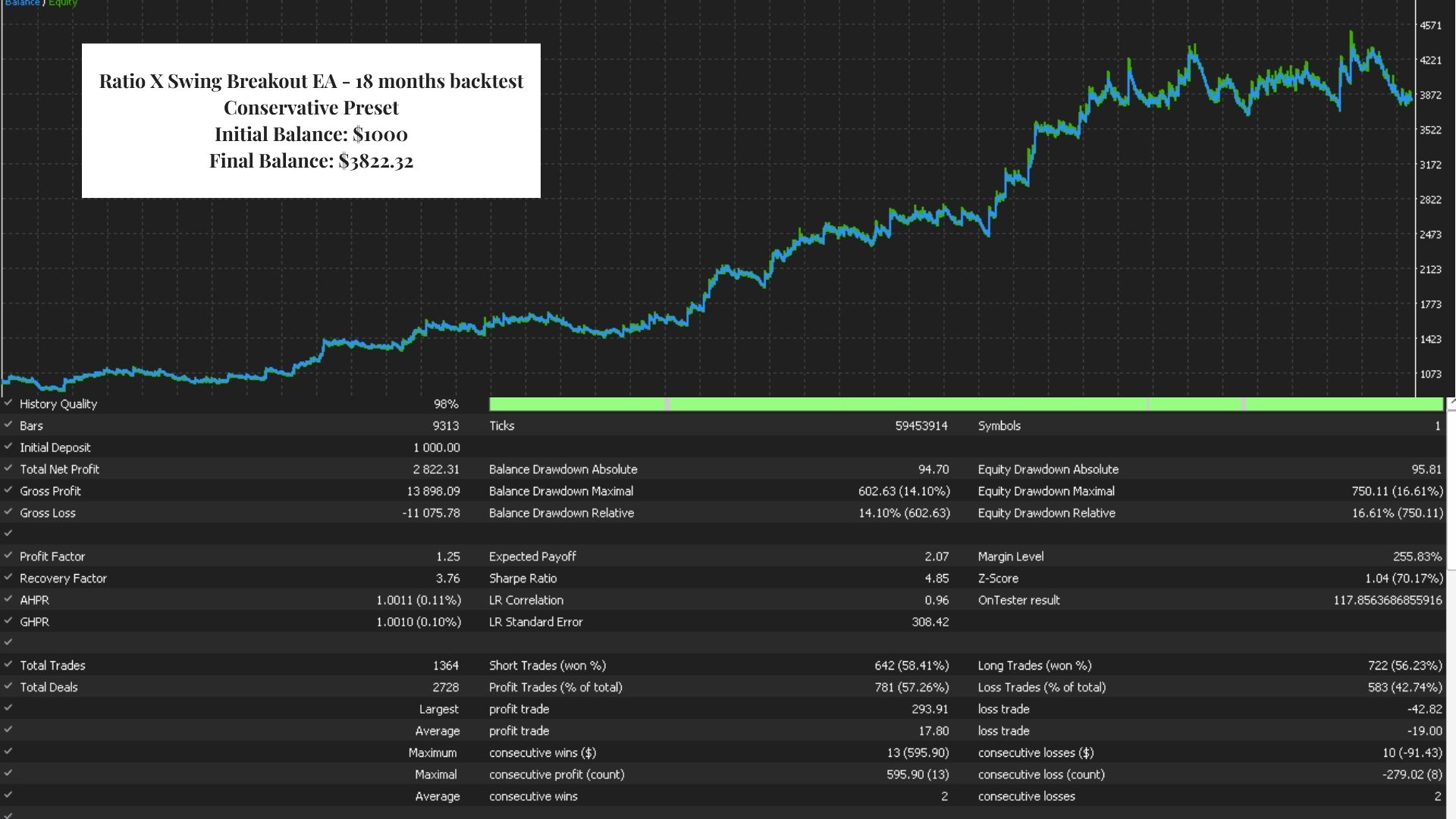
Figure 1. Conservative preset. Backtest result, not live trading performance.
Balanced preset
The Balanced report contains 1,366 trades and reaches USD 5,330.03 in net profit. However, maximum equity drawdown rises to 24.85%, while Profit Factor declines to 1.20 and Recovery Factor to 2.62.
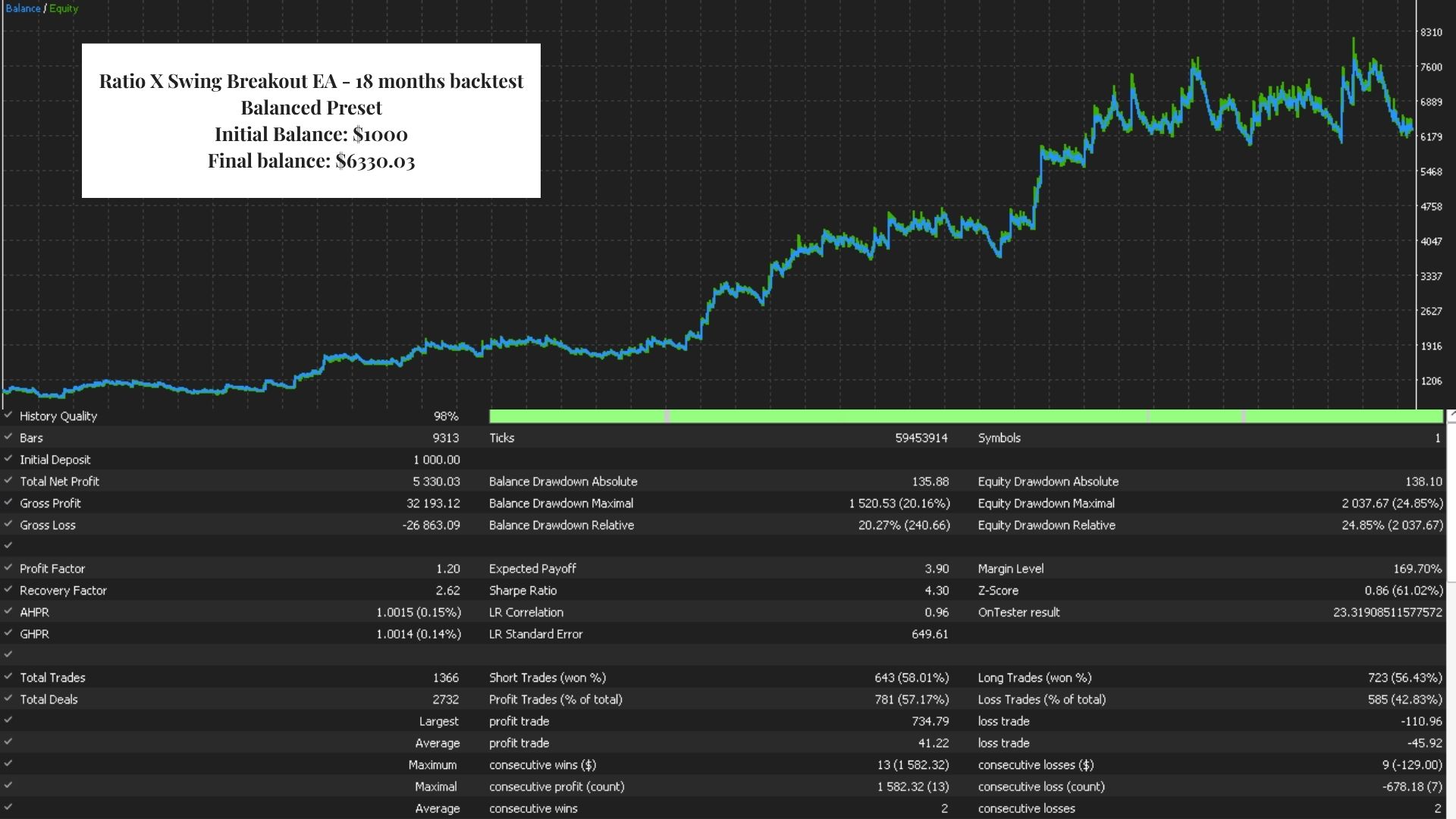
Figure 2. Balanced preset. Higher historical return is accompanied by higher drawdown and lower risk efficiency.
Aggressive preset
The Aggressive report is the most visually dramatic: USD 19,412.37 in net profit from the same USD 1,000 starting deposit. It is also the clearest warning against evaluating an EA by final balance alone. Maximum equity drawdown reaches 51.49%, Profit Factor falls to 1.11, Sharpe Ratio falls to 3.52, and Recovery Factor falls below 1.0.
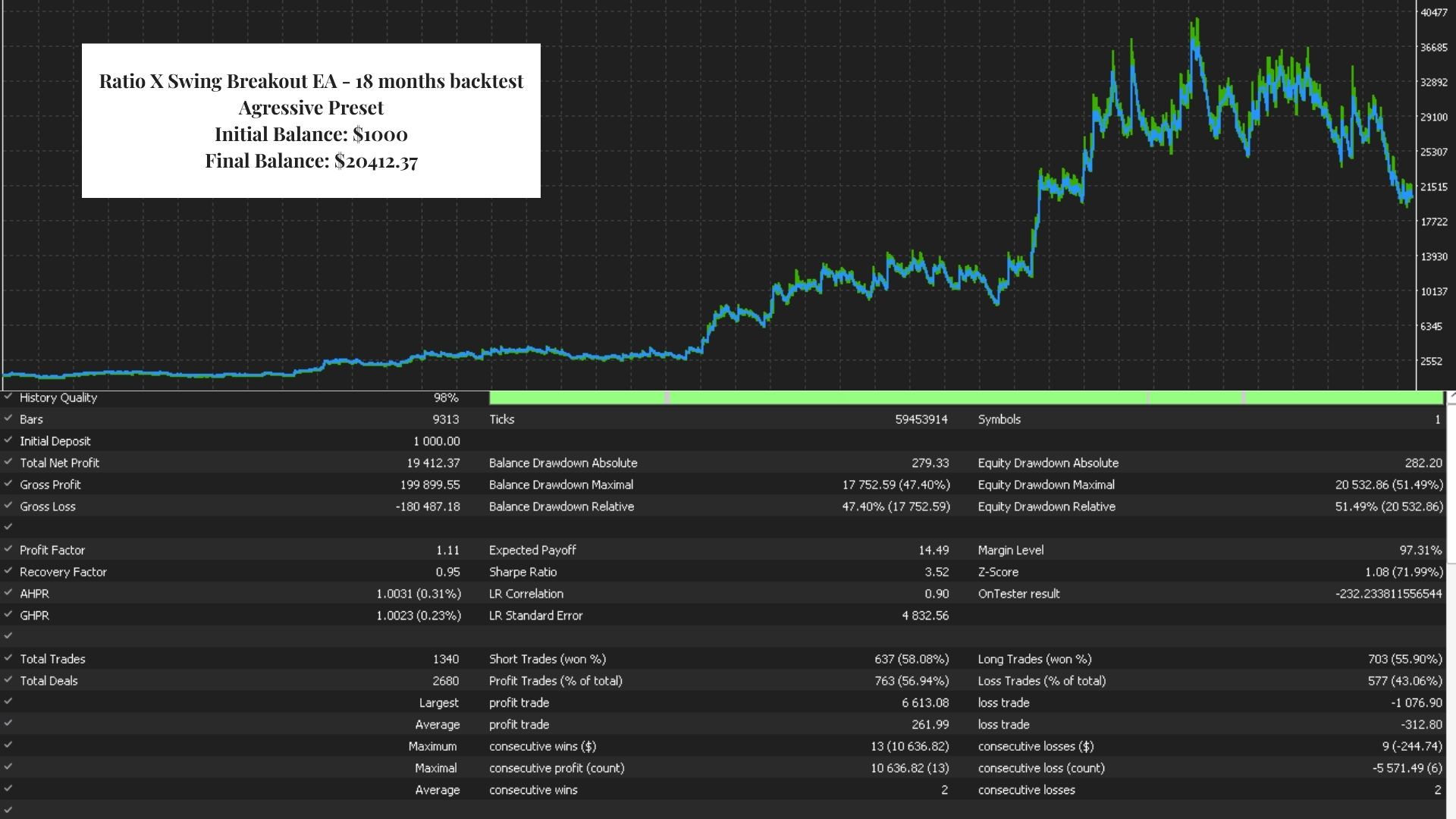
Figure 3. Aggressive preset. The larger balance curve comes with materially greater historical capital risk.
8. The Most Interesting Result Is Not the Final Balance
The trade counts are remarkably close: 1,364, 1,366, and 1,340. That tells us the presets did not manufacture more opportunity. They applied different exposure to a similar stream of opportunities.
As exposure increased:
- Net profit increased.
- Maximum equity drawdown increased from 16.61% to 51.49%.
- Profit Factor declined from 1.25 to 1.11.
- Sharpe Ratio declined from 4.85 to 3.52.
- Recovery Factor declined from 3.76 to 0.95.
This is the central observation. The Aggressive preset did not discover a stronger signal. It amplified the financial outcome of approximately the same signal engine while reducing the margin for error.
The highest backtest return is not automatically the best result. A more useful question is how much structural quality remained after risk was increased.
For that reason, the Conservative curve may be more informative than the largest final balance. It gives a clearer view of the underlying engine before exposure dominates the picture.
9. What These Screenshots Do Not Prove
Backtests are research instruments, not promises. The reports show a large sample and useful tester metadata, but they do not independently establish future profitability or live execution quality.
Results can change materially with:
- Broker tick history and timezone mapping
- XAUUSD contract specification and symbol suffix
- Spread, commission, swap, latency, and slippage
- Stop and freeze levels
- Historical economic-calendar availability
- Different optimization and validation periods
10. The Engineering Principle Behind the EA
Ratio X Swing Breakout is not based on predicting every movement in Gold. It is based on refusing most conditions, waiting for confirmed H1 structure, requiring price to travel beyond that structure, assigning a finite monetary loss before entry, and keeping every order attributable to a specific module.
The broader lesson is applicable to any MetaTrader 5 trading system: the quality of an EA is not defined only by the signal that opens a trade. It is defined by what the system refuses to trade, how it behaves when the broker rejects a request, how clearly it exposes its state, and how honestly its risk is measured.
If you want to inspect the full feature set, configuration, and demo availability, the implementation is listed as Ratio X Swing Breakout on the MQL5 Market.
Developed by Ratio X AI Solutions.
Risk warning: Trading Gold and other leveraged instruments involves substantial risk and can result in the loss of all deposited capital. The figures discussed above are Strategy Tester results, not live account results. Past performance and historical simulations do not guarantee future returns. This material is for informational purposes only and is not financial advice.