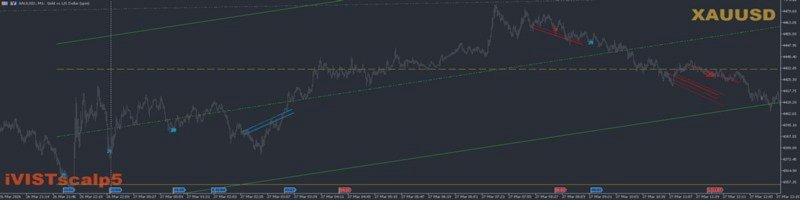
The Art of Working with Timings: How to Extract Maximum from Market Movements

The iVISTscalp5 indicator is the core of the #VISTmany research project. It is a market forecasting system based on time levels (timings).
A timing is not just a mark on the chart. It is a trigger that forms a price impulse. Once the impulse is formed, the movement toward the timing can continue — and at this moment, another opportunity arises for precise scalping.
In this article, we will examine key situations where #iVISTscalp5 timings should be ignored in order to preserve capital and improve entry accuracy.
⸻
Trading Approaches Using iVISTscalp5 Timings
1. Fast Scalping
Trading at the moment an impulse forms in order to capture the predicted movement.
2. Impulse Scalping
Entering an already formed move. This is a more advanced approach that requires experience (will be covered in a separate article).
⸻
When Timings Should Be Ignored
1. Timings at Extremes (High / Low)
• Buy timing at the daily or weekly high — high probability of reversal.
Optimal approach: wait for execution and look for sell scalping opportunities.
• Sell timing at the low — similar situation.
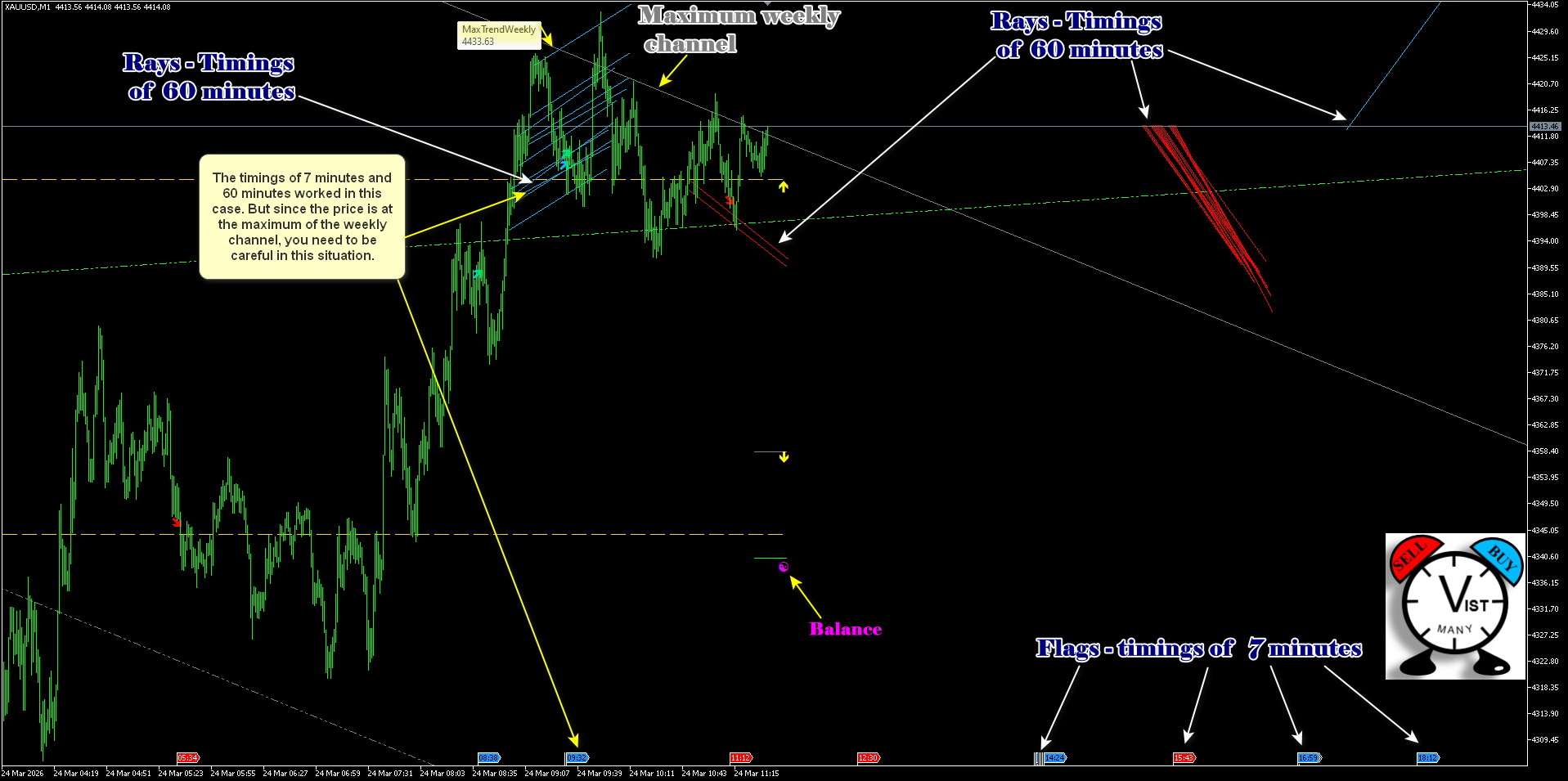
Optimal approach: after execution, look for buy scalping.
Key idea:
Trade against extremes, not in their direction.
⸻
2. Insufficient Movement Potential
If the expected move is too small:
• it may not cover spread and commissions
• the probability of an unprofitable trade increases
Beginners should ignore such timings.
⸻
3. Context and Timing Spectrum
The iVISTscalp5 indicator provides a forward-looking market structure for the week.
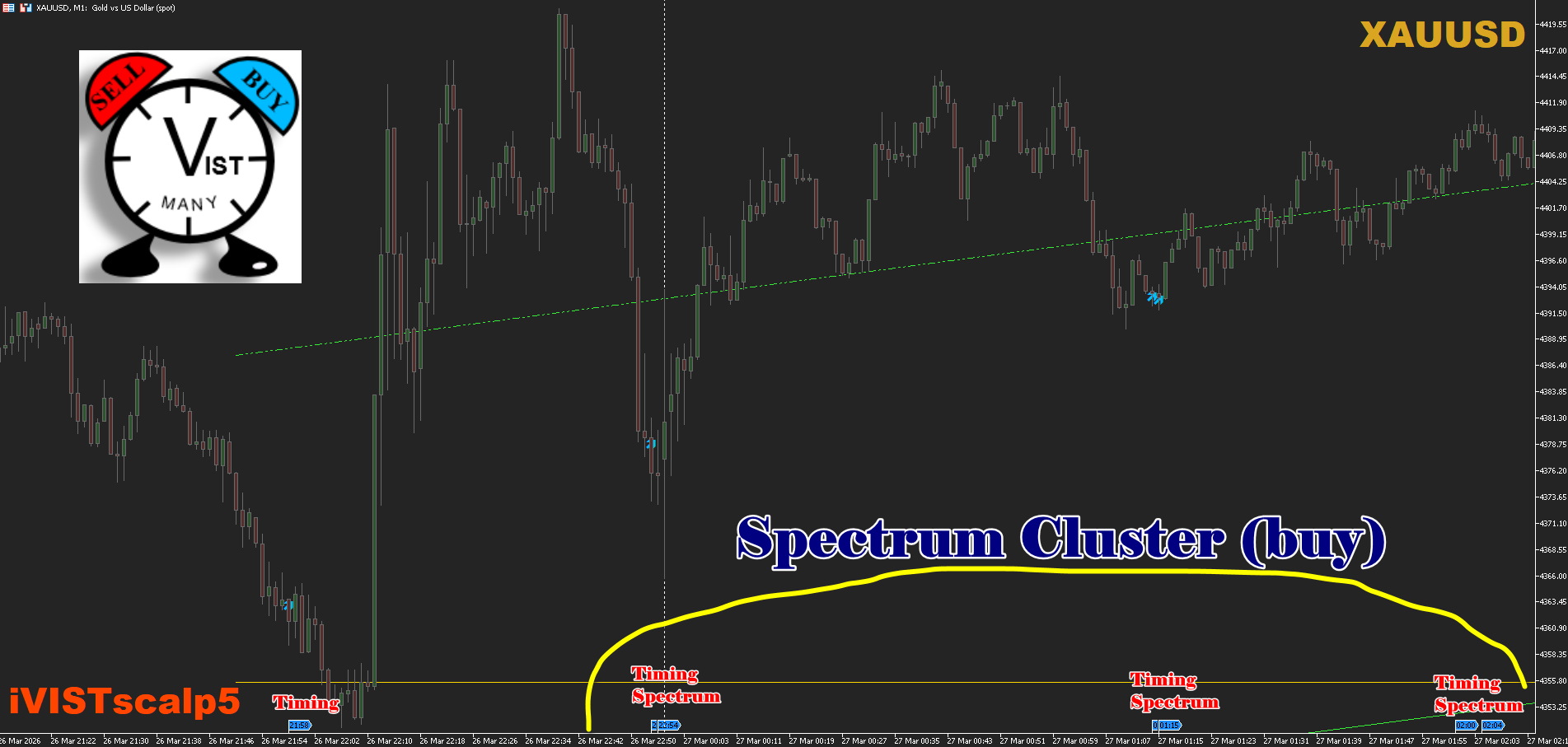
A timing spectrum is a sequence of consecutive forecasts in one direction, with time differences ranging from 1 to 6 minutes.
A group of spectrums is a cluster of such sequences in the same direction.
• If a sell timing is followed by a buy spectrum (2 or more) → ignore sell
• If a buy timing is followed by a sell spectrum → ignore buy
Always follow the direction of the upcoming impulse, not a single isolated signal.
⸻
4. Price Movement Before Timing
• Buy timing is most effective after a decline
• Sell timing is most effective after a rise
Timing acts as a correction point, not a continuation of an overextended move.
⸻
5. Special Market Conditions
Ignore timings during:
• Balance zones (pink circle in iVISTscalp5)
• First Friday of the month — Non-Farm Payrolls and US macro data
• Third week (Thursday–Friday) — expiration period
• Timing spectrums:
• upcoming buy spectrum → ignore single sell timings
• upcoming sell spectrum → ignore single buy timings
These conditions significantly reduce signal accuracy.
⸻
Important Observation
Statistically, price almost always returns to the opening level of a timing to retest it.
This can be used for:
• more precise entries
• position scaling
• risk control
⸻
Conclusion
Working with timings is not about blindly following signals.
It is about:
• understanding context
• discipline
• precise entry timing
The iVISTscalp5 indicator allows you not just to trade,
but to systematically extract profit from market impulses.
Website // Youtube // Telegram_Basic // Telegram_Gold // Telegram_iVISTscalp5_ Working with the iVISTscalp5_indicator // X


