AZ Volzone SYSTEM locked in range finder
- Indicatori
- Versione: 2.58
- Aggiornato: 13 giugno 2026
- Attivazioni: 20

This indicator is the main component of my trading system. ATTENTION - I strongly recommend using the indicator when analyzing the market with a futures broker (even using a demo version of the account will be good if brokers provide quotes and volumes in real time), and entries can be made on the spot market.
My system has nothing in common with the recently popular SmartMoney system and its varieties.
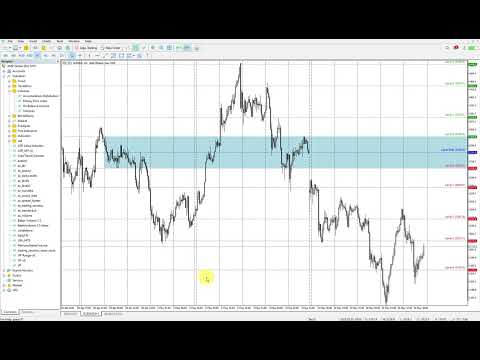
In the latest update, I completely corrected the logic. Now the indicator works without the need to manually double-check data from the Chicago Mercantile Exchange website. The default settings are set for maximum efficiency. A quick explanation: it's designed for trading on an H1 timeframe. If the price is trading above the blue area, long positions take priority; if below the blue area, short positions take priority. The calculated levels are potential price targets.
The indicator is designed to work with futures brokers, meaning if you want to trade Gold (XAUUSD), you must have two terminals—one from your CFD broker and one from any futures broker for GC (Gold). Even a demo version is sufficient, as long as the Level_1 data has no lagOperating principle: find the day you consider the starting point - enter the date of this day into the indicator, look, and use the levels that the indicator creates as a target indicator of price movement. It works both for indicating the day and for indicating the range of several days. But the levels calculated by the indicator are also suitable for intraday trading
Your task when working with the indicator: after the reference day has been found - just look for entry patterns from the boundaries of the levels that the indicator will create. And that's it, if the zone is set correctly, then in 80% of cases the price will move from one level to another. You can't even imagine how easy it is.
The indicator has 2 operating modes: automatic and manual. The indicator is suitable for both intraday trading and relatively short medium-term trading. ATTENTION - The indicator is designed for analysis on the futures market! If you want to trade on the spot - you MUST do an analysis on the futures market and then simply copy (open) trade on the spot market. This is very important. The indicator is based on my many years of research into the Wyckoff method, the theory of trading from Maitrade and part of the logic from LRA (Locked in Range) analysis.
Discipline and psychology are something that I cannot force you to follow, you will need to work on this yourself. In certain market phases, you may think that you have found the Grail. This is not true. Trading is constant market provocations.