
There are days when I look at XAUUSD and have a fairly clear opinion about what is happening.
And there are days when almost every argument has an equally convincing counterargument.
Gold is especially good at creating those situations.
Rates can pressure it.
Inflation can support it.
The dollar moves one way.
Geopolitics suddenly changes the picture.
A few hours later, the narrative may already be different.
That is one of the reasons I became less interested in the question:
“Where should Gold go next?”
and much more interested in another one:
What must price show before I enter?For me, that is a much more useful question.
Two convincing stories. One price.
Imagine two traders looking at exactly the same XAUUSD chart.
One says:
“Rates could stay higher. Gold should fall.”
The other says:
“Uncertainty is increasing. Gold should rise.”
Both may have perfectly reasonable arguments.
But the market has made no promise to follow either of them.
That becomes particularly obvious around important technical levels.
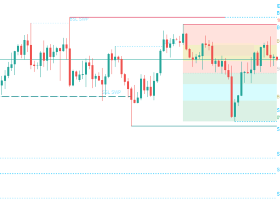
Price approaches resistance.
It hesitates.
Then suddenly breaks through.
The first impulse looks perfect.
Traders enter.
And a few minutes later price falls straight back below the level.
A false breakout traps traders who reacted to the first move, and the reversal can sweep stops clustered around the structure.
Anyone who spends enough time watching Gold has seen some version of this.
A setup can look obvious...
until it doesn't.
This is one of the things I like about systematic trading.
An algorithm does not need an opinion about the Federal Reserve.
It does not have to understand a political speech.
It does not have to decide which headline is more important.
It can ask a simpler question:
Has price actually satisfied the conditions required by the strategy?
Support. Resistance. Breakout. Confirmation.
This became one of the central ideas in my work on automated Gold strategies.
I did not want the system to operate on assumptions such as:
“Gold looks bullish.”
or:
“Gold should fall from here.”
I wanted explicit conditions.
A strategy can identify price structure.
It can evaluate support and resistance.
It can wait for a breakout.
It can require additional confirmation.
It can reject the setup if the required conditions are missing.
For example, a breakout does not necessarily need to mean:
price crossed a line → immediately enter.
A strategy can require price to behave in a particular way around the level before an entry becomes valid.
Depending on the strategy, the important information may come from a different time horizon for identifying the larger structure and for confirming the actual entry.
That is a very different idea from simply reacting to every price crossing.
Of course, this does not remove risk.
A qualified breakout can still fail.
A logical trade can still lose.
No algorithm knows the future.
But there is an important difference between predicting what price should do and defining what price must demonstrate before the system is allowed to act.
Then I ran into another problem.
Even a good trading idea does not behave the same way under every market condition.
Gold changes character.
Volatility expands.
Volatility contracts.
Sessions behave differently.
News changes liquidity.
A level that matters on one horizon may look completely different on another.
That led me to a question that eventually became central to the project:
Why should one entry model be responsible for every market condition?This question became part of the architecture behind an EA I have been developing:
Golden RoyalGolden Royal is an Expert Advisor for MetaTrader 5 focused on XAUUSD.
Instead of depending on one trading setup, the current architecture uses 9 strategies inside one EA.
The common foundation is support/resistance and breakout-related logic, but the strategies work with different entry/exit timing structures and their own conditions.
At the timing layer, the current strategy configurations use these entry/exit horizons, expressed in minutes:
Strategy 1: 1440 / 15
Strategy 2: 1440 / 5
Strategy 3: 1440 / 60
Strategy 4: 240 / 60
Strategy 5: 240 / 5
Strategy 6: 60 / 15
Strategy 7: 60 / 5
Strategy 8: 60 / 15
Strategy 9: 15 / 5
The first value represents the broader entry-analysis horizon used by that strategy, while the second represents its shorter execution/exit timing layer.
These pairs are only one part of the strategy logic.
Two strategies can use the same timing pair and still differ in the conditions that qualify a setup, the filters applied around the level, or the way a position is managed.
That distinction matters.
I did not want “9 strategies” to simply mean:
one idea + nine optimized parameter sets.
The purpose of the architecture is to allow different strategy modules to evaluate the market through different conditions while operating together inside one EA.
Risk management was equally important.
Golden Royal currently includes:
Stop Loss
Take Profit
Break Even
Trailing Stop
Drawdown control
Fixed-lot position sizing
Percentage-based risk sizing
I also deliberately avoided several mechanisms:
No Martingale.
No Grid.
No Averaging.
That does not make the system “safe”.
There is no such thing as a risk-free trading algorithm.
It simply defines the type of architecture I wanted to research.
But nine strategies and a long feature list prove nothing.
This is where I think automated-trading discussions often become too focused on marketing.
Anyone can call an EA:
“advanced”.
“intelligent”.
“professional”.
What I personally want to see is data.
How was it tested?
What data were used?
How many trades were involved?
How large was the sample?
What was the drawdown?
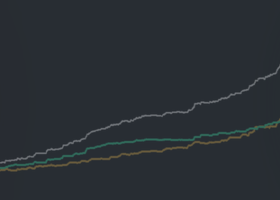
How did the combined strategy set behave over time?
So I tested all 9 Golden Royal strategies together in MetaTrader 5 Strategy Tester.
The historical test uses:
XAUUSD.R • H1
Test data: from July 2023 through the latest period included in my current test dataset
Model: Every tick based on real ticks
History Quality: 100%
Ticks: 120,678,090
Trades: 2,366
Profit Factor: 4.16
Sharpe Ratio: 8.49
Recovery Factor: 17.75
Profitable Trades: 82.21%
Relative Equity Drawdown: 24.21%
Those are strong historical-test statistics.
They also need to be treated realistically.
These numbers belong to this specific historical period, dataset, settings and testing environment. I do not assume that they will repeat in live trading.
And this point is important enough to say clearly:
These are historical Strategy Tester results. They are NOT live trading results.A backtest cannot tell us what will happen tomorrow.
It cannot guarantee future profitability.
Spreads change.
Execution changes.
Slippage exists.
Brokers differ.
Market regimes change.
The behavior of Gold itself changes.
What historical testing can provide is evidence to investigate, not certainty about the future.
That is the way I prefer to look at these results.
Not:
“Look how much money this can make.”
But:
“Here are the conditions. Here are the statistics. Now examine them.”
Now I’m interested in the difficult part.
This is also one of the reasons I wanted to write this article.
Golden Royal is still being developed.
And I am genuinely interested in how experienced MQL5 developers and algorithmic traders would approach some of the problems that come after the basic strategy starts working.
For example:
How would you implement protection around high-impact news?
A simple fixed blackout window before and after an event is easy.
But is that really the best architecture?
Would you use:
-
different blackout periods depending on event importance?
-
separate rules for CPI, NFP, FOMC and central-bank speeches?
-
volatility expansion instead of the calendar itself?
-
spread widening as an additional trigger?
-
delayed trading until liquidity normalizes?
-
separate behavior for positions already open before the event?
I am particularly interested in approaches that avoid overengineering while still handling abnormal market conditions intelligently.
What about abnormal spreads and execution?
Would you simply reject an entry above a fixed maximum spread?
Or would you compare the current spread with a rolling historical spread distribution?
Would you track execution slippage and temporarily suspend a strategy when broker conditions deteriorate?
For XAUUSD, this seems particularly important.
How would you handle correlated strategy risk?
Nine strategies inside one EA creates another interesting problem.
Even if the strategies are logically separate, several of them can identify opportunities in the same direction at approximately the same time.
So what is the better approach?
Allow each strategy its independent risk budget?
Limit total portfolio exposure?
Reduce the risk of later entries if other strategies are already active?
Treat simultaneous signals as confirmation?
Or do the opposite and prevent concentration?
I am still evaluating this.
What protections would you add at account level?
Some ideas I am considering:
-
maximum daily loss;
-
maximum daily number of trades;
-
maximum simultaneous exposure;
-
spread protection;
-
slippage protection;
-
volatility-regime filtering;
-
session-specific risk;
-
news protection;
-
cooldown after abnormal loss;
-
strategy-specific drawdown limits;
-
global equity protection.
But adding more protection does not automatically make a system better.
Every new filter can also remove valid trades.
Every additional parameter creates another opportunity for overfitting.
And that is where I think the discussion becomes really interesting.
Where is the line between robust protection and overengineering?I would genuinely like to hear opinions from experienced MQL5 developers and systematic traders.
If you were building a 9-strategy XAUUSD EA:
Which protections would you consider essential?
Which ones would you avoid?
How would you handle high-impact news?
Would you manage risk independently for each strategy or at portfolio level?
What would you test next before trusting the architecture with live data?
I am not asking these questions rhetorically.
Good technical criticism is useful.
If you see a weakness in the approach, I would rather hear it.
Golden Royal is not finished.
I've worked professionally in software development for more than 20 years, including more than a decade managing software-development teams.
One thing that experience taught me is that the first working version of a system is usually when the most interesting work begins.
You build.
You test.
You measure.
You find weaknesses.
You change something.
Then you test again.
That is how I want to develop Golden Royal.
Not by continuously adding features because they sound impressive.
But by asking:
What problem does this change solve?
Can I test it?
Does it improve robustness?
What does it break?
I expect future versions to evolve from that process.
Whether those changes ultimately improve real-world trading performance can only be answered through continued testing and observation.
So… where does Gold go next?
Rates?
Inflation?
The dollar?
Geopolitics?
I don't know.
And I'm comfortable saying that.
Because perhaps an XAUUSD system does not always need to predict why the next move will happen.
Sometimes it is enough to define:
what price must do,
what conditions must be present,
how much risk is acceptable,
and
when the system should do nothing at all.
That is the idea I am exploring with Golden Royal.
Not prediction.
Not certainty.
Not promises.
Rules. Conditions. Risk. Execution.
If you're interested in systematic XAUUSD trading, you can find Golden Royal on my MQL5 profile and examine the architecture, settings and historical testing materials yourself.
And if you have experience solving the protection and portfolio-risk problems described above, I would genuinely value your opinion in the comments.
Don't judge the project because I wrote an article about it.
Look at the methodology.
Look at the data.
Point out the weaknesses.
And make your own assessment.
Risk & Performance Notice
The Strategy Tester statistics discussed in this article are historical simulated backtest results, not live trading results.
Historical or simulated performance does not guarantee, predict or imply future performance. Actual trading results may differ because of market conditions, spreads, commissions, slippage, execution, broker conditions, symbol specifications, EA settings and other factors.
Trading financial instruments involves substantial risk and may result in partial or complete loss of trading capital. Golden Royal does not guarantee profits, returns, specific trading performance or protection against losses.
This article is provided for informational, technical-discussion and product-development purposes and does not constitute investment, financial or trading advice.