GhostGrid
- Эксперты
-
Alex Amuyunzu Raymond
 I’m an experienced MQL5 developer and software engineer specializing in building robust, high-performance algorithmic trading systems for MetaTrader 5. My work goes beyond standard EA development — I design intelligent, scalable solutions that combine market logic, automation, and external
 - Версия: 1.0
- Активации: 5
GhostGrid — The EA That Trades Less, and Wins More Often Because of It
Most Expert Advisors are built to trade. GhostGrid was built to know when not to — and that single distinction is what separates a system that survives long-term from one that eventually blows up an account chasing activity. GhostGrid is a fully automated trading system for MetaTrader 5 that only commits capital when three independent confirmation layers agree at the same moment. When they don't line up, GhostGrid does nothing at all — no forced entries, no exposure, no guessing. It waits, silently, until the market actually shows its hand.
The philosophy behind GhostGrid
Most trading systems fail not because their entry logic is bad, but because they trade in conditions where no entry logic works. A grid strategy that fires during a strong trend gets steamrolled. A breakout strategy that fires during a dead, directionless session gets faked out over and over. GhostGrid solves this by never running a single fixed strategy against every market condition. Instead, it constantly diagnoses what kind of market it's currently in, and only deploys the strategy that actually fits that condition — or deploys nothing if neither fits cleanly.
Layer one — the macro and session guard. Before anything else is even considered, GhostGrid checks whether the current time falls inside a configurable high-risk window, such as the minutes surrounding scheduled volatility events or specific session hours you'd rather sit out. If the timing is wrong, nothing else matters — the system stays flat, full stop.
Layer two — volume resonance. Price movement without real participation behind it is one of the most common traps in trading. GhostGrid measures current tick volume against its recent rolling average and requires a genuine spike in activity before it will treat a directional move as trustworthy. This filters out the thin, low-liquidity drift that produces false signals on lower-volume symbols and sessions.
Layer three — the live risk gate. Even when timing and volume look right, GhostGrid checks the account's own risk state before acting. It verifies the daily loss threshold hasn't been breached and that the rolling multi-day loss ceiling is still intact. If the account is already under strain, GhostGrid will not add to it, regardless of how good a setup looks on the chart.
Only when all three layers agree simultaneously does GhostGrid allow a trade. A single layer disagreeing is enough to keep the system flat — this is by design, not a limitation.
Two engines, deployed automatically based on what the market is actually doing
GhostGrid classifies the market in real time using ADX trend strength alongside a fast/slow moving average spread measured against ATR, sorting current conditions into ranging, trending, or undefined.
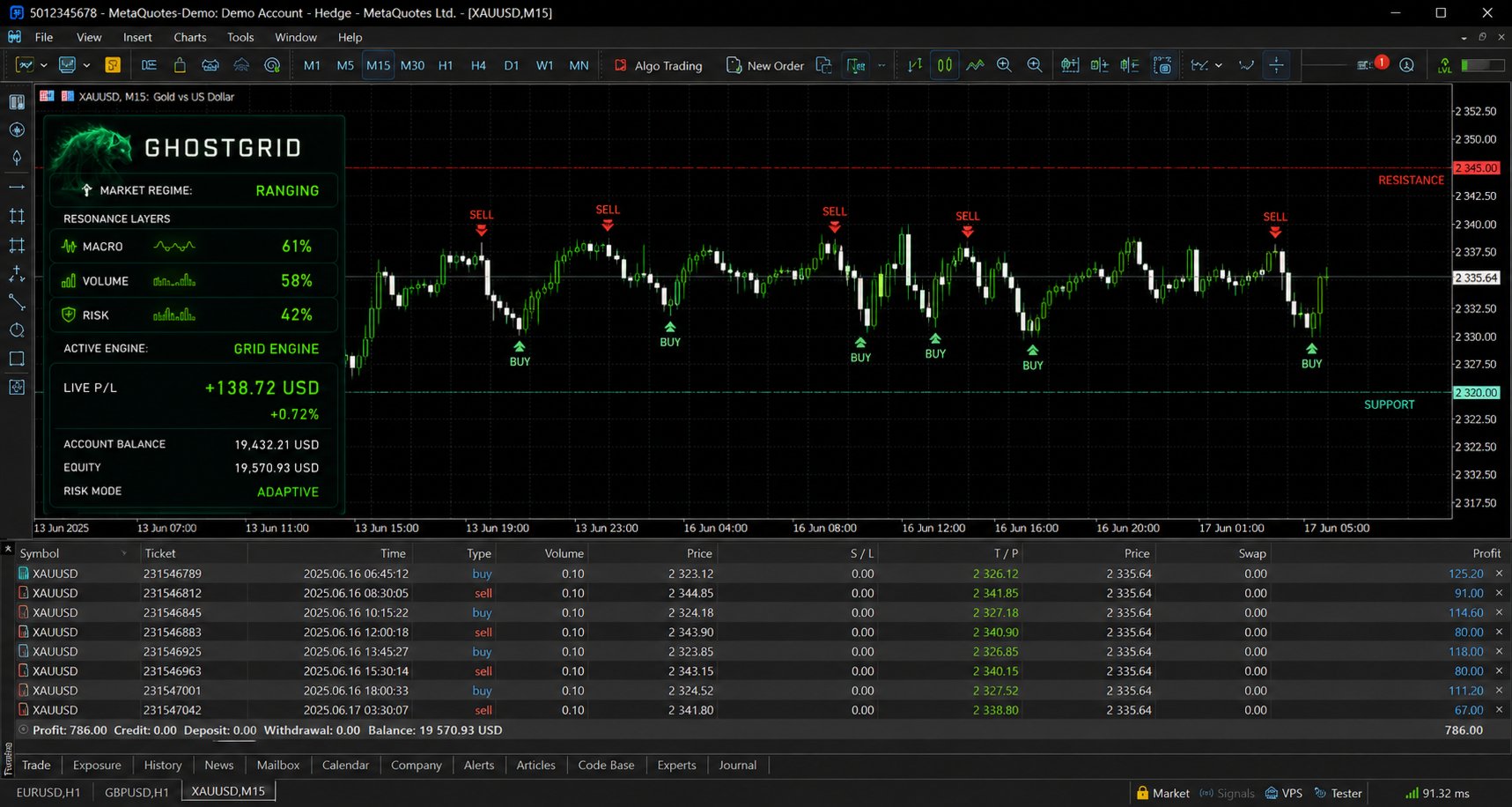
In a ranging market, the grid engine activates. It places bounded, capped-level entries structured around a moving average to capture small back-and-forth price oscillations. Critically, there is no martingale-style lot multiplier that snowballs position size after a loss — every leg stays controlled, so a losing sequence never spirals into an oversized, account-threatening position.
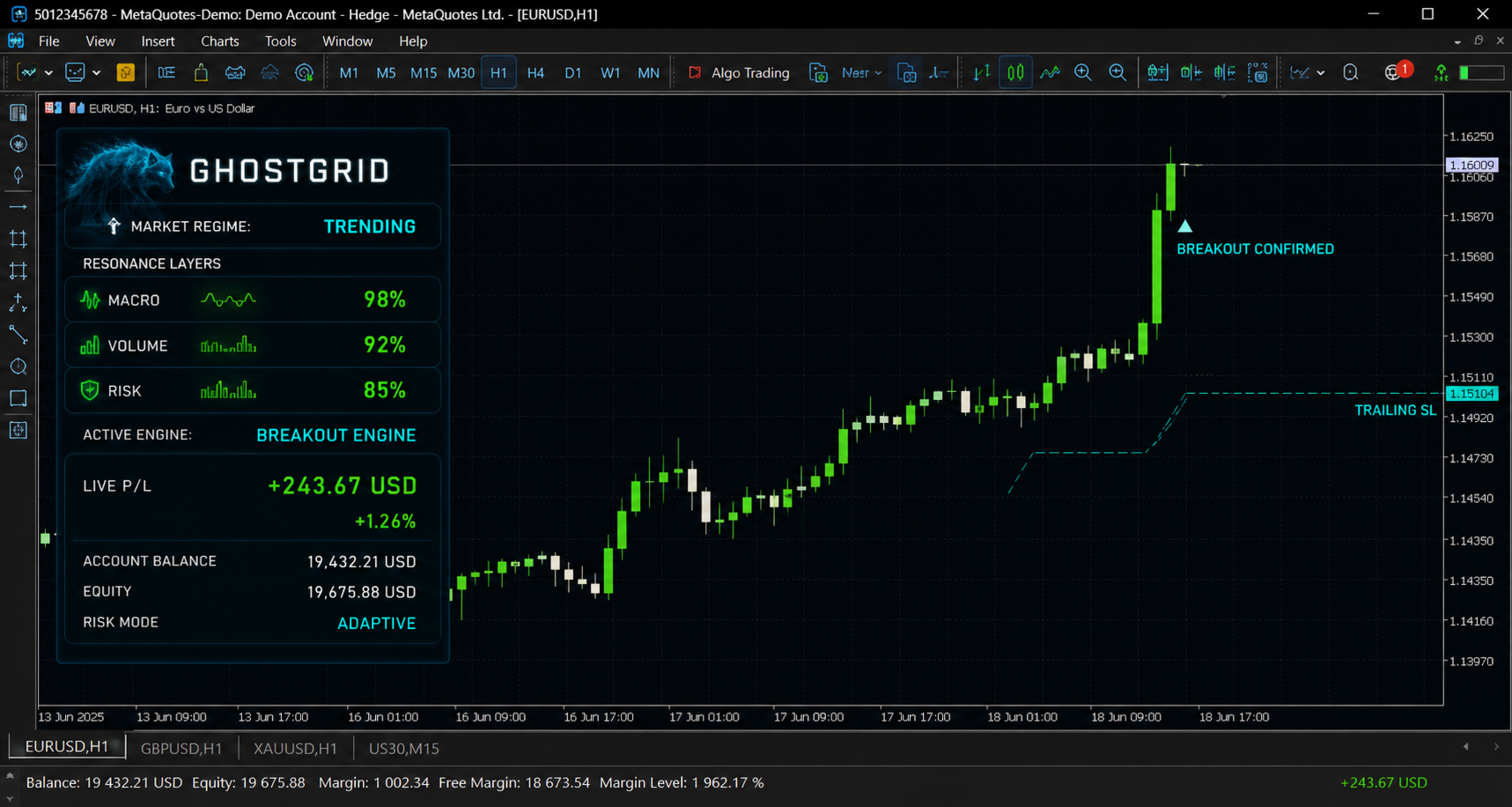
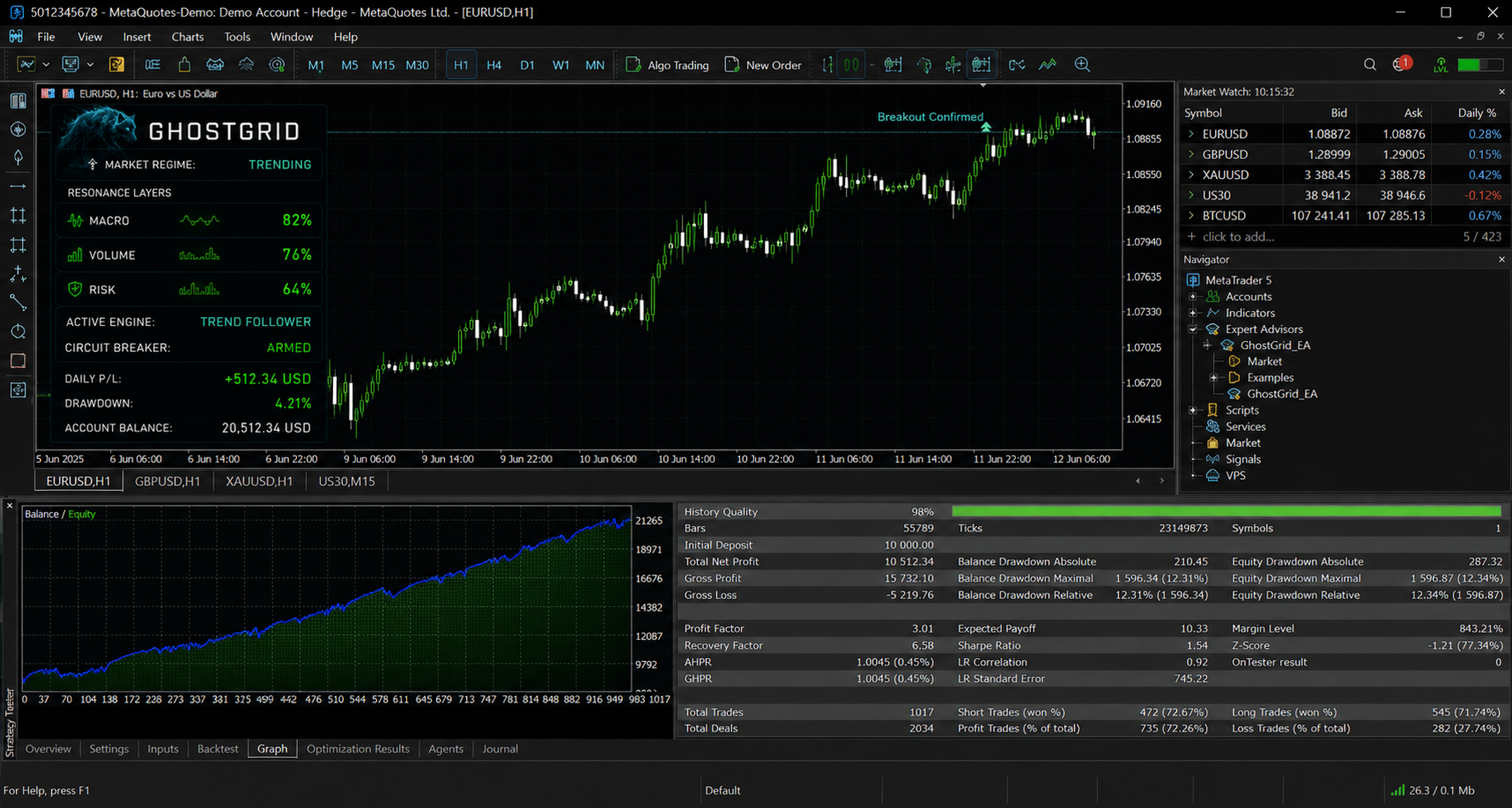
In a trending market, the breakout engine activates. It requires price to close meaningfully beyond a recent high or low — not just touch it — before treating a move as a genuine breakout, filtering out the false breakouts that catch most breakout systems off guard. Once in a position, it trails the stop dynamically to let a real trend run instead of capping profit prematurely.
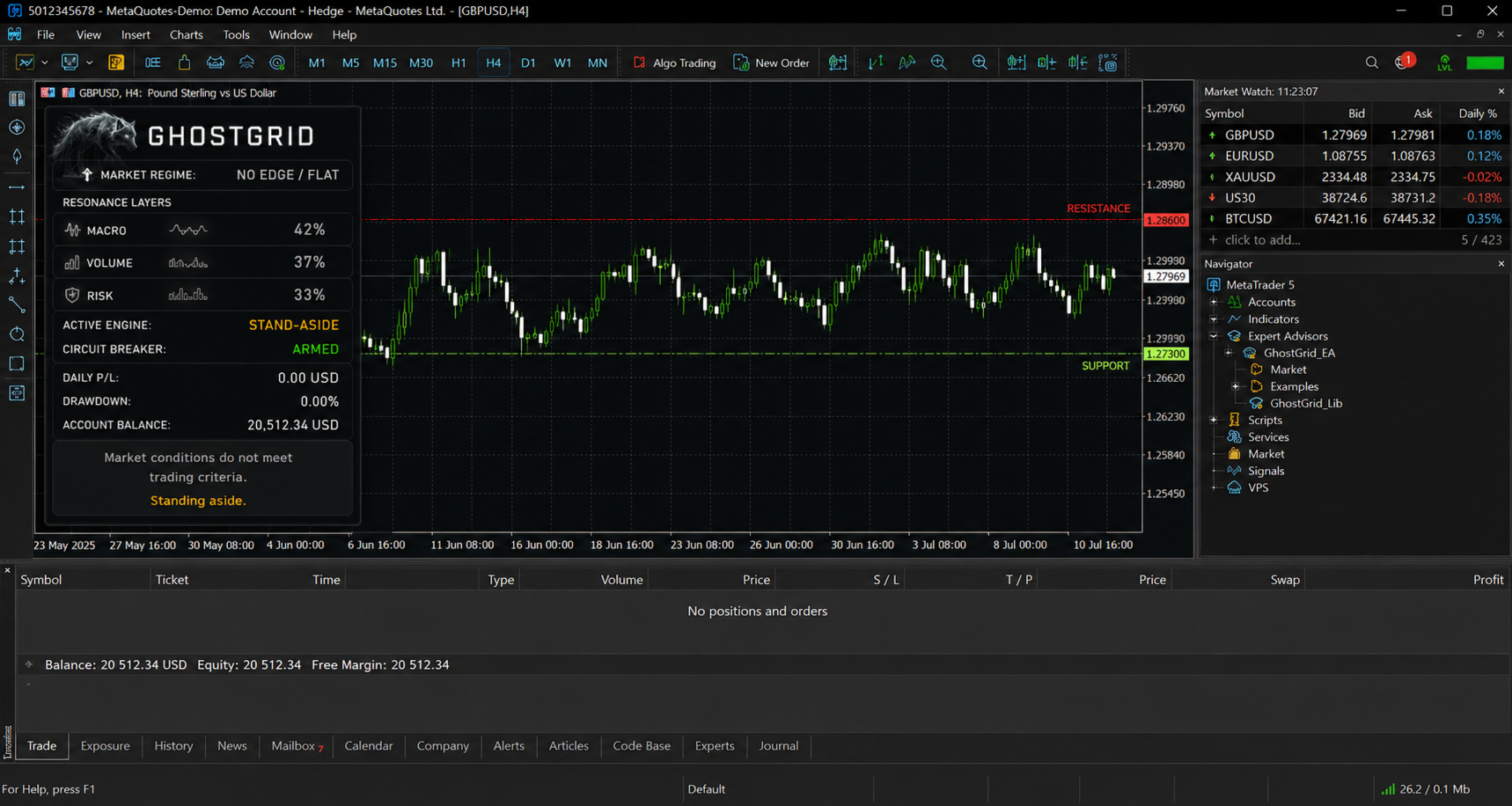
When the market shows neither a clean range nor a clean trend, GhostGrid deploys neither engine. It goes flat and simply waits for the next valid read — most trading sessions, in most market conditions, this is exactly what a disciplined trader would do manually if they had the patience to watch every tick. GhostGrid has that patience by default.
Risk control across two separate layers, not one
GhostGrid enforces a daily loss percentage cap that halts all new trading for the remainder of the trading day once it's reached, and a separate rolling multi-day loss threshold that functions as a hard circuit breaker across consecutive losing days — protecting the account from the kind of compounding losing streak that damages most systems long before a losing month is even over. Every trade is sized as a percentage of current account equity rather than a fixed lot value, so risk scales properly as the account grows or shrinks. Every stop-loss and take-profit is automatically checked against the broker's minimum stop and freeze levels, so orders are never rejected for sitting too close to current price — a common and frustrating failure point in many other EAs.
A dashboard that shows you the reasoning, not just the results
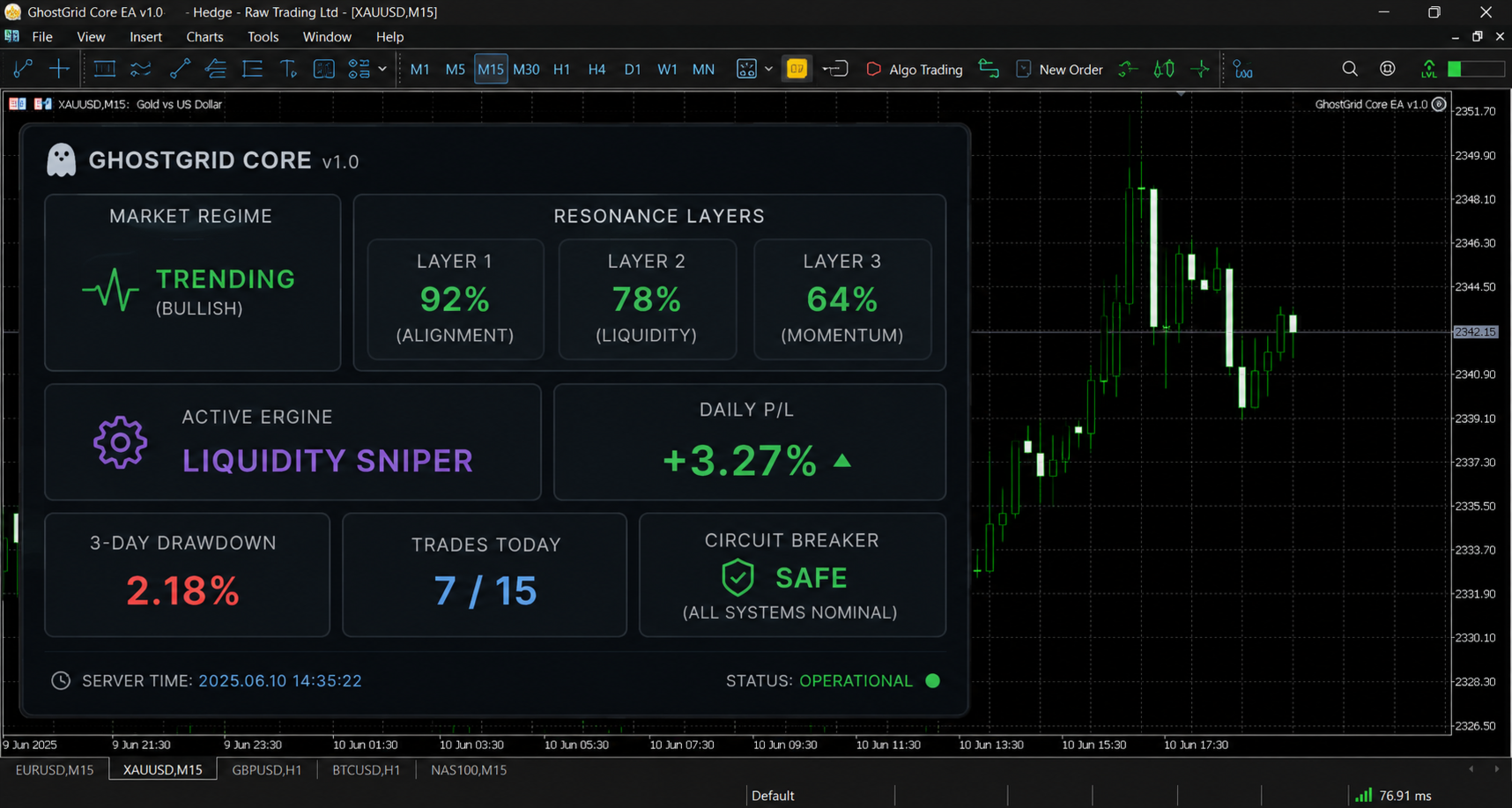
GhostGrid runs a live on-chart panel that displays the currently detected market regime, the real-time status of each of the three confirmation layers, which engine is active right now — grid, breakout, or stand-aside — today's running profit and loss, the multi-day drawdown reading, the number of trades executed today, and whether the circuit breaker has been triggered. Everything updates continuously as price moves, so at any moment you can see not just what GhostGrid is doing, but exactly why.
GhostGrid isn't built for traders who want constant activity on their account statement. It's built for traders who understand that the best trade is often no trade at all, and who want a system disciplined enough to act on that understanding automatically, every single session, without emotion and without exception.