Is a Strong Dollar No Longer a Problem for Gold? How XAU/USD Is Changing the Rules

Can gold decouple from the dollar and rise independently of DXY and Treasury yields? A new model and probabilities of reaching key levels.
For a long time, the relationship looked almost mechanical: the dollar rises – gold falls; US Treasury yields rise – pressure on gold increases. Gold is priced in dollars and pays no interest, so a strong DXY and higher bond yields raise the opportunity cost of holding it.
But this model is becoming less linear. Central banks are increasing gold reserves, US government debt is approaching $40 trillion, and gold is increasingly seen as protection against risks within the dollar-based financial system itself.
The Old Relationship Still Exists
After Fed Chair Kevin Warsh’s Jackson Hole speech, gold fell by more than 3% on 28 August, retreating from a three-month high. The probability of a Fed rate hike in September rose from 36% to 58%, while the probability of a hike by December reached 89%.
In Q2, the average gold price was $4,506 per ounce – 8% below the record Q1 average. A stronger dollar and higher rate expectations were accompanied by outflows of 45 tonnes from gold ETFs.
Central Banks Care Less About DXY
The main structural change is central-bank demand. A rise in 10-year Treasury yields from 4.5% to 5% does not necessarily force central banks to sell gold, because reserve diversification and the absence of issuer credit risk matter more to them.
In Q2, central banks bought 289 tonnes of gold versus 57 tonnes in Q1 – 62% more than a year earlier.
According to the World Gold Council, 89% of reserve managers expect global gold reserves to rise over the next 12 months, 45% plan to increase their own holdings, and 83% believe gold’s share of reserves will be higher in five years.
Gold vs Treasuries – A New Competition
The 30-year Treasury yield reached 5.327% in August – its highest level since 2007, something that would normally weigh heavily on gold. However, Citigroup closed its short Treasury position, increased gold exposure and maintained a bearish view on the dollar amid concerns over the US deficit and long-term financing costs.
This creates a new regime. Previously, higher yields meant bonds became more attractive and gold was sold. Now they can also mean investors are demanding a larger risk premium for holding US debt – and buying gold as protection.
If yields rise because of a strong economy and a hawkish Fed, gold usually suffers. If they rise because of budget deficits, heavier bond issuance and concerns about debt sustainability, gold may react in the opposite way.
For gold, gradual reserve diversification matters more than a complete move away from the dollar. Even a small redistribution of global reserves can create steady demand that is less dependent on daily DXY movements.
Can Gold Really Decouple?
Completely – unlikely. Partly – it is already happening.
In the short term, XAU/USD remains sensitive to the Fed, DXY and Treasury yields. Over longer periods, central-bank demand, US debt, fiscal deficits and reserve diversification are becoming more important.
This creates a new possible regime: the dollar stays strong, yields remain high, but gold continues its long-term rise after corrections.
Gold by the End of 2026: Key Level Probabilities
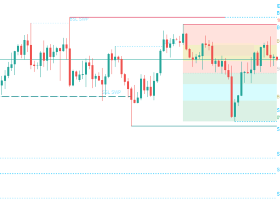
With gold near $4,450, annual volatility of 28% and no directional trend, the model estimates the probability of touching $4,700 by 31 December at 75%, $5,000 at 48%, $5,500 at 20% and $5,600 at 16%.
On the downside, the probability of touching $4,300 is 82%, $4,200 – 71%, $4,100 – 61%, and $4,000 – 50%.
Gold has not fully decoupled from the dollar and Treasuries, but structural demand is already weakening the old relationship. A nearly 50% probability of touching $5,000 suggests that further gains are possible even without a sharp decline in DXY and Treasury yields.
#Gold #XAUUSD #DXY #Dollar #Treasuries #Fed #GoldMarket #GoldForecast #FinancialMarkets