Why the Live Candle EA Is Different from Everything I Have Built So Far

How I arrived at the ensemble of non-standard timeframes
For a long time, I worked with single-model systems. That approach gave me useful signals, but it also showed me a clear limit. One model could sometimes pass one test, but it almost never passed two different tests at the same time. I used five months as a meaningful test period. In my view, that was enough to see whether a model had real strength or just temporary luck. That was the baseline I kept returning to again and again.
After that, I moved into fold-based ensembles. The logic looked good on paper. I split the period into folds, trained many models, and combined them into one ensemble. But the result was still the same kind of mess. One test passed, and the second failed.
I tried fixed folds, moving folds, and weekly folds with weekly shifts across the full period. I kept testing because I wanted to know whether the issue was in the data split or in the idea itself. Eventually, it became clear that the problem was deeper than the fold structure. The answer was not just “more folds.” The answer was more diversity.
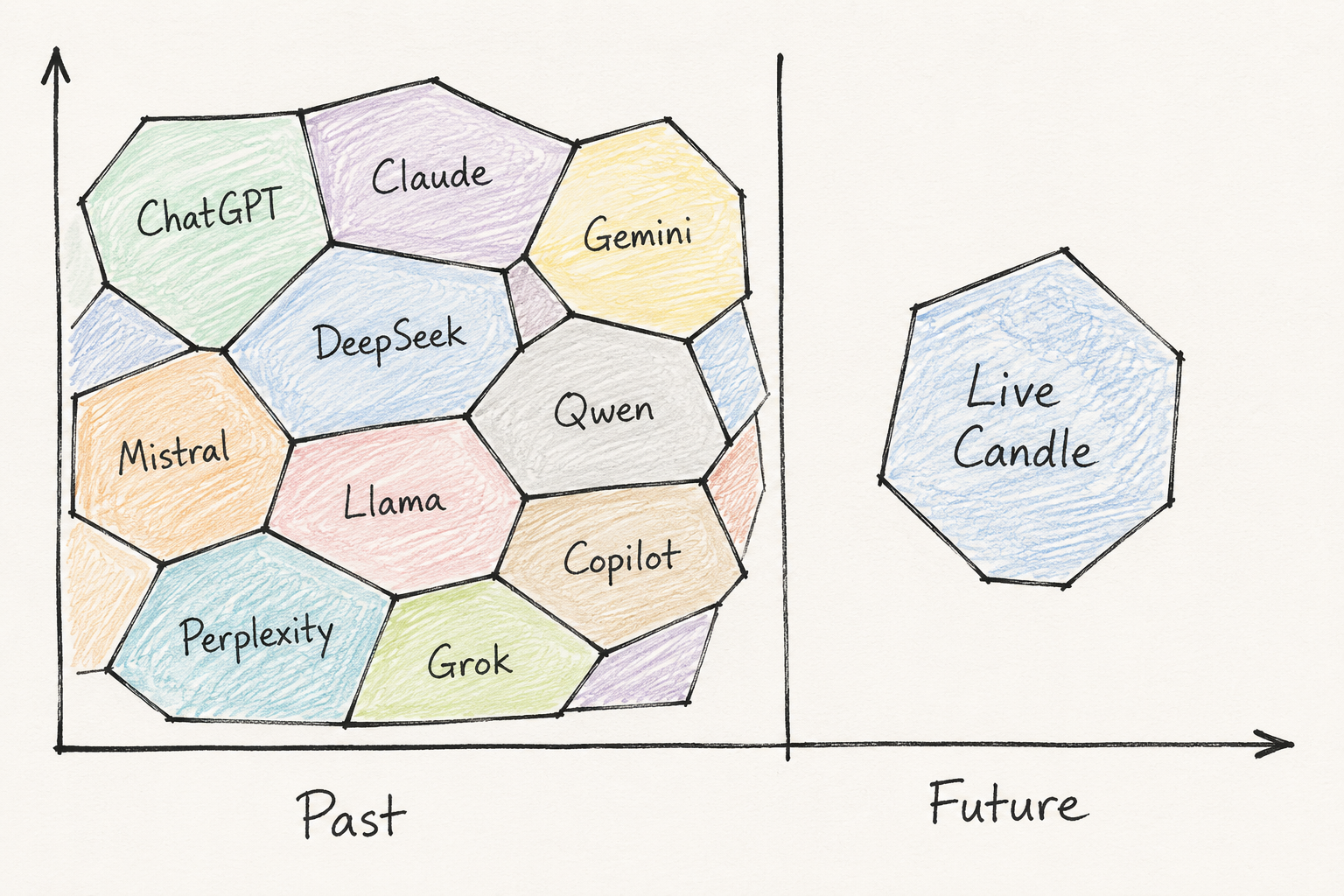
That is when non-standard timeframes became important. I started using D3, H7, and H5 together with the standard charts. This opened a much wider space of possible ensembles. At first, it could look like I was just adding randomness. But that was not the real point. I was already running a large number of training attempts. I had 400 training runs for NHiTS and 150 runs for TFT. That is a lot of work and a lot of different model combinations. If success were only random, then the simpler ensembles should have shown it too.
Instead, the more varied combinations started to survive more tests. That told me something important. The system was not just lucky. It was becoming more flexible. And flexibility is what lets a model adapt when the market changes. And that is how the Live Candle EA was born.
How I used AI, and what I used it for
AI has become a fashionable word in trading. A lot of people like to say that a trading system consults AI before every decision. That sounds impressive, but it is just marketing noise. AI does not know the future. It does not have full market information. It cannot see everything that matters at the moment a trade is opened.
I used AI as a development tool. It helped me think through experiments, structure ideas, and move faster through technical work. It was not a black box that made trades for me. It was a tool that helped me build the trading research process itself.
And honestly, without that support, I do not think I would have gone through all these experiments in half a year. The amount of work was too large for a fully manual process. There were too many ideas to test and too many dead ends to reject. AI helped me move from raw hypotheses to something that could actually be tested.
That is the honest role of AI in this project. It was not a substitute for judgment. It was an accelerator for research and development. The real decisions were still mine. The real responsibility was still mine. But AI made it possible to go much further than I could have gone alone in the same time frame. That matters, because this EA is not the result of one lucky idea. It is the result of a long chain of iteration, testing, and rebuilding. AI helped me survive that process. Without it, I probably would have been stuck much earlier.
The idea of the grey ensemble
The next step is the grey ensemble. This is one of the most important parts of the whole concept. The grey ensemble trades in parallel with the main ensemble. It is not a copy of the main system. It is a separate layer with a different market focus.
If the main ensemble includes the daily chart, the grey ensemble does not. That is intentional. The grey ensemble is designed to work on a smaller market scale. It is supposed to pay attention to smaller movements and more local structure. That gives it a different role inside the full system. The main ensemble looks at the broader picture. The grey ensemble tries to add something extra on top of that. It is there to increase total opportunity.
I see the grey ensemble as an addition to the core business of the EA. The goal is not to make the system look more complicated. The goal is to give it another path to profit. A strong trading system does not need one perfect view of the market. The grey ensemble is my way of adding one more useful view.
At the same time, work on the grey ensemble is still ongoing. The main limit right now is not the idea itself. The main limit is hardware. There is a lot of data, and that data is noisy by nature. Testing this properly takes time and computing power. Right now, that is the bottleneck.
If sales bring in more capital and the idea proves promising, then this direction must be tested further. That is not optional. It is the kind of opportunity that deserves deeper research. Another important direction is to add one more model and possibly even more non-standard timeframes. A stronger PC could reveal more answers about how to really control the market.
Because if something is possible, it is worth trying to build it.