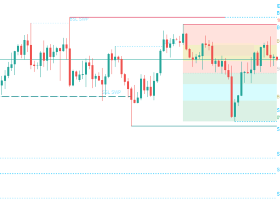
The Mechanics of Momentum: Why Gold and Bitcoin Are Structural Paradigms for Breakout EAs

The Mechanics of Momentum: Why Gold and Bitcoin Are Structural Paradigms for Breakout EAs (And How Neural Networks Weaponize Volatility)
In quantitative trading, volatility is frequently misunderstood. Risk managers view it as a threat; mean-reversion traders attempt to fade it. However, for a specific class of algorithmic frameworks—Breakout Expert Advisors—systemic volatility is not a risk metric to be minimized; it is the absolute prerequisite for a statistical edge.
If you are architecting a trading robot designed to exploit sudden price expansions, two asset classes demand your undivided attention: Gold (XAUUSD) and Bitcoin (BTCUSD).
This deep dive breaks down the structural, macroeconomic, and crypto-native reasons why these two instruments present the ideal sandbox for breakout strategies, the inherent flaws of classical technical logic, and how integrating Neural Networks (NN) transforms a rigid script into an adaptive execution engine.
Part 1: The Macroeconomic and Structural Blueprint of Gold & Bitcoin
To build an EA that successfully extracts capital from XAUUSD and BTCUSD, we must first look past the charts and understand the underlying market microstructure. Breakouts do not happen because of lines on a screen; they happen due to imbalances in order flow.
1. Gold (XAUUSD): The Institutional Liquidity Spring
Gold operates as the ultimate global macro barometer. It reacts violently to interest rate decisions (FOMC), inflation data (CPI), geopolitical escalations, and central bank liquidity cycles.
-
The Compression-Expansion Cycle: Central banks and commercial institutions accumulate or distribute massive physical and paper positions over weeks or months, creating long, highly compressed consolidation zones.
-
The Breakout Trigger: When key macroeconomic data shifts, the entire institutional block moves simultaneously. Because the order sizes are immense, they instantly absorb all available liquidity at local support or resistance levels, creating a massive vacuum that drives a violent, one-directional momentum cascade.
2. Bitcoin (BTCUSD): The Liquidation Engine
Bitcoin represents an entirely different, yet equally lucrative infrastructure. It is a market fueled by high retail participation, fragmented spot/derivatives exchanges, and aggressive leverage.
-
The Squeeze Phenomenon: In crypto markets, traders heavily utilize perpetual swaps with extreme leverage. When BTCUSD consolidates, huge clusters of Stop-Losses and liquidation prices accumulate just outside the trading range.
-
The Avalanche Effect: The moment price breaches a key structural level by even a single pip, it triggers a chain reaction. Short positions are forced to buy back market orders to cover liquidations, which drives the price higher, tripping the next layer of stops. This creates a near-vertical price expansion (a short/long squeeze) that a well-designed EA can exploit with surgical precision.
Asset Profile Comparison
-
Gold (XAUUSD)
-
Primary Volatility Driver: Macroeconomic Data & Central Banks
-
Average True Range (ATR): Consistently high relative to Forex
-
Liquidity Environment: Highly deep, centralized institutional pools
-
Spread Characteristics: Stable, tight (Broker dependent)
-
-
Bitcoin (BTCUSD)
-
Primary Volatility Driver: Leverage Liquidations & Whale Order Flow
-
Average True Range (ATR): Extreme expansion capability (Asymmetric)
-
Liquidity Environment: Fragmented, rapid depth exhaustion during spikes
-
Spread Characteristics: Variable, prone to widening during volatility
-
Part 2: The Failure Point of Classical Technical Analysis
A traditional breakout EA uses a deterministic, binary architecture. The code usually dictates a simple condition: If Price is greater than the Daily High plus a fixed offset, then Send a Market Order to BUY.
While this logic works flawlessly in clean backtests with static data, it frequently fails in live market environments due to The Predatory Fakeout.
Because XAUUSD and BTCUSD are highly watched markets, they are prime targets for liquidity hunting. Institutional algorithms routinely push prices just past obvious structural highs to trigger retail breakout orders and resting stop-losses. Once that liquidity is grabbed, the smart money reverses the market, leaving rigid breakout EAs trapped at the absolute top of the move.
To survive these markets, an Expert Advisor requires a cognitive validation layer that can differentiate between a true structural expansion and a temporary liquidity sweep.
Part 3: Architecting the Neural Network Validation Layer
Integrating a Neural Network or a specialized machine learning layer into an MQL5 Expert Advisor is not about predicting the future price. Rather, it serves as a multidimensional context filter. Instead of analyzing price in isolation, the Neural Network processes the environment in which the breakout occurs.
1. The Multi-Factor Feature Matrix
When a breakout condition is met on the chart (e.g., on a custom timeframe like M10), the EA feeds a vector of normalized features into the internal decision engine:
-
Volatility Context: Comparing the short-term ATR against the long-term historical baseline to ensure the expansion is statistically significant.
-
Microstructure Friction: Monitoring current tick spread and execution velocity. A wide spread during a breakout implies low liquidity, increasing fakeout risks.
-
Temporal Session Bias: Normalizing the time of day. A breakout at the London or New York open carries institutional weight; a breakout during the Asian session doldrums on Gold is often a trap.
-
Order-Block & Range Metrics: Calculating the distance from the current price to historical high-volume nodes.
2. Dynamic Execution Mapping (The Five Modes)
Instead of a simple True/False execution path, the Neural Network maps the feature vector to specific behavioral classes:
-
Skip Mode: The model identifies a predatory liquidity sweep. Orders are withheld.
-
Defensive Mode: Volatility is present, but structural context is muddy. The EA places pending orders but scales down the lot size significantly.
-
Neutral Mode: Standard execution parameters matching the baseline risk rules.
-
Confident & Aggressive Modes: The stars align—high volume, tightening spreads, macro momentum, and clear structural clearance. The network opens up the parameter boundaries, allowing the EA to maximize exposure during a high-probability market expansion.
3. Adaptive Local Memory (Q-Value Feedback Loops)
Markets evolve. The correlation between volatility and fakeouts on Bitcoin changes over time. An elite MQL5 EA resolves this by utilizing localized learning loops (such as Boltzmann-based action selection or Q-value updates).
When a trade closes, the EA updates its internal state array based on the success or failure of that specific context and writes the updated weights to a local terminal file. Upon the next terminal initialization, the EA reads this file, ensuring it retains its operational memory without requiring a full, heavy retraining process within the MT5 Strategy Tester.
Conclusion: Strategic Implementation Guidelines for MQL5 Developers
If you aim to develop or deploy a breakout framework for XAUUSD and BTCUSD, keep the following architectural guardrails in mind:
-
Avoid Market Orders: Never enter at the market during a fast breakout. Use structured Pending Stop Orders. If the market gaps or spikes past your validation thresholds before hitting your pending level, your EA can instantly delete or adjust the order, saving you from catastrophic slippage.
-
Account for Broker Variables: Bitcoin contract sizes, tick values, and swap rates vary dramatically between brokers. Your EA must dynamically parse broker environment variables to calculate risk, rather than hardcoding lot allocations.
-
Protect the Account: A drawdown-sensitive risk component must overrule the Neural Network. If your account equity experiences a sudden decline, your risk management loop must force the execution modes into Defensive or Skip, regardless of how confident the AI model claims to be.
Volatility is the ultimate generator of alpha—if you possess the structural net to capture it. By pairing the explosive price actions of Gold and Bitcoin with an adaptive, neural-network-backed validation filter, you shift your trading from gambling on price directions to systematically exploiting structural market mechanics.
How do you manage false breakouts on high-volatility assets like XAUUSD or BTCUSD? Are you utilizing fixed indicator filters, or have you already transitioned to local machine learning states within MetaTrader 5? Let us know your thoughts in the comments below!