From -1.15% to +21.38%: Alpha Pulse AI Myfxbook Update After GPT-5.5 + Opus 4.7 Swap

On April 24, 2026, the Alpha Pulse AI baseline Myfxbook account sat at -1.15% lifetime growth.
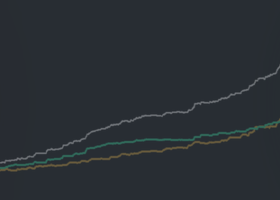
On May 23, the same account shows +21.38% lifetime growth.
That's a 22.53-percentage-point swing in 30 days on a live, public, $7,000+ deposit account that anyone can click and audit trade by trade. The curve didn't bend that hard by accident — and I want to walk through exactly what changed, what the Myfxbook record actually shows, and what caveats every honest reader should hold in their head before drawing conclusions.
The short version: in late April, we moved the production AI stack from the prior-generation models to GPT-5.5 plus Claude Opus 4.7. The recovery curve started immediately after. Whether that's a coincidence or a causal relationship is what the next three months of data will determine. But here's the read as of May 23.
What April Looked Like (And Why We Swapped Models)
The Alpha Pulse AI architecture has seven components — context engineering, system prompt design, hard-coded risk management, call frequency, pre-trade guardrails, output validation, logging. The reasoning engine that produces the entry signal is one component of seven, but it's the one where model quality directly translates into edge.
Through Q1 and into early April 2026, the production stack ran on the prior-generation models that had been validated through late 2025. The behavior we were seeing in live trading by mid-April:
- Reasoning quality on trade rejections was inconsistent — the same setup signature sometimes got reasoned as "high confidence" and other times as "skip" with no clear contextual difference
- Multi-step setups (where the model needed to track context across several bars) showed degradation versus how the same setups had handled in earlier test windows
- Output structure stability on edge cases was lower — the parser was rejecting more responses than it had been three months prior
None of those issues were catastrophic individually. Aggregated, they showed up as the equity curve sitting at -1.15% growth on April 24 — within the range of normal drawdown for the system, but past the threshold where I'd usually start questioning whether something in the stack had drifted.
GPT-5.5 and Claude Opus 4.7 had both released by that point with capability improvements that mapped directly to the issues we were seeing: stronger reasoning on multi-step context, cleaner structured output adherence, more stable behavior on ambiguous setups. The decision to migrate the production stack to a new model generation was made deliberately, after backtesting the new models against the same prompts and validation logic that the production system was already running.
The swap happened in late April. The curve started turning shortly after.
What The Myfxbook Shows As Of May 23, 2026
Here are the publicly verifiable numbers — anyone can click the live link and confirm them:
- Lifetime gain: +21.38%
- Absolute gain: +21.42%
- Average daily: 0.13%
- Average monthly: 3.90%
- Maximum drawdown: 14.23%
- Balance: $8,556.13 (highest May 20: $9,199.17)
- Profit: $1,509.55 on $7,046.58 in deposits, withdrawals $0 (account is in growth mode, no withdrawals taken yet)
- Total trades: 210
- This Year: +23.73% / $1,640.94 / 197 trades / 46% win rate
- This Month: +1.52% / $128.18 / 57 trades / 35% win rate
- This Week: +1.86% / $156.64 / 19 trades / 36% win rate
The advanced statistics tell the rest of the story:
- Profit factor: 1.17
- Average win: $105.19 (2,117.85 pips)
- Average loss: -$78.56 (-1,781.41 pips)
- Expectancy: +$7.19 / +38.2 pips per trade
- Longs won: 43% (44/102)
- Shorts won: 50% (54/108)
- Average trade duration: 3h 8m
- Best trade ($): May 12 → +$434.88
- Worst trade ($): May 20 → -$170.04
These are the numbers. They're not heroic. They're the boring math of a system with a real but modest edge running across a real but normal sample size.
The Honest Caveats (Read This Before Anything Else)
Before anyone interprets "from -1.15% to +21.38%" as proof of anything, here are the caveats I'd want a reader to hold in their head:
Win rate is below 50%. 46% YTD, 35% this month, 36% this week. The system isn't winning two trades out of three. It's winning slightly less than half — and producing positive expectancy because the average winner ($105.19) is meaningfully larger than the average loser ($78.56). That's a 1.34:1 win/loss ratio. The math works at the bucket level, not the individual-trade level. Anyone expecting to feel confident on a trade-by-trade basis will hate this system. Anyone reading the equity curve will be fine.
Profit factor 1.17 is real, but slim. A PF of 1.17 means $1.17 earned per $1.00 lost across the full record. That's an edge — but it's not the 2.0+ PF you see on marketing material from EAs with unaudited backtests. It's also the kind of edge that compounds steadily without producing the equity curve discontinuities that signal overfitting or hidden martingale logic.
30 days is not a statistical sample. The -1.15% to +21.38% swing over April 24 to May 23 looks dramatic on the chart. It's also a sample of 30 days. Could it reverse? Yes — every system has variance windows where the curve drops for reasons unrelated to underlying edge. The question worth asking is whether the architectural change (model swap) produced the improvement, or whether the improvement is variance that would have shown up regardless. Three more months of data will answer that. Today's read is "early positive signal," not "confirmed turnaround."
This month's gain is small. +1.52% for May so far. Most of the recovery from -1.15% to +21.38% happened in the first 2-3 weeks after the swap. May has been quieter — fewer trades, smaller individual outcomes. That's exactly what a healthy live system looks like: bursts of clean signal followed by quieter consolidation, not perpetual upward acceleration.
The worst trade was recent. May 20 produced the largest single-trade loss on the account: -$170.04. The same week as the all-time-high equity print of $9,199.17. The risk controls did exactly what they're supposed to — limited the damage to a defined fraction of equity — but the loser happened on the new models, not on the old ones. Model improvements don't eliminate variance; they shift the distribution.
Read those caveats fairly. The curve is genuinely better. The system is genuinely improved. None of that means future returns are predictable from current numbers.
How This Connects To MultiStrategy Pro v2
The same model swap was applied to MultiStrategy Pro v2, which had its fresh start on May 3, 2026 — clean account, eight portfolio slots, $4,000 starting capital, the new model stack from day one.
The v2 backtest reference (run during build before going live): net profit $8,963, return +224.1%, balance drawdown -5.83% across the full 8-slot portfolio.
Live forward results on MSP v2 are still in their first three weeks as of this writing — far too early for any conclusion. The point isn't that MSP v2 is already proven; it's that the same architectural improvement applied to a portfolio context (multi-strategy, multi-pair, lower per-slot risk) is the parallel test of whether the new models help in the portfolio configuration the way they appear to help on the single-system Alpha Pulse baseline.
Two production lines on the same model stack will produce a much stronger read by mid-2026 than either line alone.
What This Means For Anyone Considering Alpha Pulse AI
The signal is positive enough to share. The sample is not large enough to claim anything beyond "early indication that the model swap helped."
If you're considering Alpha Pulse AI today, the right read is:
- The system has positive lifetime expectancy with verified public Myfxbook
- The architecture (7 components, hard-coded risk, structured output) is the same architecture that survives the model-swap discussion above — the bones don't change, only the reasoning engine on top
- The current model stack (GPT-5.5 + Claude Opus 4.7) is the one running on the recovering curve, not the one that produced the April 24 -1.15% low
- The math is realistic, not heroic — 46% YTD win rate, PF 1.17, expectancy positive but not flashy
If you want a system with marketing numbers ("82% win rate, 4.5 profit factor"), Alpha Pulse AI is not it. If you want a system with public, auditable performance on real money with real drawdowns and real recovery, this is what that looks like in 2026.
Where To Start
If the architecture and the honest numbers are what you're looking for:
Step 1 — Audit the public record: Alpha Pulse AI baseline on Myfxbook. Click into trade history. Filter by month. Verify the numbers above.
Step 2 — Get the EA: Alpha Pulse AI product page. The current production stack runs GPT-5.5 + Claude Opus 4.7 with full architectural components in place.
Step 3 — Plan the scaling vehicle now: When the EA is producing consistent results on your account, Axi Select is the no-challenge-fee allocation program where capital scales with your Edge Score. Same EA, larger capital, real payouts.
And if you want monthly Myfxbook updates, model swap notes, and the writeups that don't fit a blog post, join the newsletter. One email a week, no fluff.
Frequently Asked Questions
Did the model swap cause the recovery, or was it variance?
Honest answer: I don't know with statistical confidence. The recovery started immediately after the swap and the new models address the specific issues I was seeing pre-swap (reasoning quality on multi-step setups, output structure stability), so the causal hypothesis is reasonable. But 30 days of data isn't proof. Three more months of data with consistent behavior under the new stack will give a defensible answer. Today the read is "early positive signal," not "confirmed causation."
Why is the win rate only 46% if the system works?
Because the system is built on asymmetric reward-to-risk, not on high win rate. Average winner $105.19 vs average loser $78.56 means winners are about 34% larger than losers. Win 46% of the time with that ratio and the expectancy stays positive. Win 60% with a 1:1 ratio and the expectancy is identical. The system uses the math that's available — modest win rate, structurally larger winners than losers — rather than chasing the inflated win rates that mark backtest-bait EAs.
What does the 14.23% maximum drawdown mean in practice?
That at the deepest point in the account's lifetime, equity was 14.23% below the previous high-water mark before recovering. For context: most prop firm accounts terminate at 10% trailing drawdown. Alpha Pulse AI's risk profile is suited for own-capital accounts or capital allocation programs (like Axi Select) where 14-15% drawdowns are within the normal operating envelope. It's not suited for tight-drawdown prop firm rules.
Which AI model is actually doing the trading decision?
GPT-5.5 handles the primary signal generation (reading market context, identifying setup signatures, producing structured output). Claude Opus 4.7 runs a secondary validation pass on edge cases where the primary model's confidence is in an ambiguous range. The two-model approach reduces false positives on uncertain setups. Both models receive the same structured context engineered by the EA's data layer.
Is the new model stack permanent?
Until the next meaningful model generation. The architecture treats reasoning models as a swappable component — when a new model demonstrates measurable improvement on the validation prompts, the production stack migrates. That's the whole point of having the seven components decoupled: the reasoning layer can evolve without rebuilding the rest of the system.