Global Macroeconomic Convergence Analysis: Fracture of the Energy Order and Market Reconfiguration in Q2 2026

Global Macroeconomic Convergence Analysis: Fracture of the Energy Order and Market Reconfiguration in Q2 2026
The architecture of global financial markets during the second week of April 2026 is defined by a turbulent transition from cautious optimism toward a reality of prolonged geopolitical confrontation. The interconnection of energy crises in the Middle East, the restructuring of the monetary base in North America, and the pivot toward Artificial Intelligence as a productivity engine has created an investment environment where volatility is not an exception, but an intrinsic characteristic of the system. This report details the current state of assets, high-impact news, and the future trajectories of the world's leading economies.
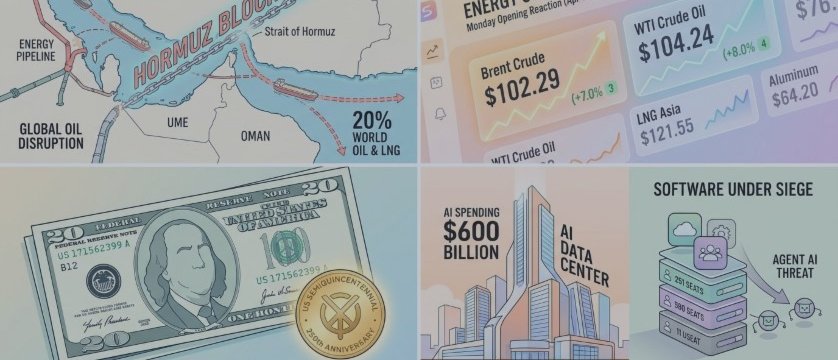
The Strait of Hormuz Shock: Epicenter of Global InstabilityThe defining event of this period has been the escalation of the conflict between the United States, Israel, and Iran, which reached a tipping point on April 12, 2026, with the announcement of a total naval blockade by the U.S. Navy in the Strait of Hormuz. This announcement followed the collapse of peace negotiations in Islamabad, Pakistan, where parties failed to reconcile Iranian demands for sovereign control over the strait and the release of frozen assets.
The disruption of maritime flow at this geographic chokepoint—through which 20% of the world's oil and 20% of Liquefied Natural Gas (LNG) traditionally transit—has precipitated what the International Energy Agency (IEA) describes as the greatest disruption in the history of the global oil market. Despite a brief period of relief during a two-week ceasefire that allowed for a temporary drop in prices, the reopening was never total or operational for container trade.
Impact on the Commodities and Energy MarketThe reaction of energy prices has been immediate and violent. Following the blockade announcement, West Texas Intermediate (WTI) crude jumped 8.5% to settle at $104.76 per barrel, while Brent once again surpassed the $100 barrier, trading at $102.29 in the early hours of Monday, April 13. This surge negates the gains made during the previous week, when hopes for a diplomatic resolution had driven prices below $95.| Commodity | Pre-War Price (Feb 2026) | Peak Price (March 2026) | Current Price (Apr 13, 2026) | Monday Opening Variation |
| Brent Crude | $70.00 | $119.00 | $102.29 | +7.0% |
| WTI Crude | $65.00 | $114.00 | $104.24 | +8.0% |
| Asia LNG (MMBtu) | $10.50 | $25.40 | $25.20 | +140% (vs Feb) |
| Gold (Ounce) | $2,150 | $4,800 | $4,787 | Stable |
| Aluminum | $2,250 | $3,100 | $3,050 | Attack reaction |
The crisis is not limited to oil. The Iranian attack on the Ras Laffan LNG complex in Qatar has reduced that country’s production capacity by 17%, damage that analysts estimate will take three to five years to fully repair. This has forced QatarEnergy to declare force majeure on its exports, exacerbating the energy crisis in Europe, which was already dealing with critically low storage levels of 30%.
North America: Monetary Reconfiguration and Economic DualityIn the United States, the administration has initiated a profound transformation of the symbols and mechanisms of financial power. The Treasury Department announced plans to include the President's signature on all new paper currency, breaking with the tradition of using only the signatures of the Secretary of the Treasury and the Treasurer. This move is part of the nation’s 250th-anniversary celebrations, which also include the launch of commemorative 24-karat gold coins.
The Pivot Toward Digital Currency and Gold BackingBeyond aesthetic changes, the Treasury has greenlit a structural monetary redesign set to take effect in 2027. This plan proposes the gradual replacement of paper currency with a government-issued cryptocurrency, complemented by physical gold coins for reserve transactions. This policy responds to a global trend of distrust in traditional fiat assets; data from the New York Federal Reserve shows that Treasury bond holdings by foreign central banks have fallen to their lowest level since 2012, while nations such as Poland and China massively increase their physical gold reserves.
| U.S. Macroeconomic Indicator | Current / Estimated Value | Trend | Observation |
| National Debt | $39 Trillion | Rapid Rise | Surpasses China + EU GDP |
| CPI Inflation (March) | 3.3% YoY | Rising | Driven by energy |
| Unemployment Rate | 4.3% | Stable-Low | Reversal of climate effects |
| 10-Year T-Note Yield | 4.35% | Rising | Reflects risk premiums |
| AI Spending (Data Centers) | $600 Billion | +38% (2026) | Driven by Hyperscalers |
Monday, April 13, marks the formal start of the first-quarter earnings season for Wall Street’s major banks. Goldman Sachs leads the reports, followed by JPMorgan Chase, Citigroup, and Wells Fargo. Expectations are high for the investment banking and trading divisions, which have benefited from extreme volatility in energy and currency markets.
Goldman Sachs, in particular, is viewed as a "luxury indicator" within finance. Its Q1 estimates suggest earnings per share (EPS) of $16.48, a 16.7% year-over-year increase, driven by an M&A "supercycle" in the tech sector and strong activity in its Fixed Income, Currencies, and Commodities (FICC) desk. However, the market remains alert to any signs of weakness in retail consumption, which is beginning to show cracks due to rising gasoline prices—now averaging $4.10 per gallon nationally and exceeding $5.00 in California.
Europe: The Stagflation Dilemma and Supply CrisisThe European continent finds itself at the center of a perfect storm. The combination of critical dependence on Qatari LNG and high oil prices has led EU Economy Commissioner Valdis Dombrovskis to warn of an imminent risk of a "stagflationary shock."
Economic Projections and ECB PolicyThe European Central Bank (ECB) kept interest rates unchanged at its March meeting, but the tone of its communications has become significantly more restrictive. Headline inflation in the Eurozone stood at 2.5% in March, exceeding the 2% target, while core inflation showed a slight decrease to 2.3%. The risk is that a prolonged conflict in the Middle East could push inflation toward peaks of 4.2% by year-end, while GDP growth could stall or contract in the second quarter.
-
Sectoral Impact: Energy-intensive industries in Germany and Northern Italy are reporting production drops due to prohibitive energy costs. The European banking sector has suffered due to flattening yield curves and increased credit risk provisions.
-
United Kingdom: The London market has shown relative resilience, with the FTSE 100 rising 4.7% in the week of April 10 due to its heavy composition of mining and energy companies like Shell and BP. Nonetheless, falling business confidence and rising inflation (expected to exceed 5% in 2026) pose severe challenges for the Bank of England.
For Asian economies, the Strait of Hormuz is the umbilical cord sustaining their growth. China, India, Japan, and South Korea represent 75% of Gulf oil exports. This dependence explains why Asian markets reacted with euphoria to last week's ceasefire, with the Nikkei 225 rising 7.2%. However, Monday's opening has returned the reality of conflict, with widespread drops exceeding 1% following the U.S. blockade announcement.
China: Q1 Results and Growth OutlookChina prepares to publish its Q1 GDP data on Thursday, April 16. The analyst consensus expects year-over-year growth of approximately 4.8% to 5.0%, supported by strong public investment and resilient exports of high-tech and green technology products. An encouraging data point has been the end of a 41-month deflationary cycle in producer prices (PPI), which recorded a 0.5% increase in March. This shift suggests that Beijing's stimulus measures are beginning to permeate the industrial value chain.
Digital Assets and Cryptocurrencies: Toward InstitutionalizationThe cryptocurrency market has entered a phase of unprecedented operational and regulatory maturity. As of April 13, 2026, Bitcoin (BTC) has shown a significant recovery, trading near $73,000.
-
New Global Regulatory Framework: 2026 is shaping up to be the year of jurisdictional clarity. In the U.S., a joint SEC and CFTC ruling has classified Bitcoin, Ethereum, and XRP as digital commodities. Simultaneously, the GENIUS Act establishes a federal framework for payment stablecoins.
-
The Role of "Digital Gold": The U.S. Treasury has recognized that the crypto market has created a new structural demand channel for short-term safe assets, with an estimated $120 billion of stablecoin collateral invested directly in T-bills.
The transition toward a "national security" economic model is replacing cost-optimized globalization. Energy resilience and technological sovereignty have become the maximum priorities.
-
"Higher for Longer" Interest Rates: Persistent inflationary pressures from energy and wages will prevent central banks from making the rate cuts expected earlier this year.
-
The Renaissance of Real Assets: Gold has reclaimed its central role as a critical component of sovereign reserves against the fragmentation of the dollar-based payment system.
-
Equity Bifurcation: Success will depend on discerning between tech companies capturing real value from AI and those whose business models are being dismantled by it.
In conclusion, the market is operating under a structural "geopolitical risk premium." The week of April 13 will be a critical test for the resilience of the financial system against external shocks. Prudence and diversification toward quality and tangible assets remain the recommended strategies for professional investors in this new economic regime.
Copyright © 2026 code4trading - Gori Germán Pablo.