The Autopsy of a Funded Account: How to Structure an EA to Survive Prop Firms

Let's start with an obvious, painful truth that the retail market completely refuses to accept:
Prop Firms are not looking for profitable traders. They are looking for flawless risk managers.
Every single day in the MQL5 ecosystem, I see the exact same story unfold. A trader buys a $50 Expert Advisor. He runs a backtest from 2018 to 2023. The equity curve is a perfect, straight line moving up at a 45-degree angle. His heart rate spikes. He immediately buys a $100,000 challenge at a Prop Firm.
In Week 1 (Phase 1), the market enters a strong directional trend. The EA surfs the wave beautifully. He passes the test. He feels like a mathematical genius.
Then comes Phase 2. It’s an NFP (Non-Farm Payroll) Friday. The market goes sideways, becoming choppy and full of noise. His EA, hard-coded for trends, opens a buy order. The market drops. The EA averages down (opens a Grid). The market drops further. The EA doubles the lot size (Martingale). Suddenly, a red notification pops up on his phone screen:
"Account Breached: Daily Drawdown Limit Reached."
He didn't blow the account because he had bad luck. He blew it because he brought a hammer to fix a plumbing leak. He deployed a blind, static tool in an environment that demands dynamic Survival Engineering.
Why 90% of EAs Fail in Prop Firms
To understand how to pass a prop firm challenge, you first need to understand exactly how their rules are mathematically designed to fail you. The business model of most Prop Firms heavily relies on your inability to manage two specific metrics: the Maximum Daily Drawdown and the Maximum Trailing Drawdown.
The human brain—and by extension, the code written by amateur developers—is addicted to the Win Rate. It is incredibly easy to program a trading robot with a 95% win rate. All you have to do is remove the Stop Loss.
The robot opens a trade. If it goes negative, it holds the losing position for days, or even weeks, until the price eventually bounces back. In a standard MetaTrader backtest, this generates a beautiful, constant profit curve. But in the real world of a Prop Firm, the floating drawdown will eliminate your account long before the trade ever gets the chance to return to breakeven.
The math of ruin is obvious: if the firm gives you a strict 5% daily loss limit, and your EA uses dynamic averaging down (grid) to "save" bad trades, you are literally coding a ticking time bomb. It does not matter if the EA survived for 89 days straight. On the 90th day, a single "Black Swan" event or a sudden volatility shock will trigger the daily limit, and your funded account will be locked forever.
Win rate does not pay the bills; risk asymmetry does.
The Solution: Survival Engineering
If you want to operate institutional capital, you need to stop thinking like a gambler trying to predict the future and start thinking like a Data Engineer building an impenetrable defense system.
Survival precedes profit. Always.
Here is the technical protocol—the exact foundation of code and logic—that separates a retail toy from a professional algorithmic infrastructure ready for Prop Firms:
1. The Circuit Breaker (Hard-Coded Daily Loss Limit)
No human in their right mind operates heavy industrial machinery without a bright red emergency stop button. Your EA cannot be any different. The first line of defense in any prop-firm algorithm is not the entry signal; it is the exposure filter.
- The Rule: The EA must have a rigid, inviolable daily loss limit tied to the Equity (floating), not just the closed Balance.
- The Execution: If the prop firm allows a 5% daily loss, your circuit breaker must trip at 3.5% or 4%. Once it hits that limit, the code must force the immediate closure of all open positions. It should then trigger an ExpertRemove() function, or logically lock any new entries until the server rollover (00:00).
- The Obvious Reason: It is infinitely better to close the day in the red and live to trade tomorrow, than to pray for the market to reverse and lose your funded account forever.
2. Dynamic Volatility-Based Trailing Stops (The End of the Fixed Take Profit)
The market does not know where your 50-point Take Profit is, and it certainly does not care. Fixing rigid targets is completely ignoring the current price dynamics.
EAs that successfully pass evaluations use dynamic defenses. Instead of aiming for a long target and running the risk of the price hitting resistance and reversing (which increases your trailing drawdown), you must secure profit exactly as the volatility allows.
Use indicators like the ATR (Average True Range) to trail your Stop Loss and move it to Breakeven rapidly. If the market gives you a 1% push, pocket it and protect the capital. The math of consistency does not require home runs; it requires constant, protected base hits.
3. Market Regime Filtering (Context is King)
This is where the professionals separate themselves from the amateurs in algorithmic development.
A market does not simply "go up" or "go down." It transitions between three main regimes: Trend, Consolidation (Range), and Volatility Shocks.
Turning on a Moving Average Crossover robot during a sudden volatility shock or a tight, choppy range is financial suicide. Real AI and data science are not used to guess the next candle; they are used to classify the market regime in the present. If your algorithm detects that the current volatility is erratic and dangerous, it simply aborts trading for the day. Sitting out of the market is a highly profitable position in Prop Firms.
Stop Forcing the Puzzle Piece
The secret to passing prop firms is not found in the complexity of your entry setup. It is not found in a magical, non-repainting indicator. The secret lies in the iron discipline of applying asymmetrical risk management through code, completely eliminating human hesitation and biological hope.
If you have the programming skills, take the concepts above—Circuit Breakers, ATR Trailing, Context Filters—and start rewriting your source code today. Stop focusing 80% of your time on where to enter, and spend it coding when NOT to enter and when to run away.
However, if you are a trader focused on efficiency and understand that your time is the most valuable asset you have, you don't need to reinvent the wheel.
It was exactly to bridge this massive technical gap between retail trading and institutional capital that our infrastructure was engineered. We didn't build a single robot; we built an Arsenal. The Ratio X MLAI 2.0 Engine was architected purely through the lens of Market Regimes and Risk Engineering, featuring the exact hard-coded circuit breakers required to protect and scale funded accounts.
Stop guessing. Stop gambling your evaluation fees on curve-fitted backtests. Start engineering your execution.
Discover how we structured our tools for pure adaptation and mathematical survival.
Automate Your Execution: The Professional Solution
Stop trying to force static robots to understand a dynamic market, and stop trying to piece together fragile API connections through trial and error. Professional trading requires an arsenal of specialized, pre-engineered tools designed to adapt to shifting market regimes.
The official price for lifetime access to the complete Ratio X Trader's Toolbox—which includes the Prop-Firm verified MLAI 2.0 Engine, AI Quantum, Breakout EA, and our comprehensive risk management framework—is $247.
However, I maintain a personal quota of exactly 10 coupons per month for my blog readers. If you are ready to upgrade your trading infrastructure, use the code MQLFRIEND20 at checkout to secure 20% OFFtoday. To ensure this professional setup is accessible, you can also split the investment into 4 monthly installments.
As a bonus, your access includes the exact "Prop-firm Challenger Presets" that I used to pass the live verification, available for free in the member's area.
Real-World Application: The Ratio X Professional Arsenal
Theoretical knowledge is useless without disciplined application. At Ratio X, we do not sell the dream of a single "magic bot." We engineer a professional arsenal of specialized tools designed for specific market regimes, leveraging AI where it matters most: context validation.
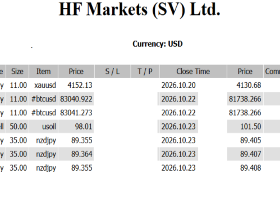
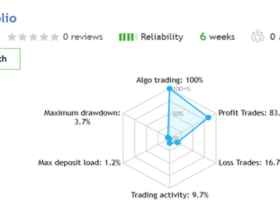
Our flagship engine, Ratio X MLAI 2.0, serves as the "Brain" of this arsenal. It utilizes an 11-Layer Decision Engine that aggregates technicals, volume profiles, and volatility metrics, sending them through our secure middleware to validate the market context. Crucially, it DOES NOT use dangerous grid matrices or martingale capital destruction. We engineered this specific logic to officially PASS a live Major Prop Firm Challenge, proving that stability and contextual awareness are the true keys to longevity.


Furthermore, we utilize the Ratio X AI Quantum engine as a solid complementary tool. It features advanced multimodal capabilities and strict "Regime Detection" using ADX and ATR cross-referencing. If the AI detects a chaotic, untradeable regime, the hard-coded "Circuit Breakers" step in and physically prevent the EA from executing, saving your capital from emotional drawdowns.
"Very powerful... I use a 1-minute candlestick and send APIs every 60 seconds. I am ready to use real money. It is a great value and not inferior to the performance of $999 EAs." — 小杰 陈 (Xiao Jie Chen), Verified User
SECURE THE Ratio X Trader's Toolbox
Use Coupon Code:
MQLFRIEND20
Get 20% OFF + The Prop-Firm Verification Presets (Free)
The Guarantee
Test the Toolbox during the next major news release (on Demo). If it doesn't protect your account exactly as described, use our 7-Day Unconditional Guarantee to get a full refund.