Why I’m Still Long Gold and Silver — Even at $4900 and $96

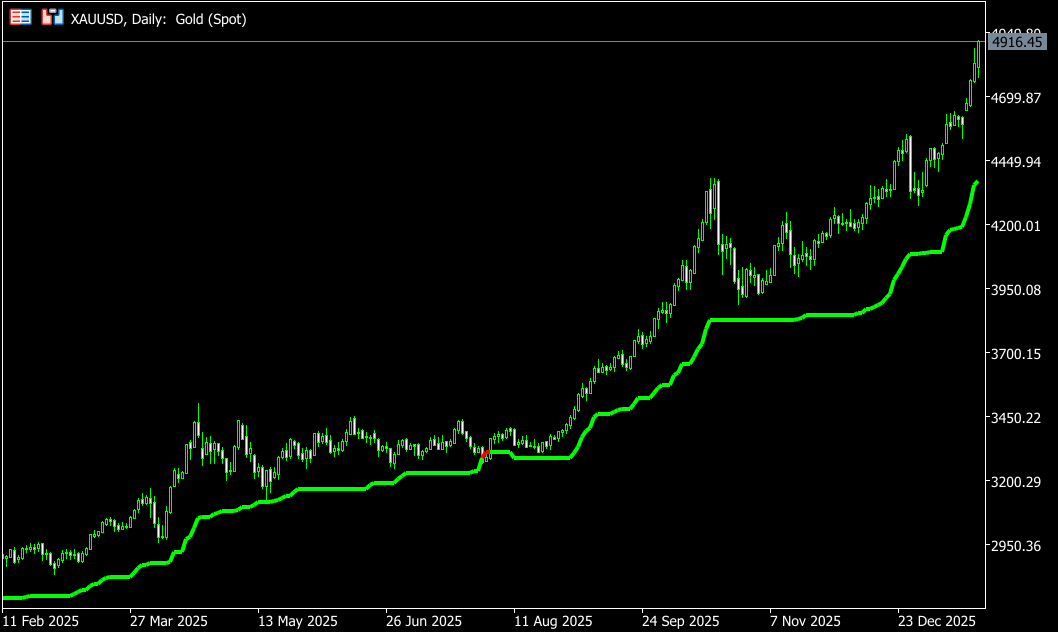
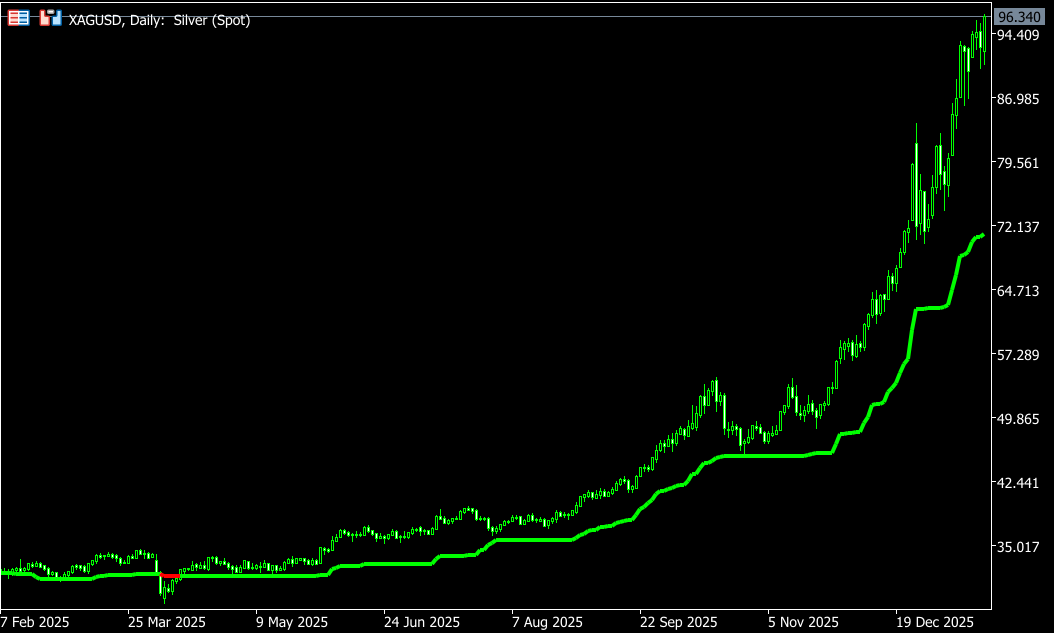
Let me be brutally honest: if you’re trading gold and silver right now, you’re not just watching charts—you’re watching history unfold in real-time. And as of January 22, 2026, we’re staring down two numbers that feel less like price levels and more like psychological gates: $4900 for gold, $96 for silver.
I’ve been in this game since 2014. I’ve seen gold hit $2000, then $2300, then crash back to $1600 during the Fed’s “everything must go” rate hikes. I’ve watched silver get crushed under margin calls while miners begged for liquidity. So when I tell you this rally feels different—I mean it. Not because of some analyst’s report or central bank tweet, but because of what I’m seeing on my own screens, in my own trades, and in the quiet panic of retail traders who got in too late.
My solutions on MQL5 Market: Evgeny Belyaev’s products for traders
Gold at $4900 isn’t just a number—it’s a statement. It’s the market saying, “We no longer trust paper promises.” The dollar is weakening, inflation is sticky, and geopolitical tensions are simmering like a pot left unattended. I’ve been scaling into long positions since November 2025, starting with 10% allocations, then 20%, then 30%. I didn’t chase the breakout. I waited for pullbacks—those little dips where the crowd gets scared and sells. That’s where I bought. And every time I added, I felt the same thing: a deep, quiet confidence that this wasn’t a bubble. It was a revaluation.
My solutions on MQL5 Market: Evgeny Belyaev’s products for traders
Silver at $96? That’s even wilder. Silver has always been the volatile cousin to gold’s stoic elder brother. But here’s what most analysts miss: silver isn’t just reacting to gold. It’s being pulled up by industrial demand—especially in solar panels, EV batteries, and AI infrastructure. I’ve been tracking industrial ETFs and mining capex reports. The data doesn’t lie. Demand is surging, and supply is constrained. When silver broke $70 last year, I thought it was overbought. Then it kept going. Now, at $96, I’m not betting on a correction—I’m betting on acceleration.
Here’s the hard truth: if you’re waiting for a “perfect entry,” you’ve already missed it. The smart money isn’t sitting on the sidelines. They’re using volatility as a tool—not a threat. I’ve been placing tight stop-losses (around 3–5%) and letting winners run. I’m not holding for months. I’m holding for weeks, sometimes days, riding momentum until the tape shows exhaustion.
One thing I’ve learned: don’t fight the trend. If gold is pushing $4900 and silver is flirting with $96, don’t short them just because “it’s too high.” That’s how you lose money fast. Instead, watch volume spikes, MACD divergences, and RSI readings above 70—but don’t sell just because RSI says “overbought.” Sometimes, “overbought” means “still climbing.”
My personal playbook right now:
- Gold: Buy dips near $4800–$4850. Target $5000. Stop-loss at $4750.
- Silver: Buy pullbacks to $92–$93. Target $100+. Stop-loss at $90.
This isn’t advice. It’s my experience. You’ll make your own mistakes. But if you’re trading these metals now, remember: you’re not just trading prices. You’re trading sentiment, fear, greed, and the slow collapse of fiat trust. And that? That’s the real edge.
If you trade precious metals seriously—and want tools built for their rhythm, not repainted hype—consider subscribing. I share only what I use, test, and refine myself.