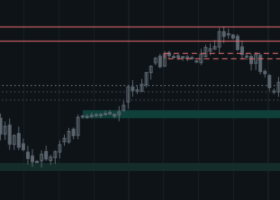
Market Overview
The foreign exchange market remains broadly supportive of the U.S. dollar.
Following last week's stronger-than-expected U.S. employment report, the market continues to price in:
-
Reduced expectations for Federal Reserve rate cuts
-
Higher long-term Treasury yields
-
Continued demand for the U.S. dollar
However, since the start of the week, traders have become increasingly cautious ahead of Wednesday's U.S. CPI release.
As a result, the pace of dollar appreciation has slowed.
The U.S. Dollar Index (DXY) recently climbed to around 100.05 before easing back toward the 99.8 area as markets entered a wait-and-see mode.
U.S. Interest Rates Remain the Key Driver
The primary market theme continues to be U.S. interest rates.
The U.S. 10-year Treasury yield remains above 4.5%, while the 30-year yield has moved above 5%.
The market is experiencing a bear steepening of the yield curve, driven primarily by rising long-term rates.
Key factors include:
-
Strong labor market data
-
Persistent inflation concerns
-
Expectations that the Federal Reserve may keep rates elevated for longer
Some investors are even considering the possibility of additional rate hikes before the end of 2026.
As a result, downside pressure on the dollar remains limited.
U.S. CPI Is the Major Event This Week
Market attention has now shifted almost entirely toward Wednesday's CPI report.
The data will be a critical indicator for the future direction of Federal Reserve policy.
If CPI Comes in Stronger Than Expected
-
Treasury yields could rise further
-
Dollar buying may accelerate
-
USD/JPY could move higher
If CPI Comes in Weaker Than Expected
-
Rate hike expectations may ease
-
Treasury yields could fall
-
The dollar may come under pressure
However, USD/JPY faces an additional complication.
The market remains highly sensitive to potential intervention from Japanese authorities near the 160 level.
Many traders are currently focused on the following scenario:
Strong CPI → Higher USD/JPY → Increased Intervention Risk
USD/JPY
USD/JPY continues to hold near the psychologically important 160 level.
The main drivers remain:
-
Rising U.S. yields
-
Ongoing yen carry trades
-
Wide U.S.–Japan interest-rate differentials
At the same time, several factors continue to cap gains:
-
Concerns about official Japanese intervention
-
Expectations of additional policy normalization by the Bank of Japan
Recent market behavior has followed a familiar pattern:
Strong U.S. data
↓
USD/JPY approaches 160
↓
Intervention concerns intensify
↓
Sharp pullback
A similar pattern could emerge again if CPI surprises to the upside.
Middle East Developments
The geopolitical outlook remains uncertain.
President Trump has continued to express optimism regarding ceasefire efforts.
Meanwhile, Israeli Prime Minister Benjamin Netanyahu has suggested that military operations may continue.
As a result, markets are simultaneously pricing in two possible outcomes:
-
Progress toward a ceasefire
-
Renewed escalation of hostilities
Any major headline could trigger significant volatility in both oil and currency markets.
Oil Market
The oil market has remained relatively stable in recent sessions.
However, key geopolitical risks remain unresolved, including:
-
The Strait of Hormuz situation
-
Ongoing tensions involving Iran
While markets are not currently pricing in a full-scale regional conflict, a geopolitical risk premium remains embedded in crude oil prices.
A renewed rise in oil prices could reinforce:
-
Inflation concerns
-
Expectations of prolonged Fed tightening
-
Additional dollar strength
Key Events to Watch
Economic Data
-
U.S. CPI (Most Important)
-
U.S. Trade Balance
-
U.S. Wholesale Inventories
-
Canadian Trade Balance
-
South African GDP
-
Mexican CPI
Other Events
-
U.S. 3-Year Treasury Auction
-
European Financial Conference
-
French Fiscal Policy Remarks
-
U.S. Primary Election Developments
Key Market Questions
1. Will U.S. CPI Exceed Expectations?
This is the single most important question for markets this week.
2. Can the U.S. 10-Year Yield Hold Above 4.5%?
Yield stability remains critical for continued dollar strength.
3. Can USD/JPY Break Above 160?
The market is once again testing this key level.
4. Will Intervention Concerns Intensify?
Any move above 160 is likely to attract increased scrutiny from Japanese authorities.
5. Could Middle East Tensions Escalate Again?
Geopolitical developments remain a major source of uncertainty.
6. Will Oil Prices Resume Their Rally?
A renewed rise in crude could have significant implications for inflation and monetary policy expectations.
Summary
Markets are now firmly focused on Wednesday's U.S. CPI report.
The strong employment data has helped maintain a bullish dollar backdrop, but intervention concerns continue to limit upside potential for USD/JPY near the 160 level.
For now, the market remains caught between two opposing forces:
Dollar strength driven by persistent inflation and higher yields
and
Resistance near 160 caused by intervention concerns.
The CPI report is likely to determine whether USD/JPY finally breaks above 160 or enters a broader corrective phase.