Edge loophole detector
- Indicatori
- Versione: 18.0
- Attivazioni: 5

Quantitative Session Breakout Profiler & Data Miner
Executive Summary: The "London Hunter v18.0" is not merely a buy/sell signal indicator; it is a statistical data mining engine. Its core idea is that market openings (London, NY, Asia) are not random, but distinct "micro-regimes." By measuring the specific "physics" of price movement (speed, pullback, candle size) during these opening windows, the system identifies which specific conditions lead to successful breakouts and which lead to fakeouts (bull/bear traps).
1. The Core Philosophy
Most breakout strategies fail because they treat every breakout the same. This system operates on the premise that a breakout happening with "High Speed" and "Low Pullback" is fundamentally different from a breakout with "Low Speed" and "High Pullback."
The system "fingerprints" every trading session to answer one question: "Under exactly what physical conditions does the market respect the breakout?"
2. Operational Logic (The "Hunter" Workflow)
The system operates in a cyclical 4-step process:
Phase A: The Trap (Session Definition)
The system waits for specific high-volatility time windows (configurable inputs):
-
London Open: (Default 10:45 start, 15 min duration)
-
New York Open: (Default 16:15 start, 15 min duration)
-
Asia Open: (Default 03:45 start, 15 min duration)
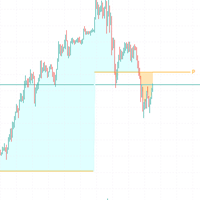
During this "Duration" (e.g., 15 minutes), it draws a box around the High and Low. This is the "Kill Zone."
Phase B: The Fingerprint (Metric Analysis)
While the session is forming, the system calculates three unique internal metrics for the candles to categorize the market "texture":
-
Speed (Ticks per Candle): Is the volume heavy or light relative to price movement? (Classified as Low/Med/High).
-
Pullback %: How direct is the movement? Are candles closing near their highs (Strong) or leaving long wicks (Weak)? (Classified as Low/Med/High).
-
Edge Score: A composite algorithmic score combining size and directionality.
Result: Every session gets a unique ID, for example: LON_SPD:High_PB:Low_EDG:Med (London session, High Speed, Low Pullback, Medium Edge).
Phase C: The Hunt (Breakout & Outcome)
Once the 15-minute box closes, the system watches the next ResultCandles (e.g., 5 candles).
-
Trigger: Did price break the Box High or Box Low?
-
Outcome Verification: Did price stay outside the box after 5 candles (Win/Continue), or did it reverse back inside (Loss/Fail)?
Phase D: The Verdict (Statistical Reporting)
This is the most advanced part of the code. It doesn't just show arrows; it builds a Matrix CSV ( Hunter_Matrix.csv ). It aggregates the history to tell you:
-
"When London has High Speed and Low Pullback, breakouts work 70% of the time."
-
"When Asia has Low Speed and High Pullback, breakouts fail 80% of the time."
3. The "Kill Zone" Filtering Engine
The code includes a sophisticated post-processing filter (The _Filters_ section). It analyzes the gathered data and applies "Risk Sanity" checks:
-
Expectancy Filter: Rejects patterns that don't produce a positive net point average.
-
Risk Skew: Rejects patterns where the "Worst Loss" is historically more than 8x the "Average Win" (prevents account blowups).
-
Sample Size: Ignores patterns that haven't happened at least Filter_MinCount times (statistical significance).
4. Unique Value Propositions (The "Alpha")
-
Auto-Optimization: Instead of guessing if you should trade London or NY, the system tells you exactly which sub-conditions of those sessions are profitable.
-
Fakeout Detection: By analyzing PullbackPercent , the system aims to filter out "exhaustion moves" where the market sprints to the edge of the box but lacks the energy to continue.
-
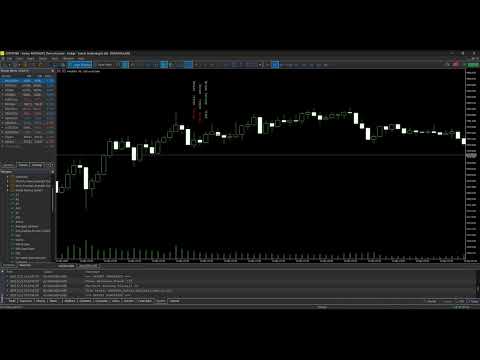
Visual Stacking: The chart visuals ( STACK_ABOVE ) provide a dashboard for the trader to see the "DNA" of the current market movement in real-time (Speed, Edge, Pullback ratings).
Summary of the "Idea"
This is a Pattern Recognition & Backtesting Machine built into an indicator. It turns subjective concepts like "strong breakout" vs "weak breakout" into quantifiable data points (Speed/Pullback/Edge) to filter out bad trades mathematically.