AI and Machine Learning Filters in MetaTrader 5: How Adaptive Classifiers Solve Market Regime Shift for EAs

AI and Machine Learning Filters in MetaTrader 5: How Adaptive Classifiers Solve Market Regime Shift for EAs
Every algorithmic trader deploying Expert Advisors on MetaTrader 5 eventually encounters the same demoralizing reality: an automated strategy that performed flawlessly during extensive Strategy Tester backtests gradually deteriorates in forward live execution. The developer optimizes indicator periods, calibrates stop-loss levels, and stress-tests tick data across three years of market history. Yet, within weeks of live deployment, the equity curve flattens, drawdowns expand beyond acceptable tolerances, and the system begins bleeding capital through a relentless sequence of false breakouts and choppy whipsaw entries. When this breakdown happens, the standard retail response is to blame curve-fitting or immediately abandon the algorithm in search of another shiny automated robot. This cycle of endless bot-hopping is the single most prevalent reason retail algorithmic portfolios fail.
The root cause of algorithmic strategy decay is rarely a defect in the underlying trade logic itself. Moving average crossovers, breakout boundaries, and mean-reversion oscillators are mathematically sound principles. Instead, the failure stems from a fundamental structural flaw: static parameter assumptions in an intrinsically non-stationary financial environment. Traditional MetaTrader 5 Expert Advisors operate on rigid, hardcoded rules designed for a single theoretical market condition. When global macroeconomic forces, central bank interest rate decisions, or institutional order flows shift the broader market from a quiet mean-reverting consolidation into a violent high-momentum trend expansion, those hardcoded rules become mathematically invalid. The market regime has rotated, but the robot remains completely blind to the environmental shift.
Modern quantitative finance solves this persistent challenge through the integration of artificial intelligence and machine learning regime filters. Rather than asking a single trading algorithm to predict future price direction under all circumstances, quantitative engineers decouple the decision-making process. By introducing an adaptive machine learning classifier as an environmental supervisory layer, an Expert Advisor evaluates market state before committing risk. The AI filter does not generate buy or sell orders; instead, it answers a much more critical structural question: Does the current volatility, liquidity, and momentum state match the statistical regime for which this trading strategy was engineered? If the answer is negative, the execution gate remains locked, protecting the account from toxic execution conditions and devastating trailing drawdown breaches.
Understanding Market Non-Stationarity: Why Static Technical Indicators Inevitably Fail
Financial asset prices do not follow stationary probability distributions. In classical statistics and physics, a stationary process is one whose mean, variance, and autocorrelation structures remain constant over time. If financial markets were stationary, a 14-period Relative Strength Index (RSI) or a 20-period Bollinger Band would produce identical statistical edge whether applied in 2018 or 2026. However, empirical market microstructure reveals that currency pairs, precious metals like XAUUSD, and stock index derivatives undergo continuous structural regime evolution.
A static indicator calculates its output solely from historical price bars within a fixed lookback window. When market volatility doubles due to geopolitical conflict or banking sector stress, a fixed 20-point stop loss or a standard 2-ATR trailing buffer is mathematically overwhelmed by normal intraday noise. Conversely, when liquidity dries up during holiday trading sessions or quiet Asian consolidation ranges, breakout systems are repeatedly slaughtered by false breakouts because the threshold required for true directional expansion is never attained.
Retail algorithmic trading systems typically suffer from three primary non-stationary vulnerabilities:
- Distribution Drift: The statistical distribution of price returns shifts between fat-tailed, high-kurtosis trending states and Gaussian-like mean-reverting ranges. A bot trained on Gaussian assumptions inevitably blows up when fat-tail events strike.
- Variance Instability: Intraday volatility fluctuates by several hundred percent across trading sessions. A fixed-lot execution model that functions safely during the low-volatility Asian session exposes the account to catastrophic margin stress during overlapping London and New York economic data releases.
- Autocorrelation Reversal: Trending regimes exhibit positive price return autocorrelation (momentum continues), whereas range-bound regimes exhibit negative autocorrelation (price bounces back toward the mean). Running a trend-following system in a negative autocorrelation regime produces an unbroken sequence of buy-at-the-top and sell-at-the-bottom losses.
Traditional indicators describe what price has done within a narrow historical window. Machine learning regime filters determine the statistical state of the market environment so you only trade when your edge is mathematically valid.
To survive over multi-year horizons, an Expert Advisor must possess environmental situational awareness. It must distinguish between healthy directional liquidity and predatory liquidity vacuums, between calm compression and explosive volatility expansion. This requirement is precisely where machine learning classifiers deliver an indispensable quantitative advantage.
The Microstructural Paradigm: Static Indicator Rules vs. Dynamic Machine Learning Classifiers
To understand the technological leap from traditional retail trading bots to institutional-grade algorithmic systems, one must contrast how static indicator logic and machine learning classifiers process raw market inputs. The following comparative analysis outlines the foundational differences between conventional MQL5 rule sets and adaptive machine learning filters:
| Architectural Dimension | Traditional Static MT5 EA | AI & Machine Learning Regime-Filtered EA | Practical Impact on Strategy Survival |
|---|---|---|---|
| Input Processing | Single or dual indicator values (e.g., RSI > 70, Fast MA > Slow MA). | Multi-dimensional feature vector (volatility, spread velocity, volume ratio, ATR slope, tick entropy). | Captures nuanced multi-variable market states rather than superficial lagging price points. |
| Parameter Adaptability | Rigid lookback constants hardcoded into inputs (e.g., Period = 14). | Dynamic classification weights or statistical probabilistic thresholds. | Prevents parameter decay and eliminates the need for bi-weekly manual backtest re-optimization. |
| Regime Awareness | Zero environmental perception; treats all market bars as identical data. | Explicitly outputs discrete regime labels (Trending, Ranging, High-Risk Volatility Shock). | Automatically vetoes trade execution when the current regime violates the strategy's statistical edge. |
| Spread & Liquidity Handling | Static maximum spread check (e.g., Spread < 25 points). | Dynamic spread-to-volatility ratio and tick arrival frequency profiling. | Prevents catastrophic fills during central bank liquidity vacuums, spread spikes, and slippage events. |
| Drawdown Profile | Suffers severe cluster drawdowns during prolonged regime mismatch. | Smooths equity curve by shifting into defensive or capital preservation modes. | Directly safeguards trailing drawdown limits required by prop firms and institutional mandates. |
As the comparison establishes, a machine learning filter does not attempt the impossible task of predicting the exact closing price of the next five-minute candlestick. Instead, it classifies the operational environment into distinct probabilistic states. When an Expert Advisor knows with high statistical confidence whether it is operating within a low-volatility trend, a chaotic news spike, or an orderly range, it can execute its strategy with surgical precision while remaining safely on the sidelines during hazardous turbulence.
The Decoupled Three-Layer Architecture for MetaTrader 5 Expert Advisors
The hallmark of professional algorithmic engineering is modular separation of concerns. In naive trading bot scripts, entry signal generation, regime filtering, and money management are hopelessly tangled inside a monolithic OnTick() function. When market conditions shift, the developer cannot determine whether the signal trigger failed, the filter broke down, or the risk calculation was flawed.
To build an institutional-grade algorithmic framework, quantitative developers employ a decoupled Three-Layer Architecture:
- Layer 1: The Signal Generation Layer: This engine evaluates pure mathematical logic—such as swing breakout levels, moving average confluences, or order flow momentum. Its sole responsibility is calculating theoretical trade coordinates (direction, initial stop, and target). It operates entirely blind to macroeconomic events or broader portfolio drawdowns.
- Layer 2: The Environmental Context Filter Layer (AI/ML): This supervisory gate sits between Layer 1 and the execution server. It continuously analyzes market microstructure: volatility velocity, normalized ATR ratios, tick arrival entropy, and machine-learning regime classifications. If Layer 1 generates a BUY signal, but Layer 2 detects a choppy sideways regime or an abnormal spread expansion, Layer 2 exercises immediate veto power. The trade is blocked before it reaches the broker.
- Layer 3: The Capital Protection and Risk Management Layer: The final sovereign authority governs portfolio safety. It monitors account equity, daily loss thresholds, peak-to-valley trailing drawdown, and open floating exposure. Regardless of approvals from Layers 1 and 2, Layer 3 enforces hard risk locks to prevent catastrophic capital depletion.
Decoupling trade generation from regime filtering and capital protection transforms fragile Expert Advisors into robust, institutional trading systems capable of enduring non-stationary market regimes.
By delegating market regime detection exclusively to Layer 2, developers can maintain simple, robust signal models in Layer 1 without resorting to over-complicated curve-fitting. The machine learning filter ensures that those simple models are only deployed in environments where their statistical edge has been quantitatively proven.
Valid MQL5 Implementation: Building an Adaptive Market Efficiency & Volatility Regime Filter
To implement an effective regime filter in MQL5, we do not necessarily need a multi-gigabyte neural network running on an external server. Many powerful machine learning concepts—such as Perry Kaufman's Fractal Efficiency Ratio, normalized volatility velocity, and spread-relative scoring—can be computed directly in native MQL5 code with zero external latency and complete execution stability.
The following production-ready MQL5 class demonstrates an adaptive regime classifier. It calculates market efficiency (directional movement divided by total path traveled) alongside ATR expansion velocity to classify market state into four actionable operational regimes:
//+------------------------------------------------------------------+
//| Ratio X Trade - Adaptive Market Efficiency & Volatility Filter    |
//| Native MQL5 Class for Regime-Aware Expert Advisor Execution      |
//+------------------------------------------------------------------+
#property copyright "Copyright 2026, Ratio X Trade"
#property link      "https://www.ratioxtrade.com"
#property version   "2.00"

enum ENUM_REGIME_STATE
{
   REGIME_STABLE_TREND,       // High efficiency, controlled volatility: Ideal for Trend Following
   REGIME_CONSOLIDATION_RANGE,// Low efficiency, low volatility: Ideal for Mean Reversion / Grid
   REGIME_VOLATILE_EXPANSION, // Explosive ATR burst, high efficiency: Breakout / Scalp Mode
   REGIME_HAZARDOUS_CHOP,     // Low efficiency, high volatility: HALT ALL TRADING ENTRIES
   REGIME_UNINITIALIZED
};

class CAdaptiveRegimeFilter
{
private:
   string             m_symbol;
   ENUM_TIMEFRAMES    m_timeframe;
   int                m_efficiency_period;
   int                m_atr_period;
   int                m_atr_handle;
   double             m_trend_threshold;
   double             m_volatility_multiplier;

public:
   CAdaptiveRegimeFilter(void) :
      m_symbol(""),
      m_timeframe(PERIOD_CURRENT),
      m_efficiency_period(14),
      m_atr_period(14),
      m_atr_handle(INVALID_HANDLE),
      m_trend_threshold(0.55),
      m_volatility_multiplier(1.75) {}

   ~CAdaptiveRegimeFilter(void)
   {
      if(m_atr_handle != INVALID_HANDLE)
         IndicatorRelease(m_atr_handle);
   }

   bool Initialize(string symbol, ENUM_TIMEFRAMES tf, int eff_period=14, int atr_period=14)
   {
      m_symbol = (symbol == "") ? _Symbol : symbol;
      m_timeframe = tf;
      m_efficiency_period = (eff_period > 5) ? eff_period : 14;
      m_atr_period = (atr_period > 5) ? atr_period : 14;

      m_atr_handle = iATR(m_symbol, m_timeframe, m_atr_period);
      if(m_atr_handle == INVALID_HANDLE)
      {
         PrintFormat("CAdaptiveRegimeFilter: Failed to create ATR handle for %s", m_symbol);
         return false;
      }
      return true;
   }

   ENUM_REGIME_STATE ClassifyCurrentRegime(void)
   {
      if(m_atr_handle == INVALID_HANDLE)
         return REGIME_UNINITIALIZED;

      MqlRates rates[];
      ArraySetAsSeries(rates, true);
      int copied_rates = CopyRates(m_symbol, m_timeframe, 0, m_efficiency_period + 1, rates);
      if(copied_rates < m_efficiency_period + 1)
         return REGIME_UNINITIALIZED;

      // 1. Calculate Kaufman Efficiency Ratio (ER)
      // Direction = Net change from start to end of window
      double net_direction = MathAbs(rates[0].close - rates[m_efficiency_period].close);

      // Total Path = Sum of individual bar price changes
      double total_path = 0.0;
      for(int i = 0; i < m_efficiency_period; i++)
      {
         total_path += MathAbs(rates[i].close - rates[i+1].close);
      }

      double efficiency_ratio = (total_path > 0.0) ? (net_direction / total_path) : 0.0;

      // 2. Calculate ATR Volatility Velocity
      double atr_values[2];
      ArraySetAsSeries(atr_values, true);
      if(CopyBuffer(m_atr_handle, 0, 0, 2, atr_values) < 2)
         return REGIME_UNINITIALIZED;

      double current_atr = atr_values[0];
      double previous_atr = atr_values[1];
      double atr_expansion_ratio = (previous_atr > 0.0) ? (current_atr / previous_atr) : 1.0;

      // 3. Dynamic Spread Safety Evaluation
      long current_spread = 0;
      SymbolInfoInteger(m_symbol, SYMBOL_SPREAD, current_spread);
      double point = SymbolInfoDouble(m_symbol, SYMBOL_POINT);
      double spread_in_price = current_spread * point;

      // If spread consumes more than 35% of current bar ATR, declare hazardous
      if(current_atr > 0.0 && (spread_in_price / current_atr) > 0.35)
      {
         return REGIME_HAZARDOUS_CHOP;
      }

      // 4. Multi-Dimensional State Classification
      bool is_efficient = (efficiency_ratio >= m_trend_threshold);
      bool is_expanding = (atr_expansion_ratio >= m_volatility_multiplier);

      if(is_efficient && !is_expanding)
         return REGIME_STABLE_TREND;
      else if(!is_efficient && !is_expanding)
         return REGIME_CONSOLIDATION_RANGE;
      else if(is_efficient && is_expanding)
         return REGIME_VOLATILE_EXPANSION;
      else
         return REGIME_HAZARDOUS_CHOP; // Inefficient direction with explosive volatility
   }
};
When integrated into an Expert Advisor, this class acts as an automated risk filter. Before evaluating technical indicators or submitting trade requests, the strategy calls ClassifyCurrentRegime() . If the output is REGIME_HAZARDOUS_CHOP , the robot automatically skips execution for that bar. If the output is REGIME_STABLE_TREND , the system activates directional trend logic. If the state indicates REGIME_CONSOLIDATION_RANGE , execution shifts toward bounded mean-reversion engines.
Comparing Machine Learning Architectures for MetaTrader 5
Modern MetaTrader 5 supports diverse approaches to artificial intelligence and machine learning integration. Depending on infrastructure requirements, coding complexity, and execution latency tolerances, developers can implement local native algorithms, embedded ONNX models, or external AI consensus pipelines. The table below delineates the trade-offs across major quantitative machine learning architectures in MT5:
| Machine Learning Architecture | Implementation Mechanism in MT5 | Latency & Speed Profile | Computational Complexity | Recommended Strategic Application | |
|---|---|---|---|---|---|
| Native Mathematical Classifiers | Direct MQL5 calculations (Efficiency ratios, volatility entropy, Hurst exponents). | Sub-millisecond (Zero external API or bridge overhead). | Low to Moderate; runs seamlessly on standard VPS instances without GPU. | Real-time tick filtering, spread velocity, volume ratio, ATR slope, tick entropy). | Captures nuanced multi-variable market states rather than superficial lagging price points. |
| Open Neural Network Exchange (ONNX) | Embedded .onnx runtime models natively integrated into MT5 build 3800+. | Ultra-fast local inference (1 to 5 milliseconds per bar evaluation). | Moderate; requires offline Python training (Scikit-Learn/PyTorch) and model compilation. | Random Forest regime classifiers, Support Vector Machine (SVM) trend/range detectors. | |
| External Python DLL / Socket Bridge | Inter-process communication via named pipes, shared memory, or ZeroMQ sockets. | Moderate latency (5 to 25 milliseconds depending on local bridge IPC). | High; requires maintaining synchronized Python environments alongside MT5 terminals. | Complex deep learning networks (LSTM, Transformers) analyzing multi-timeframe order flow. | |
| Cloud AI / Hybrid LLM Gateways | Secure asynchronous HTTPS requests querying high-level AI models for macro sentiment. | High latency (300 to 1,500 milliseconds; asynchronous only). | Very High; involves external API keys, server endpoints, and token costs. | Macroeconomic news analysis, central bank press release parsing, daily bias confirmation. |
For high-frequency intraday trading and prop-firm compliance where execution speed is paramount, native mathematical classifiers and embedded ONNX models deliver the optimal balance of statistical power and execution reliability. By keeping the classification engine inside the MT5 terminal memory space, the system eliminates external connection failures, API outages, and execution lag.
The Systematic Alternative: The Ratio X Trader's Toolbox
Building, training, and maintaining custom machine learning models and dynamic regime filters across multiple financial instruments requires advanced quantitative expertise and hundreds of hours of complex programming. For traders who want institutional-grade regime filtering without the exhausting development cycle, the Ratio X Trader's Toolbox provides a turnkey algorithmic solution.
The Ratio X Trader's Toolbox is a complete institutional portfolio of 17 specialist Expert Advisors plus the proprietary Ratio X Trend Watcher market regime indicator for MetaTrader 5. Rather than relying on a single vulnerable bot, the Toolbox equips you with dedicated algorithmic engines purpose-built for specific market states:
- Adaptive Intelligence Specialists (6 EAs): Systems like Ratio X AI Quantum, MLAI 2.0, Neuroflow, and Hybrid Flow incorporate multi-layer confirmation stacks, machine learning regime filters, and optional external consensus gating with strict daily drawdown guards.
- Gold & Metals Specialists (6 EAs): Dedicated XAUUSD engines including Ratio X Gold ML, Gold Fury, and Freshbot Gold engineered specifically to navigate the unique session volatility and spread dynamics of gold.
- Trend & Breakout Specialists (4 EAs): Mechanical continuation and swing-point breakout logic, including Ratio X Swing Breakout and Trend Follower, designed to join confirmed institutional price expansion.
- Range Specialist & Decision Support (1 EA + 1 Indicator): The RX Stochastic Scalper for quiet sideways consolidation, paired with the Ratio X Trend Watcher indicator to visually verify market regimes.
Every system within the Toolbox operates on the proven three-layer framework: separating raw entry signals from adaptive environmental context gates and rigorous capital protection locks.
To inspect the complete architectural breakdown and watch the systems in action, review the Ratio X Architecture Video and Strategy Guide on the official website.
Empirical Verification and Independent Performance Records
In quantitative trading, theoretical models are meaningless without empirical verification. The algorithmic strategies powering the Ratio X architecture undergo exhaustive Strategy Tester backtests on 98% real tick data quality, incorporating variable execution spreads and simulated broker slippage across multi-year historical cycles.
For example, in verified 18-month MetaTrader 5 Strategy Tester backtests conducted on 98% history quality with an initial deposit of $1,000, the Ratio X Swing Breakout system demonstrated the protective power of disciplined regime-filtered execution across three standardized risk configurations:
- Conservative Risk Preset: Generated $3,822.32 final balance while restricting maximum drawdown to an exceptional 14.10%.
- Balanced Risk Preset: Produced $6,330.03 final balance with a controlled peak-to-valley drawdown of 20.16%.
- Aggressive Risk Preset: Reached $20,412.37 final balance with a drawdown ceiling of 47.40%.
Important Risk Notice: Strategy Tester backtests and historical simulations represent verified quantitative performance under specific historical market conditions. Past performance does not guarantee future results. Every trader must test systems thoroughly on a MetaTrader 5 demo account before deploying live capital.
Traders and quantitative developers worldwide deploy Ratio X systems across prop-firm challenges and private accounts, reflected in active community discussions and a 4.7-star rating on Trustpilot. Professional risk management does not promise a casino fantasy of zero losing trades; it guarantees that when adverse market conditions strike, multi-layer filters shield your equity from catastrophic failure.
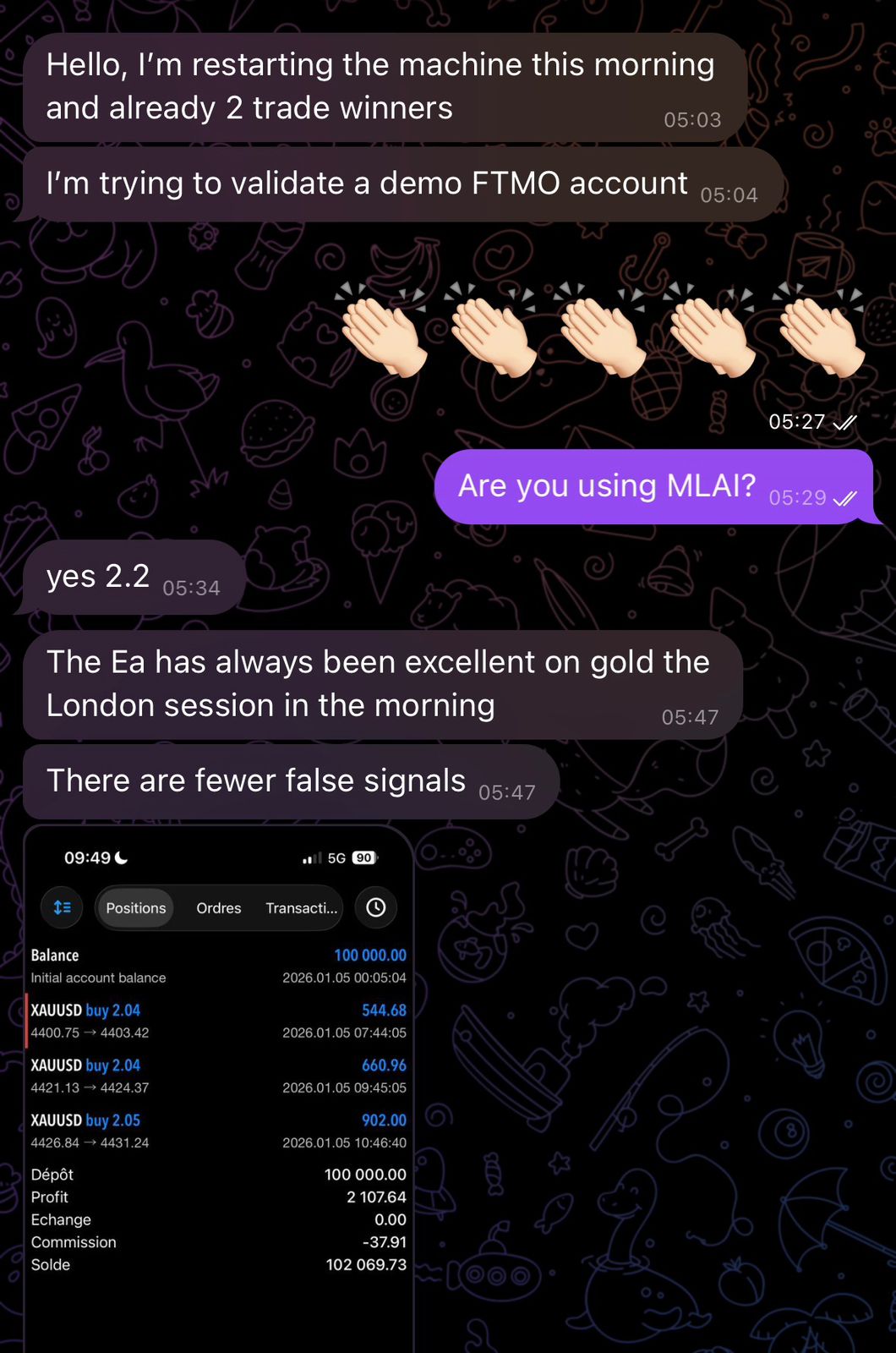 Figure 1: London session execution capture: Dynamic volatility filtering effectively filtering false breakouts during opening session order flow.
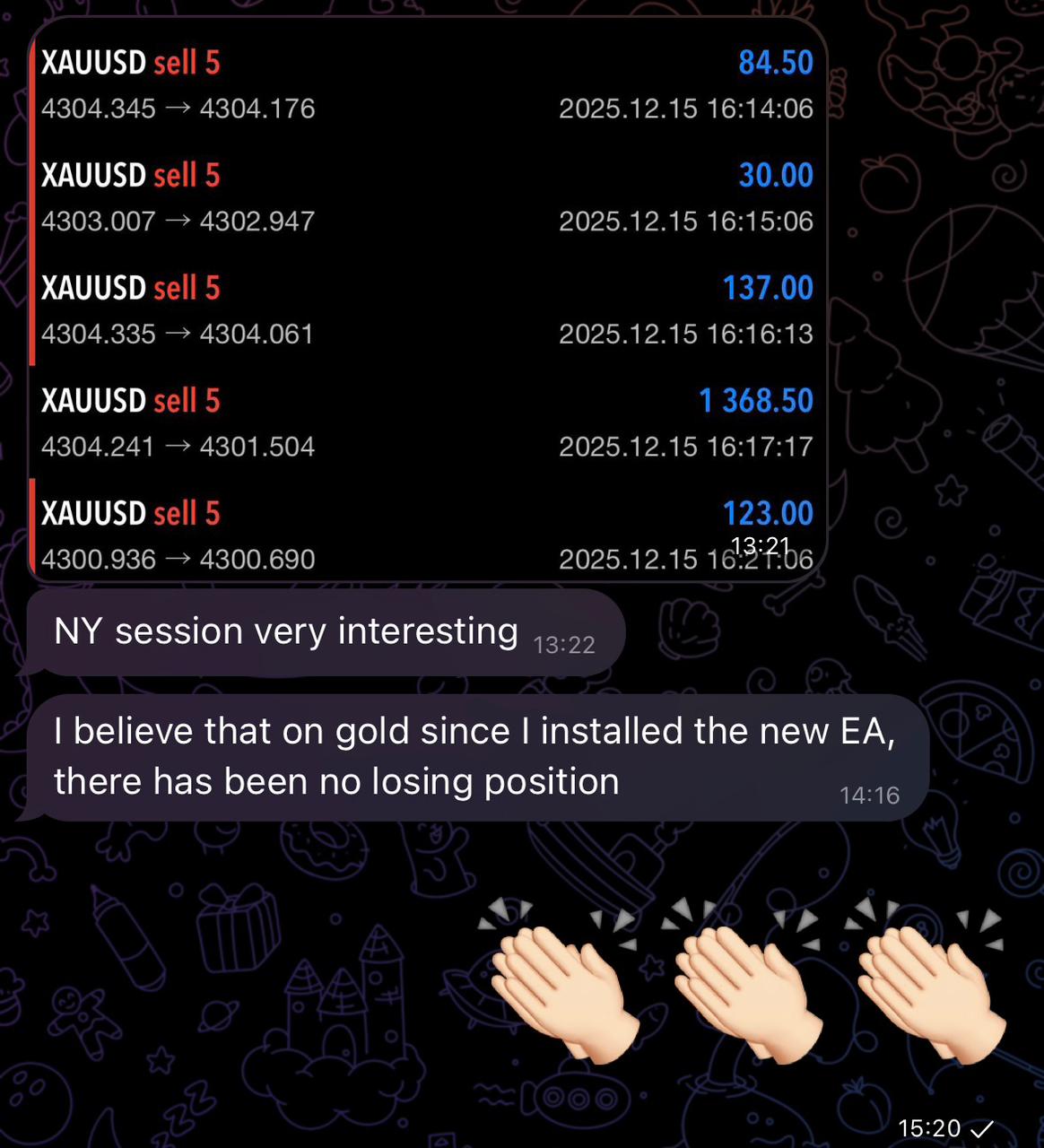 Figure 2: New York session trade execution under high liquidity conditions with automated trailing drawdown guards active.
Upgrade to Regime-Aware Algorithmic Trading Today
Stop bot-hopping and stop sacrificing your capital to rigid, single-market Expert Advisors. Equip your MetaTrader 5 terminal with an institutional suite of 17 specialist EAs engineered to identify, match, and navigate changing market regimes.
The Ratio X Trader's Toolbox provides lifetime access to all 17 automated trading robots, the Ratio X Trend Watcher indicator, comprehensive step-by-step installation manuals, and free future updates to all included systems—with absolutely zero monthly subscription fees.
Your purchase is backed by our ironclad 7-Day Unconditional Money-Back Guarantee. Download the complete software suite, attach the systems to your MetaTrader 5 demo accounts, test the adaptive regime filters through high-impact market news releases, and evaluate the performance firsthand. If the software does not exceed your professional expectations, simply request a refund within seven days for a prompt, full reimbursement.
Get The Ratio X Trader's Toolbox Now — Lifetime License
MQLFRIEND20 at checkout to unlock an immediate 20% discount on your license. Please note that this discount coupon is strictly limited to 10 redemptions per month.Risk Disclosure: Trading foreign exchange, precious metals, and financial contracts for difference (CFDs) carries a high level of risk and may not be suitable for all investors. Algorithmic software tools, Expert Advisors, and indicators developed by Ratio X Trade provide systematic analytical assistance and do not constitute financial advice or guarantees of profitability. Always exercise disciplined risk management and thoroughly evaluate all automated strategies in a MetaTrader 5 demo environment before committing real capital.