Confluence just means this: wait for two or three things to agree, then act.
Every trader has heard of it. Almost nobody actually does it.
Why not? Not because it's a bad idea. Because doing it is annoying.
Why Confluence Gets Skipped
Ask any trader if they check for confluence. They'll say yes.
Now watch them trade. A moving average crosses. They click buy. Nobody looked at the support level sitting three pips below, because that support level lives in a different window, on a different template, that they'd have to go dig up.
That's the real story. Not laziness. Just plumbing.
To check three tools before one trade, you have to:
- Alt-tab to a calendar app for the news schedule.
- Scroll past a cluttered oscillator pane to find the S/R line.
- Try to remember which way the MA crossed before your chart filled up with tooltips.
Each of those takes a few seconds. Doesn't sound like much. But add them up while a candle is closing and your attention is already stretched thin, and most people just stop after the first signal. Not because they forgot the other two existed. Because chasing them down felt like it would cost the trade.
A Worked Example
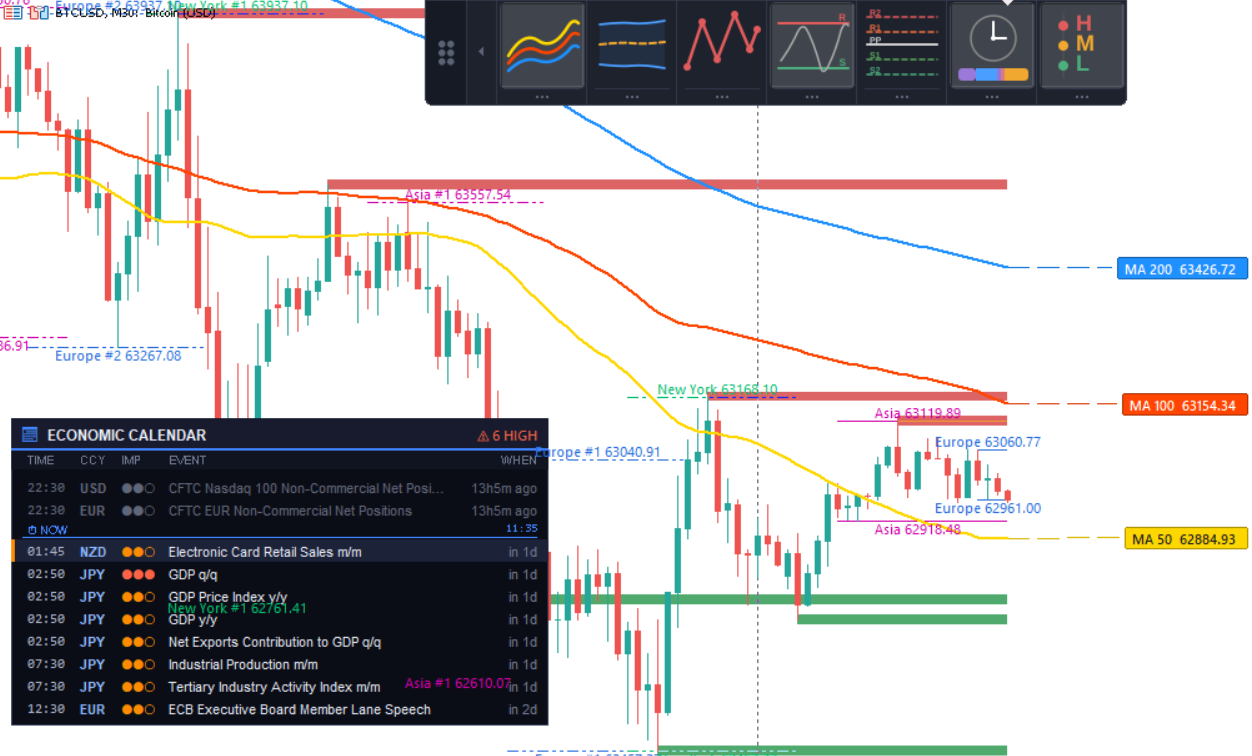
Here's a BTCUSD chart. Three things happen close together:
- The fast moving average crosses above the slow one.
- Price sits right on a support zone that's held before.
- The London session, historically the busiest hours for this pair, is about to open.
None of this is exotic. Anyone running a Triple MA, an S/R tool, and a session tool already has all three pieces. The only real question is whether they're looking at all three at the same moment, or whether one of them is sitting unread in a window that's currently off screen.
Take each signal by itself and it's not much:
- An MA cross is a coin flip with a small edge. It lags, and it whipsaws in chop.
- A support zone is just a line price has bounced off before. It might not this time.
- A session opening tells you volume is coming, not which direction it's going.
But get all three lined up, and something shifts. Price is turning up, right where buyers have shown before, right as real volume is about to walk in the door. Still not a guarantee. Three weak signals agreeing beats one weak signal you talked yourself into trusting.
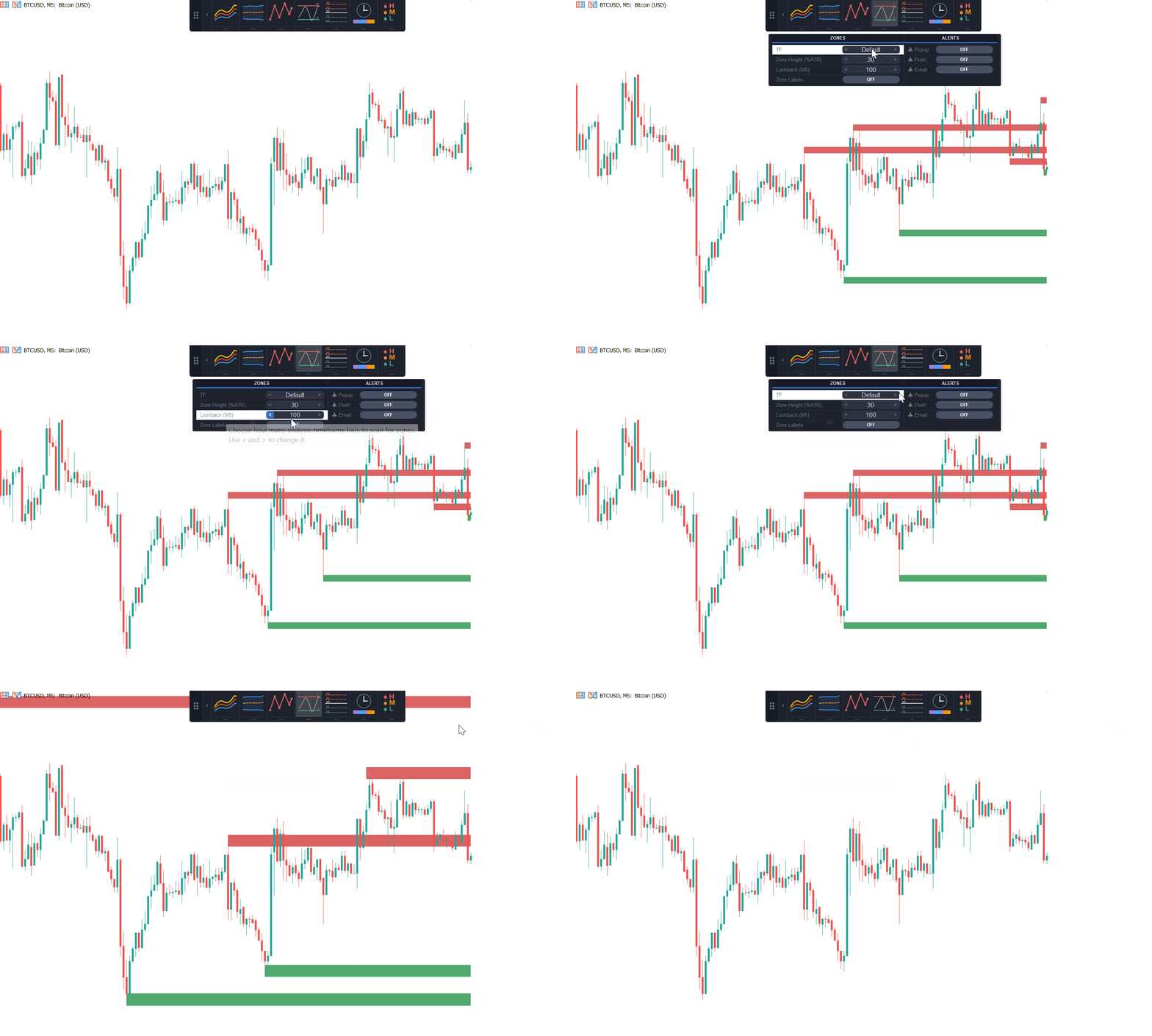
The opposite case teaches you more, honestly. MA turns up, but price is stuck under a resistance zone that's already rejected it twice. Or the crossover fires in the dead hours between sessions, when nobody's really trading. In both cases, confluence isn't giving you a green light. It's telling you to sit on your hands.
A system that only ever agrees with the trade you already wanted to take isn't confluence. It's you finding reasons to do what you were going to do anyway.
Making the Check Habitual, Not Effortful
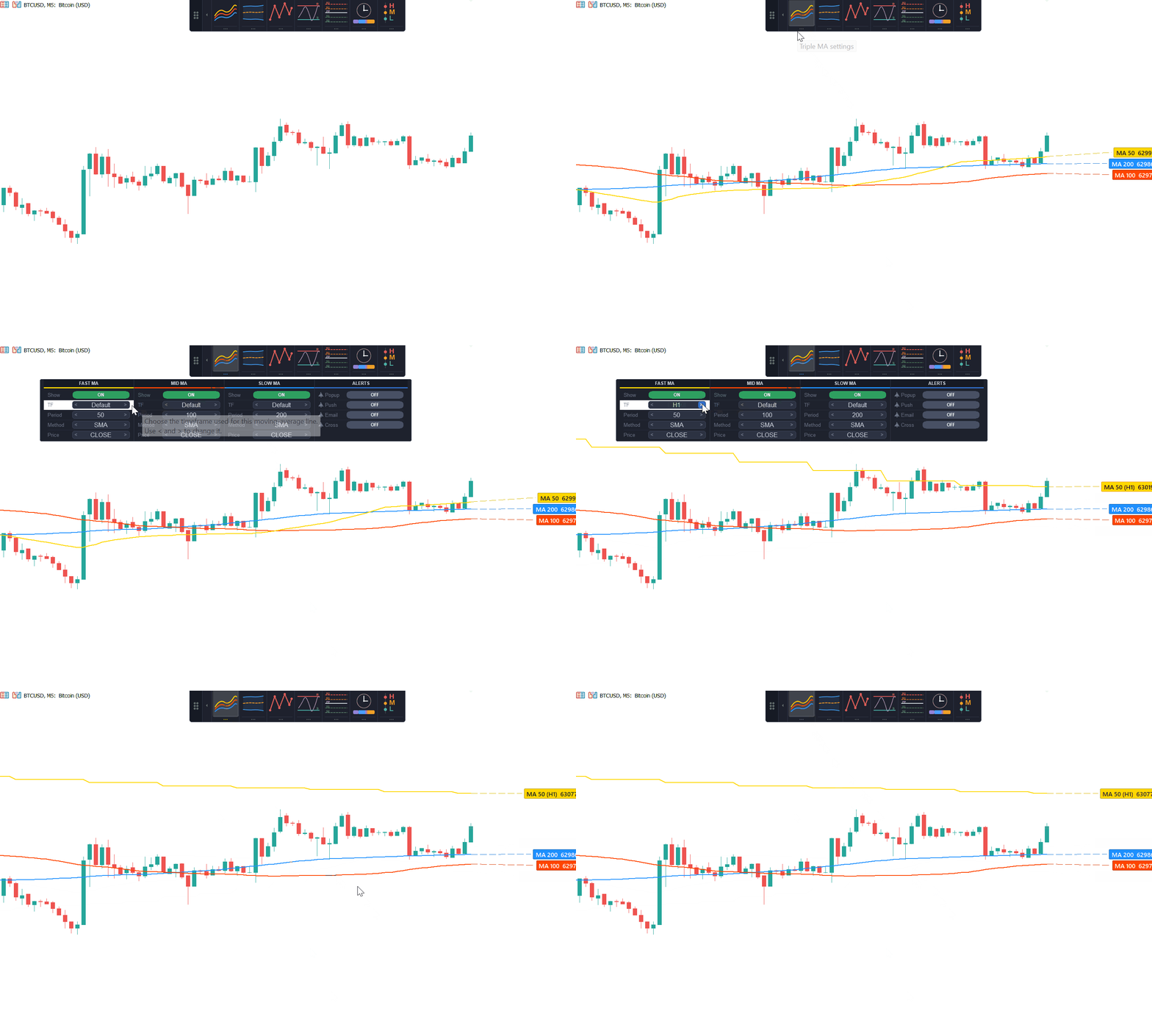
That worked example was easy to describe for a simple reason. All three pieces, the MA, the zone, the session clock, were sitting on one chart, in one panel, at the same time. Nothing to reload, nothing to switch to.
That's the whole trick, really. Not a smarter indicator. Just less distance between the tools you already trust.
ChartDeck PRO does exactly that. It's a dockable sidebar with Triple MA, Support and Resistance, Sessions, and four more tools, all live on the same chart. Turn a tool on or off with one click on its row, instead of hunting for a separate window.
Checking three signals stops being a five-tab scramble you skip when the market's moving fast. It's a glance at one sidebar. That's the version of "check for confluence" people actually keep doing, week after week, once the market gets busy.
None of this makes confluence a promise. It just cuts down how often you're trading on noise.
Three aligned signals still lose sometimes. The market doesn't owe you a clean setup just because three indicators happened to agree.
Use it as a filter that tilts the odds in your favor over a lot of trades, not a signal that guarantees the next one. And whatever setup you use, size your risk so one bad trade doesn't decide your month.