Statistical Ergodes and Eigenvalue Realization Trajectories in Quantitative Asset Architecture: Local Optimization Field

Statistical Ergodes and Eigenvalue Realization Trajectories in Quantitative Asset Architecture: Local Optimization Fields Within Compiled Source Code
The core structural failure of standardized technical indicator suites is their complete reliance on temporal averages that assume statistical ergodicity in market price action. Modern digital market microstructures exist as complex multi-dimensional probability spaces where distribution layers change continuously. Quantitative architects who attempt to define dynamic market movement by utilizing static mathematical variables will consistently experience severe model degradation. To extract sustainable statistical expectancy from live order books, algorithmic execution layers must transition entirely toward native self contained deep learning frameworks. The primary mathematical objective of an autonomous quantitative module is to process real-time volatility distributions, track multi-asset price velocity, and compute local optimization gradients with absolute operational autonomy.
Operating high performance systematic strategies requires moving past the architectural shortcuts of distributed web models. When an algorithm relies on external web APIs to generate structural probability scores, it immediately compromises execution safety. Financial data feeds are hyper sensitive to computational latency, and network communication loops introduce catastrophic vulnerabilities during phases of high market stress. A professional multi asset framework must execute its entire technical verification stack locally on the chart thread, managing multi currency correlation tensors and processing pattern recognition matrices directly within the compiled machine instructions to guarantee zero network lag execution.
The Physics of Volatility Fields and the Geometry of Order Book Imbalances
To construct an uncompromised algorithmic foundation, software engineers must model market microstructures as continuous streams of stochastic events. Traditional technical indicators compress this complex ecosystem into basic one dimensional lines, running under the flawed mathematical assumption that future momentum is a linear function of past asset velocity. This severe oversimplification ignores the reality that price discovery happens strictly at the order book interface. The continuous interaction of limit structures, immediate market sweeps, and hidden institutional iceberg positions creates a hyper dimensional surface of supply and demand imbalances that cannot be accurately tracked with simple lagging calculations.
True mathematical rigor in systematic design demands mapping the local market environment as a sequential state space. Every incoming tick modify the underlying probability fields, shifting the relative weight of directional vectors, expanding local standard deviation parameters, and altering historical pattern correlation indexes. To process these complex data layers without lag, professional trading software applies highly optimized matrix calculation routines running inside the local execution thread. This enables the indicator or expert advisor to calculate the immediate momentum of price relative to its surrounding structural volatility boundaries, establishing a reponsive baseline that functions as the single source of truth for subsequent deep learning layers.
Furthermore, an advanced quantitative system must prioritize capital protection by isolating structural expansions from random market noise. The vast majority of intraday price movements reflect purely stochastic behavior driven by retail noise traders or temporary matching delays. An algorithm that treats every raw tick as a valid continuation setup will suffer from massive false signal generation and severe drawdown cascades. By implementing native market regime analysis layers over the primary trend engine, the system can continuously calculate whether the immediate market structure reflects a sustainable trending environment, a structured pullback trajectory, or a highly compressed sideways squeeze, automatically tailoring its internal execution sensitivity to match the global macro state.
Advanced Candlestick Fingerprinting and Neural Sequential Modeling
Applying deep learning models to live financial markets requires an entirely separate level of technical discipline compared to generic pattern recognition. Early quantitative machine learning models utilized simple fixed input layers that attempted to project future price targets without evaluating temporal dependency. While these frameworks could easily achieve high over fitted win rates on historical datasets, they consistently failed in live trading environments because they lacked an inherent mathematical representation of historical context. A financial chart is a continuous sequential narrative where the relevance of the immediate price update is inextricably tied to the decay curve of preceding structural events.
To overcome this sequential challenge, sophisticated quantitative architecture leverages advanced recurrent feedback loops and specialized local memory arrays. These structures retain an internal decayed representation of historical asset behavior, trailing volatility states, and structural outcomes across multiple time horizons. By passing the calculation outputs of previous historical bars back into the primary input layer, the system establishes a local feedback connection. This allows the neural core to evaluate the immediate confluence layer not as an isolated mathematical anomaly, but within the deep historical context of identical market structures, vastly increasing the precision of its calibrated probability scores.
In highly sophisticated systematic configurations, these sequential models are fused with hybrid ensemble intelligence. Rather than allowing a single technical model to control the global trade policy, the software architecture operates multiple specialized sub modules simultaneously within the local terminal memory. One internal sub module calculates logistic probability vectors during aggressive momentum expansions, while another focuses exclusively on spatial pattern matching mechanics when price compresses into low volatility dead zones. An internal prior logic engine dynamically adjusts the mathematical weight assigned to each sub module based on the live market regime, creating an incredibly resilient, self correcting system that preserves its statistical edge under all market conditions.
Visual Engineering and Real Time Statistical Confluence Optimization
For professional systematic operators managing capital through a discretionary or semi automated approach, the complex numerical outputs of a localized neural network must be translated into clean visual intelligence. Raw matrix arrays and mathematical probability distributions are impossible to interpret during rapid market execution windows. Visual engineering resolves this operational friction by projecting multi layered statistical confluence metrics directly onto the terminal screen, converting hyper dimensional quantitative streams into crisp visual clarity.
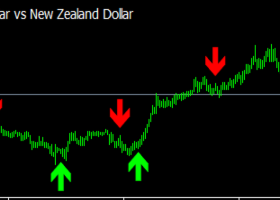
An advanced visual indicator achieves this target by functioning as a rigorous structural filter layer. The primary visual infrastructure deploys a high performance trend engine, built around a responsive native Hull Moving Average matrix, to eliminate high frequency chart noise and map the true directional bias of the asset without lag. Around this responsive baseline, the code projects dynamic volatility bands that expand and contract relative to the changing standard deviation of price. The true intelligence of this framework initiates when price approaches these dynamic boundaries; the underlying deep learning code executes a comprehensive multi level confirmation sequence, checking multi timeframe trend health, evaluating immediate candlestick shape parameters, and verifying macro economic event clocks before displaying an execution zone.
Traders who require this exact tier of data driven visual tracking can drop the ICONIC HULLX AI indicator directly onto their MetaTrader 5 charts. Engineered completely within raw native MQL5, this advanced analytical tool completely eliminates high latency external web architectures by processing its multi layered confirmation workflow entirely inside the chart thread. Instead of cluttering your screen with lagging unvalidated technical signals, it utilizes a strict technical filter stack to calculate trend direction, volatility expansion, and real time market regimes, exposing only the highest quality pullback and trend flip opportunities. It functions as an uncompromised decision support layer designed for professionals who demand total structural discipline from their visual trading setup.
Fully Autonomous Quantitative Architecture: Local Neural Cores vs Distributed Networks
When migrating from automated visual filters to fully hands free systematic portfolio execution, the software choice between native compiled code and distributed web connections represents a critical performance metric. Many retail developers select the path of least resistance, building basic expert advisors that continually serialize live tick updates and transmit them over the internet to remote Python servers via web API links. While this distributed model allows the use of generalized public code libraries, it introduces massive single points of failure through network latency, payload parsing overhead, and endpoint vulnerability, making it entirely unviable for professional asset management.
An institutional grade Expert Advisor must operate with total execution autonomy and deterministic code safety. Every microsecond of lag introduced by web routing protocols, JSON translation loops, and remote server queuing directly translates into heavy execution slippage and destroyed strategy expectancy. By compiling the complete neural model structure, linear algebra matrix calculations, and capital protection logic natively within a self contained executable file, the algorithm responds to incoming price changes instantaneously. The local system can perform hundreds of multi timeframe structural checks on every live tick, adjusting protective limits and executing tactical modifications within microseconds, long before a cloud dependent model can even complete its initial network handshake.
Furthermore, fully embedded execution models guarantee absolute operational safety under extreme market conditions. In high frequency or high volatility environments, the trading system must maintain total localized control over open portfolio exposure. If a third party remote server experiences a sudden connectivity failure or an API endpoint undergoes an unexpected software modification during a critical market reversal, a distributed strategy can become completely frozen, unable to manage protective boundaries or execute necessary exits. A native MQL5 framework retains its entire mathematical intelligence locally within the compiled file, ensuring that automated capital preservation subroutines, trailing stop management, and position scaling execute with absolute certainty under any external network environment.
Algorithmic operators demanding this exact benchmark of native high speed automated execution can run ICONIC NEUROCORE AI directly in their environments. This premium Expert Advisor stands as the absolute pinnacle of native MQL5 machine learning integration, utilizing a highly advanced fully embedded neural core engineered to trade major forex currency pairs, prime equity indices, and physical commodities simultaneously from a single chart. By processing all mathematical calculations, structural timeframe checks, and global risk caps locally within the global terminal thread, it eliminates the immense risks associated with external web links and remote server architecture. It delivers a completely autonomous data driven quantitative solution built for institutional asset discipline.
Tactical Execution and Capital Defense Layering in Asymmetrical Crypto Assets
The operational necessity of native code execution and absolute hardware processing speed becomes exceptionally critical when automated quantitative models are deployed into highly volatile asymmetrical digital asset networks. Crypto assets, specifically Bitcoin, exhibit structural liquidity distributions and price discovery behaviors that differ fundamentally from traditional sovereign currencies or blue chip equities. The digital asset landscape is defined by massive non linear momentum cascades, rapid liquidation vacuums, and sharp structural shifts that can transition from absolute baseline compression to extreme vertical trend expansions within a short time horizon.
To conquer these highly volatile asset environments, an automated multi asset framework must abandon basic mean reversion models and implement specialized trend tracking structures that heavily prioritize momentum persistence and rapid volume expansions. Bitcoin trends are frequently driven by aggressive spot accumulation or global derivative squeeze events, creating multi day directional surges that easily wipe out traditional overbought or oversold technical indicators. A native crypto architecture must continuously calculate the absolute velocity of these breakouts, deploying dynamic trailing risk logic that maximizes profit capture during extended runs while maintaining a highly sensitive defensive stop profile to insulate the principal balance against sudden trend reversals.
Additionally, systematic crypto trading demands absolute execution speed and real time transaction cost filters directly within the terminal machine code. During phases of hyper volatility, digital asset liquidity can fragment instantly across various matching engines, causing broker spreads to expand violently and introducing severe execution slippage. A native MQL5 expert advisor evaluates these operational cost boundaries on every single incoming price update. If the local model calculates that execution parameters have expanded past safe boundaries, it instantly holds all pending orders, adjusting its entry targets to defend the master account balance until normalized liquidity distributions return. This strict level of asset specific engineering is what separates fragile retail scripts from robust professional algorithmic frameworks.
For quantitative operators focused exclusively on extracting risk adjusted alpha within the digital asset sector, the ICONIC BTC AI bot provides an extraordinary demonstration of target tuned MQL5 software development. This premium Expert Advisor is mathematically calibrated to master the unique structural nuances and velocity patterns of Bitcoin trading, integrating its advanced trend tracking matrices and high speed momentum algorithms directly into a native self contained architecture. Completely rejecting hazardous unhedged grid and martingale models, it relies strictly on structural mathematical confluence, automated risk mitigation, and native deep learning structures to isolate and capture high probability trends. It delivers a pure institutional grade automated edge tailored specifically for the global crypto landscape.
Engineering Blueprint for Constructing a Native Deep Learning Layer
For algorithmic software engineers determined to build absolute operational safety and self contained intelligence into their custom indicators or expert advisors, the following detailed technical blueprint outlines the exact mathematical phases required using native MQL5 matrix features.
Phase One: Spatial Feature Extraction and Scale Normalization
The baseline requirement of any native learning system is the complete elimination of raw price metrics, which introduce immense mathematical scale bias and result in immediate model over fitting. Developers must transform raw chart prices into normalized relative vectors. Compute the logarithmic difference of close prices relative to your smooth trend baseline, and normalize the dynamic width of your standard deviation boundaries by dividing the immediate volatility value by a long term rolling variance average. By organizing these relative data points into a synchronized input matrix using native MQL5 matrix configurations, you create a stationary numerical field where all inputs operate within a bounded scale, building a clean mathematical foundation for local matrix transformations.
Phase Two: Localized Transformation and Activation Inference
With the normalized spatial matrix populated locally on the chart execution thread, the code must execute immediate vector transformations to compute the instantaneous confidence score of the setup. Establish an internal hidden layer matrix containing your pre calibrated weight tensors. The local expert advisor executes rapid matrix dot product operations to merge the immediate market state variables with the internal neural configurations. Pass this raw output vector through a local activation function, such as a sigmoid or hyperbolic tangent calculation routine, to map the final value into a clean probability scale between zero and one, creating a highly advanced quantitative gate that validates technical setups within microseconds.
Phase Three: Internal Feedback Loops and Gradient Realization
To secure permanent code autonomy without depending on external web architecture, the system must operate its own error feedback loop directly on the chart canvas. As open positions are resolved by hitting their designated target levels or triggering protective exit boundaries, the code instantly measures the exact mathematical error between its calculated probability score and the actual structural outcome. This error value is processed by an internal reinforcement learning algorithm that uses native linear algebra matrix operations to apply minute incremental adjustments to the primary weight configurations. This continuous local learning cycle ensures that your trading software actively refines its analytical sensitivity on every trade, preserving long term performance metrics as global financial environments evolve.
The Imperative of Self Contained Software Engineering in Electronic Trading Networks
The institutional quantitative arena is a continuous competitive environment driven by processing velocity and mathematical precision. The room for operational error has completely vanished. Trading systems that utilize high latency external web API connections or rely on rigid unvalidated linear indicator scripts are structurally incapable of surviving against advanced institutional algorithmic frameworks that continuously scan fragmented order books to exploit predictable retail execution patterns.
Securing a permanent quantitative edge demands a total commitment to architectural autonomy, visual engineering clarity, and non linear risk cascading. By compiling sophisticated trend engines, adaptive volatility boundaries, and native deep learning matrix calculations directly inside a self contained MQL5 environment, software developers unlock true operational resilience under all market regimes. Whether your goals are achieved through the deep visual insights of ICONIC HULLX AI, the multi asset automated portfolio execution of ICONIC NEUROCORE AI, or the specialized momentum tracking of the ICONIC BTC AI bot, the path to long term expectancy remains absolute: build natively, protect capital dynamically, and execute at the maximum speed of local hardware.