Timing Intersections: Combining 7 and 60 Minutes in Intraday Trading
20 April 2026, 20:38

0
225
Introduction
Most trading systems focus on price: levels, patterns, indicators.
But in practice, price often reacts not at levels alone, but at specific moments in time.
In this article, I will share a practical approach based on the VISTmany framework and the iVISTscalp5 indicator — focusing on how different timing cycles interact, especially 7-minute and 60-minute structures.
⸻
Time as a Market Trigger
Instead of asking:
“Where will price go?”
we ask:
“When is the market ready to move?”
This shift simplifies analysis.
Timing points act as volatility triggers.
When time is activated, price tends to respond.
⸻
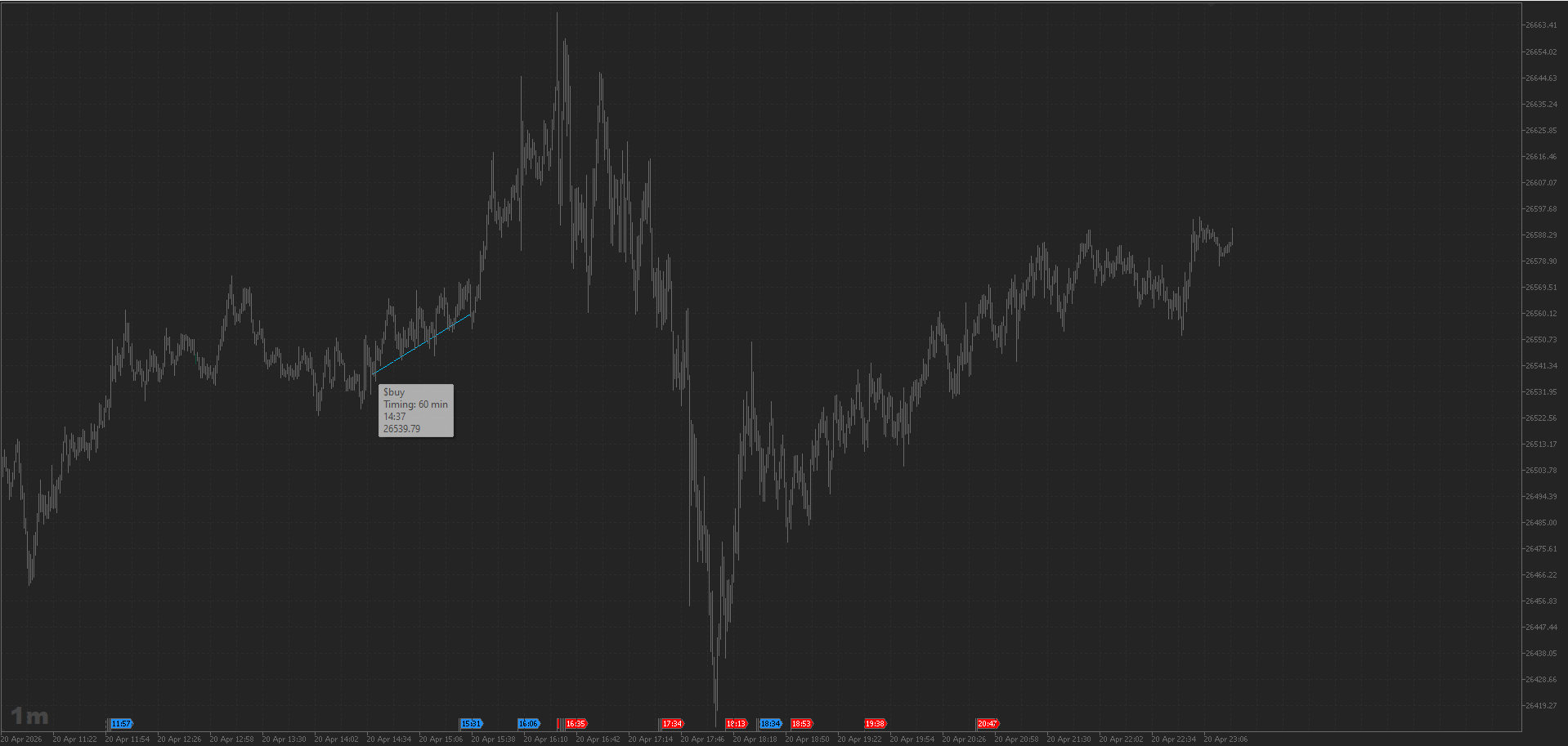
Multiple Timing Layers
One of the key ideas of the model is that:
Time exists in layers, not as a single signal.
Each layer represents a different cycle:
short-term → fast reactions
medium-term → structure
higher timeframe → dominant impulse
⸻
Why 7-Minute Timings Matter
The 7-minute structure provides:
frequent signals
early activation points
entry opportunities for intraday trading
However, taken alone, they can be:
noisy
less stable in direction
⸻
Role of 60-Minute Timings
The 60-minute structure behaves differently:
fewer signals
stronger levels
higher probability of reaction
Most importantly:
👉 60-minute timings often define the context of the day
They act as:
reversal zones
accumulation points
or continuation triggers
⸻
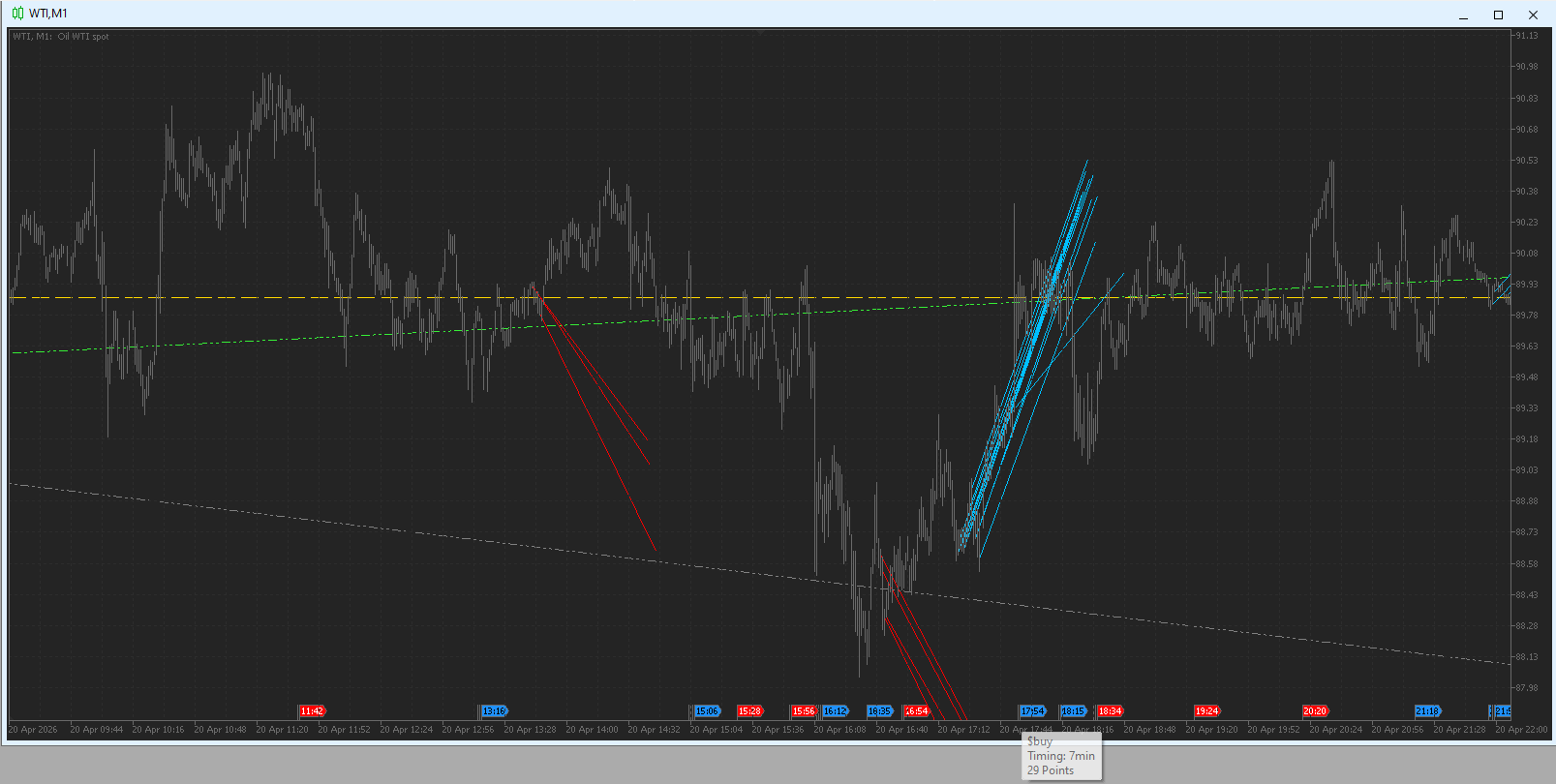
The Key Idea: Timing Intersection
The strongest setups appear when:
7-minute and 60-minute timings intersect
This creates:
alignment of short-term and higher timeframe cycles
increased liquidity concentration
stronger and cleaner price reactions
⸻
How to Read an Intersection
When both timings appear close to each other:
The 60-minute timing defines the context
The 7-minute timing refines the entry moment
👉 In practice:
60m = where
7m = when exactly
⸻
Example Logic
If:
60-minute timing suggests a reaction zone
and a 7-minute timing appears inside it
Then:
👉 probability of a meaningful move increases
⸻
Flexibility of Timing Selection
An important advantage of the model:
Timings are not fixed. They can be adjusted.
You can choose different intervals depending on your trading style.
⸻
Recommended Timing Set
From practical experience, the most balanced set is:
7 minutes → precise entries
30 minutes → intraday structure
48 minutes → intermediate cycle
54 minutes → refined structure
60 minutes → core daily levels
100 minutes → dominant impulse zones
⸻
Key Observation
Higher timing intervals tend to:
define the main movement of the day
show where larger liquidity is activated
👉 These timings often lead to:
strong impulses
or major reversals
⸻
Practical Application
A simple workflow:
Identify higher timing (60m, 100m)
Wait for price to reach the timing zone
Use lower timing (7m) for entry
Confirm with price behavior
⸻
Important Notes
Not every timing will produce a trade
Context always matters
Timing shows when, not a guaranteed outcome
⸻
Conclusion
The market is not just a price system — it is a time-structured system.
By combining different timing layers,
especially 7-minute and 60-minute cycles,
we can move from random entries to structured decision-making.