StopLoss and TakeProfit offerings | How it works and which is better to choose

For us, as traders who want to make a lot of money, the ratio of stop-loss to take-profit is irrelevant. By increasing take-profit, we reduce the likelihood of hitting it and, consequently, increase the likelihood of hitting the stop-loss. These ratios mean nothing.
We're only interested in ROI. Or more precisely, the variance that directly depends on it. Variance destroys deposits when we incorrectly predict drawdowns. Variance destroys our nervous system when we have to endure losses for months and not betray our faith in our trading strategy.
It is the "ROI" that truly influences the dispersion of our trading account balance line.
ROI = (((TP * probability of winning) / (SL * probability of losing)) – 1) * 100
ROI = ((($100 * 0.60) / ($100 * 0.40)) – 1) * 100 = 50
ROI = ((($100 * 0.131) / ($10 * 0.869)) – 1) * 100 = 50
ROI = ((($10 * 0.938) / ($100 * 0.062)) – 1) * 100 = 50
Maximum ROI is limited by our ability to predict future quotes. Therefore, in certain market situations, you can choose the most favorable stop-loss to take-profit ratio, but you won't be able to significantly increase your ROI.
Of course, this is a very simplified approach, and if we work with probability theory, we'll discover even more subtleties. But ultimately, we just need to make more money. Don't believe the fairy tales that 2 to 1 is good and 1 to 10 is bad. Use what will give your strategy the highest ROI.
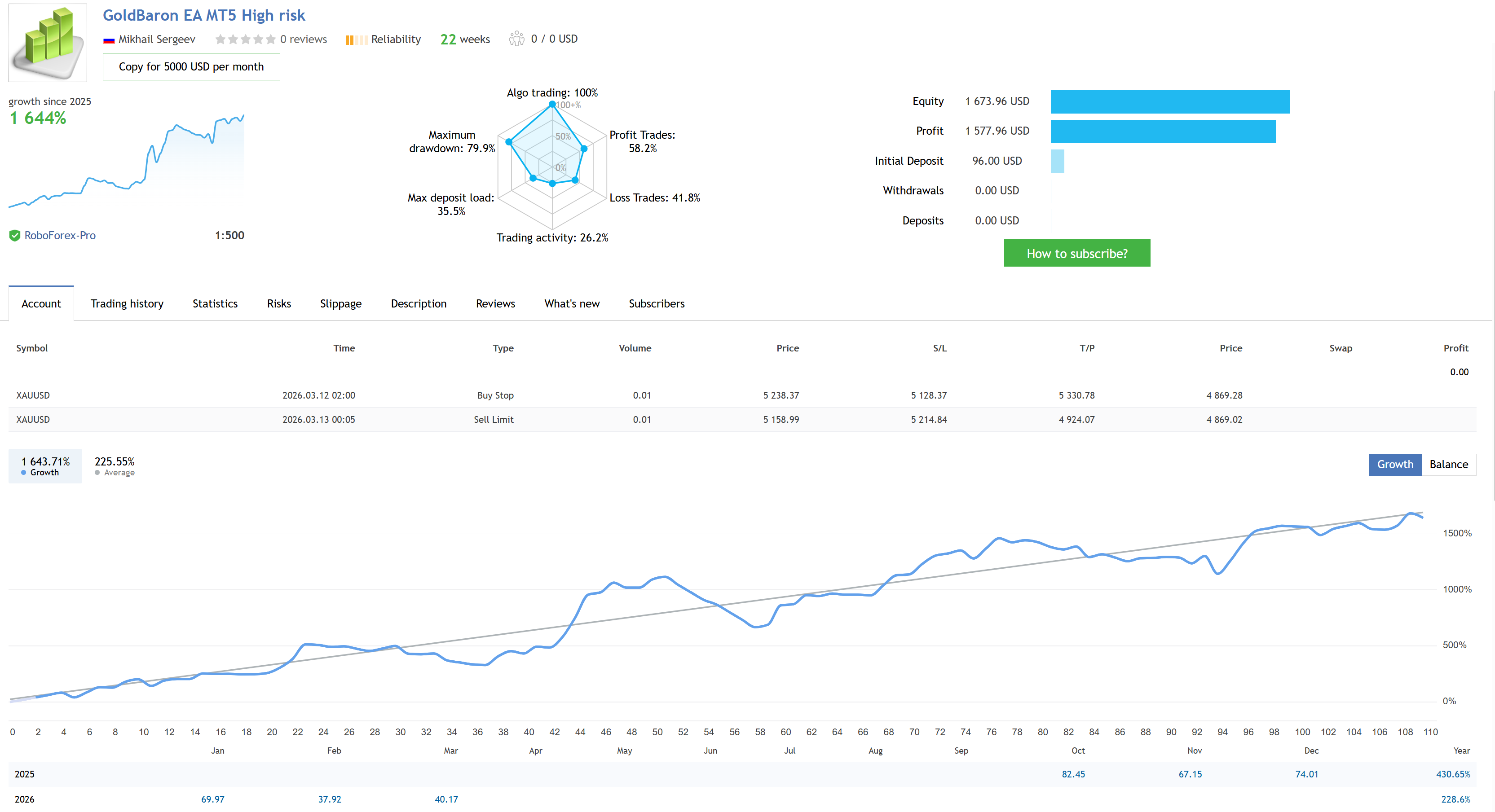
Personally , I've stopped adjusting my trades to someone else's standards and focused on maximizing ROI within the market conditions I can actually read . As proof of my expertise , I 'm providing my trading results: https://www.mql5.com/en/signals/2339244
Let your balance line arrive as close as possible to the average line of its mathematical expectation.