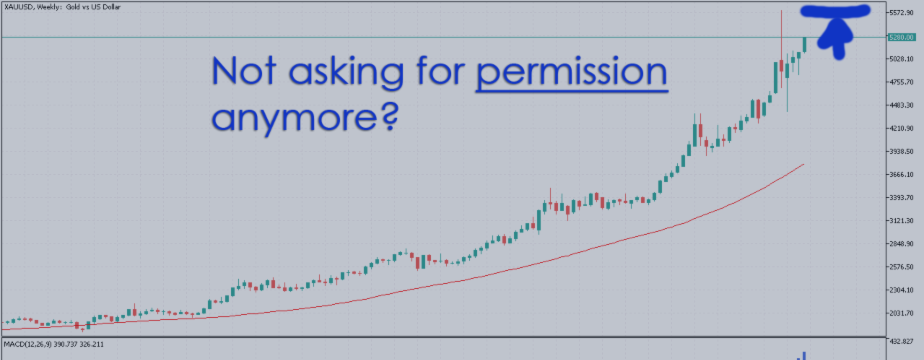
The Middle East has once again moved to the center of the global stage, and markets are responding exactly as history would suggest. With tensions escalating sharply over the weekend, Wall Street is rotating back into safe-haven assets — and gold is leading the charge. XAU/USD looks poised to make a powerful move toward its previous all-time high of $5,500 per troy ounce as early as this month. The fear premium is real, the demand is structural, and the momentum is building. That said, I don't expect the $5,500 level to be taken out on this run — the rally is likely to stall before a clean breakout. What I do expect is a strong consolidation around the $5,000 mark in the second half of March, which in itself would mark a significant new floor. Gold is not just reacting to geopolitics — it's also benefiting from a broader de-dollarization trend and renewed appetite for hard assets. The $5,000 level, if held through month-end, would be a major technical and psychological statement. This is the kind of setup that long-term gold bulls have been waiting for. Keep a close eye on price action mid-month — that's where the story gets interesting.
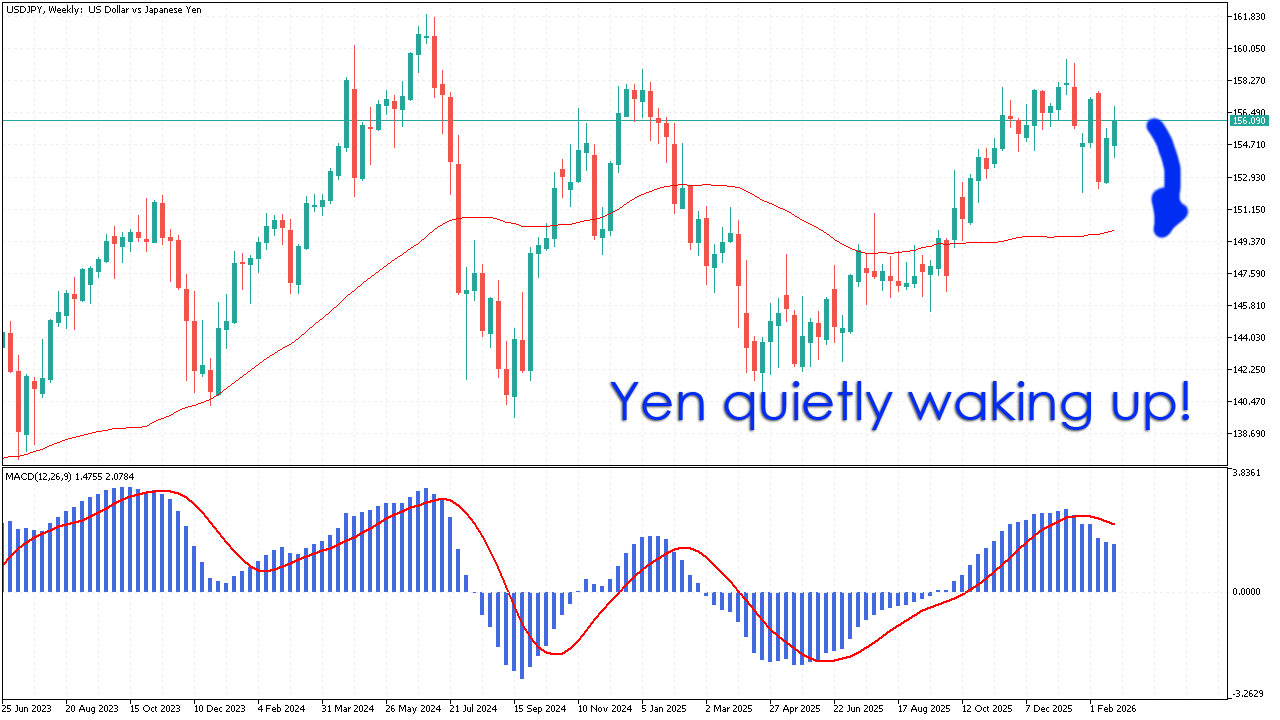
The Japanese yen is in a league of its own right now, and the current geopolitical climate only reinforces its appeal. Historically, both CHF and JPY serve as alternative safe havens when the risk of holding too many US dollars becomes uncomfortably high — and
that moment appears to be arriving. I expect USD/JPY to begin a confident move lower from the very start of the week, with the pair targeting its 52-week moving average on the weekly chart over the course of March.
The first meaningful support sits at 152.00, and the next key level to watch is 150.00. Japan's economic backdrop is neither a headwind nor a tailwind right now — it's largely neutral, which gives the yen room to move on macro sentiment alone. Prime Minister Sanae Takaichi — the first woman to hold the office in Japan's history — continues to enjoy solid approval ratings both among the public and within the Liberal Democratic Party (LDP). That political stability matters. However, an excessively strong yen would create real problems for Japan's export-driven economy, and policymakers are well aware of that threshold. For that reason, I believe a sustained break below 150.00 is off the table — not just in March, but in the months ahead. The yen strengthens, but within limits.