
Do expert advisors really work? Yes: a well-built EA can trade a real edge, consistently, for years, and I can point you at public, third-party-verified track records that prove it, including my own, drawdowns and all. But that answer is only honest with its second half attached: most EAs sold to you do not work, the marketing is engineered so you cannot tell the difference, and even a genuinely working EA will lose money for the wrong owner. This post is both halves.
You are asking this question because something made you skeptical. Maybe you already bought one that had a beautiful backtest and a short, ugly life on your account. That skepticism is not cynicism; it is pattern recognition, and it is correct. The market for EAs really is stacked with products designed to be bought, not to trade. Let us separate what is real from what is packaging, using evidence you can check without trusting me.
Why the Question Feels Unanswerable
Three structural problems make "do EAs work?" hard to research honestly:
- Survivorship theater. You only ever see the winners. Failed EAs get delisted, renamed, and relaunched, so the marketplace always looks like it is full of working robots. The graveyard is invisible by design.
- Backtests are not evidence. A backtest is a fit to the past, and with enough optimization, any strategy fits the past perfectly. Why perfect backtests lose money live covers the mechanics, but the summary is brutal: the prettier the curve, the more suspicious you should be.
- The question mixes two things. "Does the EA work?" (does it have an edge?) and "will it work for me?" (can my account and my nerves survive its losing streaks?). Vendors answer neither and imply both.
So the honest method is to ignore what any EA says about itself and look only at verified forward results: real accounts, tracked live by a third party, over enough time to include pain.
What "Working" Actually Means
Reset your definition, because the industry inflated it. A working EA is not a salary machine and not a straight line. A working EA is positive expectancy executed with discipline: over a large sample of trades, the wins outweigh the losses by enough to beat the costs. That is all, and that is a lot.
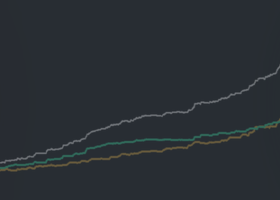
Concretely, from my own live system's public record: a 47% win rate with a profit factor of 1.24 has produced +36.59% over 185 days of forward testing. Read that win rate again: it loses more often than it wins and makes money anyway, because the average win is larger than the average loss. The math of profitable win rates is the single most clarifying thing you can learn before evaluating any robot, because it frees you from the 90%-win-rate marketing that sells worst-in-class products to best-intentioned buyers.
And the other number that defines "working": that same profitable system hit a maximum drawdown of -16.25% along the way. Every real track record has a number like that. It is the entry fee, and any vendor who hides it is telling you which kind of vendor they are.
The Evidence Standard: Verified Forward Tests Only
Here is the standard I hold my own products to, and the one you should hold everyone to, including me:
- Live account, not demo, verified by a third-party tracker (Myfxbook or equivalent) with track record and trading privileges verified.
- Long enough to include losing periods. Three good weeks is weather. Six-plus months with visible drawdowns is climate.
- Visible losses. A curve with no red is either brand new, heavily filtered, or hiding open positions in the floating column.
- Consistency between the pitch and the track. If the sales page says "low risk" and the verified drawdown says -30%, the track is telling the truth and the page is not.
Everything I sell trades in public under that standard, which is not a flex; it is the minimum the question deserves. If you want the practical walkthrough, how to verify an EA is real with Myfxbook forward testing shows exactly what to click, and the 10-minute track-record audit checklist turns it into a routine you can run on any product before spending a euro.
Test the answer yourself, for free.
The fastest way to learn whether EAs work is to run a real one with nothing at stake. The free USDJPY EA is an actual module from our paid portfolio, not a teaser build. Put it on a demo account, watch it make and lose trades, and judge with your own eyes instead of anyone's marketing.
The Conditions That Make an EA Work (For You)
Assume you found a genuinely working EA, verified track and all. It can still lose you money, and this is the part almost nobody writes:
- Your account must survive its worst stretch. Every strategy has a historical worst drawdown, and the future usually manages a bit worse. If that number, applied to your capital, would force you to stop trading it, the EA "works" and you still lose. Size for survival first, returns second.
- You must not overrule it at the bottom. The most common way owners break working EAs is switching them off mid-drawdown, exactly where the math needs continuity. If you cannot commit to the system through red weeks, no verified track will save you.
- One EA is a bet; a portfolio is a plan. Uncorrelated systems smooth each other's losing streaks, which is why serious algorithmic trading is portfolio trading. It also lowers the psychological pressure that causes the overruling above.
- Supervision, not babysitting. Working EAs still need a VPS, occasional updates, and a weekly glance. "Turn it on and go live your life" is a real benefit; "never look at it again" is a myth.
If you are wondering which kind of system fits your capital and temperament, I wrote an honest routing guide by account size and style that applies the same logic across our own catalog, including who should buy nothing.
The Honest Close
Do expert advisors work? The verified answer is yes, some do, and the verifiable part is the entire point. The industry's problem was never that EAs cannot trade; it is that the products which work and the products which sell are selected by different forces, and only a public forward test tells you which one is in front of you.
So do not believe anyone, including me. Demand the live track, read the drawdown before the return, run the free one on demo until the evidence is yours, and size any purchase so its worst historical stretch cannot knock you out. Skeptics make the best algorithmic traders. You are already halfway there.
I write a weekly, numbers-first letter about what our live systems did, including the losing weeks: the DoItTrading newsletter. It is the ongoing answer to this article's question, updated in public.
Frequently Asked Questions
Do expert advisors really work in 2026?
Yes, well-built EAs with a real edge work, and public third-party-verified track records prove it: for example, a live system running at a 47% win rate and 1.24 profit factor produced +36.59% over 185 days of public forward testing, with a -16.25% maximum drawdown on record. The catch is distribution: most EAs marketed to retail buyers do not have an edge, and only verified live results separate the two.
What percentage of forex robots are actually profitable?
No honest global number exists, because failed EAs get delisted and relaunched, which destroys the sample. What can be said with confidence: the majority of retail-marketed EAs show no verified live edge, beautiful backtests correlate poorly with live results, and the products with long public forward tests are a small minority. Judge each EA on its own verified track, not on any industry statistic.
How do I check if an EA's results are real?
Require a third-party-verified live track (Myfxbook or equivalent) with track record verification enabled, at least six months of history, visible losing periods, and a drawdown consistent with the sales pitch. Distrust backtest-only evidence entirely. A structured version of this check takes about ten minutes per product and disqualifies most of what is on sale, which is exactly the point.
Why did my EA work for a month and then lose everything?
The usual suspects: an overfit strategy meeting conditions it was not fitted to, a martingale-style recovery mechanism finally hitting its losing streak, or position sizing that could not survive a normal drawdown. A month of profit is weather, not climate. Before the next EA, check its verified worst drawdown and size your account so that stretch is survivable from day one.
Can I test an EA without risking money?
Yes, and you should: run it on a demo account first, long enough to see real trades, real losses, and real behavior around news and weekends. Weeks, not days. A free EA from a verified portfolio on a demo account is a zero-risk way to learn how algorithmic trading actually feels before any purchase decision.