How to Make Money by Understanding Trading Sessions (And Why Most Traders Ignore It)

How to Make Money by Understanding Trading Sessions (And Why Most Traders Ignore It)
In trading, many people focus heavily on indicators, patterns, and strategies—but overlook one of the most powerful factors that directly impacts performance: market sessions.
If you are not paying attention to when you trade, even the best strategy can fail.
In this article, we’ll explore why trading sessions are critical, how different pairs behave across sessions, and how you can use the Advanced Session Filter inside Strategy Assistant to significantly improve your results.
Why Trading Sessions Matter More Than You Think
The forex market runs 24 hours a day—but it doesn’t behave the same way all the time.
Each session represents a different group of active traders, liquidity levels, and volatility conditions:
- Tokyo Session – Typically slower, ranging market
- London Session – High volatility, strong movements
- New York Session – Continuation or reversal of London moves
- Sydney Session – Low activity, often consolidation
This means one simple truth:
A strategy that works perfectly in one session can completely fail in another.
The Hidden Edge: Pair Behavior by Session
Over time, experienced traders notice something important:
👉 Each currency pair behaves differently depending on the session
For example:
- EURUSD often respects technical analysis better during London and New York sessions
- Breakouts are more reliable when volatility increases
- Patterns that fail in low-volume sessions can succeed during session opens
Why?
Because volume and participation increase, and the market has enough power to complete technical setups.
Real Example: Session + Strategy Combination
Let’s say you trade Trend Line Breakouts.
You might notice:
- During quiet sessions → false breakouts
- During London open → strong, clean breakouts
This happens because:
👉 At the beginning of the London session, volatility enters the market
👉 “Incomplete” patterns finally get enough momentum to break
So instead of changing your strategy, you optimize when you use it.
This is where most traders go wrong—they change strategies instead of adjusting timing.
Introducing the Advanced Session Filter in Strategy Assistant
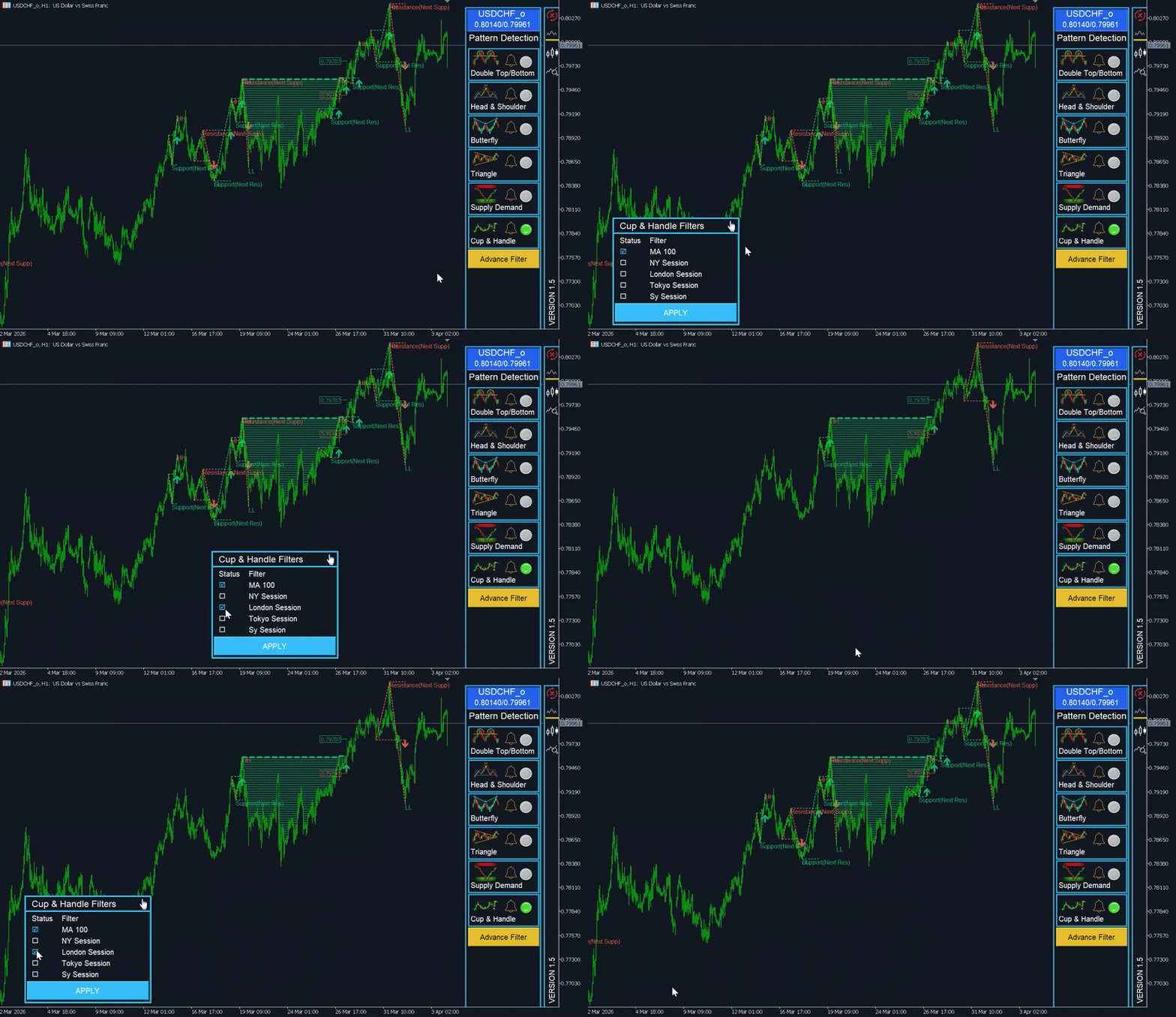
To solve this problem, we introduced the Advanced Filter in Strategy Assistant, with a powerful Session Filter feature.
This allows you to:
- Filter signals based on specific trading sessions
- Enable or disable sessions with a simple checkmark
- Test which strategy performs best in which session
- Build your own optimized trading combination
How It Works
Inside the Advanced Filter popup:
- Select your preferred sessions:
- London
- New York
- Tokyo
- Sydney
- Enable or disable each session easily
- Combine it with any strategy (like breakout, trend, etc.)
Why This Changes Everything
Instead of asking:
❌ “Is this strategy good or bad?”
You start asking:
✅ “In which session does this strategy perform best?”
This small shift creates a huge edge.
Build Your Own Winning Combination
Here’s a powerful approach:
- Pick a strategy (e.g., Trend Line Breakout)
- Trade it across different sessions
- Observe performance
- Use the Session Filter to keep only the best-performing session
For example:
- EURUSD + Trend Line Breakout
- Best results during London session open
👉 Now you trade smarter, not harder.
Combine Session Filter with MA Filter
Strategy Assistant doesn’t stop there.
You can combine:
- Session Filter → When to trade
- Moving Average Filter → Direction of the market
This gives you:
✔ Better timing
✔ Better direction
✔ Better accuracy
Final Thoughts
Most traders fail not because their strategy is bad—but because they use it at the wrong time.
Understanding trading sessions gives you a powerful advantage:
- Better entries
- Fewer false signals
- Higher probability setups
With the Session Filter in Strategy Assistant, you can turn this knowledge into a practical tool and build a strategy that adapts to real market behavior.
Start Using Session-Based Trading Today
If you want to take your trading to the next level, start focusing on when you trade—not just how you trade.
Because in trading, timing is everything.