Ever notice how the first Friday of the month feels a little different in the financial world? That's when the U.S. government releases its famous "Jobs Report" — officially called Nonfarm Payrolls, or NFP. You don't need to be a Wall Street expert to understand why it matters. Here's a simple breakdown.
What Is Nonfarm Payrolls, Really?
In plain terms: it's a monthly count of how many jobs the U.S. economy added or lost — excluding farms, government workers, and a few other categories. Think of it as a monthly health check for the American job market.
Why exclude farms? Because planting and harvesting seasons create big, predictable swings that don't reflect the real economy. By focusing on "nonfarm" jobs, economists get a clearer picture of what's actually happening.
Why Does This Number Move Markets?
Money follows jobs. When more people are employed, they spend more — on rent, groceries, cars, vacations. That spending fuels business growth, which can push prices up (hello, inflation).
The Federal Reserve — the U.S. central bank — watches this closely. If the job market gets too hot, they might raise interest rates to slow things down. If it cools too much, they might cut rates to stimulate growth. These decisions affect everything: your mortgage rate, the value of the dollar, even the price of gold or Bitcoin.
It's Not Just About One Big Number
Here's a pro tip: don't just look at the headline. Smart readers check three things:
- The NFP number itself: Did the economy add jobs or lose them?
- The unemployment rate: What percentage of people looking for work can't find it?
- Wage growth: Are paychecks getting bigger? This tells us if people actually have more money to spend.
Sometimes these signals disagree. For example, the economy might add lots of jobs, but if wages aren't rising, consumers may still feel financially squeezed. That nuance matters.
What Happens When the Report Drops?
At 13:30 UTC on the first Friday of each month, markets often jump. Currency pairs like EUR/USD can swing 50–100 pips in seconds. Gold might spike. Stock indices can reverse direction.
Why? Because traders and algorithms react instantly to whether the data beats or misses expectations. But here's the catch: the initial move isn't always the "real" move. Sometimes the market reverses 10 minutes later once bigger players step in.
Note: During U.S. daylight saving time (roughly March–November), the release shifts to 12:30 UTC.
Real Example: Trading NFP with "Red Riding Hood"
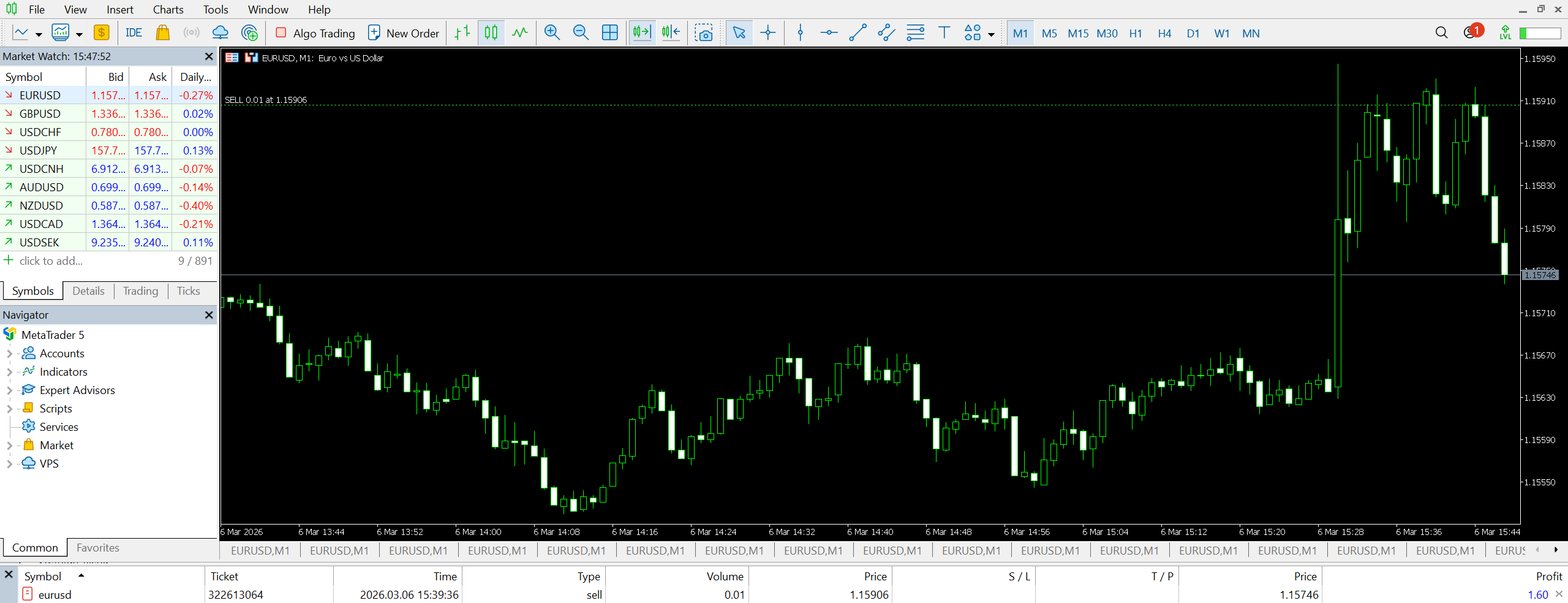
Let's look at what actually happened during the last NFP release on March 6th.
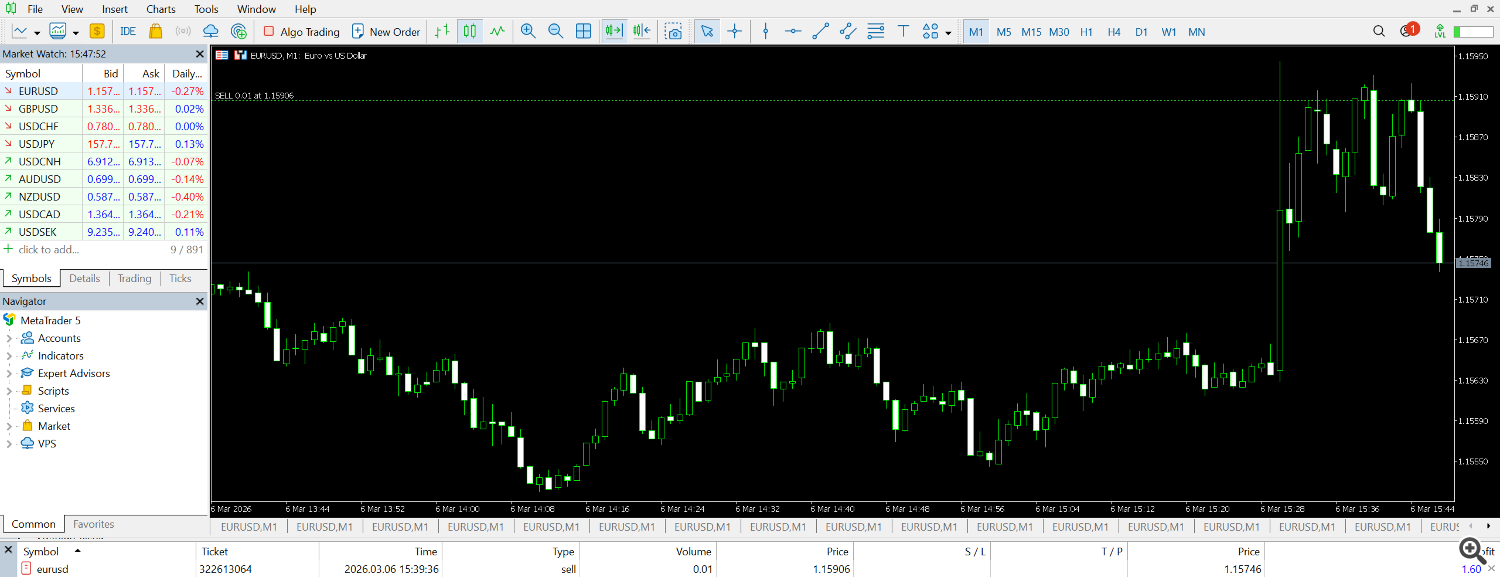
EUR/USD trade from March 6th NFP release - Entry at 1.15906, capturing the downward move after initial volatility
The automated trading advisor "Red Riding Hood" identified a selling opportunity on EUR/USD shortly after the market reaction.
The setup:
- Pair: EUR/USD
- Direction: SELL
- Entry: 1.15906
- Time: 13:39
- Result: The position captured the downward movement as the initial volatility settled
This example shows an important principle: you don't always need to trade the initial spike. Sometimes the smarter move comes after the market digests the news and picks a clearer direction. "Red Riding Hood" waited for the chaos to settle, then entered when the trend became more predictable.
So… What's the Smart Move for You?
Let's be honest: trading NFP manually is tough. The volatility is intense, the timing is critical, and one emotional decision can wipe out weeks of gains. You could spend months learning to read the signals, managing risk, and staying calm under pressure.
Or… you could let a tool that's already proven itself do the heavy lifting.
"Red Riding Hood" isn't magic — it's discipline coded into software. It waits for the noise to fade, identifies high-probability setups, and executes without fear or hesitation. The March 6th trade wasn't luck. It was strategy, patience, and precision — exactly what this advisor is built for. If you're tired of watching from the sidelines while others capitalize on major market events, maybe it's time to give yourself an edge.
Ready to let "Red Riding Hood" guide your next trade?