Introduction
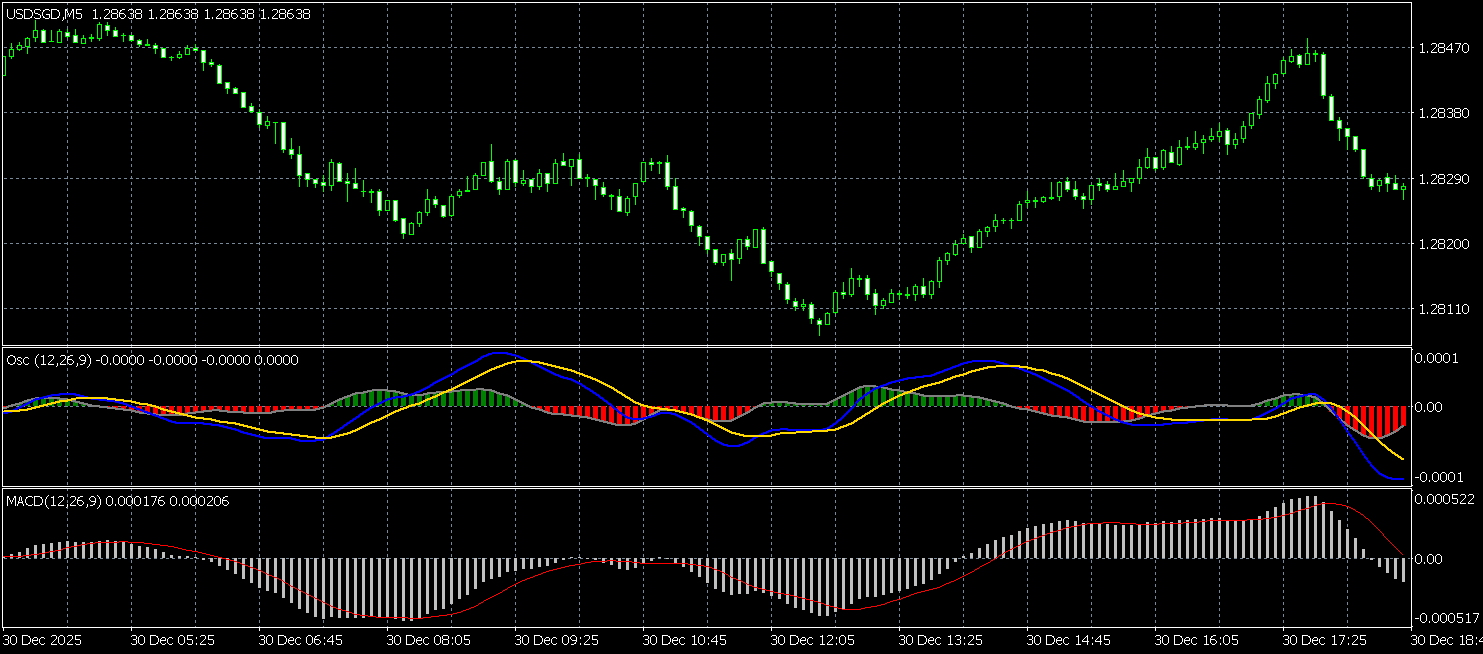
Both MACD and OMACD (Oscillator of MACD) are momentum indicators used in technical analysis, but they serve different purposes and provide distinct insights into price movements.
Traditional MACD Structure
The standard MACD consists of three components:
MACD Line: Fast EMA minus Slow EMA (typically 12-26 periods)
Signal Line: EMA of the MACD Line (typically 9 periods)
Histogram: MACD Line minus Signal Line
The MACD histogram shows the difference between the main line and its signal, indicating momentum strength and potential crossover points.
OMACD Structure
The OMACD takes the concept further by applying the MACD calculation recursively:
First Level: Calculate standard MACD histogram (Fast EMA - Slow EMA - Signal)
Second Level: Apply MACD calculation to the histogram itself
OMACD Line: Fast EMA of histogram minus Slow EMA of histogram
OMACD Signal: EMA of the OMACD Line
OMACD Histogram: OMACD Line minus OMACD Signal
Key Differences
Sensitivity
MACD responds directly to price movements with moderate lag due to the EMA smoothing.
OMACD responds to changes in momentum itself, making it more sensitive to acceleration and deceleration in trends rather than absolute price direction.
Signal Generation
MACD crossovers occur when the MACD line crosses its signal line, indicating potential trend changes.
OMACD crossovers detect changes in momentum acceleration, often providing earlier warnings of exhaustion or strengthening.
Zero Line Interpretation
MACD above zero suggests bullish momentum (fast EMA > slow EMA).
OMACD above zero indicates accelerating positive momentum or decelerating negative momentum.
Divergence Detection
MACD divergence compares price highs/lows with MACD highs/lows.
OMACD divergence examines momentum acceleration patterns, potentially revealing hidden weakness or strength earlier.
Practical Applications
MACD Best For:
Identifying the primary trend direction Generating straightforward buy/sell signals Confirming breakouts and trend continuations Traders preferring clearer, less noisy signals
OMACD Best For:
Detecting momentum shifts before they appear in price Identifying trend exhaustion earlier Finding subtle divergences Traders seeking early entry/exit points Scalping and short-term trading strategies
Mathematical Perspective
MACD measures first-order momentum (velocity of price change).
OMACD measures second-order momentum (acceleration of momentum change).
This makes OMACD a derivative of a derivative, providing insight into the rate of change of momentum itself.
Combining Both Indicators
Many traders use both indicators together:
MACD for trend direction and strength OMACD for timing entries and exits Confirmation when both align Warning signals when they diverge
Limitations
MACD Limitations:
Can lag during fast market movements False signals in ranging markets Less effective in choppy conditions
OMACD Limitations:
More sensitive means more noise Can generate premature signals Requires experience to interpret correctly May overcomplicate analysis for beginners
Conclusion
MACD provides a solid foundation for momentum analysis with clear trend identification. OMACD offers enhanced sensitivity by analyzing momentum acceleration, useful for traders seeking earlier signals. Neither is inherently superior; the choice depends on trading style, timeframe, and market conditions.
Understanding both indicators allows traders to select the appropriate tool for their specific needs or combine them for comprehensive momentum analysis.
Available Here
EfratBuilds MACD mt4 | Buy Trading Indicator for MetaTrader 4