Why Spread & Slippage Decide Your EA Results (Especially on Gold Breakouts)

If you run an EA and your results don’t match what you expected, here’s the uncomfortable truth:
It’s often not the EA. It’s your execution.
Most traders obsess over:
-
entries
-
indicators
-
“best settings”
-
magic parameters
…but ignore the real killers:
✅ Spread
✅ Slippage
✅ Latency
✅ Broker execution quality
✅ Trading conditions during volatility
And this matters 10x more when you trade:
-
XAUUSD (Gold)
-
breakouts
-
news-driven moves
-
fast continuation markets
The simplest explanation: your EA trades a different market than you see
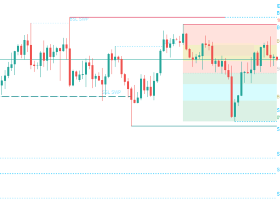
Your chart shows a clean breakout.
But your EA lives in the real world where:
-
spreads widen when volatility spikes
-
your order fills late
-
your stop gets hit earlier
-
your take profit gets missed by a few points
-
pending orders trigger at worse levels than expected
That gap (between “chart reality” and “execution reality”) is where edge disappears.
Spread: the hidden fee that steals your expectancy
A breakout system is often built around “small edges repeated many times.”
If your average trade wins are not massive, then:
extra spread = fewer winners + more stop-outs.
Example logic:
-
your strategy targets a clean continuation
-
but spread widens at the breakout moment
-
your entry is worse, your stop is effectively closer, and you get shaken out more often
This is why “random broker choice” is not a detail.
It’s part of the strategy.
Slippage: the silent reason breakouts underperform live
Slippage is when you get filled worse than requested.
It hits hardest when:
-
the market moves fast (Gold)
-
liquidity is thin
-
brokers “protect themselves” during spikes
-
your connection is slow (home PC, WiFi, distance to server)
If you trade XAUUSD with breakout logic, slippage can easily turn:
-
good trades into average trades
-
average trades into losers
Latency: why your EA needs a stable environment (not your laptop)
Many traders run EAs like this:
-
Windows updates
-
laptop sleep mode
-
unstable internet
-
MT4/MT5 freezes
-
chart loaded with 20 indicators
Then they wonder why execution is messy.
If you want a clean test of any EA, your environment should be:
-
stable
-
always on
-
close to the broker servers (ideally via VPS)
Gold doesn’t wait for your PC.
The “Execution Stack” (what actually improves results)
Here’s the practical checklist I use:
1) Use a broker with solid EA conditions
If you’re trading breakouts or Gold, you want:
-
competitive spreads
-
reliable fills
-
stable conditions during volatility
That’s why I recommend:
IC Trading – Raw spreads / low-cost execution
https://bit.ly/3KvI9RO
Pepperstone – Compatible with most EA strategies
https://bit.ly/4ophy72
2) Keep your EA setup simple and consistent
Most people destroy results by “tweaking” every week.
Pick:
-
1 timeframe
-
1 risk level
-
1 mode/preset
…and let it run long enough to build real data.
3) Treat volatility like a rule, not a surprise
For Gold especially:
-
avoid overleveraging
-
don’t stack exposure
-
accept that some weeks will be messy
-
your job is to survive the messy weeks
Everyone is obsessed with prop firms… but most models push you into bad execution and bad risk
Here’s what happens with typical challenge-style prop firms:
-
you rush
-
you force trades
-
you increase risk
-
you overtrade volatility
-
you reset and repeat
That’s not a serious path for algorithmic trading.
If you care about scaling in a way that actually makes sense, look at Axi Select:
https://bit.ly/48TlcAc
Why I bring it up in an execution post:
-
scaling only matters if your execution + risk are stable
-
Axi Select is closer to a “progression” mindset than the classic “challenge treadmill”
If you’re building a real automated setup, at least compare it before you burn time and money on endless challenges:
https://bit.ly/48TlcAc
Where my ProTrading EAs fit into this
A lot of EAs fail because they are:
-
too complex
-
too easy to misconfigure
-
built around dangerous recovery logic
My ProTrading EAs are designed to be:
-
straightforward
-
stable in behavior
-
easy to run without 200 inputs
-
focused on practical risk control
If you want to see the exact products:
JPY Trend EA ProTrading (74 USD)
MT5: https://www.mql5.com/en/market/product/157484
MT4: https://www.mql5.com/en/market/product/157485
Gold Trend Breakout EA ProTrading (74 USD)
MT5: https://www.mql5.com/en/market/product/157465
MT4: https://www.mql5.com/en/market/product/157466
But here’s the key message:
Even the best EA can look mediocre on bad execution.
Fix the execution first, then judge the strategy.
Quick “copy/paste” conclusion
If your EA results feel inconsistent, don’t immediately blame the EA.
First check:
-
spreads during volatility
-
slippage on breakouts
-
connection stability / latency
-
broker execution quality
-
risk level vs market conditions
And if you’re scaling-minded (instead of challenge-hopping), compare:
Axi Select: https://bit.ly/48TlcAc
Brokers I recommend for EA execution:
IC Trading: https://bit.ly/3KvI9RO
Pepperstone: https://bit.ly/4ophy72