MACD Trend Visualizer System MT5
- Indicadores
- Versão: 1.10
- Atualizado: 29 julho 2026
- Ativações: 20

Product Overview
MACD Trend Visualizer System is a main‑chart MACD trend visualization and bullish/bearish switching indicator designed for both the MT4 and MT5 platforms. It draws a four‑period moving‑average system (MA5, MA10, MA30, MA60) on the main chart, internally calculates the MACD histogram value, and fuses three conditions — MACD bullish/bearish momentum, moving‑average alignment, and price position — to automatically determine whether the current market is in a bullish or bearish trend, generating Long and Short entry signals at the critical points of trend switching. Additionally, the system incorporates a profit‑target‑distance exit warning mechanism: when unrealized profit reaches a set threshold and price shows signs of short‑term pullback, it automatically triggers Exit Long or Exit Short departure prompts. With rigorous signal logic, clear visual hierarchy, and independent alert switches plus multi‑channel notification, it is an ideal main‑chart tool for building a trend‑following and profit‑protection trading system.
Core Features
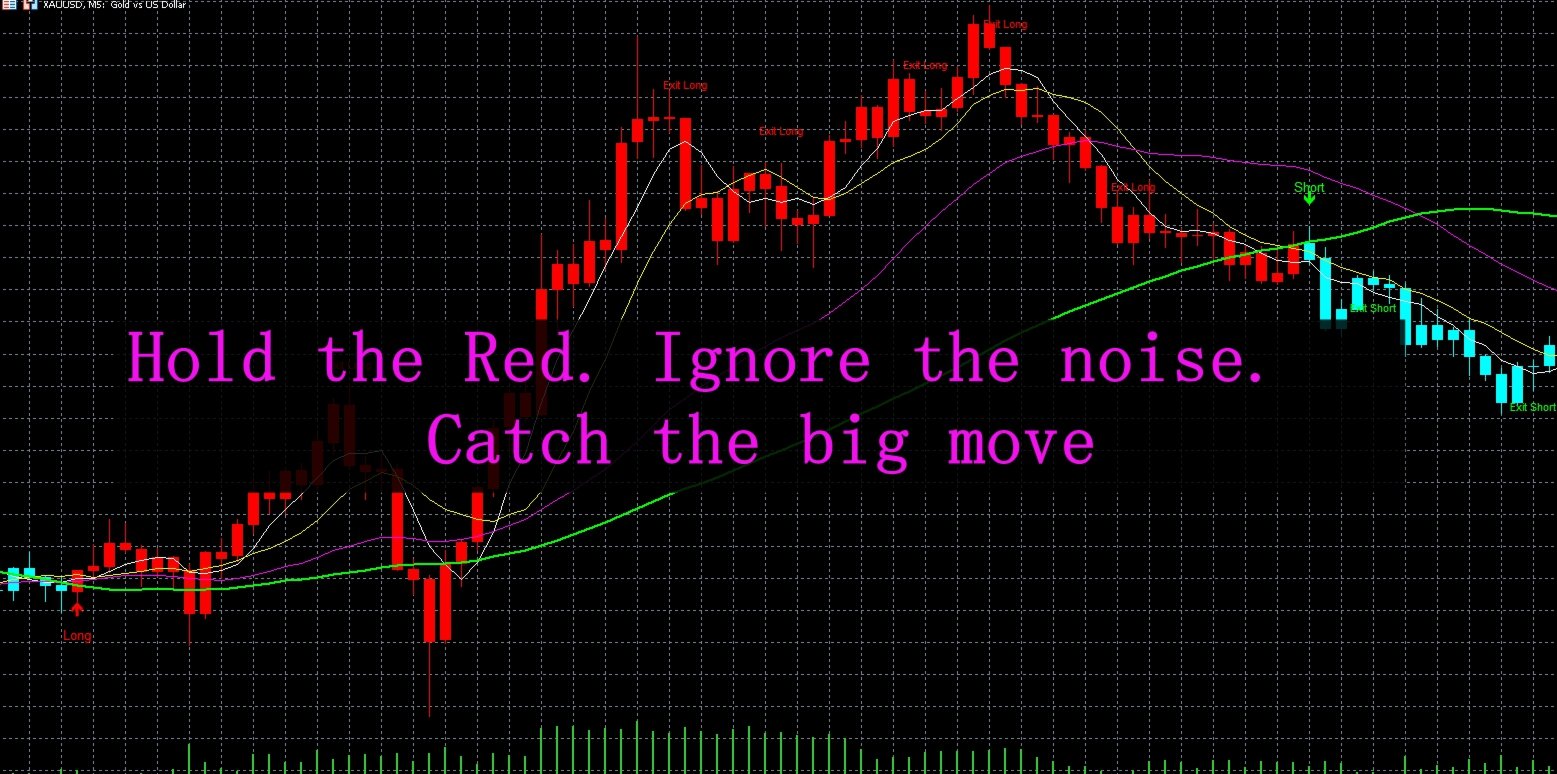
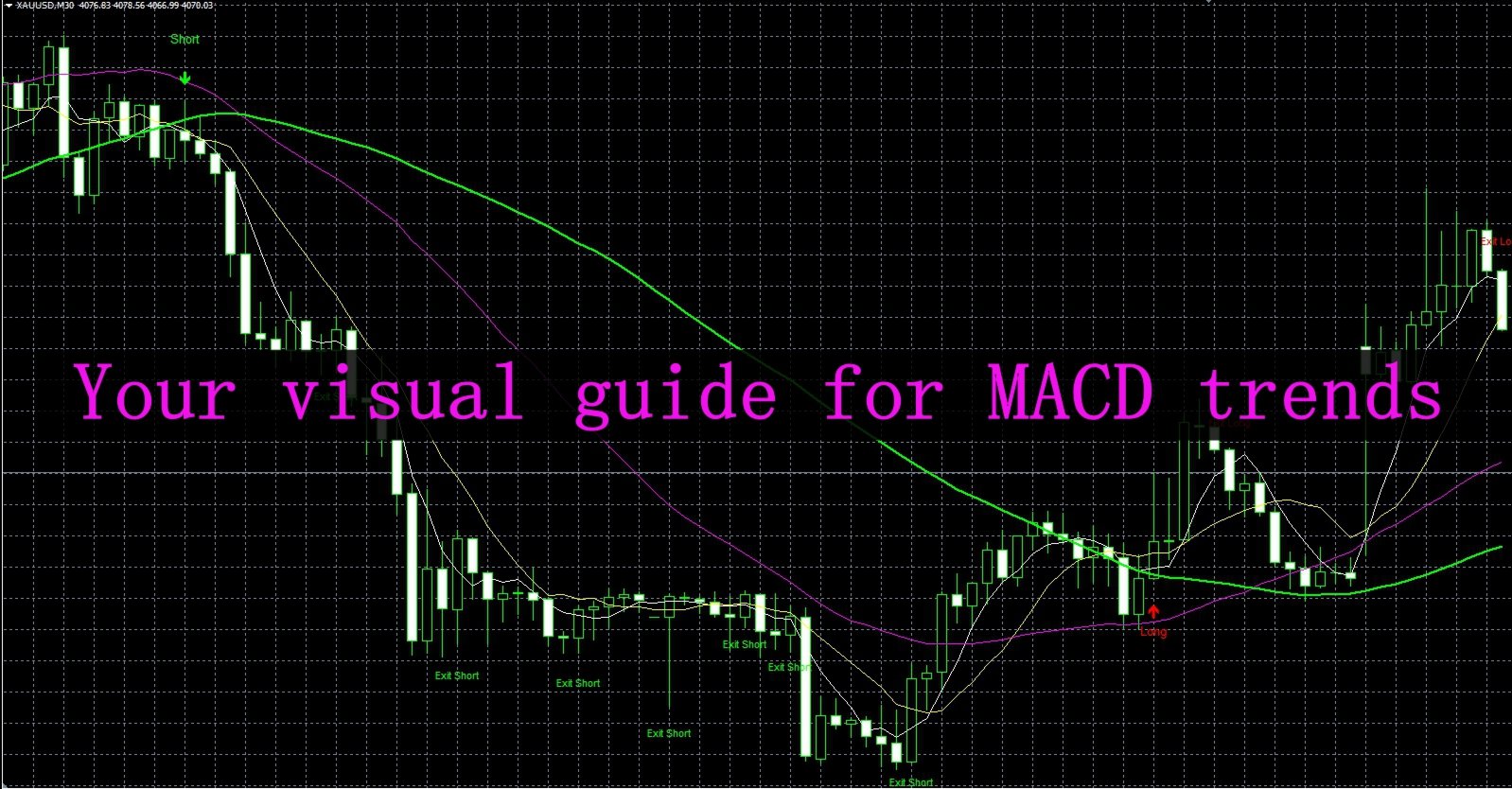
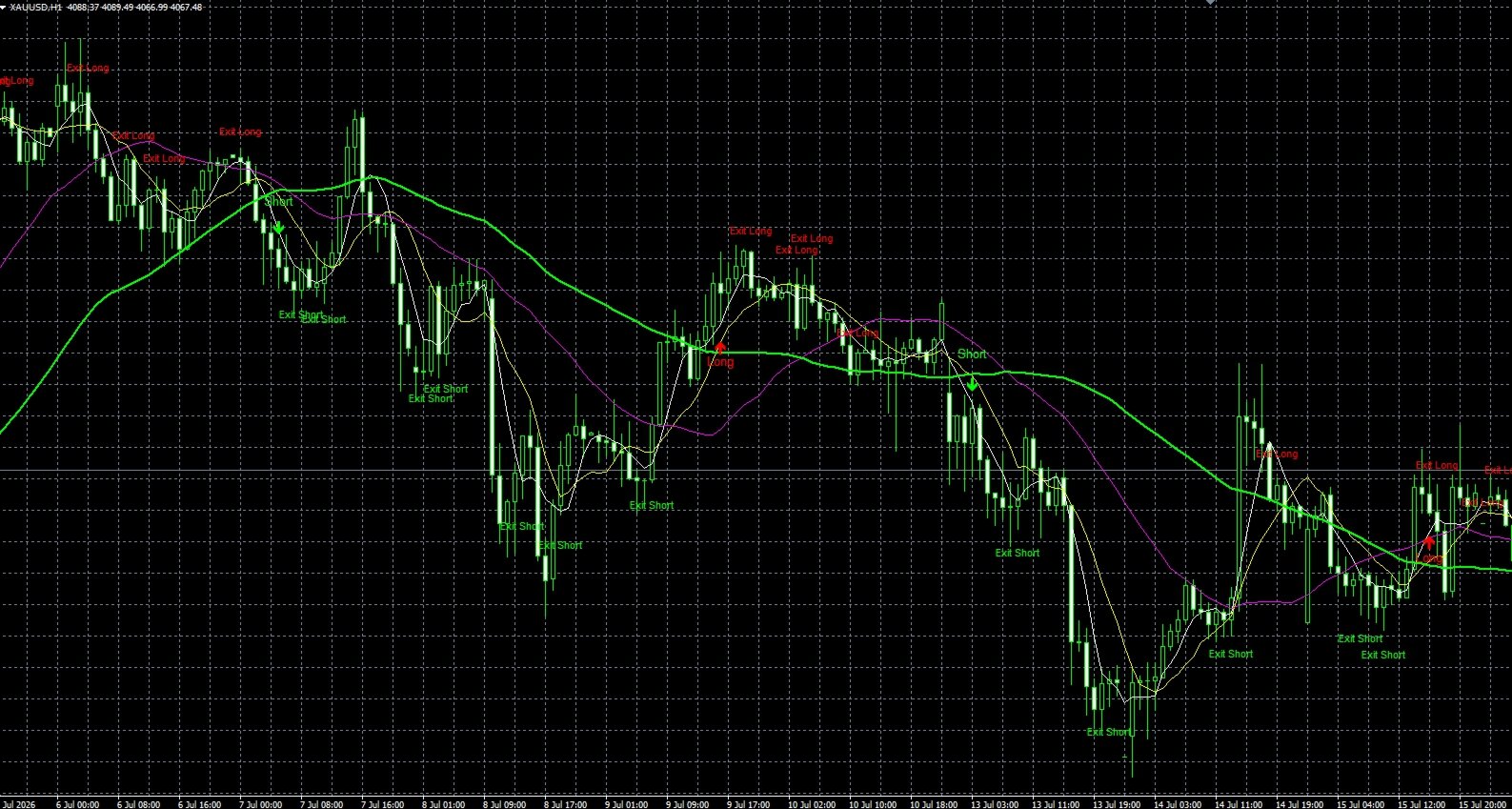
Four‑Period Moving Average System and MACD Trend Fusion The system draws four moving averages on the main chart: the MA5 white line reflects the ultra‑short‑term price center of gravity, the MA10 yellow line reflects the short‑term trend direction, the MA30 magenta line serves as the medium‑term trend reference, and the MA60 green thick line serves as the medium‑to‑long‑term trend benchmark and bullish/bearish watershed. The system simultaneously calculates the MACD histogram value with 12/26/9 parameters internally and performs a three‑way resonance check with moving‑average alignment and price position: when the close is above MA60, the MACD histogram is positive, MA10 is above MA60, and the close is above MA10, the bullish condition is confirmed; when the close is below MA60, the MACD histogram is negative, MA10 is below MA60, and the close is below MA10, the bearish condition is confirmed. The system tracks the distance since the most recent confirmation of each condition and dynamically determines the current trend ownership — whichever side was confirmed more recently is the dominant trend. The MT5 version additionally supports trend candle color‑coding, coloring candles in a bullish trend red, candles in a bearish trend cyan, and candles with no clear trend gray, so that trend state is instantly visible through candle color.
Bullish Signal
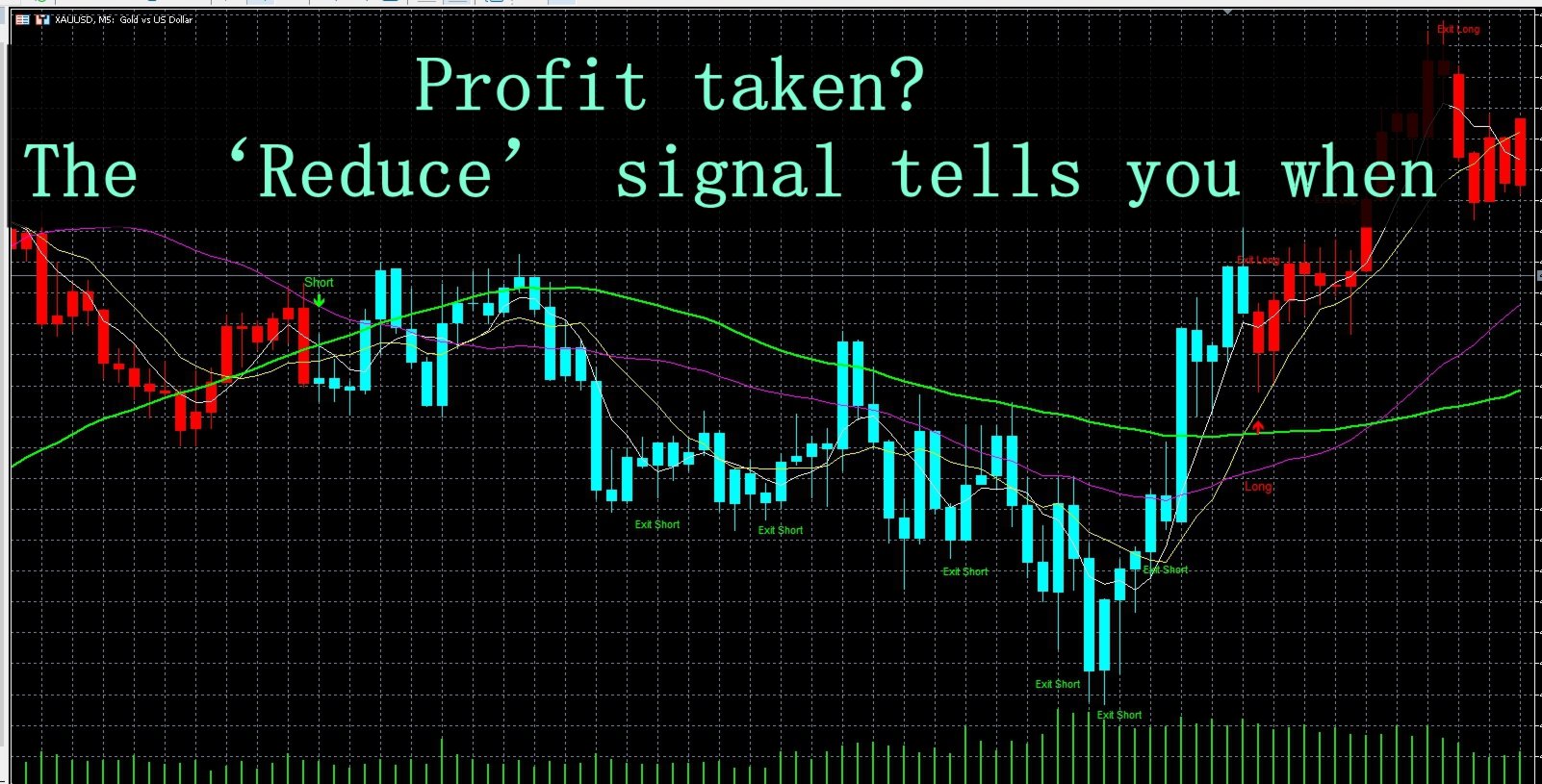
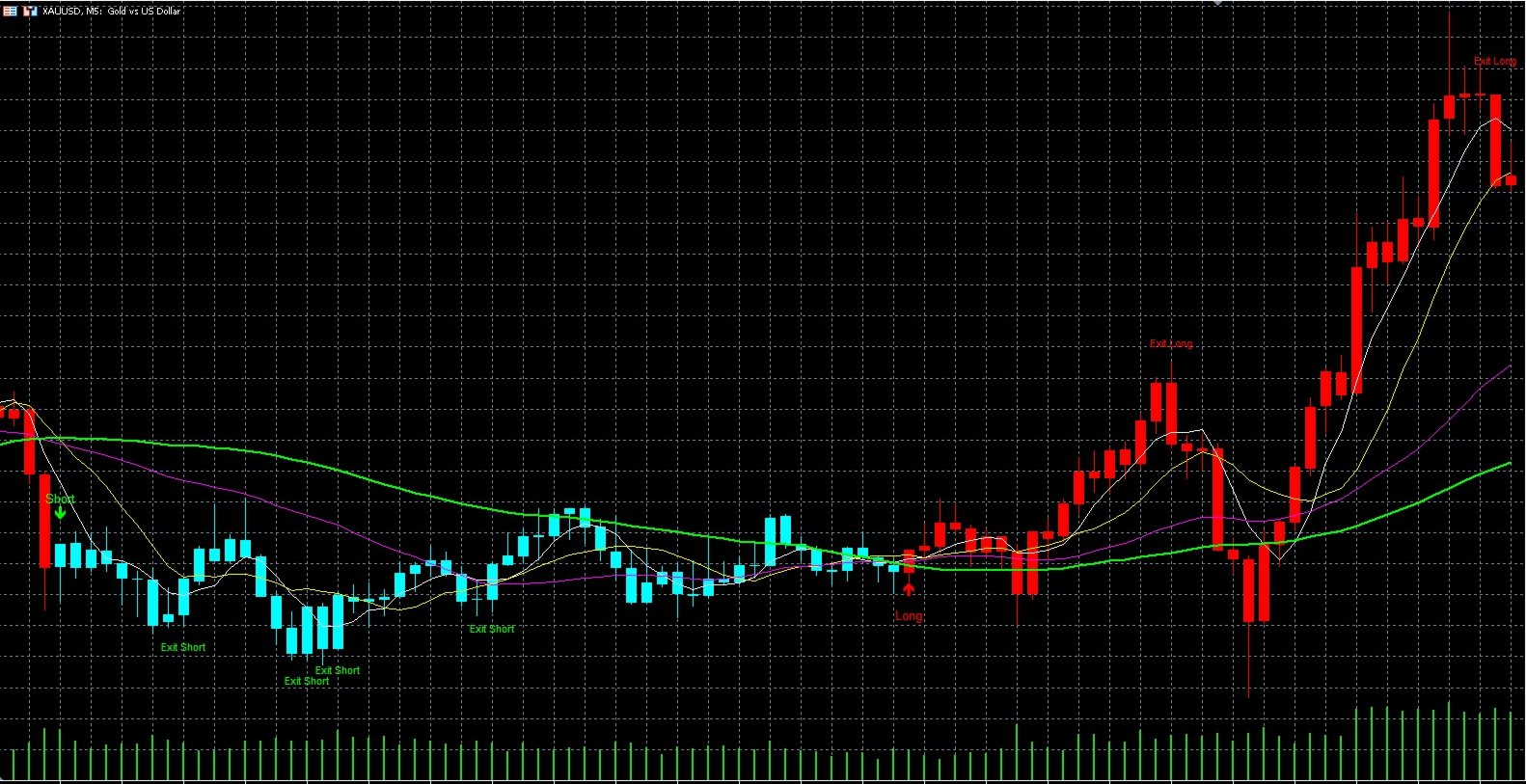
- Long (Go Long): Triggered when the system determines that the current trend has switched from bearish to bullish (i.e., the distance since the most recent bullish condition confirmation becomes smaller than the bearish condition distance for the first time), displaying a red upward arrow with the text "Long" below the candle. This means that MACD momentum has turned positive, moving‑average alignment has shifted to bullish, and price has crossed above the medium‑to‑long‑term watershed — all three conditions are simultaneously satisfied and the trend has just completed a bearish‑to‑bullish switch, making it a classic trend‑reversal long‑entry signal suitable for establishing a long position at the early stage of a trend.
Bearish & Exit Signals
- Short (Go Short): Triggered when the system determines that the current trend has switched from bullish to bearish (i.e., the distance since the most recent bearish condition confirmation becomes smaller than the bullish condition distance for the first time), displaying a green downward arrow with the text "Short" above the candle. This means that MACD momentum has turned negative, moving‑average alignment has shifted to bearish, and price has crossed below the medium‑to‑long‑term watershed — all three conditions are simultaneously satisfied and the trend has just completed a bullish‑to‑bearish switch, making it a classic trend‑reversal short‑entry signal suitable for establishing a short position or closing a long position at the early stage of a trend.
- Exit Long (Reduce Long): Triggered for the first time when, while holding a long position, the close falls below MA5 and the distance between the close and MA60 is still greater than or equal to the set profit‑target distance (default 450 points), displaying the red text "Exit Long" above the candle. This means that although price has accumulated considerable unrealized profit, short‑term momentum shows signs of pullback (breaking below MA5), making it a position‑reduction or profit‑taking warning signal for long positions, prompting traders to lock in partial profits and reduce holding risk.
- Exit Short (Reduce Short): Triggered for the first time when, while holding a short position, the close rebounds above MA5 and the distance between MA60 and the close is still greater than or equal to the set profit‑target distance (default 450 points), displaying the green text "Exit Short" below the candle. This means that although price has accumulated considerable unrealized profit, short‑term momentum shows signs of rebound (crossing above MA5), making it a position‑reduction or profit‑taking warning signal for short positions, prompting traders to lock in partial profits and reduce holding risk.
Practical Application
In day‑to‑day trend‑following trading, the Long and Short signals form a complete trend‑switching entry system. The Long signal represents a bearish‑to‑bullish trend turning point, suitable for establishing a long position at the early stage when the MACD histogram turns from negative to positive and moving averages shift from bearish to bullish alignment; the Short signal represents a bullish‑to‑bearish trend turning point, suitable for establishing a short position or closing a long position at the early stage when the MACD histogram turns from positive to negative and moving averages shift from bullish to bearish alignment. Both signals are the first confirmation of a trend switch, characterized by "earliness," making them suitable for trend traders to capture the large initial segment of a trend move.
The Exit Long and Exit Short signals form a profit‑protection system. After a trend has run for some time, the distance between price and MA60 gradually widens and unrealized profit accumulates; when price then shows a short‑term pullback (longs breaking below MA5 or shorts crossing above MA5), the system triggers an exit warning. This is not a trend‑reversal signal but a "trend still intact but short‑term overheated" position‑reduction prompt, suitable for traders executing a staged profit‑taking strategy: reduce part of the position to lock in profits first, hold the remainder for trend continuation, and exit fully only when a reverse Short/Long signal appears.
It is recommended to use Long/Short signals as the primary entry basis and Exit Long/Exit Short signals as the position‑management basis; used together, they achieve a complete trading loop of "trend entry, staged profit‑taking, reverse exit."
Parameter Settings
Core algorithm parameters: Profit Target ZZ defaults to 450 points, controlling the profit‑target distance threshold for Exit Long and Exit Short signals. This value is in "points" and is internally multiplied by Point to convert to price distance. A larger value makes the exit warning more conservative (requiring greater unrealized profit before triggering), suitable for long‑term trend holding; a smaller value makes the exit warning more sensitive, suitable for short‑term swing trading. Traders should adjust flexibly based on the volatility characteristics of the instrument and their own holding period. Max Lookback Bars defaults to 2000, controlling the maximum number of historical candles marked with signals, balancing chart cleanliness with backtesting needs.
Alert settings: Alert On Bar Close is enabled by default and is strongly recommended to stay enabled, so alerts fire only after a candle closes and confirms the signal, avoiding false signals caused by intrabar price swings. Popup and Sound are enabled by default, while Push and Email are disabled by default; traders can adjust them flexibly according to their screen‑watching habits.
Per‑signal alert switches: The system lets you independently enable or disable alerts for each of the four signals, Long, Short, Exit Long, and Exit Short; all four are enabled by default, allowing you to receive only the signals relevant to your current strategy and filter out unnecessary noise.
Usage Recommendations
This indicator applies to mainstream instruments such as forex, precious metals, indices, and cryptocurrencies, and is fully compatible with the MT4 and MT5 terminals. It is recommended for use on the H1 timeframe and above; MACD trend‑switching signals on larger timeframes are more stable and practically valuable than on smaller ones, effectively reducing frequent‑switch interference in ranging markets.
It is recommended to combine this indicator with volume indicators or support/resistance tools. A Long signal accompanied by volume expansion and a breakout above a prior resistance level has significantly improved reliability; an Exit Long signal appearing near a prior high with shrinking volume is a high‑confidence profit‑taking opportunity. The Profit Target ZZ parameter should be adjusted by instrument: major forex pairs are recommended at 300-500 points, gold at 800-1500 points, and cryptocurrencies should be set according to actual volatility. No indicator can guarantee a 100% win rate, so please always set strict stop losses and control position risk, using this indicator as a decision aid rather than the sole basis.
Summary
MACD Trend Visualizer System perfectly fuses four mechanisms: four‑period moving‑average trend identification, MACD bullish/bearish momentum resonance, first‑confirmation of trend switching, and profit‑target‑distance exit warning. It is not only a visually clear, hierarchically layered main‑chart moving‑average trend tool but also a practical trend‑following system with bullish/bearish switching entry, profit‑protection exit, and all‑round alert control, suitable for traders at every level to build robust trend‑following and profit‑protection rules, capturing large trend moves while effectively locking in unrealized profits and controlling drawdowns.