Priority Stability
- Experts
-
Ivan Simonika
 List of the best products: https://www.mql5.com/ru/users/dragonivan/seller
e-mail: dragon.ivan.sym@gmail.com - Versione: 3.4
- Aggiornato: 16 settembre 2026
- Attivazioni: 5
Priority Stability: Intelligent Market Cycle Management System
Priority Stability is a high-end algorithmic solution designed to automate trading processes within the foreign exchange market. The core logic is built upon statistical volatility analysis and mathematical modeling of position distribution. This expert advisor acts as a precision tool for systematizing market operations, eliminating subjective bias from the decision-making process.
Architecture and Data Processing Logic
The Priority Stability framework is based on a multi-factor analysis of market dynamics. Rather than forecasting future price movements, the algorithm reacts to real-time data flow using integrated noise-filtering modules.
Core Functional Features:
- Non-Geometric Sequencing: A proprietary grid formation algorithm that utilizes calculated coefficients to adjust the distance between operations dynamically.
- Hybrid Execution Protocol: A sophisticated protocol combining immediate execution with a pending order system to optimize entry points based on current market volatility.
- Risk Management Modules: Integrated environmental filters, including spread expansion monitoring and time-based activity constraints.
- Dual Boundary System: A multi-layered result fixation structure that incorporates both server-side hard limits and internal algorithmic triggers.
Technical Operational Standards
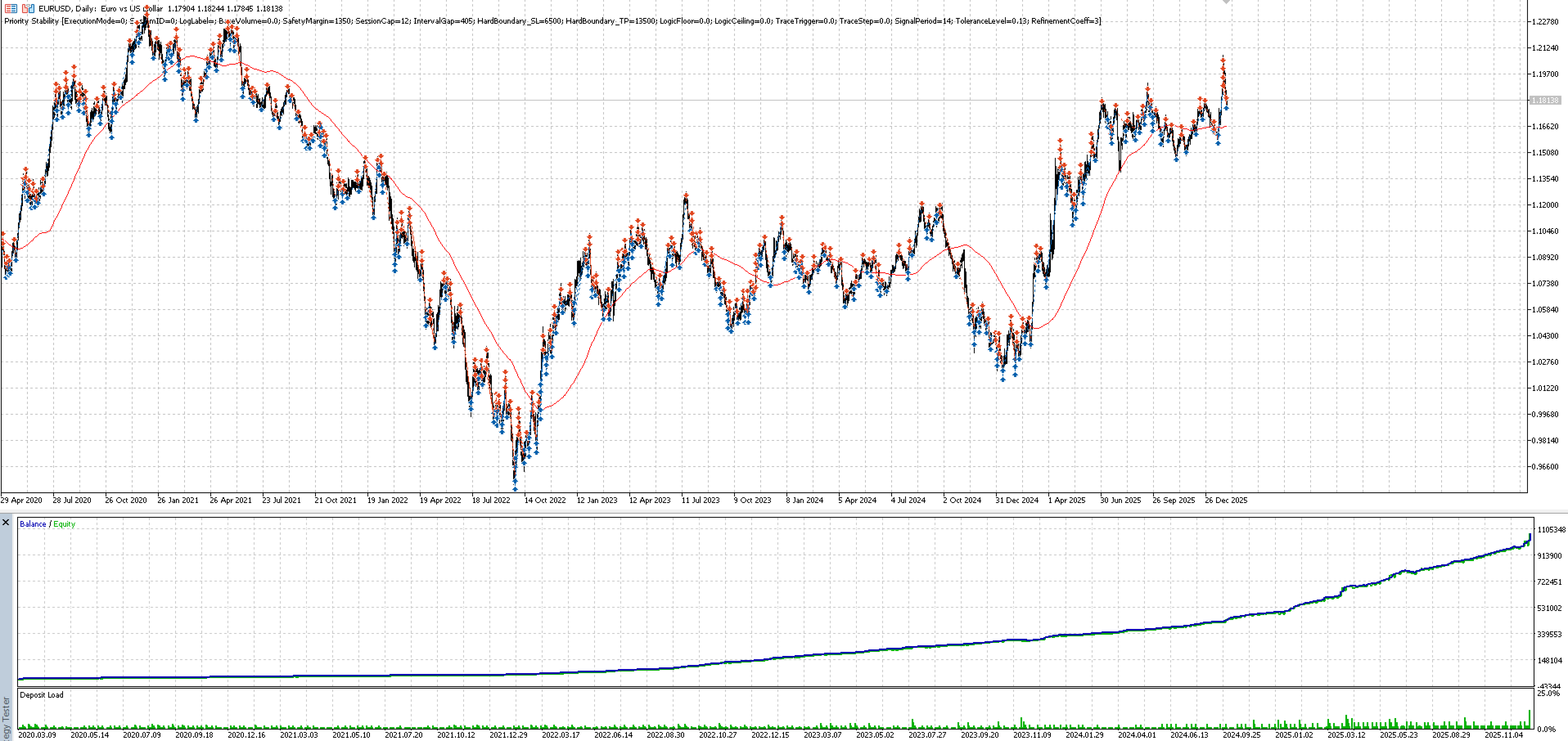
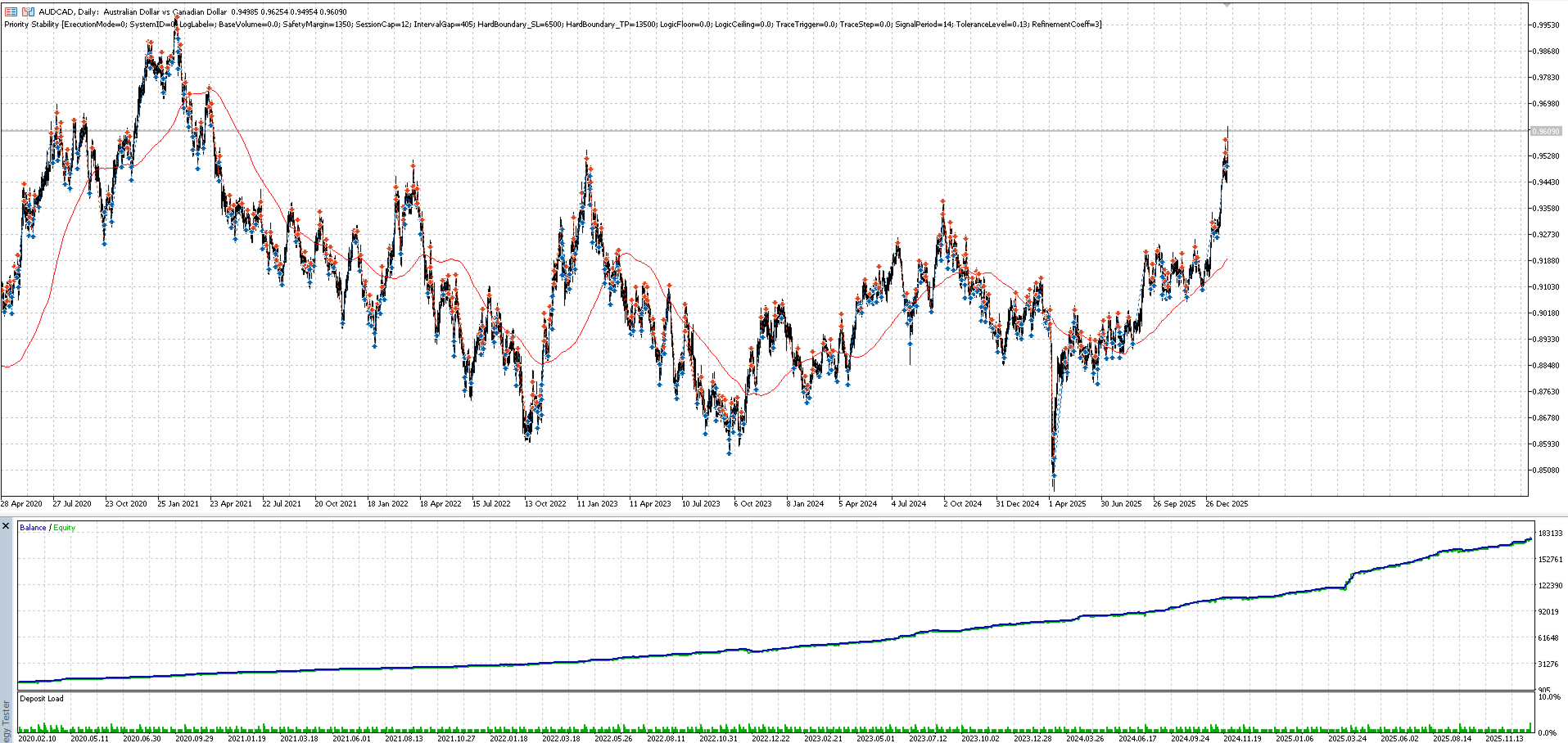
Priority Stability is engineered for high-liquidity instruments during periods of pronounced price action. The algorithm monitors market phases 24/5, processing data across a wide range of currency pairs (such as EURUSD, GBPUSD, USDJPY, AUDUSD, and others) to identify statistical deviations.
Interface Specification (v1.0)
The control interface is categorized into specialized blocks for precise calibration based on specific market conditions:
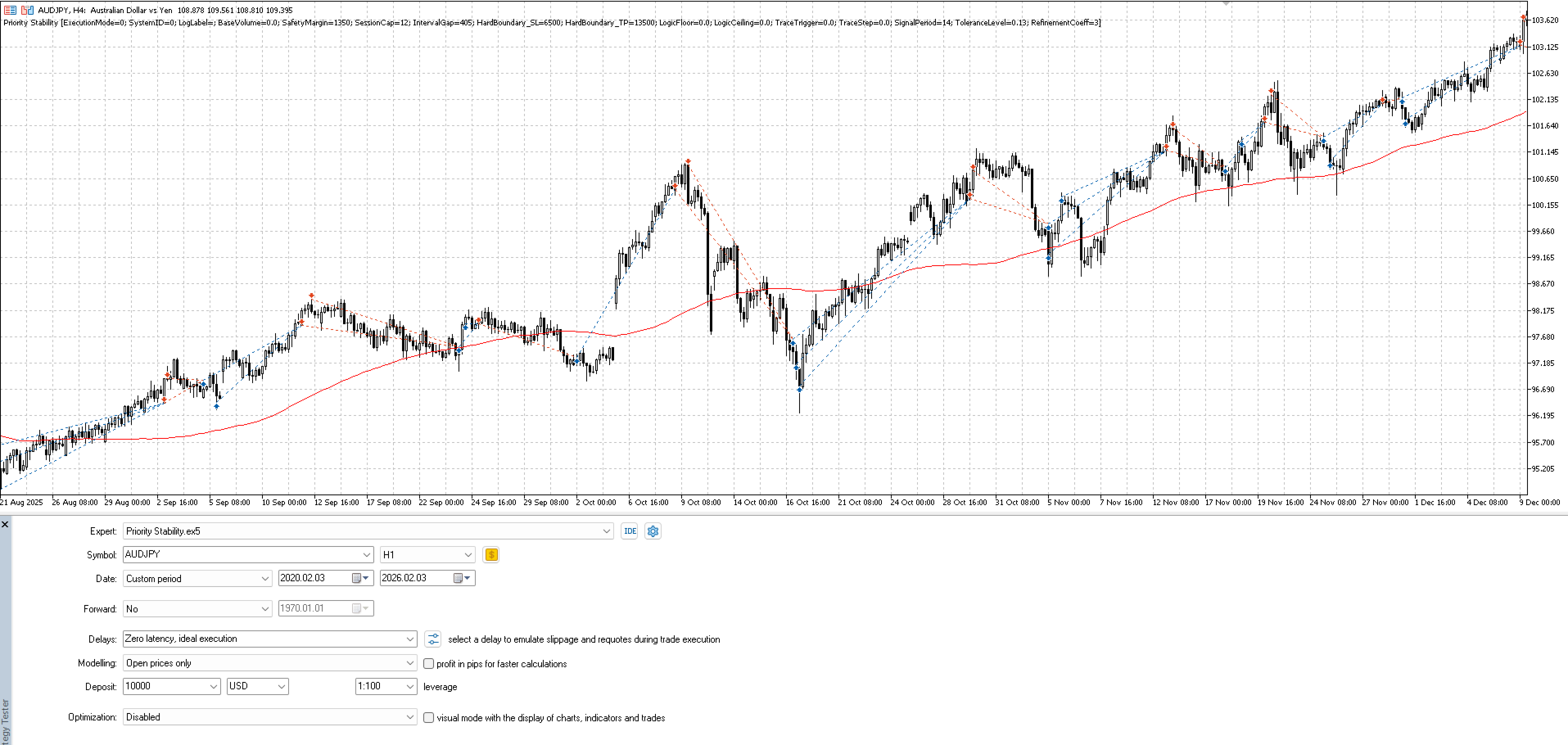
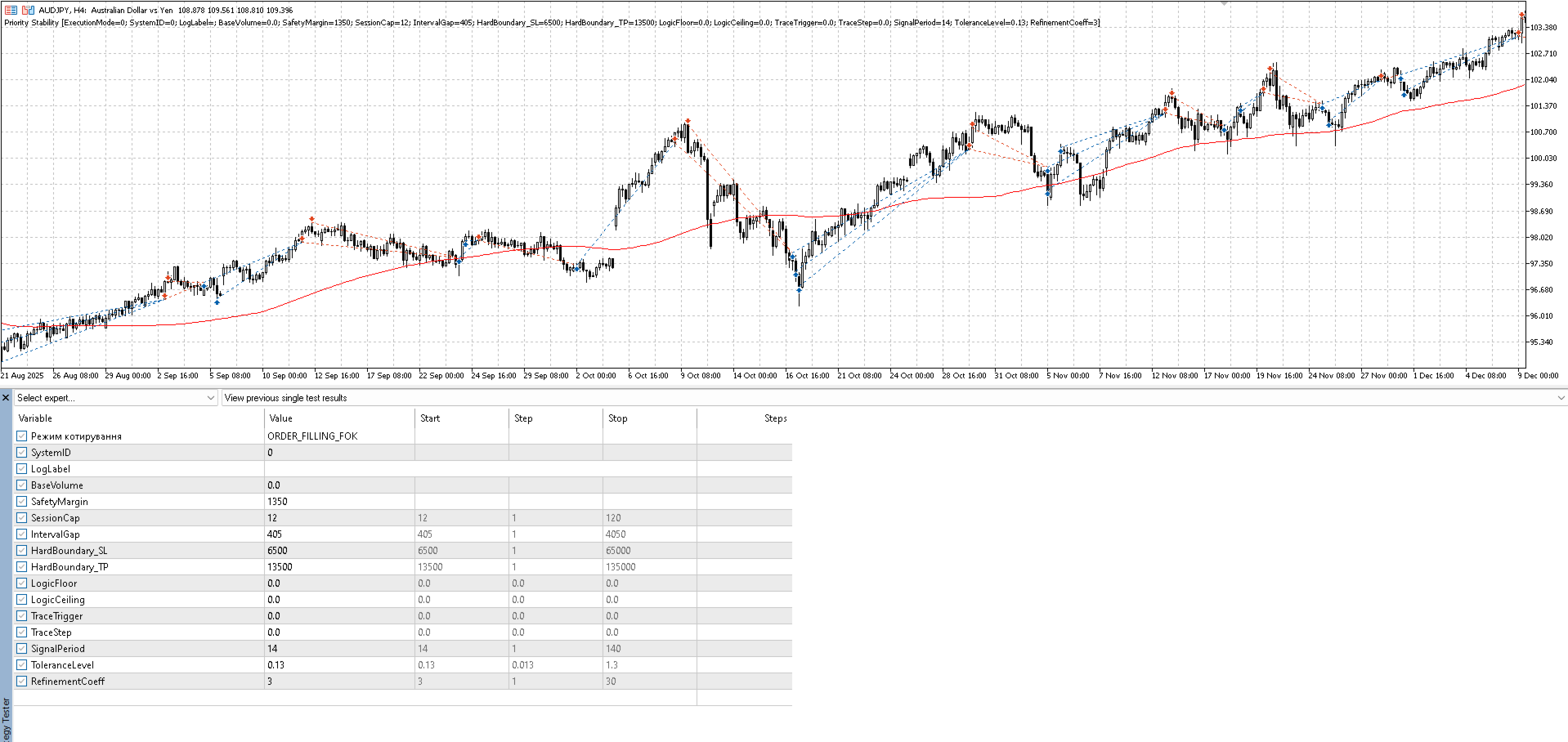
- ExecutionMode – Technical configuration for order filling and execution protocols.
- SystemID – A unique digital signature used to differentiate this algorithm's operations.
- LogLabel – A text identifier for internal system logging and tracking.
- BaseVolume – The initial unit of trade load (starting volume).
- SafetyMargin – A calculated parameter for determining load relative to available equity.
- SessionCap – The maximum limit of simultaneous processing cycles.
- IntervalGap – The step value for the grid deployment algorithm.
- HardBoundary_SL / TP – Physical price limits transmitted to the server side.
- LogicFloor / Ceiling – Internal software triggers for algorithmic position closure.
- TraceTrigger – Activation threshold for the dynamic boundary adjustment (Trailing).
- TraceStep – Adjustment step for the vector tracking mode.
- SignalPeriod – The depth of the retrospective data sample used by the core engine.
- ToleranceLevel – A coefficient used for market noise filtration.
- RefinementCoeff – A mathematical constant for fine-tuning the indicator block outputs.
Why Priority Stability?
- Mathematical Determinism: Every action is strictly governed by pre-set parameters and real-time data inputs.
- Technological Adaptability: Flexible configuration options allow the system to be tailored to various market phases by adjusting sensitivity variables.
- Strategy Confidentiality: The use of internal algorithmic levels allows for complex exit scenarios without exposing sensitive data to the public order book.
Risk Warning:
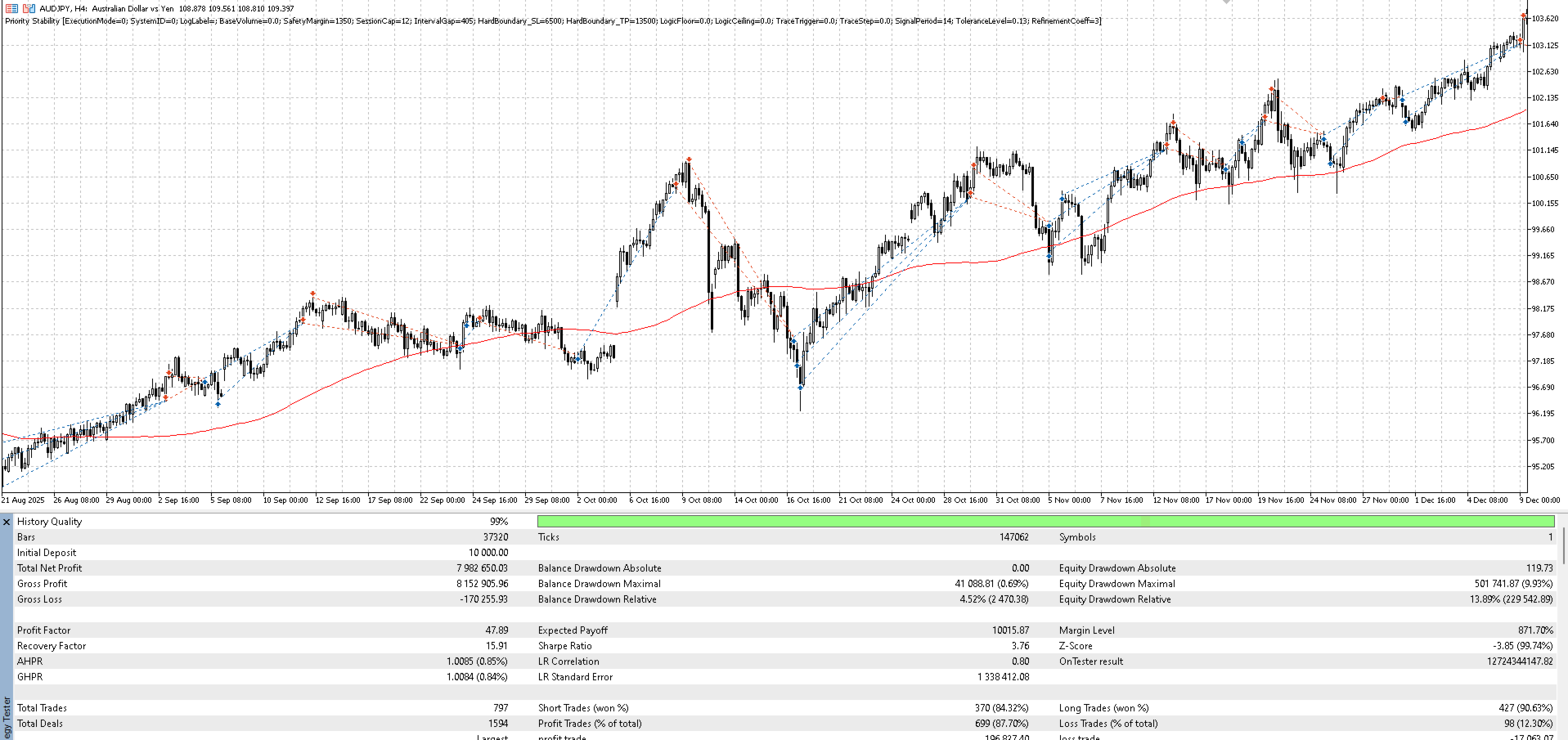
Trading in financial markets involves a high level of risk and may lead to the loss of invested capital. The Priority Stability algorithm is a software tool for strategy automation and does not eliminate market risks. Past performance on historical data is not a reliable indicator of future results.
Disclaimer:
This software is provided on an "as-is" basis. The developer shall not be held liable for any direct or indirect losses resulting from the use of this expert advisor. The user assumes full responsibility for parameter configuration, selection of trading instruments, and the application of the software suite in live market environments.