 MetaTrader 5
 Experts
 Indicators
 Scripts
 Libraries
 Storage
Join our fan page
- Views:
- 3600
- Rating:
- Published:
- Updated:
-
 You are missing trading opportunities:
- Free trading apps
- Over 8,000 signals for copying
- Economic news for exploring financial markets
Registration Log inYou agree to website policy and terms of use
If you do not have an account, please register -
 Need a robot or indicator based on this code? Order it on Freelance
Go to Freelance
Need a robot or indicator based on this code? Order it on Freelance
Go to Freelance
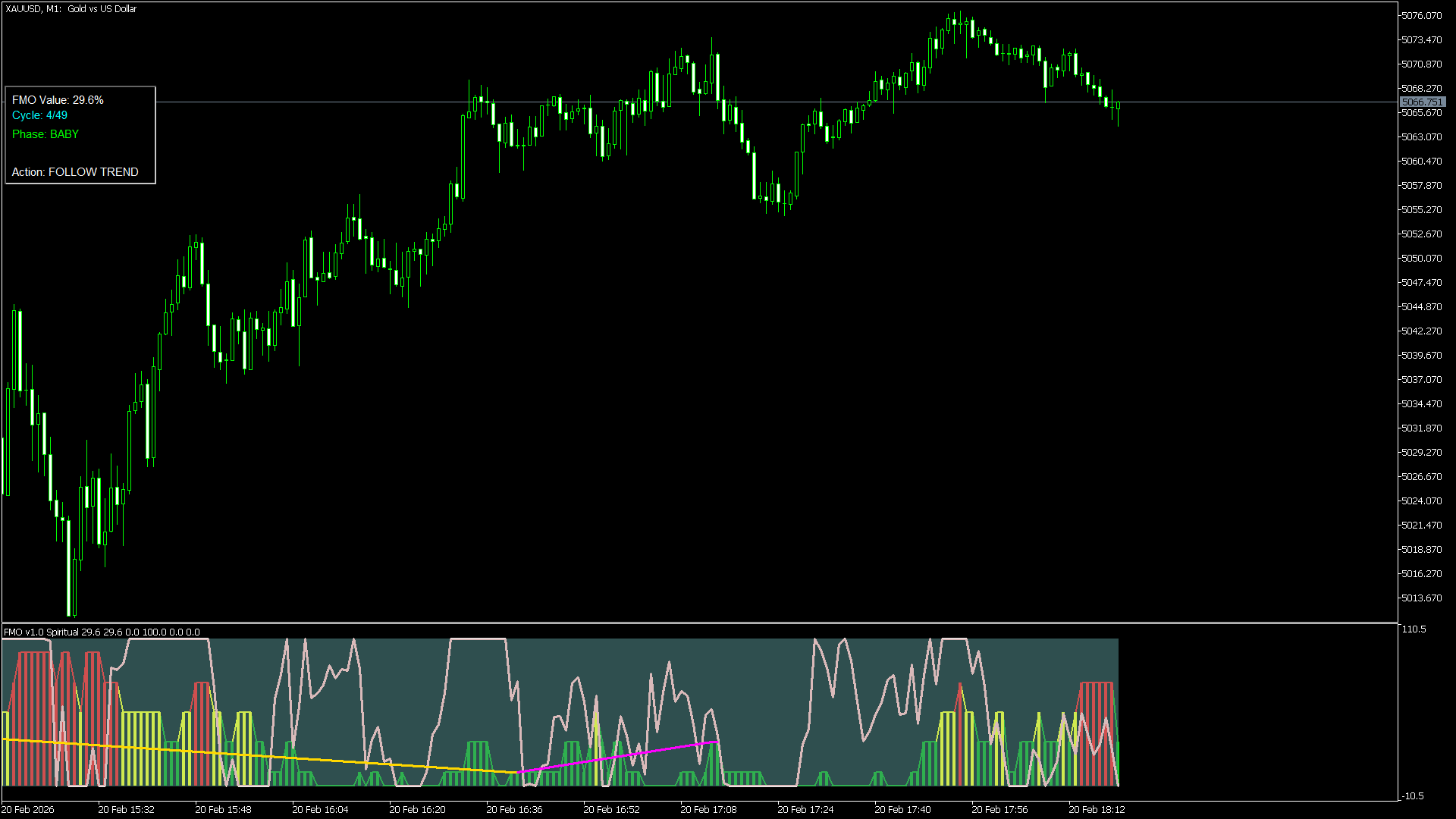

The indicator was created on the following basis, and shared experience with Andrey Yarosvet, as follows:
A Cyclical Model of Human Development
A Conceptual Synthesis of Psychology, Sociology, and Life Cycles
This work presents a deep analysis of human life through a numerical matrix (3, 7, 39, 49), using it as a conceptual lens for understanding psychology, sociology, and developmental cycles.
It is not a conventional scientific framework. Rather, it is a synthesized model — integrating esoteric, psychological, and sociological perspectives into a unified cyclical structure.
The goal is to organize and interpret human development through layered, interacting cycles.
I. Fundamental Cycles: The Building Blocks of Personality
We begin with the foundational cycles — 3 and 7 — which form the basis for larger developmental structures.
Cycle of 3: Cognition and Synthesis
(The Dialectical Cycle)
In psychology and philosophy, development often follows a threefold pattern:
thesis → antithesis → synthesis.
In human life, each 3-year microcycle can be understood as a stage of mastering a new skill, identity, or understanding.
Year 1 — Thesis: Encounter
A person confronts something new: an idea, a skill, a role, or a challenge.
This stage is characterized by primary perception — often naive but open.
Examples:
-
A child takes their first steps.
-
A student begins studying a new subject.
-
A person starts their first job.
Year 2 — Antithesis: Struggle and Contradiction
This is the stage of friction. Practice reveals limitations.
Old assumptions collide with new realities.
Mistakes, effort, doubt, and correction dominate this period.
Examples:
-
The child falls repeatedly but keeps standing up.
-
The student struggles to understand the material.
-
The employee faces real responsibilities and personal limitations.
Year 3 — Synthesis: Integration and Mastery
The skill or idea becomes internalized.
It is no longer external effort — it becomes part of identity.
Competence stabilizes. Understanding deepens. Automation appears.
Examples:
-
The child runs naturally.
-
The student masters the subject.
-
The employee becomes a capable professional.
This 3-year cycle acts as a fractal learning unit, repeating throughout life and building increasingly complex competencies.
Cycle of 7: Transformation and Identity
The 7-year cycle appears in many esoteric and anthroposophical teachings (for example, Rudolf Steiner), and parallels can be found in developmental psychology (such as Erik Erikson’s stages).
Each 7-year period marks a fundamental shift in identity, values, and life direction.
Unlike the 3-year cycle, which refines skills, the 7-year cycle restructures the psyche itself.
It represents a change in the dominant psychological orientation — almost like a shift in the “inner planet” governing one’s life.
II. Great Cycles: The Architecture of Life
Building upon the cycles of 3 and 7, we arrive at composite structures:
39 years (3 × 13) and 49 years (7 × 7).
The 49-Year Cycle (7 × 7)
Seven Stages of Self-Realization
This is the full arc of becoming — from birth to wisdom — divided into seven 7-year phases.
Stage 1 (0–7): Body and Will — Physical Birth
Psychology: Formation of basic trust. Development through imitation. Mastery of bodily control and basic impulses.
Sociology: Complete dependence on family; formation of primary attachments.
Stage 2 (7–14): Feelings and Imagination — Emotional Birth
Psychology: Awakening of imagination and emotional depth. Thinking remains concrete and image-based. Authority is accepted instinctively. Conscience begins forming.
Sociology: Entry into structured social systems (school). Learning rules through friendships and play.
Stage 3 (14–21): Intelligence and Rebellion — Intellectual Birth
Psychology: Emergence of abstract and critical thinking. Identity formation. Rebellion and separation from parents. Peak sexual energy.
Sociology: Search for belonging (peer groups, subcultures). First serious romantic relationships. Early career direction.
Stage 4 (21–28): Soul and Society — Social Birth
Psychology: Testing ideals in reality. Career beginnings. Relationship formation. Trial-and-error in identity and work.
Sociology: Active integration into economic and social structures.
Stage 5 (28–35): Consciousness and Crisis — Conscious Birth
Psychology: The first major existential crisis (“turning thirty,” often associated symbolically with the return of Saturn). Awareness of life’s finitude. Reassessment of goals and values.
Sociology: Stabilization or transformation of social status. Deepening or radical change of profession.
Stage 6 (35–42): Responsibility and Mastery — Birth of the Creator
Psychology: Peak professional competence. Responsibility expands beyond the self — toward children, teams, or society. The dominant task is generativity: creating and transmitting value.
Sociology: Assumption of key social roles and leadership positions.
Stage 7 (42–49): Spirit and Meaning — Spiritual Birth
Psychology: Midlife reassessment. Search for meaning beyond achievement. Interest in philosophy, spirituality, and legacy. Integration of accumulated experience.
Sociology: Transition from active achiever to mentor or guide.
The 39-Year Mark (3 × 13)
The Peak of Mundane Order
The 39-year cycle is not separate but embedded within the 49-year cycle.
It occurs within Stage 6.
At 39, a person completes thirteen 3-year learning cycles.
Psychological Meaning
This represents the peak of material and social competence.
Career, family, and social identity are often consolidated.
It is the summit of the “first mountain” of life.
A Critical Threshold
Age 39 represents both:
Triumph — Full realization of the first half of life’s program.
Danger — Without deeper meaning, stagnation begins.
If new dimensions (spiritual, existential, integrative) are not developed, burnout or emptiness may follow.
It is the peak of order.
From here, the system either evolves to a higher complexity — or begins to decline.
III. Critical Reflection
Is Chaos an Order of Subtle Organization?
This model suggests that it is.
Chaos as Invisible Structure
Events that seem random — career shifts, relationship crises, sudden passions — can be understood as transitions between cycles.
An “unexpected” crisis at 28–29 is not random; it signals movement from Stage 4 to Stage 5.
Fractal Development
Development is nonlinear.
3-year learning cycles nest within 7-year transformation cycles.
Seven of these create a 49-year arc.
This is fractal order — patterns repeating at increasing scales.
Order Through Interaction
Life feels complex because cycles overlap.
A person may simultaneously:
-
Conclude a 3-year professional mastery cycle,
-
While being midway through a 7-year family transformation cycle.
The interaction of these rhythms produces the unique texture of each life.
Conclusion
This model reframes human life not as a linear progression of events, but as a multidimensional spiral.
Each turn brings new experience while following deeper cyclical laws.
What appears as chaos in individual experience may, in fact, be the expression of a finely structured universal order.
 nClose Orders
Function for closing positions and deleting orders
 ICE (Impulse Confirmation Engine)
ICE Pro v1.0: Momentum Intelligence System. ICE isn't just a static indicator-based EA (Expert Advisor). It's an Adaptive Trading engine that uses volatility (ATR) and volume profiles as primary filters to determine which price movements are "True Impulses" and which are simply "Market Noise."
MASTER-WINNERFX-Asim
Trend based grid Expert Advisor for MetaTrader 5 using EMA and RSI indicators. Dynamic lot size is calculated from account balance with minimum and maximum lot protection. Initial trade opens when price confirms trend direction relative to EMA and RSI levels. Grid orders are added at fixed point distance using controlled multiplier. All trades are managed as a basket and closed at defined profit target or maximum loss level. Includes optional news hour pause and market close filter. No DLL or external services required.
 WPR Monitoring MTF Trend
monitoring varous trends of timeframes in one timeframes