
Position Sizing in Forex: How to Calculate Lot Size and Risk 1% Per Trade

Position Sizing in Forex: How to Calculate Lot Size and Risk 1% Per Trade
Position sizing is one of the most important parts of forex risk management. Even a strong trading strategy can lead to significant losses if the trade volume is too large for the account balance. Many traders focus on finding accurate entry signals, but professional trading requires more than identifying market direction. It also requires knowing exactly how much capital to risk on every position.
Understanding position sizing in forex helps traders control potential losses, calculate the correct lot size, and protect their trading capital during unfavorable market conditions. Instead of choosing a random volume for each trade, traders can use a consistent calculation based on account equity, risk percentage, stop-loss distance, and pip value.
In this guide, we will explain how to calculate lot size, apply the 1% risk rule, understand the relationship between stop loss and position size, and avoid common position-sizing mistakes.

What Is Position Sizing in Forex?
Position sizing refers to determining how much trading volume to use when opening a position. In forex, volume is usually measured in lots, and the selected lot size directly affects how much money a trader gains or loses for every pip movement.
For example, a 50-pip movement against a 1.00 standard lot position creates a much larger financial loss than the same movement against a 0.10 lot position.
Position sizing connects three important elements:
Account balance or equity: The capital available for trading.
Risk per trade: The percentage or amount of capital a trader is willing to lose.
Stop-loss distance: The number of pips between the entry price and stop-loss level.
These factors determine the appropriate trading volume. A well-calculated position size allows traders to maintain consistent risk even when stop-loss distances change between setups.
How Much Should You Risk Per Trade?
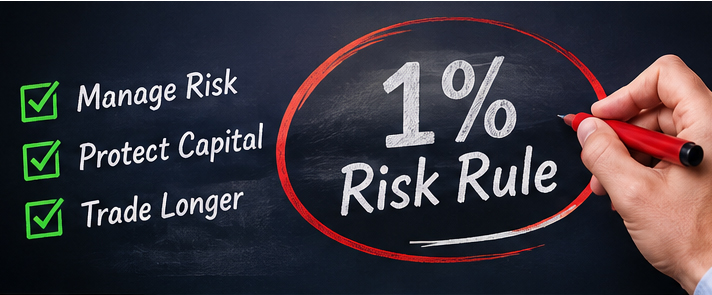
One of the most common risk management guidelines is the 1% rule. It means risking no more than 1% of the trading account on a single trade.
Some traders use 0.5%, while others may choose 1% or 2%, depending on their strategy, experience, and risk tolerance. However, risking a smaller percentage generally provides more room to handle losing streaks.
Understanding the 1% Risk Rule
Consider a trader with a $10,000 account.
0.5% risk = $50
1% risk = $100
2% risk = $200
If the trader follows the 1% rule, the maximum planned loss on a trade should be approximately $100 when the stop loss is triggered.
This approach helps prevent one unsuccessful position from causing serious damage to the account.
However, the risk percentage should be calculated using the current account equity when appropriate, rather than relying indefinitely on the original deposit. As the account grows or declines, the amount at risk can be adjusted accordingly.
Why Consistent Risk Matters
Losing trades are an unavoidable part of trading. Even profitable strategies experience periods of consecutive losses.
For example, risking 5% per trade can create substantial drawdown after several unsuccessful positions. By comparison, risking 1% generally reduces the impact of a losing streak.
The objective is not to avoid every loss. It is to keep individual losses manageable so that the account can survive unfavorable market conditions and remain available for future opportunities.

How to Calculate Lot Size in Forex
Calculating the correct lot size is essential for applying a consistent risk management strategy.
The basic position-sizing formula is:
Position Size (Lots) = Risk Amount ÷ (Stop-Loss Distance × Pip Value per Standard Lot)
To use this formula, traders need to know three values:
The amount of money they are willing to risk.
The stop-loss distance in pips.
The pip value for one standard lot of the traded instrument.
Practical Lot Size Calculation Example
Assume the following trading conditions:
Account balance: $10,000
Risk per trade: 1%
Risk amount: $100
Stop-loss distance: 25 pips
Pip value per standard lot: approximately $10
The calculation becomes:
$100 ÷ (25 × $10) = 0.40 lots
Therefore, the appropriate position size is approximately 0.40 standard lots.
If the stop-loss distance increases to 50 pips while the risk amount remains $100, the position size must decrease:
$100 ÷ (50 × $10) = 0.20 lots
This example demonstrates an important principle: wider stop losses generally require smaller position sizes to maintain the same financial risk.
Understanding Standard, Mini, and Micro Lots
Forex trading volumes are commonly divided into three categories:
Standard lot: 100,000 units of the base currency.
Mini lot: 10,000 units.
Micro lot: 1,000 units.
For many USD-quoted major currency pairs, one standard lot has an approximate pip value of $10, although the exact value depends on the instrument and account currency.
Traders should always verify pip value, contract specifications, and minimum volume requirements with their broker before opening a position.
The Relationship Between Stop Loss and Position Size
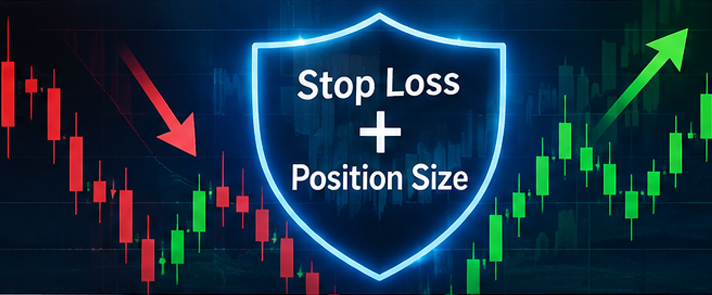
Stop loss and position sizing should always be considered together. Choosing a stop-loss level based only on the amount of money a trader wants to lose can result in poor trade placement.
A stop loss should first reflect the trading setup, market structure, volatility, or technical invalidation level. Position size should then be calculated according to the distance between entry and stop loss.
For example, a scalping setup may require a relatively tight stop, while a swing trade may need more room for normal price fluctuations.
The trader should not automatically increase the lot size simply because the stop loss is smaller. Market volatility, spread, execution conditions, and the probability of reaching the target also matter.
A properly calculated position size helps maintain consistent risk without forcing the stop loss into an unsuitable technical level.
Important Factors That Affect Position Sizing
Although account balance and stop-loss distance are central to the calculation, several additional factors can influence the final position size.
Pip Value and Currency Pairs
Pip value is not identical across all currency pairs. It depends on the traded instrument, exchange rate, contract size, and account currency.
This becomes particularly important when trading cross-currency pairs or instruments such as gold. Traders should use the correct contract specifications rather than assuming that every pip has the same monetary value.
Volatility and Market Conditions
Highly volatile markets can experience rapid price movements and wider spreads. During major economic announcements, execution may also differ from normal conditions.
Some traders reduce their position size during uncertain market conditions to limit exposure.
Correlated Trading Positions
Opening several positions does not necessarily mean that risk is diversified.
For example, holding multiple USD-related trades in the same direction may create concentrated exposure to one currency. If the dollar moves against the positions, several trades may lose simultaneously.
Traders should evaluate total portfolio exposure rather than calculating each position in isolation.
Common Position Sizing Mistakes to Avoid
Using the Same Lot Size for Every Trade
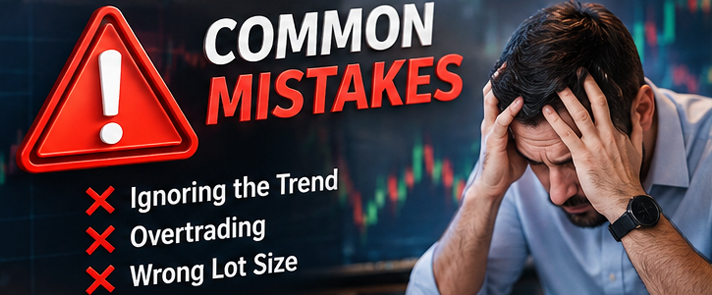
Different setups have different stop-loss distances. Using a fixed lot size regardless of the stop distance can cause inconsistent risk.
Increasing Lot Size After Losing Trades
Increasing volume to recover previous losses can quickly increase drawdown. Position size should follow a predefined risk plan, not emotional decisions.
Ignoring Trading Costs
Spread, commission, and slippage can increase the actual cost of a trade. These expenses should be considered when estimating potential losses, especially for scalpers and high-frequency traders.
Confusing Leverage with Risk
High leverage allows traders to control larger positions with less margin, but it does not reduce the financial risk of those positions. A large lot size can still create substantial losses even when the required margin is relatively small.
Final Thoughts: Make Position Sizing Part of Your Trading Plan
Successful risk management starts before a trade is opened. Traders should determine their acceptable risk, identify a technically valid stop-loss level, calculate pip value, and select a suitable lot size before entering the market.
Consistent position sizing cannot guarantee profitable trades, but it can help control drawdowns and prevent individual losses from becoming unnecessarily large. Testing different risk percentages and position-sizing methods on a demo account can also help traders understand how their strategy behaves under different market conditions.

Improve Trade Management with TW Hedge Console MT4
For traders who want more control over trade execution and recovery management, TW Hedge Console MT4 offers a manual Buy and Sell panel, automatic hedge recovery orders, flexible lot calculation, configurable recovery distances, dynamic basket breakeven calculation, and basket Take Profit management.
It provides additional flexibility for managing trading cycles and multiple positions. However, it is a hedge recovery and trade management system, not a dedicated 1% risk calculator or a guarantee against losses. Traders should test its settings carefully on a demo account before using it in live trading.


