The Direction Was the Same. The Read Was Not — XAUUSD Scalping and GBPUSD Smart Trend
26 August 2026, 21:32

0
109
On 26 August, two short trades developed on two different markets.
The direction was the same. The way I read it was not.
I read XAUUSD M5 with Scalping mode and GBPUSD M15 with Smart Trend mode. Both were bearish opportunities, but each mode organized the decision differently.
That contrast is more useful than the result alone. It shows how the same market view can be handled through two different ways of timing a trade.
XAUUSD M5: Why I Chose Scalping Mode
Gold could also have been approached through Smart Trend. I chose Scalping deliberately because I wanted to show its Context + Timing sequence on the chart. This was a choice of approach, not a test of which mode was better.
The Scalping read is simple.
Trend Context answers: Which side?
Scalp Timing answers: When?
A setup appears when fresh Timing moves into agreement with Context on a completed candle.
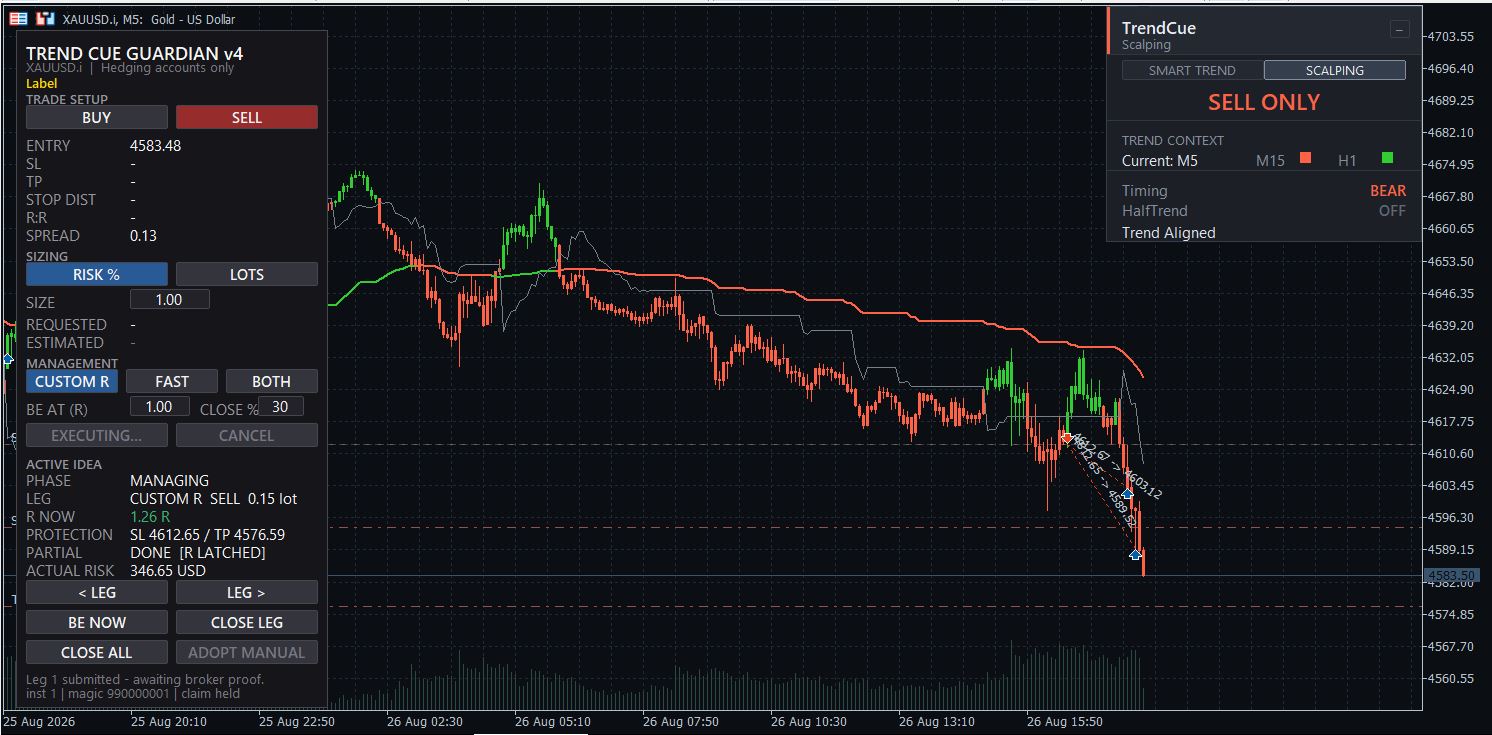
At the Gold setup, Context showed SELL ONLY. Timing turned BEAR, and the panel read Trend Aligned. The permitted side and the timing event were now in agreement.
I opened two short positions.
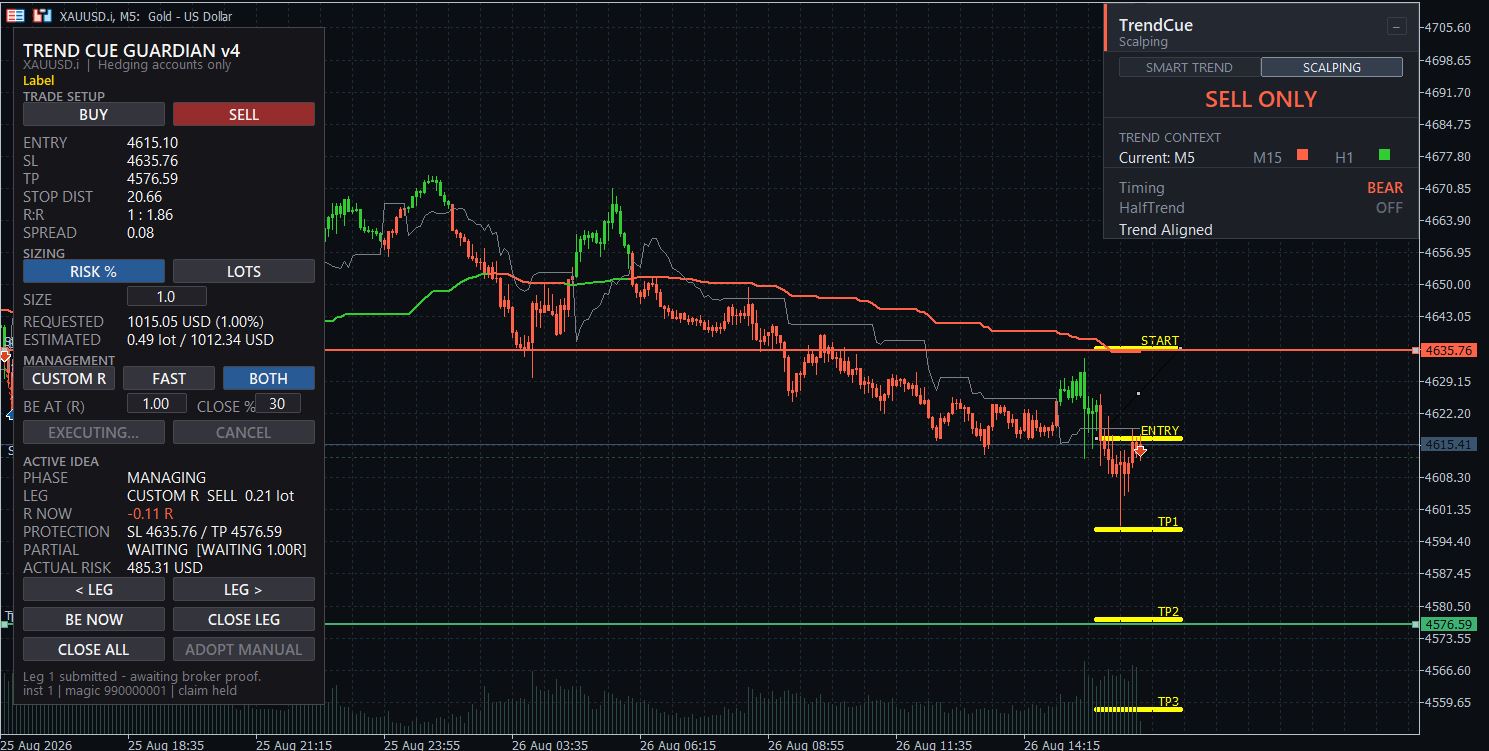
XAUUSD M5 at entry: Scalping mode shows SELL ONLY, BEAR Timing and Trend Aligned. I entered slightly late because I was away from the screen when the setup appeared. Price was still close to the original setup area, so I decided to take the trade.
While the trade was open, Timing turned BULL, but Context remained SELL ONLY. The panel changed to Waiting for Sell Setup.
That was not a new short setup. The directional permission was still bearish, but Timing no longer agreed with it.
This distinction matters. SELL ONLY is not an entry by itself. It tells me which side to wait for; Timing tells me when a fresh setup appears.
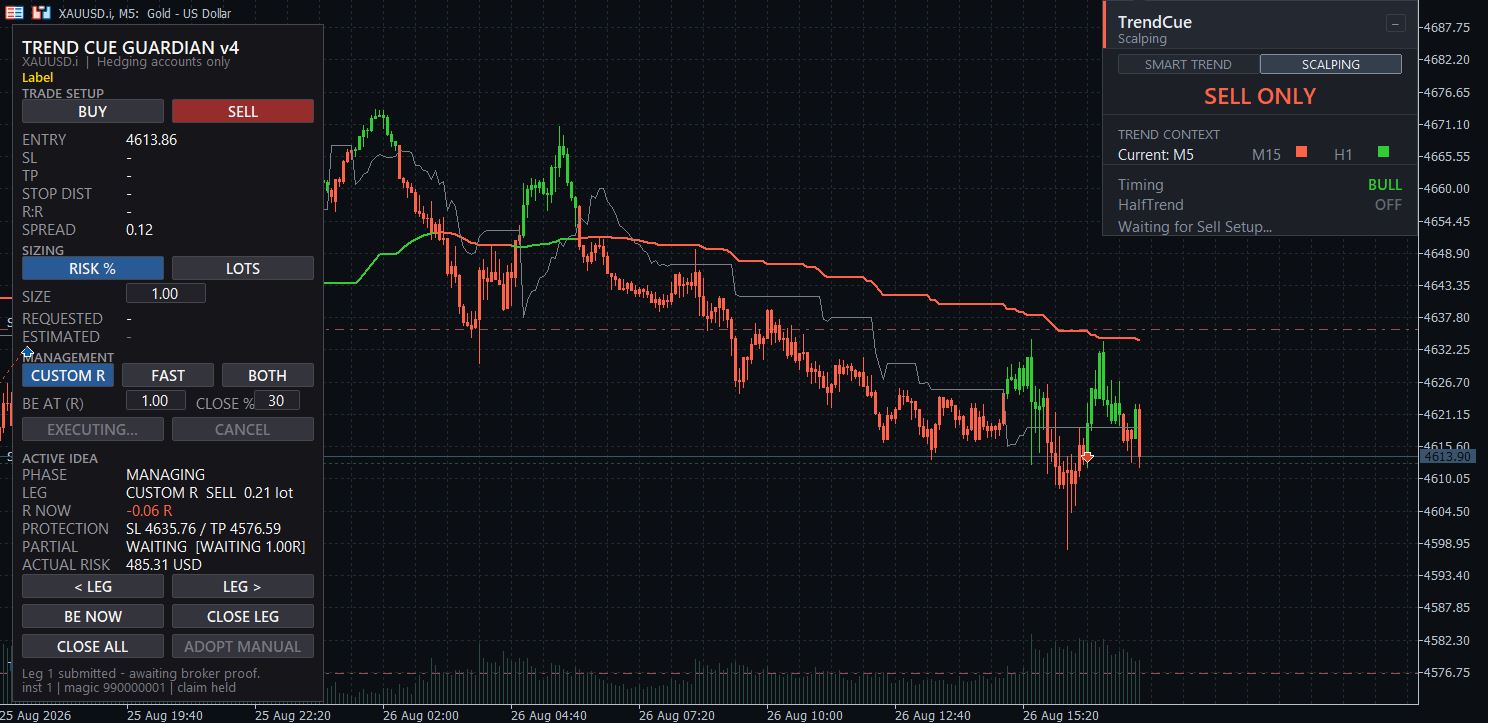
Context still permits sells, but BULL Timing means there is no fresh short setup.
Timing later returned to BEAR on a completed candle and aligned with Context again. Price then continued lower.
This is the practical lesson from the Gold sequence. Context can remain in place while Timing resets. SELL ONLY does not mean selling every candle; it means waiting for a fresh bearish timing event on the permitted side.
GBPUSD M15: The Smart Trend Setup
For GBPUSD, I used Smart Trend because the M15 chart offered a clear, structured sequence: Direction, Timing and a confirmed event.
On M15, Direction showed SELL ONLY, Timing was BEAR, and a confirmed SELL SIGNAL printed after the candle closed. Broader Structure remained visible as context, but the active setup was clear: the current direction permitted a short and Timing confirmed it.
Unlike the Gold sequence, there was no timing reset to interpret at the point of entry. Direction and Timing were already aligned when the confirmed Smart Trend event appeared.
I opened two short positions. The trade then developed lower in the direction of the setup.
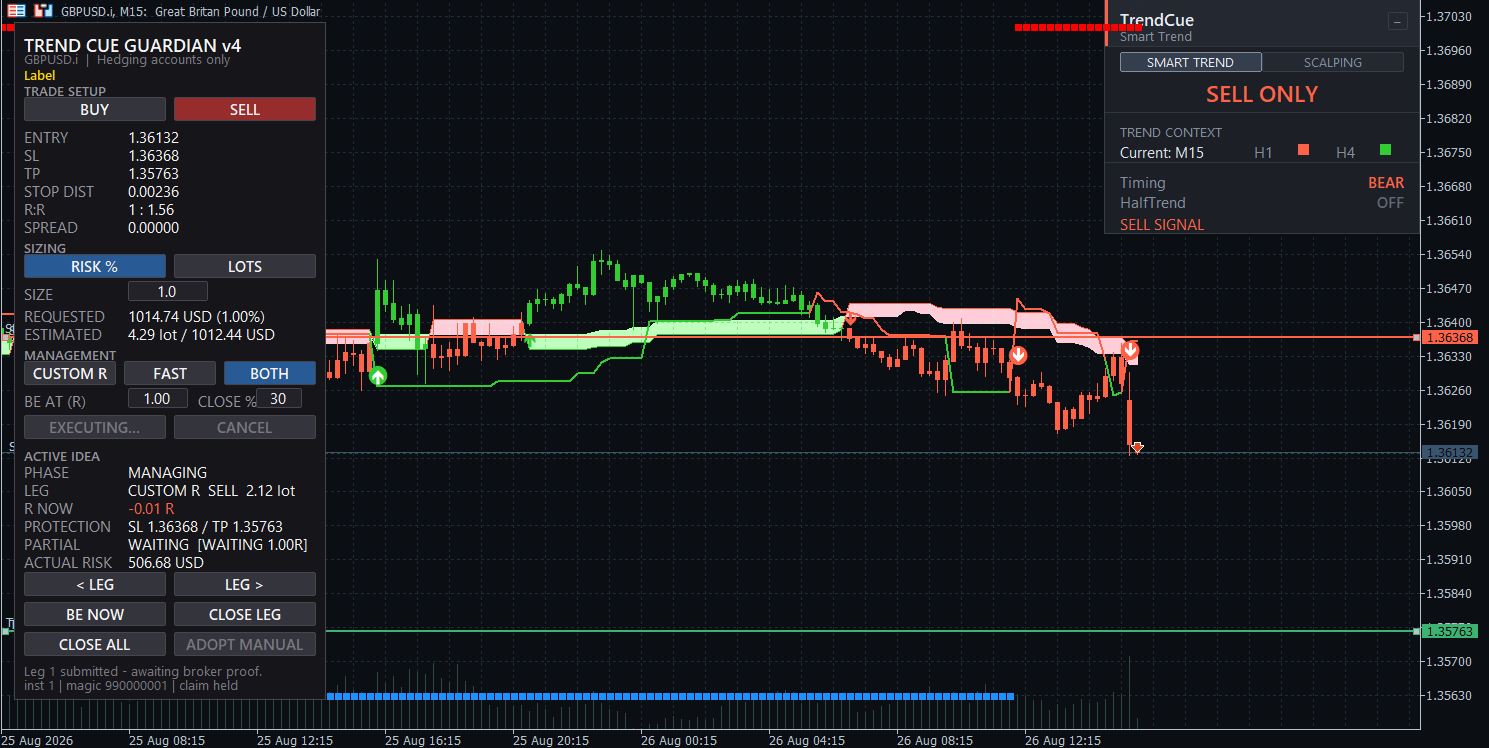
GBPUSD M15 in Smart Trend mode: SELL ONLY, BEAR Timing and a confirmed SELL SIGNAL.
What the Final History Shows
The final MT5 history shows both Gold positions and both GBPUSD positions closed in profit. I included the history for transparency, not to turn one trading session into a performance claim.
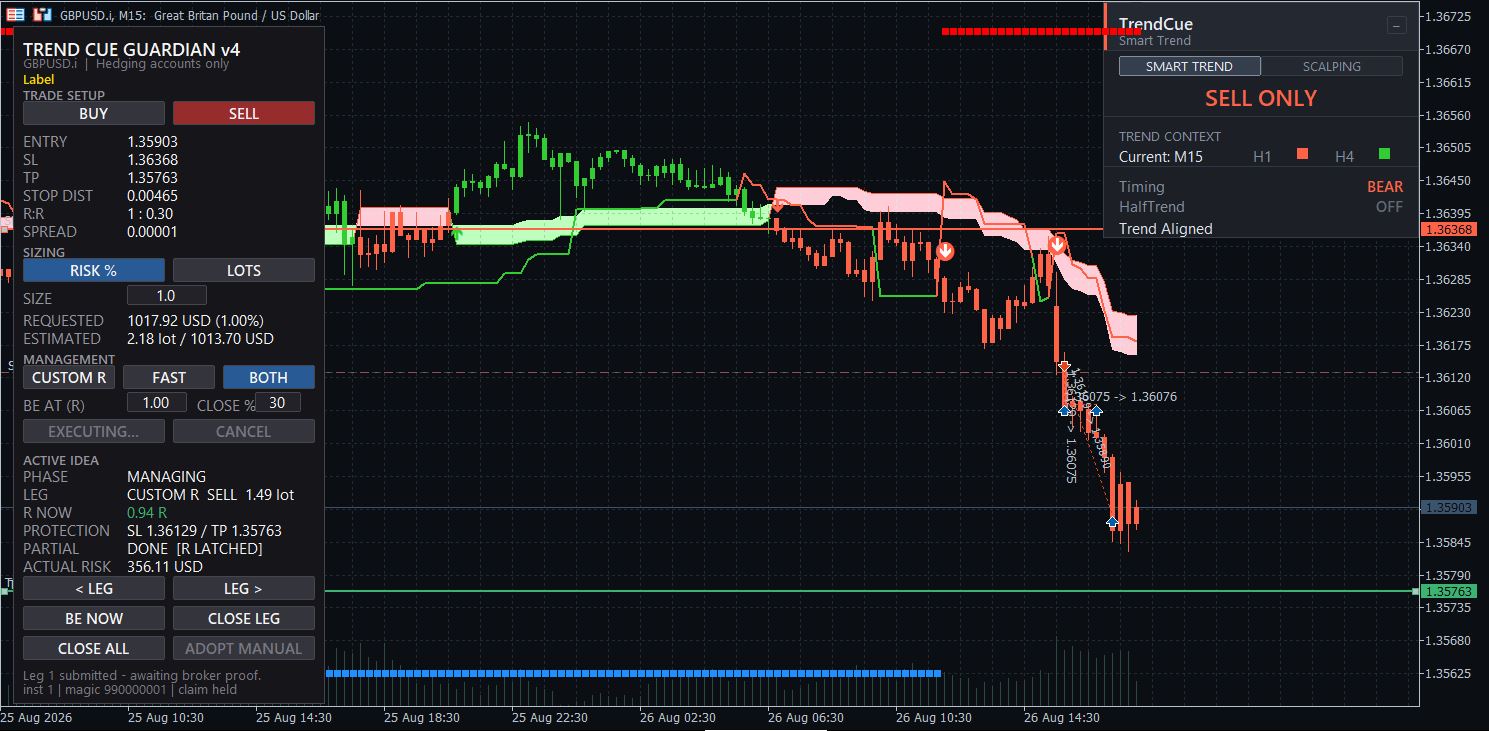

Final MT5 history for both trade ideas; all four position rows closed in profit.
What the Two Trades Actually Show
What interested me was not simply that both trades finished positively. It was that the same bearish view was handled through two different TrendCue modes.
Smart Trend gave the more structured read: Direction, Timing and a confirmed event, with broader Structure available as context.
Scalping gave the faster read: Context defined the side, then fresh Timing identified the next valid opportunity.
The difference is practical. Smart Trend gives a more structured trend-following read. Scalping focuses on directional context and the next fresh timing transition.
In both cases, execution and risk decisions remain with the trader.
This is one trading session, not a performance study. Trading involves risk, and one positive session does not predict the next result.
Tool used:
TrendCue Smart Trend


![[EURUSD]: Weekly Liquidity Activation Points (LAP), October 12-16, 2026](https://c.mql5.com/6/1035/splash-preview-777305.png "[EURUSD]: Weekly Liquidity Activation Points (LAP), October 12-16, 2026")
![[Nasdaq]: Weekly Liquidity Activation Points (LAP), October 12-16, 2026](https://c.mql5.com/6/1035/splash-preview-777311.png "[Nasdaq]: Weekly Liquidity Activation Points (LAP), October 12-16, 2026")