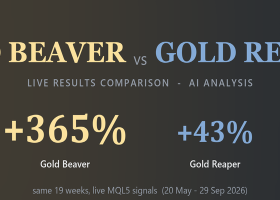

Most breakout systems don't fail because the entry is wrong. They fail because they take every breakout the chart offers — the good ones and the dead ones, at the same size, with the same conviction. This is what happened when I stopped trying to find a better entry and started teaching a model which breakouts to skip.
The Moment Every Breakout Trader Knows
Price breaks the high. Your order fills. You feel good about it — and twenty minutes later the stop is gone and price sits exactly where it started.
Not once in a while. Over and over. At some point you start wondering whether breakouts work at all.
They do. Just not all of them.
Why the Chart Can't Tell You Which Is Which
A breakout above a high always looks the same. Price crosses a line. That's it.
But one of them happens on a quiet Tuesday morning when nothing is moving and nobody is watching. The other happens after gold has been coiling for three days and the whole market is waiting to see which way it goes.
Same breakout. Completely different outcome.
A normal EA cannot see that difference. It sees the line and it trades. So it catches the good ones — and every other one too. And the other ones cost more than the good ones bring in.
That is the whole reason most breakout systems sit just above or just below break-even. Not because the idea is wrong. Because the filter is missing.
What I Did Instead of Optimising
First I let the EA run without changing anything. Five and a half years of gold, every single signal written down — not just the outcome, but what the market looked like at the moment the signal appeared. How calm or hectic. How directly price had been moving. Time of day. How much had been going on in the hours before.
28 measurements. More than 3,000 signals.
Then I trained a model on that table, with one question only: what did the market look like when this worked — and what did it look like when it didn't?
The answer was clearer than I expected. Breakouts that keep running start in measurably different conditions than the ones that snap straight back.
The Test That Actually Counts
This is where it matters, and this is where most products quietly fail.
Anyone can make a backtest look good. You turn the knobs until the curve is pretty, take a screenshot, and there is your miracle product. It looks fantastic and it means nothing, because the system already knew the answer when you asked the question.
So I did it the other way around. The model was trained only on the older data. Everything from April 2024 onward it never saw during training. Then I let it loose on those 2.3 years.
It had to guess — on market conditions it had never been shown.
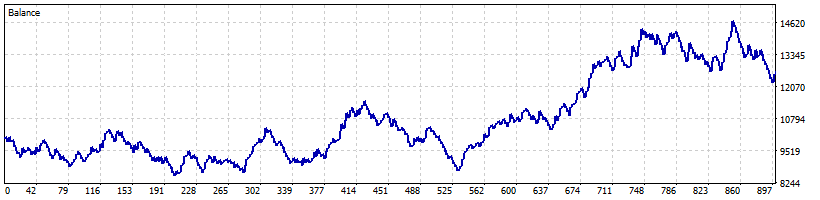
| filter off | filter on | |
| Net profit | +2,677 | +7,912 |
| Profit factor | 1.08 | 1.42 |
| Maximum drawdown | 25.66% | 14.41% |
| Trades | 448 | 236 |
| Equity curve straightness | 0.83 | 0.96 |
XAUUSD, H1, real ticks, 26 April 2024 to 10 August 2026. Starting balance 10,000, risk 1.5% per trade.
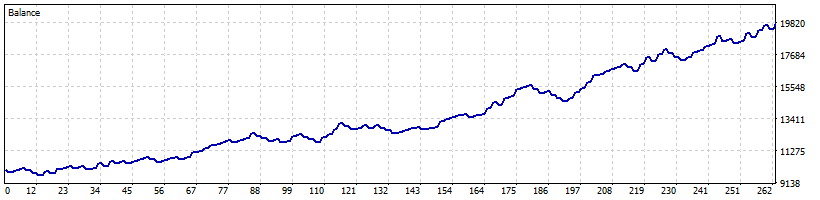
Roughly three times the profit at half the drawdown, out of half the trades.
And one more check, because a good-looking result is not the same as a real one: I repeated the exact same training 40 times with the outcomes deliberately shuffled. If the filter were only finding random patterns, it should do just as well on scrambled data. It didn't. Not one of the 40 runs came close.
That was the point where I believed it myself.
What This Means Day to Day
The EA now trades less. About half the breakouts the engine finds get killed by the filter before an order is ever placed.
You have to be able to sit with that. There are weeks without a single trade. You will look at your chart, see a clean breakout, and the EA does — nothing.
Let me be direct: if you want an EA that does something every day, this is not it.
If you want one that does very little and lets you sleep, keep reading.
What Is In It, and What Is Not
No grid. No martingale. No averaging down.
Not "switched off by default" — simply not built in. Every position carries its stop from the first second, and once a trade runs, the stop follows it.
There is also a drawdown brake: if the account hits the limit you set, the EA closes everything and pauses, and tells you why in plain text on the chart. At the start of the next month it resumes on its own.
That last part sounds obvious. It isn't. I found exactly that bug in my own build — a brake that latched and never released — and it cost 4.5 profitable years in a backtest before I caught it. It is fixed. I mention it because you deserve to know somebody actually looked.
Installation: Drag, Load, Done
Drag the EA onto an XAUUSD chart, H1 timeframe. Load the set file. Enable AlgoTrading.
The model is built into the expert. No separate download, no folder to find, nothing to copy. It ships inside the product, so it cannot go missing — and the EA can never end up quietly trading without the part that makes it work.
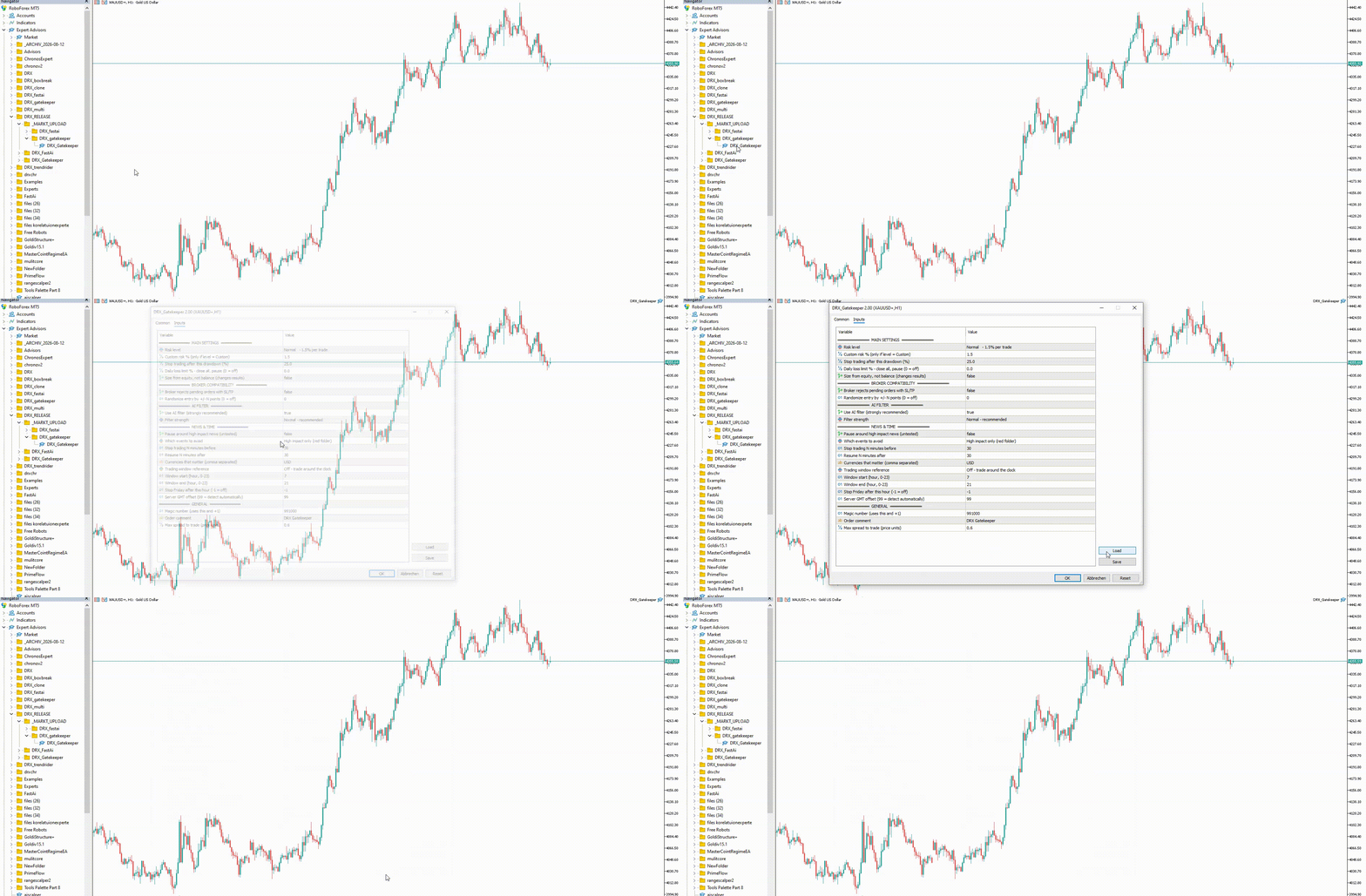
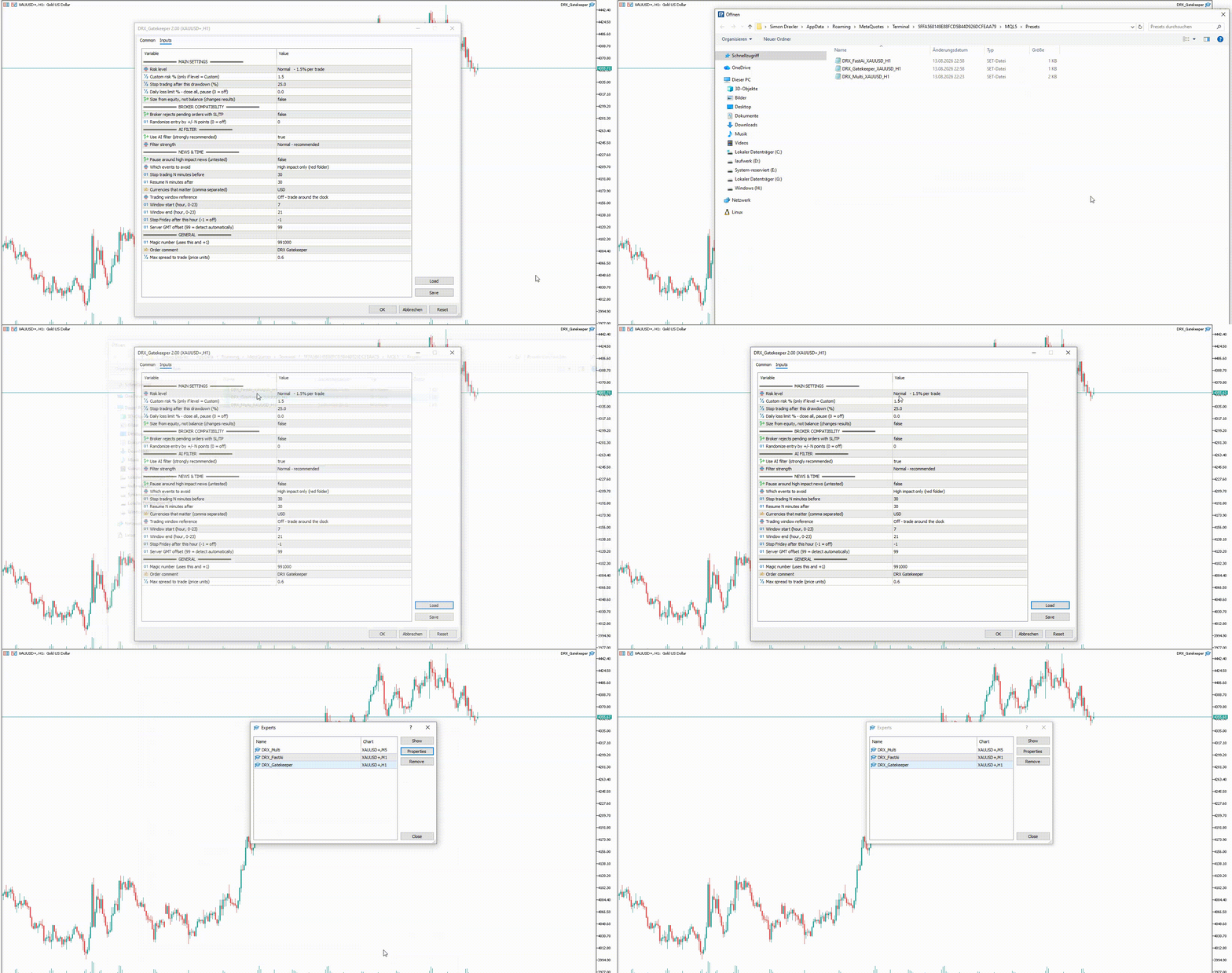
H1 is not a suggestion. The model only knows H1. On M15 it receives numbers it has never seen and starts guessing. The EA warns you if the timeframe is wrong.
Test It Before You Trust It
Open the strategy tester, XAUUSD, H1, load the set file.
And please select "Every tick based on real ticks" for modelling — not "1 minute OHLC".
OHLC mode pretends price moves in a straight line inside each minute. It doesn't. For a system with a trailing stop that makes a large difference, and always in the flattering direction. You end up celebrating a result that will never happen live. I measured this on my own system and the gap was not small.
Real ticks take longer. The first run downloads data and that can take a while. But afterwards you know where you stand.
Then run it on a demo account for a few weeks. Not because I don't trust the EA, but because an EA that does nothing for ten days feels very different with real money than it does in a tester.
The 3 Mistakes That Will Ruin Your Results
- Testing on 1-minute OHLC. It inflates any trailing-stop system, consistently and substantially. You will see a number you like and then wonder why live doesn't match.
- Running it on the wrong timeframe or symbol. The model was built on gold, H1. Anywhere else it is being asked about a world it has never seen — and it will still answer, confidently and wrongly.
- Judging it after two weeks. This system trades roughly 100 times a year. Two quiet weeks is not evidence of anything. If you cannot give it a few months, this is the wrong tool.
The Set File for Gold
Exactly the configuration the numbers above were measured with. Nothing tidied up for the screenshot.
Save it as DRX_FastAi_XAUUSD_H1.set into MQL5\Presets\ , or download the ready-made file below.
RiskLevel=1 CustomRiskPercent=1.5 MaxDrawdownPercent=25.0 MaxDailyLossPercent=0.0 MaxSpread=0.60 MagicNumber=993000 TradeComment=DRX FastAi AIF_Use=true AIF_Strength=1
That is the entire settings list. Everything else — entry distances, stop and target multiples, trailing, the trend filter — is fixed in the build at the values that were tested. They are not offered as dials, because changing them means you are no longer running the system these numbers describe.
Risk level and the drawdown limit are yours to set. The rest is measured.
The Honest Closing Note
This is one instrument, one timeframe, one broker's spread, and 236 trades. That is enough to take seriously. It is not enough to promise anything.
Past results are not a commitment to the future — you have read that sentence a hundred times and it is usually there for legal cover. I mean it literally: what you see above is what happened, and it is the honest reason to try this on a demo account before you decide anything else.
Where DRX FastAi fits in
Everything described above — the breakout engine, the 28 market measurements, the trained filter that rejects half the signals — runs automatically on your own chart. The model ships inside the expert; there is nothing to install and nothing to configure beyond your risk level.
How many breakouts did you take last month that you knew were bad while you were taking them? That gap — between knowing and acting — is exactly what a filter closes. Tell me in the comments how you currently decide which setups to skip, and I will answer every one.