MQL4 and MQL5 Programming Articles

Study the MQL5 language for programming trading strategies in numerous published articles mostly written by you - the community members. The articles are grouped into categories to help you quicker find answers to any questions related to programming: Integration, Tester, Trading Strategies, etc.
Follow our new publications and discuss them on the Forum!
Add a new article

You are missing trading opportunities:
- Free trading apps
- Over 8,000 signals for copying
- Economic news for exploring financial markets
Registration
Log in
You agree to website policy and terms of use
If you do not have an account, please register


All about Automated Trading Championship: Interviews with the Participants'06
Interviews with the Participants of Automated Trading Championship 2006 demonstrated a great variety of views of automated trading and trading as a whole. You can see yourselves which ideas turned out to work better during the Championship and which of them could not pass the critical verification through a three-month long "test-drive" on a contest account.


Gating mechanisms in ensemble learning
In this article, we continue our exploration of ensemble models by discussing the concept of gates, specifically how they may be useful in combining model outputs to enhance either prediction accuracy or model generalization.


GoertzelBrain: Adaptive Spectral Cycle Detection with Neural Network Ensemble in MQL5
GoertzelBrain combines Goertzel spectral analysis with an online‑trained neural network ensemble to convert cycle features into a directional confirmation signal. The indicator builds a compact feature vector from the dominant period, amplitude, confidence and their dynamics, plus local volatility, and outputs +1, −1 or 0. The article provides the full MQL5 implementation, explains the architecture and feature engineering, and shows how to use it as a directional filter.


Feature Engineering for ML (Part 5): Microstructural Features in Python
This article implements the Chapter 19 microstructure suite in afml.features.microstructure and explains a two-layer design for OHLCV-only and tick-augmented workflows. We cover Roll and Corwin–Schultz spread/volatility, Kyle's, Amihud's, and Hasbrouck's lambdas, VPIN, and bar‑level imbalance features, all in Numba‑accelerated kernels. A single np.searchsorted pass resolves bar boundaries, enabling prange parallelization and producing a bar‑indexed feature matrix ready for downstream ML models.

MQL5 Wizard Techniques you should know (Part 60): Inference Learning (Wasserstein-VAE) with Moving Average and Stochastic Oscillator Patterns
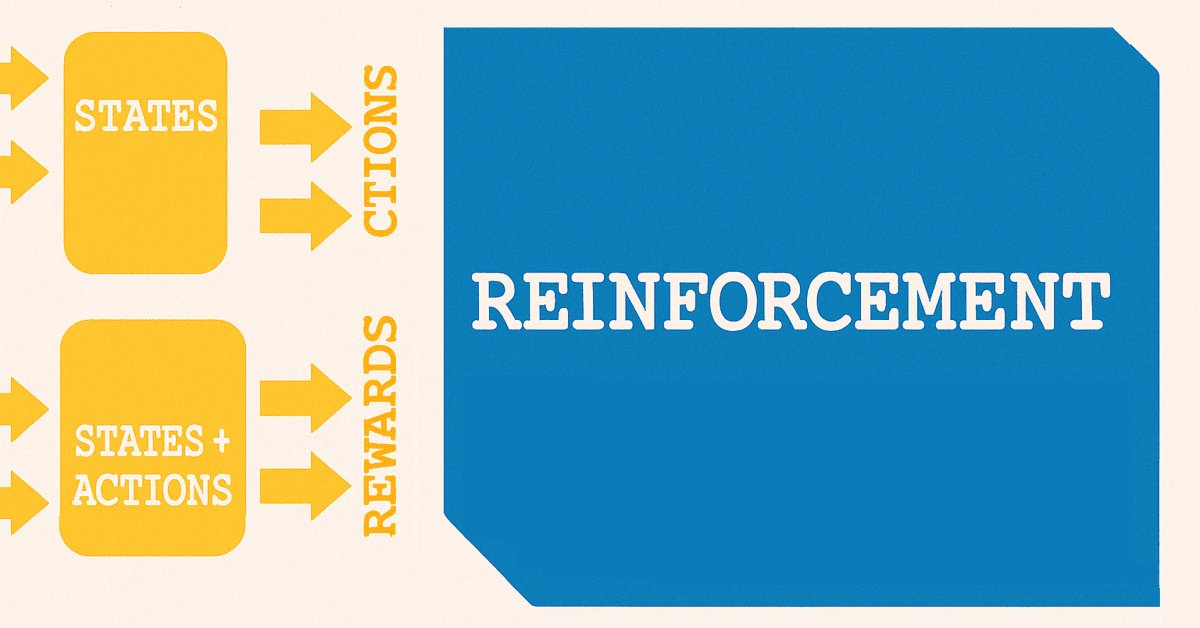
We wrap our look into the complementary pairing of the MA & Stochastic oscillator by examining what role inference-learning can play in a post supervised-learning & reinforcement-learning situation. There are clearly a multitude of ways one can choose to go about inference learning in this case, our approach, however, is to use variational auto encoders. We explore this in python before exporting our trained model by ONNX for use in a wizard assembled Expert Advisor in MetaTrader.


Trust Your Backtest Data First: Building a Reproducible Historical Data Audit in Python for MetaTrader 5
A reproducible, read-only Python audit for MetaTrader 5 that verifies history quality before any backtest. It exports M5 data from multiple terminals, detects gaps and synthetic bars by timestamp spacing, and reports coverage per year. The same deterministic strategy then runs on three broker feeds over a common window to quantify result drift and decompose it into spread, data/price, and trade effects.


Neural Networks in Trading: LSTM Optimization for Multivariate Time Series Forecasting (Final Part)
We continue to implement the DA-CG-LSTM framework, which offers innovative methods for time series analysis and forecasting. The use of CG-LSTM and dual attention allows for more accurate detection of both long-term and short-term dependencies in data, which is particularly useful for working with financial markets.


The Group Method of Data Handling: Implementing the Multilayered Iterative Algorithm in MQL5
In this article we describe the implementation of the Multilayered Iterative Algorithm of the Group Method of Data Handling in MQL5.


The MQL5 Standard Library Explorer (Part 13): Implementing the Math Solvers Library in Trading
We present a complete workflow for adaptive filtering in MQL5 using the CNlEq Levenberg–Marquardt–like solver. The EA fits a VAMAC model—two EWMAs with an ATR‑based scaling—by supplying residuals and a Jacobian through CNlEq's reverse‑communication loop, with optional numerical or analytical derivatives. Code, setup instructions, and GBPUSD H1 tests show how to replace static thresholds with on‑bar re‑estimation.


Population optimization algorithms: Binary Genetic Algorithm (BGA). Part I
In this article, we will explore various methods used in binary genetic and other population algorithms. We will look at the main components of the algorithm, such as selection, crossover and mutation, and their impact on the optimization. In addition, we will study data presentation methods and their impact on optimization results.


From Basic to Intermediate: Events (I)
Given everything that has been shown so far, I think we can now start implementing some kind of application to run some symbol directly on the chart. However, first we need to talk about a concept that can be rather confusing for beginners. Namely, it's the fact that applications developed in MQL5 and intended for display on a chart are not created in the same way as we have seen so far. In this article, we'll begin to understand this a little better.


MQL5 Wizard Techniques you should know (Part 33): Gaussian Process Kernels
Gaussian Process Kernels are the covariance function of the Normal Distribution that could play a role in forecasting. We explore this unique algorithm in a custom signal class of MQL5 to see if it could be put to use as a prime entry and exit signal.


Risk Manager for Trading Robots (Part I): Risk Control Include File for Expert Advisors
Trading is characterized by high demands on risk management discipline. The article presents an analysis of the main reasons for traders' failures and proposes a technical solution in the form of the CEnhancedRiskManager class for the MQL5 platform. It includes practical testing on an aggressive grid EA.


Encoding Candlestick Patterns (Part 3): Frequency Analysis for Single Candlestick Type Structure
This article introduces a frequency-analysis framework for encoded candlestick patterns in MQL5. By transforming candlesticks into alphabetic symbols, historical price action can be analyzed as a statistical sequence rather than a visual chart. Using GBPUSD and Gold across multiple timeframes, the study examines the occurrence frequency of individual candlestick types, identifies dominant market structures, and reveals the symmetry between bullish and bearish price movements. The results establish a quantitative foundation for pattern discovery and prepare the way for analyzing multi-candlestick sequences and their predictive potential in algorithmic trading systems.


Neural networks made easy (Part 63): Unsupervised Pretraining for Decision Transformer (PDT)
We continue to discuss the family of Decision Transformer methods. From previous article, we have already noticed that training the transformer underlying the architecture of these methods is a rather complex task and requires a large labeled dataset for training. In this article we will look at an algorithm for using unlabeled trajectories for preliminary model training.


Neural Networks in Trading: The Temporal Query Model (TQNet)
The TQNet framework opens up new possibilities for modeling and forecasting financial time series by combining modularity, flexibility, and high performance. The article explores the possibility of implementing complex mechanisms for handling global correlations, including advanced parameter initialization methods.


Measuring What Matters (Part 3): The Reconstruction Engine — Validating Risk Footprints with Matrix Algebra
This article performs a numerical verification of MQL5 eigendecomposition for a covariance matrix using the spectral theorem A = V Λ Vᵀ. It reconstructs the matrix with Diag(), Transpose(), and MatMul(), computes the residual and its Frobenius norm, and shows that deviations remain at floating‑point precision, with results printed to the Experts journal.


Market Simulation (Part 03): A Matter of Performance
Often we have to take a step back and then move forward. In this article, we will show all the changes necessary to ensure that the Mouse and Chart Trade indicators do not break. As a bonus, we'll also cover other changes that have occurred in other header files that will be widely used in the future.


Developing an MQL5 RL agent with RestAPI integration (Part 4): Organizing functions in classes in MQL5
This article discusses the transition from procedural coding to object-oriented programming (OOP) in MQL5 with an emphasis on integration with the REST API. Today we will discuss how to organize HTTP request functions (GET and POST) into classes. We will take a closer look at code refactoring and show how to replace isolated functions with class methods. The article contains practical examples and tests.


Neural Networks in Trading: Actor—Director—Critic
We invite you to explore the Actor-Director-Critic framework, which combines hierarchical learning and a multi-component architecture for creating adaptive trading strategies. In this article, we take a detailed look at how using the Director to classify the Actor's actions helps to effectively optimize trading decisions and improve the robustness of models in financial market conditions.


Decoding Market Intent: Reading Structure, Liquidity, and Price Behavior
We implement a five-stage MQL5 pipeline that quantifies market structure, liquidity interaction, and price behavior on four timeframes, then resolves them into a 0–100 Market Intent Score. Decision states (WAIT/WATCH/ACTION) are driven by explicit weights plus hard gates. The analytical core feeds a concise dashboard and, when AutoTrade is on, an execution layer with entry zones, invalidation and liquidity‑based targets.


Introduction to MQL5 (Part 35): Mastering API and WebRequest Function in MQL5 (IX)
Discover how to detect user actions in MetaTrader 5, send requests to an AI API, extract responses, and implement scrolling text in your panel.


Population optimization algorithms: Artificial Multi-Social Search Objects (MSO)
This is a continuation of the previous article considering the idea of social groups. The article explores the evolution of social groups using movement and memory algorithms. The results will help to understand the evolution of social systems and apply them in optimization and search for solutions.

Method of Determining Errors in Code by Commenting
The article describes a method of searching the errors in the MQL4 code that is based on commenting. This method is found to be a useful one in case of problems occuring during the compilation caused by the errors in a reasonably large code.


MQL5 Wizard Techniques you should know (Part 35): Support Vector Regression
Support Vector Regression is an idealistic way of finding a function or ‘hyper-plane’ that best describes the relationship between two sets of data. We attempt to exploit this in time series forecasting within custom classes of the MQL5 wizard.


Market Simulation (Part 05): Creating the C_Orders Class (II)
In this article, I will explain how Chart Trade, together with the Expert Advisor, will process a request to close all of the users' open positions. This may sound simple, but there are a few complications that you need to know how to manage.


Quantization in machine learning (Part 2): Data preprocessing, table selection, training CatBoost models
The article considers the practical application of quantization in the construction of tree models. The methods for selecting quantum tables and data preprocessing are considered. No complex mathematical equations are used.


Developing a Replay System (Part 52): Things Get Complicated (IV)
In this article, we will change the mouse pointer to enable the interaction with the control indicator to ensure reliable and stable operation.


Category Theory in MQL5 (Part 11): Graphs
This article is a continuation in a series that look at Category Theory implementation in MQL5. In here we examine how Graph-Theory could be integrated with monoids and other data structures when developing a close-out strategy to a trading system.


The Mathematics of Volatility: Why the GRI Indicator Deserves to Return to Your Trading Terminal
The article focuses on the Gopalakrishnan Range Index (GRI/ROCI), which quantitatively assesses the market's "degree of chaos" using the logarithm of the closing price range over a given period. The article shows how to implement GRI in MetaTrader 5, resolve the issue of negative values using a shifted logarithm, and convert the scale to convenient "points" by normalizing it by Point. Next, we examine practical scenarios for using GRI as a filter for volatility and market phases.


Graph Theory: Network Flow of Commodities (Ford-Fulkerson Algorithm), Used as a Liquidity-Capacity Engine
The article presents an MQL5 Expert Advisor that adapts the Ford–Fulkerson max-flow method into a liquidity-capacity filter. Market structures—Swing Highs/Lows, Fair Value Gaps, Order Blocks, and Liquidity Pools—form a directed graph with edge capacities from volume, price reaction, distance, and structure quality. Maximum flow qualifies ICT setups, filters weak paths, and drives dynamic position sizing for a consistent, two-stage decision process.


Eigenvectors and eigenvalues: Exploratory data analysis in MetaTrader 5
In this article we explore different ways in which the eigenvectors and eigenvalues can be applied in exploratory data analysis to reveal unique relationships in data.


Evaluating the Quality of Forex Spread Trading Based on Seasonal Factors in MetaTrader 5
The article examines the quality of a seasonal trading approach on a daily timeframe, both for individual symbols and for spreads. Particular attention is paid to identifying recurring monthly cycles and the possibilities of their application in trading within the current year.


MetaTrader 5 Machine Learning Blueprint (Part 16): Nested CV for Unbiased Evaluation
The article presents a V-in-V nested cross-validation pipeline for financial data that breaks leakage at three decision points: hyperparameter search, calibration, and final evaluation. A temporal three‑zone split isolates an inner walk‑forward search with the 1‑SE rule from an outer walk‑forward or CPCV evaluation, while OOF isotonic calibration is fitted independently. The resulting UnifiedValidationCalibrator delivers unbiased out‑of‑sample scores and well‑calibrated probabilities for deployment.


From Basic to Intermediate: Template and Typename (IV)
In this article, we will take a very close look at how to solve the problem posed at the end of the previous article. There was an attempt to create a template of such type so that to be able to create a template for data union.


Position Management: A Reusable Trade Journal with Live Maximum Adverse Excursion, Maximum Favorable Excursion, and R-Multiple Tracking in MQL5
This article presents CTradeJournal, a self-contained MQL5 class for live tracking of open positions at tick frequency. It maintains MAE, MFE, and initial risk in money, calculates the R-multiple when a position closes, and writes a complete CSV record. The text explains the design choices, provides the implementation, and shows simple EA integration so you can analyze entries, stop placement, and outcome distribution.


Artificial Showering Algorithm (ASHA)
The article presents the Artificial Showering Algorithm (ASHA), a new metaheuristic method developed for solving general optimization problems. Based on simulation of water flow and accumulation processes, this algorithm constructs the concept of an ideal field, in which each unit of resource (water) is called upon to find an optimal solution. We will find out how ASHA adapts flow and accumulation principles to efficiently allocate resources in a search space, and see its implementation and test results.


Arithmetic Optimization Algorithm (AOA): From AOA to SOA (Simple Optimization Algorithm)
In this article, we present the Arithmetic Optimization Algorithm (AOA) based on simple arithmetic operations: addition, subtraction, multiplication and division. These basic mathematical operations serve as the foundation for finding optimal solutions to various problems.


Backtracking Search Algorithm (BSA)
What if an optimization algorithm could remember its past journeys and use that memory to find better solutions? BSA does just that – balancing exploration with revisiting the tried and true. In this article, we reveal the secrets of the algorithm. A simple idea, minimum parameters and a stable result.


Developing a Neural Network Trading Robot Based on Mamba with Selective State Space Models
The article explores the revolutionary Mamba/SSM neural network architecture for financial time series forecasting. We will consider a complete MQL5 implementation of a modern alternative to Transformer with linear complexity O(N) instead of quadratic O(N²). Selective State Space Models, hardware-aware optimizations, patching techniques, and advanced AdamW training methods are covered in detail. Practical test results showing an increase in accuracy from 62% to 71% while reducing training time from 45 to 8 minutes are included. A ready-made trading EA with auto learning and adaptive risk management for MetaTrader 5 is presented.