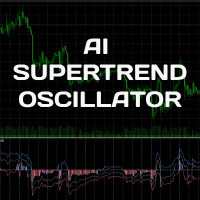
AI SuperTrend Clustering Oscillator
- Göstergeler
- Sürüm: 1.0

The AI SuperTrend Clustering Oscillator identifies three key outputs—bullish, neutral, and bearish—derived from variations between multiple SuperTrend indicators.
🔶 FUNCTIONALITY
The oscillator consists of three primary elements:
- Bullish Output: Represents the most optimistic signal, always the highest value.
- Bearish Output: Reflects the most pessimistic signal, always the lowest value.
- Consensus Output: Falls between the bullish and bearish outputs, serving as an overall trend indicator.
A positive consensus value suggests an upward trend, while a negative value indicates a downward trend. Adjusting the minimum factor focuses the analysis on broader trends, while tweaking the maximum factor sharpens the focus on shorter-term fluctuations.
Strong trends are highlighted when the bullish and bearish outputs diverge. For instance:
- A strong bullish trend occurs if the bearish output rises above zero.
- A strong bearish trend emerges if the bullish output drops below zero.
When the consensus output aligns with a trend direction but the bullish or bearish outputs conflict, it could signal an impending reversal or correction.
🔶 MECHANISM
The indicator operates by clustering differences between the closing price and multiple SuperTrend values, calculated using a range of factors. These differences are grouped into three clusters:
- Bullish Cluster: Contains the largest differences, representing optimistic market behavior.
- Bearish Cluster: Contains the smallest differences, representing pessimistic market behavior.
- Consensus Cluster: Contains intermediate differences, capturing neutral behavior.
This clustering process is applied across the historical data for comprehensive analysis.
🔶 CONFIGURATION OPTIONS
- ATR Length: Defines the period for calculating Average True Range (ATR) used in SuperTrends.
- Factor Range: Sets the minimum and maximum factors for SuperTrend calculations.
- Step: Determines the interval between factor values.
- Smooth: Adjusts the degree of smoothing applied to the outputs.
🔹 Performance Settings
- Maximum Iterations: Limits the number of steps for centroid determination. Lower values speed up processing but may reduce clustering accuracy.
- Historical Bars: Specifies the range of past data (in bars) for calculations.

































Kullanıcı değerlendirmeye herhangi bir yorum bırakmadı