PullBack Velocity Indicator
- Indicadores
-
Frank William Jr Colbert
 Olá a todos! Pensei em criar algumas ferramentas de negociação, utilitários e analisadores aprofundados para tornar a negociação mais segura e fácil para mim, e espero que estes também possam ajudar outros na sua jornada de negociação forex, análise e gestão de risco. Construí todas estas
 - Versão: 1.1
- Ativações: 5
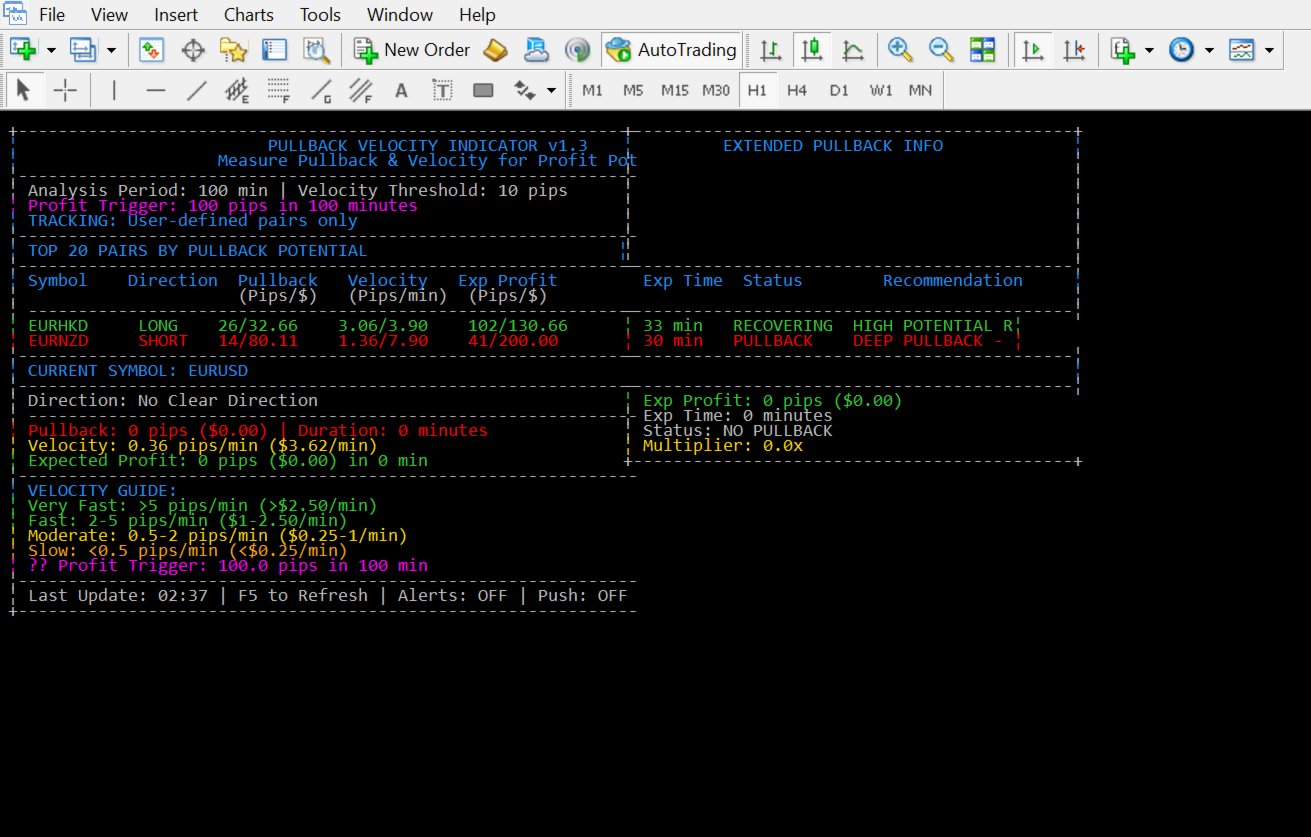
Turn market pullbacks into profitable recovery trades with the PullBack Velocity Indicator. This tool identifies when a currency pair is in a pullback phase and calculates its velocity to project potential recovery profits. By analyzing the depth and duration of a pullback against the pair's current momentum, the indicator provides a clear "Expected Profit" in pips and dollars, along with an estimated recovery time. It actively alerts you to "HIGH POTENTIAL RECOVERY" scenarios, giving you a quantifiable edge in mean-reversion and pullback trading.
Key Features:
Pullback Detection: Automatically identifies pullbacks from recent peaks (for long entries) and troughs (for short entries), measuring depth in pips and dollars.
Velocity Calculation: Measures price velocity in pips-per-minute and dollars-per-minute to gauge momentum.
Profit Projection Engine: Calculates expected profit for a recovery move based on pullback depth (Pips), velocity (Pips/min), and duration (minutes), using dynamic multipliers.
Real-time Status: Classifies each symbol's status as "PULLBACK ACTIVE," "RECOVERING," or "NO PULLBACK."
Visual Dashboard: A dual-column display shows top pairs by potential, including direction (LONG/SHORT), pullback stats, velocity, and expected profit.
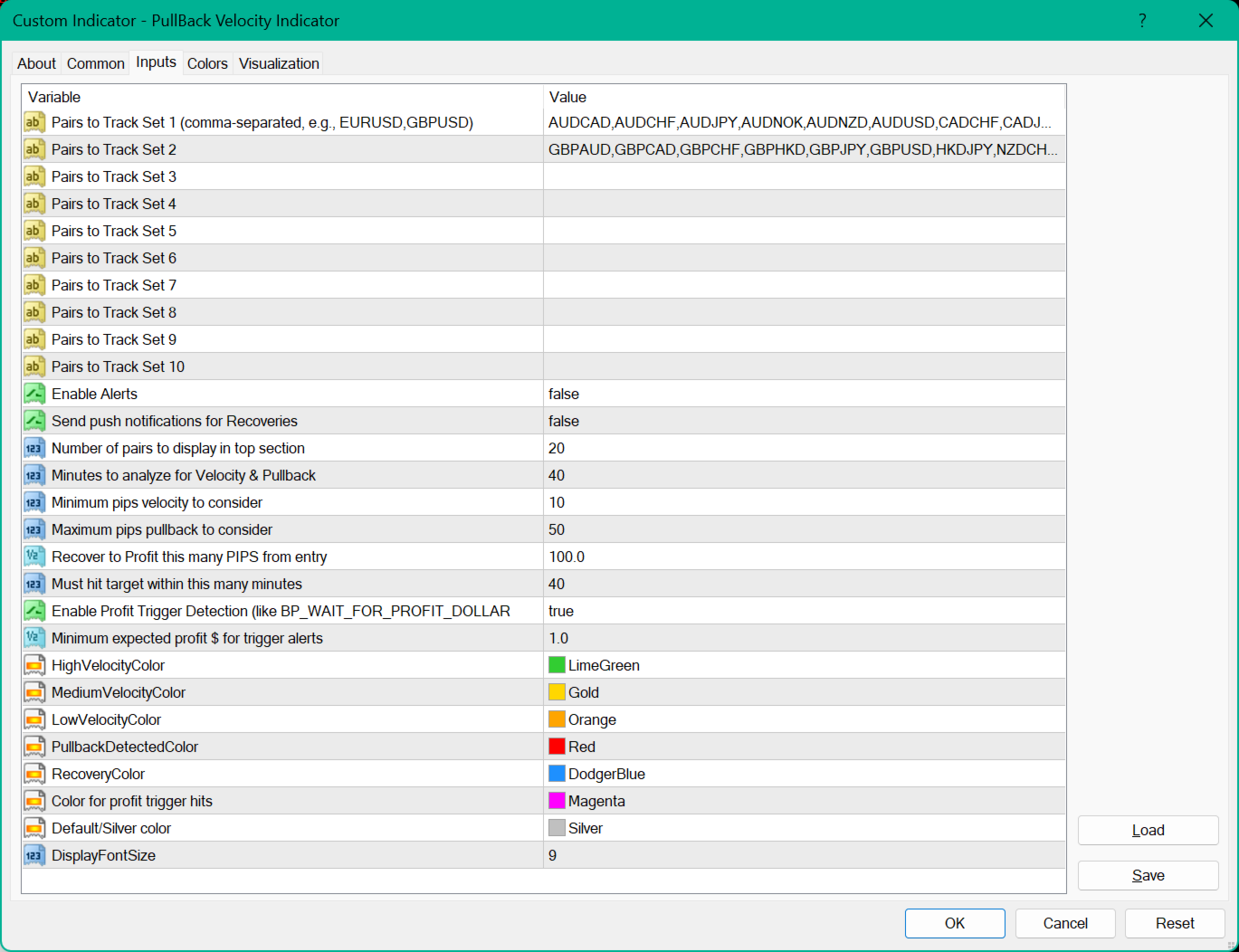
Push Notifications & Alerts: Sends desktop alerts and mobile push notifications when a "HIGH POTENTIAL RECOVERY" is detected.
Effective Uses:
Mean-Reversion Entries: Use the indicator to find pullbacks within a trend. When the status changes to "RECOVERING," enter in the direction of the original trend.
Scaling In/Out: Add to existing positions during a healthy pullback, using the "Expected Profit" as a dynamic target for scaling out.
Risk/Reward Estimation: Before entering a pullback trade, check the `PullbackPips` (risk) vs. the `ExpectedProfitPips` (reward) to ensure a favorable ratio.
Alert-Driven Trading: Set up the indicator to run across multiple charts and receive notifications, so you never miss a high-probability recovery setup.