 MetaTrader 5
 Experts
 Indicators
 Scripts
 Libraries
 Storage
Join our fan page

Opening Range Breakout with NR4 / NR7 Contraction Filters - expert for MetaTrader 5

What I've built:
• An 1,800-line XAUUSD scalping EA with regime-based setups (liquidity sweeps, break-of-structure pullbacks, fair value gaps), session filters and a spread filter.
- Views:
- 92
- Published:
-
 You are missing trading opportunities:
- Free trading apps
- Over 8,000 signals for copying
- Economic news for exploring financial markets
Registration Log inYou agree to website policy and terms of use
If you do not have an account, please register -
 Need a robot or indicator based on this code? Order it on Freelance
Go to Freelance
Need a robot or indicator based on this code? Order it on Freelance
Go to Freelance
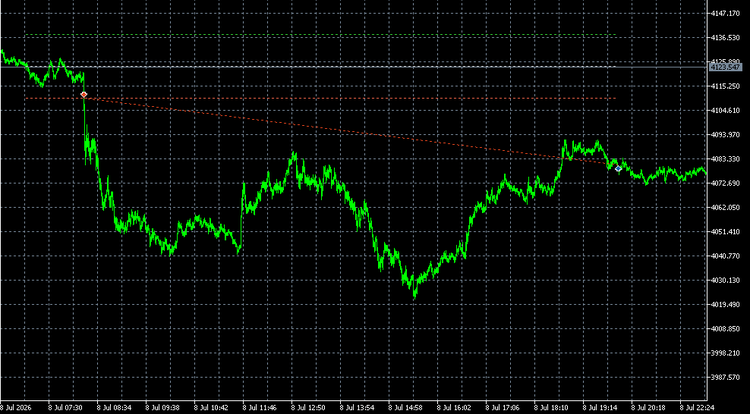
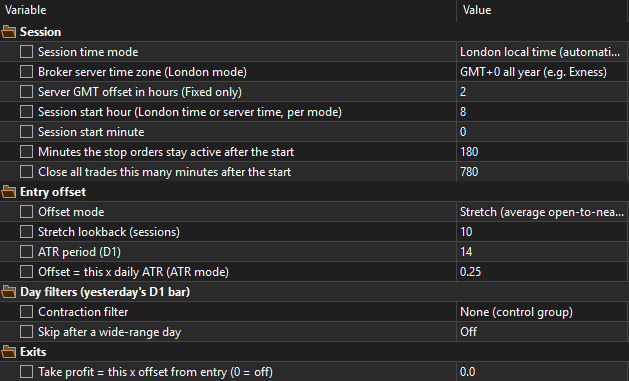
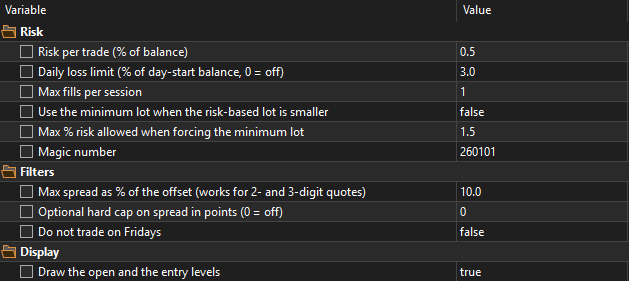
This Expert Advisor tests a classic idea: after a quiet, narrow-range day, the next day is more likely to move strongly in one direction from its open. The method is based on the opening range breakout and contraction/expansion concepts described by Toby Crabel in "Day Trading with Short Term Price Patterns and Opening Range Breakout" (1990). The code is an original implementation, adapted for a 24-hour market such as XAUUSD.
APEX VELOCITY
ApexVelocity is a professional-grade Expert Advisor designed to capture explosive momentum in high-volatility instruments like XAUUSD (Gold). Moving away from rigid, hard-coded parameters, v1.0 introduces a robust, fully dynamic architecture that adapts to market conditions and broker specifications in real-time.
 Daily PnL Percentage Overlay - prop firm daily loss limit
Displays today's floating PnL as % of balance plus how much of the daily-loss budget is consumed — the number that actually matters for prop firm rules (FTMO, Apex, TopStep). Color code: green under 50% of limit, orange under 80%, red above. Configurable reset hour. Free to use. Inputs: InpLimitPct (daily loss limit %), InpResetHour (day reset, server time), colors, font size. Attach to any chart — reads account equity live.
Accelerator Oscillator (AC)
The Acceleration/Deceleration Indicator (AC) measures acceleration and deceleration of the current driving force.
MACD Signals
Indicator edition for new platform.