Daily loss limit: how 1% risk per trade becomes a blown day

A 5% daily loss limit rarely breaks on one big trade. Here is how 1% risk per trade turns into a blown day before lunch, one decision at a time.
This is a made-up day. If parts of it feel familiar, that's the point.
The account: $10,000, a challenge with a 5% daily loss limit. The plan: 1% per trade, three trades at most. Nothing reckless. Watch what happens anyway.

The made-up day from this post, trade by trade
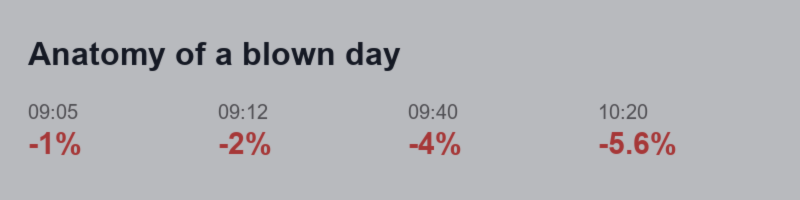
09:05 - The first trade
EURUSD long at a level that has held all week. Stop below it, $100 at risk. A clean setup. The level breaks on a news spike and the stop is hit.
Day: -$100 (-1%). Fine. That's what stops are for.
09:12 - "It's going to come back"
Seven minutes later price is back at the level. Same idea, same size, same pair. It feels like the market owes you this one. It doesn't. Stopped again.
Day: -$200 (-2%).
Nothing about this trade was planned. It was a reaction to the first one.
09:40 - "Just to get back to zero"
Now the day is -2%, and the thought arrives quietly: one trade at 2% would put you back where you started. It's still within the rules. You raise the risk.
The trade goes against you from the first minute.
Day: -$400 (-4%).
10:15 - The last $100
$100 left before the daily limit. Gold is moving fast and there's a setup. The stop that makes sense is wide, so the risk comes out at $150. You tell yourself it won't hit the stop. You send it.
It hits the stop. With slippage, a little past it.
Day: -$560 (-5.6%). The challenge is over. It's 10:20.
What actually happened
No single trade was crazy. Each one was a small step from the one before:
- the second trade was the first trade's loss, looking for a way out;
- the third trade was the second trade's loss, with the risk doubled;
- the fourth trade didn't fit in what was left of the day, and it went anyway.
The damage was done in the gaps between trades: seven minutes, twenty-eight minutes, thirty-five minutes. That is where the decisions were made, and that's where a brake has to sit.
Where the day could have stopped
- 09:12: a pause after a loss. Even ten minutes would have broken the reflex.
- 09:40: a rule that risk never rises straight after a loss.
- 10:15: a check before sending: if this stop is hit, where does the day end? -5.5% is past the limit, so the trade doesn't go.
- And a daily limit that actually stops new trades, instead of one you read about after the fact.
None of these need willpower in the moment. They need to be set before the first trade, when you're calm.
How RiskDeck fits in
Second Brain in RiskDeck by Dojiwave watches, among other things, for a loss a moment ago, a losing streak and risk rising straight after a loss. When one applies, the first press shows the reason above the button and the second press sends the trade: it gives you a second look, it never refuses. You can also set a pause after a loss. With Guard or Hold, RiskDeck checks where your account would end if every stop were hit and refuses a trade that doesn't fit, before it happens, with NO ROOM and what to do. Limits count from your stops, so a price gap or slippage can take a loss past a limit, like the gold trade above.