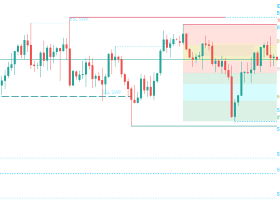

The most expensive assumption in automated trading is that one entry model should work in every market. A trend follower needs sustained movement. A breakout system needs compression followed by expansion. A mean-reversion system needs price to return toward a stable center. When the regime changes, the same logic can move from useful to structurally mismatched without changing a single input.
This is why choosing an EA by its best backtest is the wrong starting point. The better question is: what market behavior is this system designed to exploit, and what will I do when that behavior disappears?
The single-bot trap
A trader buys one robot, attaches it to several charts and expects diversification. But running the same logic on EURUSD, XAUUSD and an index is still one idea expressed through correlated markets. If volatility expands across all three, the account may discover that its “diversification†was only cosmetic.
A toolbox approach begins with strategy roles:
- Trend: systems designed to stay with persistent directional movement.
- Breakout: systems that wait for price to leave a defined structure.
- Range and reversion: systems that operate when movement repeatedly returns toward equilibrium.
- Adaptive: systems that score context or switch among internal methods as conditions change.
- Metals-specialist: systems built around the execution and volatility profile of gold or silver.

Selection comes before activation
Owning several EAs does not mean running all of them simultaneously. It means having a suitable candidate when the market, symbol and risk budget justify it. Start by writing the operating hypothesis for each system in one sentence. Then define the observable condition that invalidates that hypothesis.
For example, a breakout EA may be inactive during disorganized price action; a range system may be inactive during one-way expansion. This simple discipline prevents the common mistake of forcing an algorithm to trade outside the environment it was built for.
Build the account around risk, not excitement
Set a portfolio risk ceiling before individual EA settings. Decide the maximum combined exposure, the maximum acceptable daily loss and which systems are allowed to hold correlated positions. If two robots respond to the same dollar move, treat them as related exposure even when their names and charts differ.
The Ratio X Trader's Toolbox was built around this specialist model. It currently brings together 17 Expert Advisors and the Ratio X Trend Watcher Indicator, including trend, breakout, adaptive, grid and metals-focused approaches. The value is not that every system must trade. The value is that you can choose the right tool instead of asking one robot to pretend every market is the same.
Black Friday 2026 reader offer
Lifetime access to the complete Ratio X Trader's Toolbox is normally $297. Use coupon BLACKFRIDAY30 to receive 30% off, reducing the price to $207.90.
The promotion ends on 20 November 2026 and is limited to 30 total coupon redemptions. If the first 30 readers use the coupon before that date, the promotion ends early.
See the complete Toolbox and claim the Black Friday price
Final thought
The goal is not to collect robots. It is to build a deliberate set of responses to different market conditions. When every system has a role, a risk budget and an off-switch, automation becomes an operating process rather than a lottery ticket.
Risk disclosure: Trading leveraged products involves substantial risk. No EA can guarantee profits, and past or tested behavior does not predict future results. This article is educational and is not financial advice.