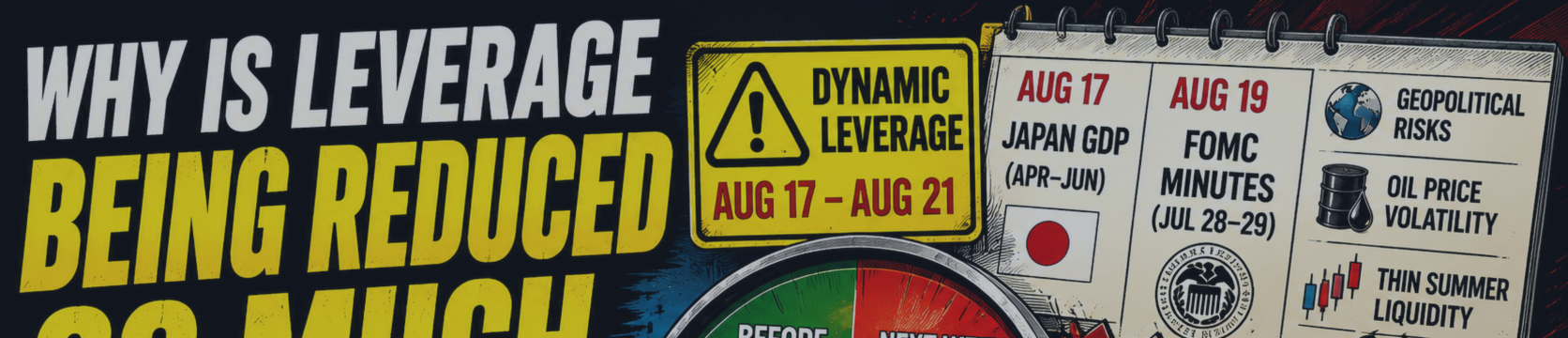

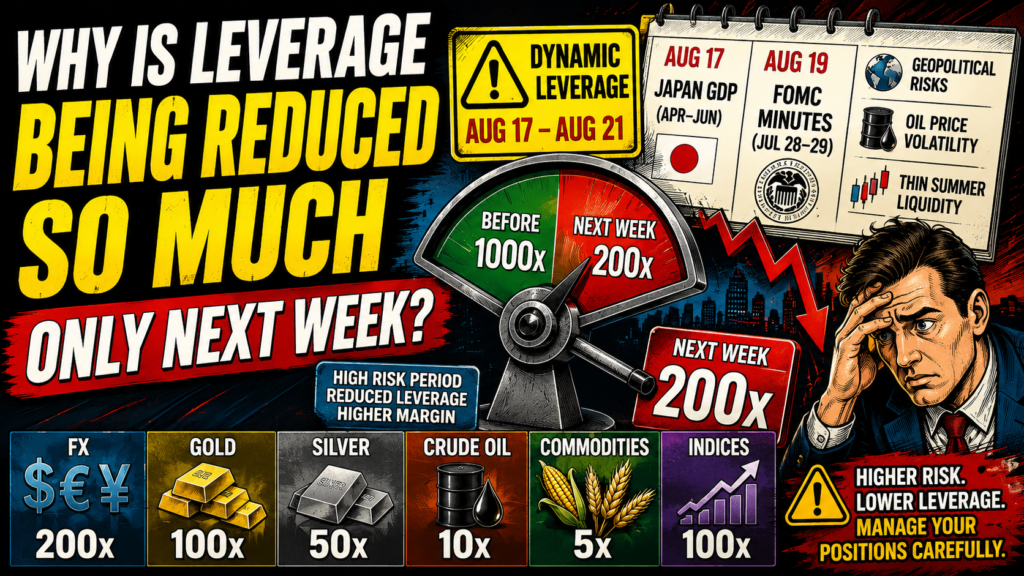
Have you ever wondered, “Why is leverage being reduced this much only next week?”
An overseas broker has announced that it will apply Dynamic Leverage from August 17 to August 21.
Dear Valued Customer,
Thank you for using xxxxxx.
Based on the major economic indicators scheduled for release from August 17 to August 21 and current market conditions, we will temporarily adjust the leverage available for certain products.
Dynamic Leverage is a system that automatically adjusts maximum leverage depending on market volatility and the level of risk during important events.
Normally, traders can use high leverage. However, when the risk of sharp price movements increases, maximum leverage may be reduced to help limit the risk of stop-outs and negative balances.
Application periods:
- From 15 minutes before a major economic indicator release until 5 minutes after the release
- Friday: From 3 hours before the market close for each product
- Monday to Thursday: From 30 minutes before the market close for each product
- Monday: During the first 30 minutes after the market opens
Maximum leverage for the affected products:
- FX: 200x
- Crude Oil: 10x
- Gold: 100x
- Silver: 50x
- Commodities: 5x
- Stock Indices: 100x
During the Dynamic Leverage period, liquidity may decrease and price volatility may increase. Please manage your positions carefully.
Outside the Dynamic Leverage period, normal maximum leverage will apply.
For FX, maximum leverage will be reduced to 200x, gold to 100x, silver to 50x, crude oil to 10x, commodities to 5x, and stock indices to 100x.
Considering the high leverage normally available, these are significant restrictions.
Is this simply a precautionary measure, or is there really something traders should be concerned about this week?
🤔 What Happens When Required Margin Suddenly Increases?
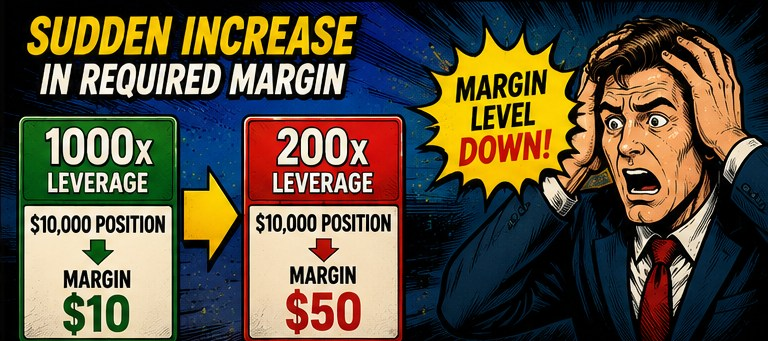
For example, if you trade FX with 1,000x leverage and have a position worth $10,000, the required margin is approximately $10.
If leverage is reduced to 200x, the required margin increases to approximately $50.
For gold, reducing leverage from 1,000x to 100x would increase the required margin by a factor of 10.
The biggest concern is how existing positions are treated.
If the leverage change causes the required margin to be recalculated, the account's margin level could suddenly fall even if the market price has barely moved.
In theory, this could bring the account into a stop-out condition simply because the leverage has changed.
Normally, you might expect the restriction to apply only to new positions. However, whether existing positions are also affected depends on the broker's account rules and terms.
This is something that needs to be checked carefully.
😠 Why Only August 17–21? A Combination of Risks
There are several market events scheduled for this period.
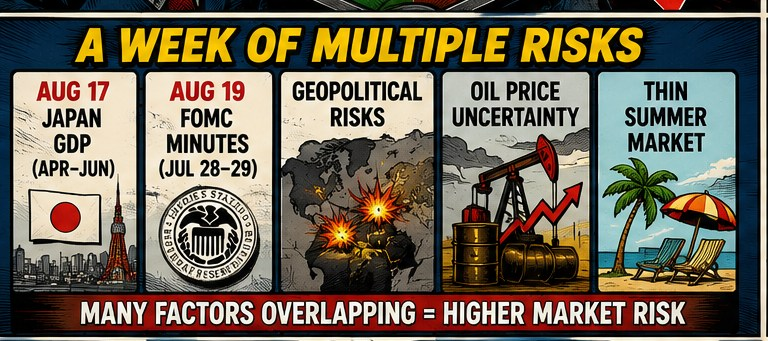
Japan's preliminary April–June GDP is scheduled for August 17, while the minutes from the July 28–29 FOMC meeting are scheduled for August 19.
In addition, the situation in the Middle East and oil prices remain unstable. Oil prices have been rising amid stalled talks between the United States and Iran, and geopolitical risks could affect markets through inflation and interest rates.
Then there is the thin summer market.
Reuters has described the current environment as a “sluggish summer phase.”
In other words, it is not one huge event, but a combination of monetary policy, GDP, geopolitical risks, oil prices, and thin summer liquidity.
It is therefore reasonable to see this as a week when multiple risks are overlapping.

🤔 Is This About Limiting High-Leverage + Zero-Cut Trading?
The leverage restriction does not appear to be simply a measure for economic indicator releases.
For traders using high leverage, the market itself is not the only risk.
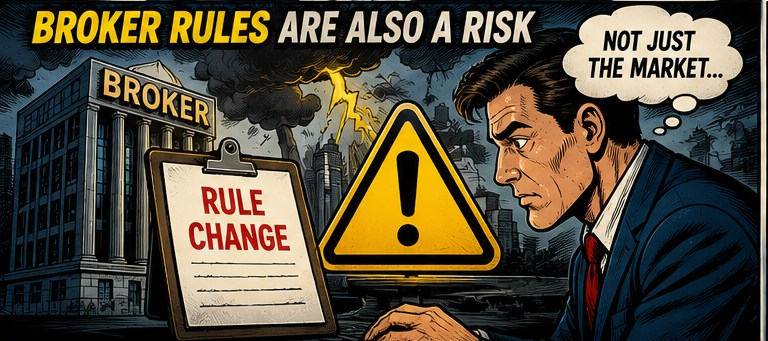
The broker's own leverage changes can also affect the margin requirements of an account.
In addition, trading strategies that use high leverage and zero-cut protection to target large price movements around events such as the FOMC or GDP releases become much more difficult under these restrictions.
From the broker's perspective, this is a reasonable risk-management measure.
From the trader's perspective, however, it means that leverage is reduced precisely when the market is expected to move significantly.
During this week, traders should therefore consider not only market conditions but also changes in the broker's own rules as a potential risk factor.
It may be a good idea to manage positions with more margin than usual.
Summary 📌
The Dynamic Leverage restriction from August 17 to August 21 is more than just a warning about major economic indicators.
GDP, FOMC-related information, geopolitical risks, oil prices, and thin summer liquidity are all overlapping during the same week.
For high-leverage traders, the broker's leverage adjustment itself can also affect required margin.
This means that the broker's rules can become part of the trading risk, not just the market movement itself.
During periods like this, checking the broker's leverage rules and managing positions with sufficient margin are especially important.