
━━━━━━━━━━━━━━━━━━━━━━━━━━━━━━━━━━
🚀 MOONDOG vNEXT — COMING SOON
This article previews the next MoonDog development release.
The new intelligence architecture, external learning pipeline and research functions described below are still being completed and validated. They are not all available in the current Market version yet.
Until the update is officially released, MoonDog operates according to the version and features currently listed on its Market product page.
Existing customers will receive officially released updates through the MQL5 Market system.
━━━━━━━━━━━━━━━━━━━━━━━━━━━━━━━━━━
🟢 FOLLOW THE CURRENT OFFICIAL MOONDOG LIVE SIGNAL
👉 https://www.mql5.com/en/signals/2386840?source=Site+Signals+From+Author
Real trades. Real market conditions. Transparent monitoring.
━━━━━━━━━━━━━━━━━━━━━━━━━━━━━━━━━━

Most trading robots try to improve by trading more.
MoonDog’s next evolution began by doing the opposite:
It learned to become harder to convince.Gold does not punish a breakout system only when it misses a move.
It also punishes it when:
◆ a breakout has no real continuation;
◆ spread expands at the wrong moment;
◆ several attractive signals represent the same weak condition;
◆ a pending order remains exposed during an unsuitable market phase;
◆ volatility disappears immediately after entry.
The question behind MoonDog vNext was therefore not:
“How can we force more trades?”
It was:
“How can we preserve the strongest breakouts while rejecting more of the expensive ones?”
That question changed the entire project.
━━━━━━━━━━━━━━━━━━━━━━━━━━━━━━━━━━
🐕 ONE BREAKOUT — FIVE HUNTERS — TWO JUDGESThe upcoming MoonDog version does not ask artificial intelligence to invent trades.
The process always begins with the five native XAUUSD breakout modules:
◆ Moon Nova
◆ Moon Apex
◆ Moon Zenith
◆ Moon Pulse
◆ Moon Eclipse
Each module searches for a different market structure and independently prepares a complete trading plan:
- direction;
- pending entry;
- Stop Loss;
- Take Profit;
- expiration;
- module identity.
Only after a valid native breakout candidate exists does MoonDog activate its confirmation intelligence.
━━━━━━━━━━━━━━━━━━━━━━━━━━━━━━━━━━
🧠 ONNX MODEL 1 — THE QUALITY JUDGE
The first embedded model evaluates the quality of the already-formed breakout candidate.
It uses only information available at the original signal timestamp.
It does not see the future.
It does not generate a different direction.
It does not create an artificial trade.
Its responsibility is limited to evaluating whether the native breakout candidate is sufficiently interesting.
If the candidate is rejected, no production order is sent.
━━━━━━━━━━━━━━━━━━━━━━━━━━━━━━━━━━
🧠 ONNX MODEL 2 — INDEPENDENT CONFIRMATION
The second embedded model examines the same breakout candidate from a separate confirmation perspective.
Depending on the selected confirmation policy, MoonDog requires sufficient agreement before allowing the candidate to continue toward execution.
The two models are not designed to replace the five breakout strategies.
They are designed to make those strategies more selective.
━━━━━━━━━━━━━━━━━━━━━━━━━━━━━━━━━━
⚙️ FINAL EXECUTION LAYER
Even an accepted signal must still pass MoonDog’s execution controls:
- spread validation;
- margin validation;
- volume normalization;
- symbol tick-size validation;
- stops-level validation;
- freeze-level validation;
- filling-mode checks;
- trading-session checks;
- account exposure limits;
- server-side protection checks.
Only a fully accepted and broker-valid plan can become a pending order.
If a required condition is not valid, the deterministic fallback is:
No trade.━━━━━━━━━━━━━━━━━━━━━━━━━━━━━━━━━━
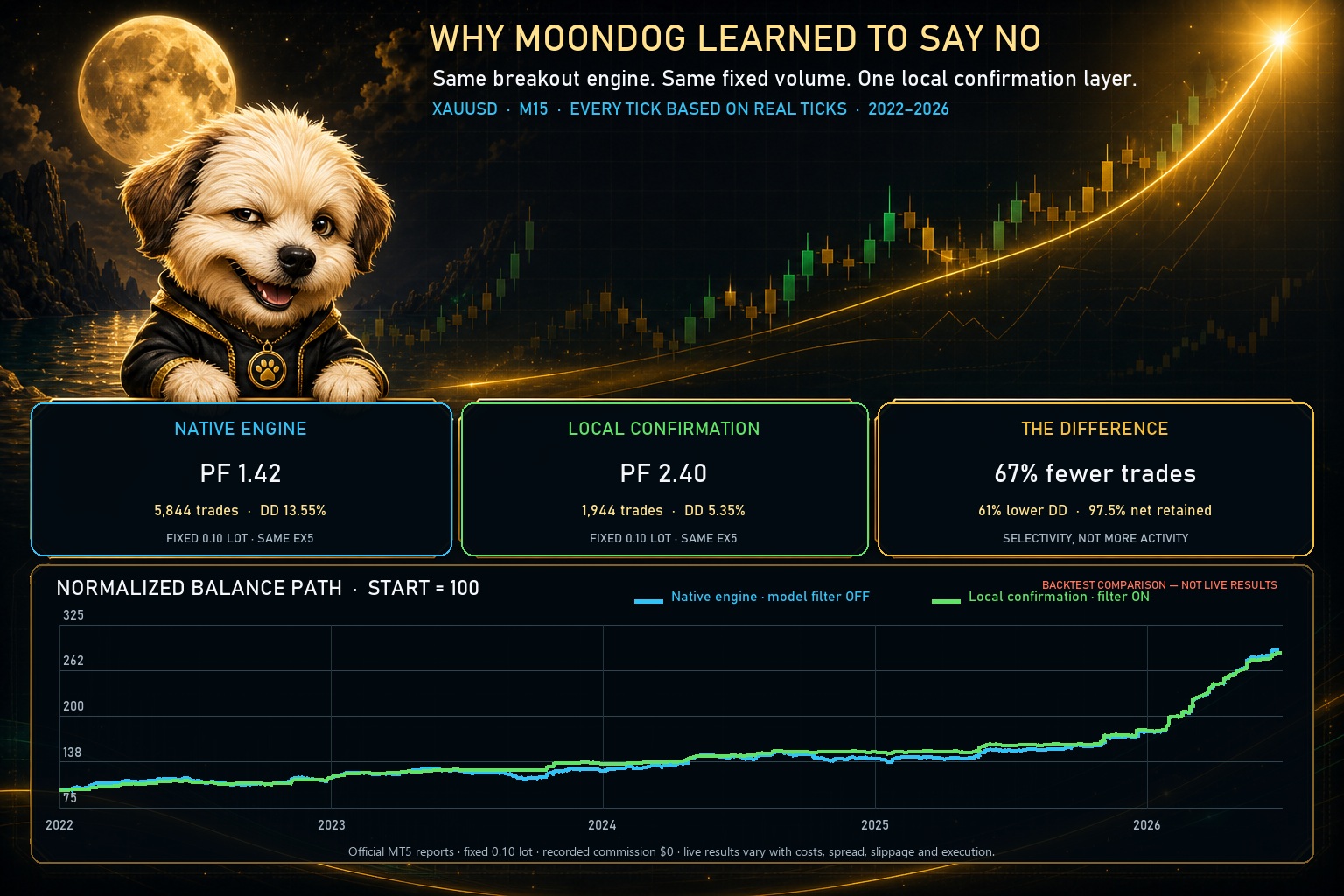
A controlled fixed-volume comparison was performed during development using:
- the same frozen executable;
- the same 0.10 lot size;
- the same XAUUSD dataset;
- M15;
- Every Tick Based on Real Ticks;
- 100% History Quality;
- the same 2022–2026 historical window.
Native breakout engine — Confirmation OFF
- Trades: 5,844
- Profit Factor: 1.42
- Net result: $19,213.33
- Equity Drawdown: 13.55%
Local confirmation intelligence — ON
- Trades: 1,944
- Profit Factor: 2.40
- Net result: $18,737.94
- Equity Drawdown: 5.35%
━━━━━━━━━━━━━━━━━━━━━━━━━━━━━━━━━━
THE DIFFERENCEThe local confirmation layer retained approximately:
97.5% of the historical net result
while producing:
66.7% fewer trades
and approximately:
60.5% lower reported equity drawdown.
The Profit Factor increased from:
1.42 → 2.40MoonDog did not improve this historical comparison by becoming busier.
It improved by becoming more selective.These figures come from historical Strategy Tester reports with recorded commission equal to zero.
They are not live results, a forecast or a guarantee of future performance.
━━━━━━━━━━━━━━━━━━━━━━━━━━━━━━━━━━
🚀 THE ADAPTIVE R125 RESEARCH PROFILESelectivity determines which trading candidates survive.
Risk management determines how strongly an accepted trade affects the account.
The experimental R125 research profile uses:
1.25% nominal risk per accepted trading plantogether with the existing model-driven risk adjustment.
This is an aggressive compounding configuration created to demonstrate MoonDog’s historical growth potential.
It is not intended to be a universal recommendation for every trader and it is not necessarily the default that will be released with MoonDog vNext.
━━━━━━━━━━━━━━━━━━━━━━━━━━━━━━━━━━
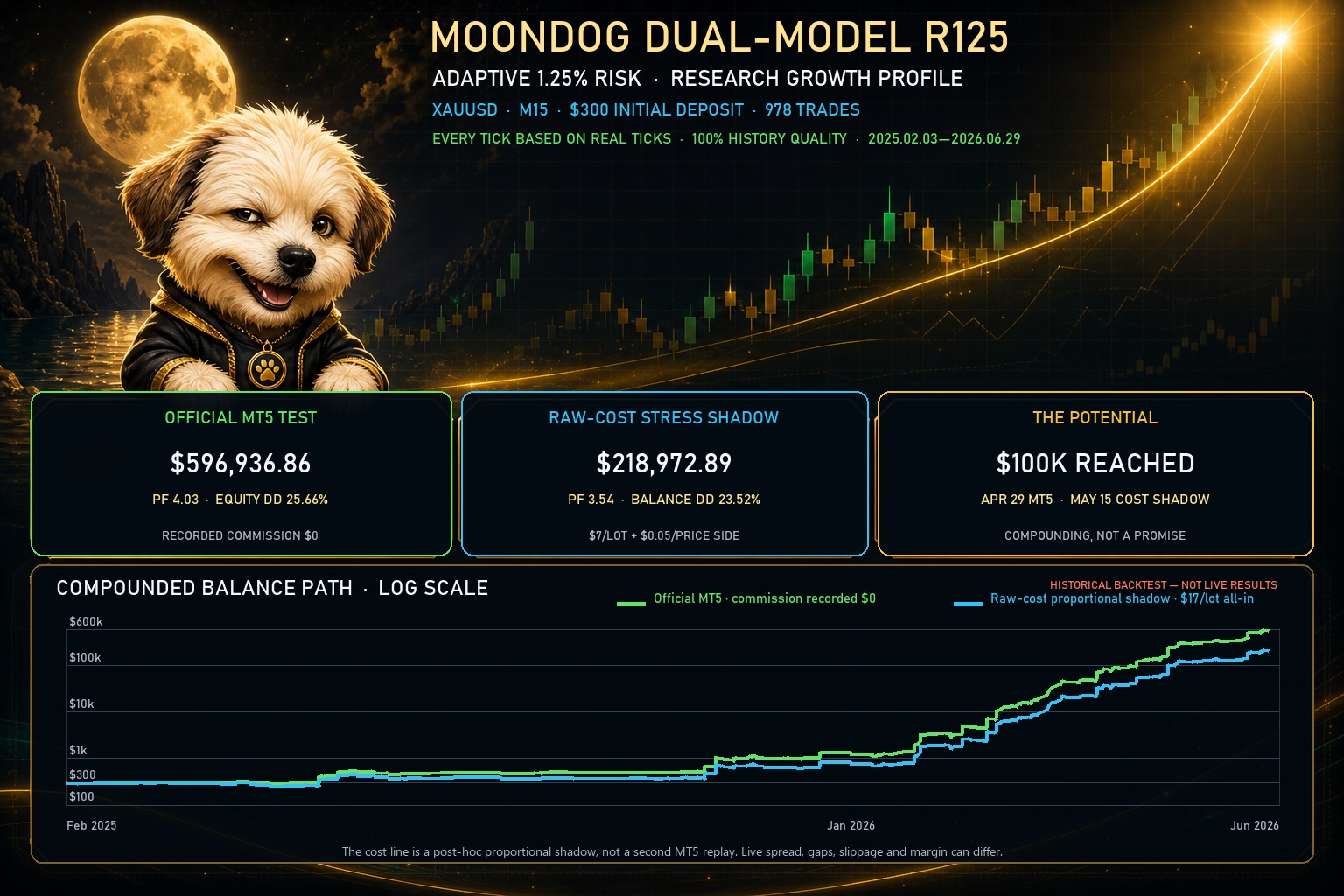
Development test configuration:
- Symbol: XAUUSD
- Timeframe: M15
- Initial deposit: $300
- Risk profile: Adaptive 1.25%
- Testing model: Every Tick Based on Real Ticks
- History Quality: 100%
- Effective period: 3 February 2025 – 29 June 2026
Official MT5 historical result
- Total trades: 978
- Profit Factor: 4.03
- Equity Drawdown: 25.66%
- Final balance: $596,936.86
- $100,000 historically reached: 29 April 2026
- Recorded commission: $0
Because the original MT5 report recorded zero commission, a separate cost-stress shadow was calculated.
━━━━━━━━━━━━━━━━━━━━━━━━━━━━━━━━━━
RAW-COST STRESS SHADOW
Assumed additional trading costs:
- $7 commission per lot round-turn;
- $0.05 XAU price slippage per side;
- $17 estimated total cost per round-turn lot.
Historical shadow result:
- Profit Factor: 3.54
- Balance Drawdown: 23.52%
- Final shadow balance: $218,972.89
- $100,000 historically reached: 15 May 2026
The cost-stress line is a proportional compounding shadow applied to the exact historical deal stream.
It is not a second complete MT5 execution replay.
Broker volume steps, margin rejections, changed entry eligibility, gaps and different live fills are not re-simulated by this shadow calculation.
This is historical potential — not a profit promise.The extraordinary-looking curve comes from compounding an aggressive risk profile through a favorable historical sequence.
Live results can be materially different.
━━━━━━━━━━━━━━━━━━━━━━━━━━━━━━━━━━
🧠 FROZEN INTELLIGENCE INSIDE MT5MoonDog vNext will not attempt to retrain itself after every trade.
The production models remain frozen while the EA is operating.
This is important because uncontrolled live self-training after individual wins and losses could make the strategy unstable, difficult to reproduce and impossible to validate correctly.
Inside MetaTrader 5, the planned production architecture uses:
◆ native breakout logic;
◆ frozen embedded ONNX inference;
◆ deterministic risk management;
◆ deterministic broker validation;
◆ local order execution.
There will be:
- no LLM making tick-by-tick entry decisions;
- no remote signal required to generate trades;
- no WebRequest required for production decisions;
- no model downloading itself during a trade;
- no future-data reader;
- no historical date controlling whether a trade should win;
- no self-training inside the EA.
The production decision remains local inside MetaTrader 5.
━━━━━━━━━━━━━━━━━━━━━━━━━━━━━━━━━━
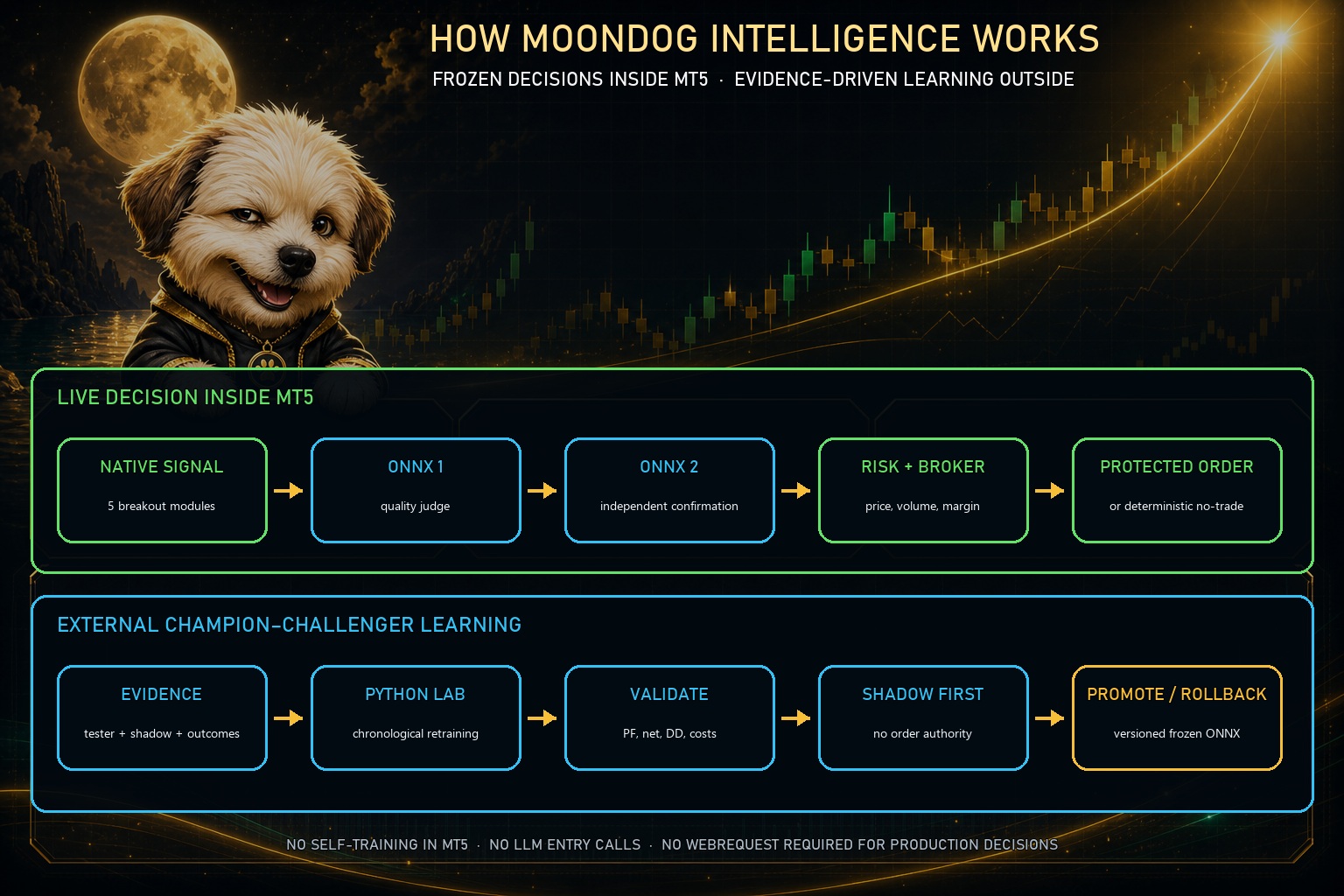
The learning process is being designed to happen outside MetaTrader 5 through a controlled Python research pipeline.
Its objective is not to modify MoonDog randomly.
Its objective is to challenge the current production model using new evidence.
━━━━━━━━━━━━━━━━━━━━━━━━━━━━━━━━━━
1 — CAUSAL EVIDENCE COLLECTION
The validation version records the information that was actually available when each native breakout candidate appeared.
Evidence can include:
- Strategy Tester results;
- shadow-mode decisions;
- accepted candidates;
- rejected candidates;
- broker execution results;
- resolved trading outcomes;
- volatility conditions;
- spread conditions;
- market-regime information;
- model confidence;
- execution quality.
The original signal-time information must be preserved.
Future information cannot be inserted into the original decision features.
━━━━━━━━━━━━━━━━━━━━━━━━━━━━━━━━━━
2 — EXTERNAL PYTHON RETRAINING
The external laboratory can periodically train new challenger models using chronological data.
The planned pipeline supports:
◆ expanding long-memory models;
◆ rolling recent-regime models;
◆ recency-weighted learning;
◆ feature-drift detection;
◆ performance-degradation detection;
◆ unfamiliar-regime detection.
Training uses past information only.
The rolling window and retraining frequency must be selected through untouched walk-forward validation, not arbitrary assumptions.
━━━━━━━━━━━━━━━━━━━━━━━━━━━━━━━━━━
3 — CHAMPION VERSUS CHALLENGER
Every new model must compete against the currently validated champion.
A challenger must demonstrate that its apparent improvement is not caused only by:
- one lucky month;
- one broker;
- one short market regime;
- a small number of exceptional trades;
- reduced simulated costs;
- higher hidden risk;
- future-data contamination;
- an incorrect execution reconstruction.
The comparison can include:
- Profit Factor;
- net result;
- balance drawdown;
- equity drawdown;
- trading costs;
- trade concentration;
- monthly stability;
- bootstrap robustness;
- cross-broker portability;
- tail risk;
- evidence integrity;
- model calibration.
A challenger that produces more profit only by increasing drawdown or tail risk is not automatically better.
━━━━━━━━━━━━━━━━━━━━━━━━━━━━━━━━━━
4 — SHADOW MODE FIRST
A new challenger never receives immediate trading authority.
It must initially run in:
SHADOW MODEIn SHADOW mode, the challenger records what it would have done while the validated production model continues controlling real orders.
The challenger can be observed without allowing it to modify:
- trade direction;
- lot size;
- Stop Loss;
- Take Profit;
- pending entry;
- open positions;
- production orders.
This creates a safer bridge between historical research and future production use.
━━━━━━━━━━━━━━━━━━━━━━━━━━━━━━━━━━
5 — PROMOTION OR ROLLBACK
Only a challenger showing stable improvement can be exported as a new versioned ONNX model.
Each model release is planned to include a manifest containing:
- training period;
- feature schema;
- preprocessing version;
- validation metrics;
- model hash;
- creation timestamp;
- model version;
- champion identity.
Previous production models are preserved for rollback.
If confidence, data quality or market familiarity is insufficient, MoonDog can preserve the previous champion or fall back to its original deterministic behavior.
━━━━━━━━━━━━━━━━━━━━━━━━━━━━━━━━━━
🛡️ WHAT WILL NOT BE ACTIVATED JUST FOR MARKETINGSeveral experimental ideas are being researched:
- adaptive entry offsets;
- additional breakout entries;
- transparent scoring engines;
- recent-regime challengers;
- alternative entry timeframes;
- counterfactual Stop Loss variations;
- counterfactual Take Profit variations.
However, an experimental feature will not receive live authority simply because one historical test looks attractive.
If it cannot beat the existing champion after realistic costs without increasing drawdown or tail risk, it remains:
OFF or SHADOW.Preserving an existing edge is more important than adding an impressive-sounding feature.
━━━━━━━━━━━━━━━━━━━━━━━━━━━━━━━━━━
⚙️ COMING SOON IN MOONDOG vNEXTThe development line currently being completed and validated includes:
◆ dual local confirmation for native breakout candidates;
◆ clearer model-quality diagnostics;
◆ structured live evidence collection;
◆ external champion–challenger retraining;
◆ model drift and degradation monitoring;
◆ optional broker-server trading windows;
◆ automatic pending-order cleanup outside selected hours;
◆ optional economic-calendar protection;
◆ improved tick-size handling;
◆ improved volume-step handling;
◆ stronger broker metadata validation;
◆ cleaner and better-organized English inputs;
◆ redesigned MoonDog dashboard;
◆ versioned model manifests;
◆ model rollback support;
◆ continued XAUUSD real-tick validation.
MoonDog is evolving from a breakout EA into a complete research, execution and evidence ecosystem.
But every feature must still pass validation before receiving production authority.
━━━━━━━━━━━━━━━━━━━━━━━━━━━━━━━━━━
✅ NO HARD-CODED BACKTEST TRICKSThe MoonDog production philosophy does not permit:
- historical dates that activate only profitable periods;
- future price information;
- a history reader that decides trades using future outcomes;
- a remote service that sends hidden buy or sell instructions;
- an LLM making live entry decisions;
- artificial balance deposits generated by the EA;
- different production logic hidden inside the backtest.
Historical results come from the tested trading logic, the selected risk configuration and the historical market sequence.
Backtests are still not guarantees of future performance.
━━━━━━━━━━━━━━━━━━━━━━━━━━━━━━━━━━
🐕 WHY MOONDOG?MoonDog combines:
◆ five independent gold breakout modules;
◆ embedded local confirmation intelligence;
◆ percentage-based or fixed-lot risk management;
◆ server-side Stop Loss protection;
◆ Take Profit management;
◆ break-even management;
◆ High/Low trailing;
◆ MoonLock profit protection;
◆ pending-order management;
◆ spread and margin controls;
◆ broker-condition validation;
◆ an evidence-based development process.
The philosophy is simple:
Keep the proven engine.
Measure everything.
Challenge it honestly.
Promote only what survives.
━━━━━━━━━━━━━━━━━━━━━━━━━━━━━━━━━━
🌟 GET MOONDOG BEFORE vNEXTThe current MoonDog price is an introductory price for the version available today.
MoonDog vNext is still being completed and validated.
As approved functionality, research evidence and future Market updates are officially released, the planned product price will increase.
Customers receive officially released product updates through the MQL5 Market system.
Current MoonDog product page
👉 [INSERT THE CURRENT OFFICIAL MOONDOG MARKET LINK HERE]
Current official live signal
👉 https://www.mql5.com/en/signals/2386840?source=Site+Signals+From+Author
━━━━━━━━━━━━━━━━━━━━━━━━━━━━━━━━━━
TRADE GOLD. FETCH THE BREAKOUT. LET THE EVIDENCE DECIDE WHAT COMES NEXT.🐕🌕 MoonDog EA — To The Moon, One Validated Breakout at a Time.
━━━━━━━━━━━━━━━━━━━━━━━━━━━━━━━━━━
IMPORTANT RISK INFORMATIONHistorical and Strategy Tester results do not guarantee future performance.
Percentage risk is nominal per accepted trading plan.
Simultaneous exposure, market gaps, spread, slippage, commission, execution latency, margin requirements and broker specifications can increase realized risk.
The R125 profile shown in this article is an aggressive historical research configuration and is not a universal recommendation.
Traders should select risk according to their financial situation, broker conditions and tolerance for drawdown.
The vNext functionality described in this article is under development and validation. Final release functionality may differ if specific components do not pass the required safety, stability or performance tests