10 years of building and running an automated Forex Trading System: What we learned
12 August 2026, 10:42

0
98
There is a big difference between creating an Expert Advisor that looks good in a backtest and building an automated trading system that can operate in the real market for many years. This article is about our experience with that process. For approximately ten years, we have been developing, testing and running an automated Forex trading approach that eventually became the basis of our SCR_EURAUD system and its more diversified version, SCR_EURAUD_advanced. The technology behind the approach is our own Expert Advisor, SCR_NightScalper. I would not describe the journey as a search for a "perfect" strategy. There is no such thing. Instead, it has been a long process of finding a combination of strategy, instruments and execution conditions that works reasonably well for our particular trading methodology and maintains a controlled risk profile The EA is only one part of the system
One of the most important lessons we learned is that the trading algorithm itself is only one component of the final result. When we started, it was tempting to focus almost entirely on the trading logic:
Finding the right currency pairs
The original SCR_EURAUD approach was built around a relatively focused selection of currency pairs. Over time, we tested many other instruments. Some looked promising in historical testing but were not attractive in live trading. Others behaved well for a period and then became less suitable as market conditions changed. Eventually, we learned that adding more symbols simply because an EA can trade them is not necessarily diversification. Different currency pairs can have very different:
Why execution conditions matter so much
This is probably the area where we made some of our biggest discoveries. Suppose a short-term strategy has a relatively small statistical advantage per trade. A small increase in spread or commission may not look important when examining one position. But when the strategy executes hundreds or thousands of trades, these costs accumulate. The same applies to execution quality. A strategy can have excellent theoretical entries, but if the live execution consistently differs from the assumptions used during development, the actual result can be significantly different. This is why we eventually stopped treating broker selection as something completely separate from strategy development. For our approach, the trading environment became part of the system itself.
The role of cashback
Another part of our experience has been the use of cashback programs where they are available and economically appropriate. This does not change the trading logic. Instead, it changes the effective cost structure of the trading operation. When a strategy performs a relatively large number of transactions over a long period, even a small reduction in effective trading costs can become meaningful. This is one reason why we look at the economics of the complete trading setup rather than looking only at gross trading performance. The objective is not to make a mediocre strategy look good through cashback. The strategy still needs to have a positive statistical expectation before any cost optimization becomes interesting.
Why we prefer live statistics over impressive backtests
Backtesting is extremely useful. We use it extensively during development. But a backtest cannot reproduce every characteristic of live trading. It cannot perfectly model future liquidity conditions, execution behavior, real slippage or every change in market structure. For that reason, we place significant value on long-term forward and live testing. A system that has survived different market environments gives us much more information than a beautifully optimized backtest covering one particularly favorable period. This is also why we believe that drawdown deserves at least as much attention as return. A trading system should be evaluated not only by asking: "How much did it make?" but also: "How did it behave while making it?"
Ten years changes your perspective
When you have been working with an automated strategy for several months, it is easy to become focused on optimization. After several years, your perspective changes. You start paying more attention to robustness. You become less interested in finding the parameter set that produces the highest historical return and more interested in understanding whether the underlying logic remains reasonable when market conditions change. You also learn to accept that there will be periods when the system performs poorly. No strategy is equally effective in every market environment. There are periods of strong performance, periods of limited activity and periods of drawdown. The objective is not to eliminate these periods completely. The objective is to keep them within a level of risk that is acceptable for the overall strategy.
What we have today
Today, SCR_EURAUD and SCR_EURAUD_advanced represent the result of many years of development, testing and live operation. Both are based on our own automated technology, with SCR_NightScalper serving as the core trading engine. The systems have different approaches to portfolio construction, but both follow the same general philosophy: automate the execution, control the trading environment and avoid unnecessary complexity.
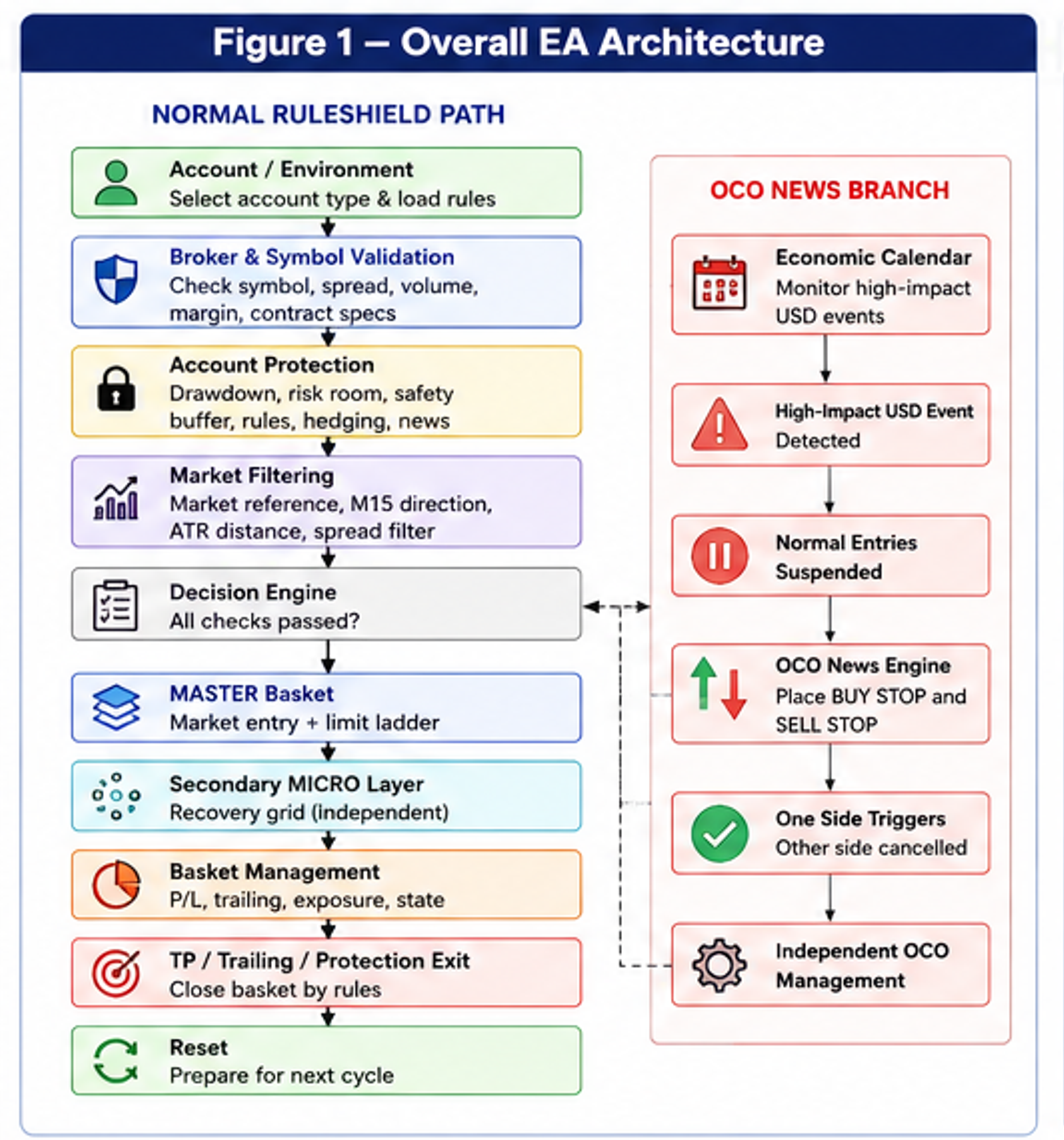
Their current performance and trading history can be independently observed through the MQL5 Signals platform. For us, public monitoring is important because it makes it possible to evaluate the actual trading history rather than relying only on statements made by the developer.
We are still testing
Perhaps the most important lesson from the last ten years is that development never really ends. Markets change. Trading costs change. Liquidity changes. Broker conditions change. And an approach that works well today should not automatically be assumed to work equally well forever. We continue to test new currency pairs, different execution environments and possible improvements to the existing methodology. Some ideas fail. Some look promising but don't survive live testing. And occasionally, something genuinely useful emerges. That process is what keeps the system evolving.
Final thoughts
If there is one thing I would emphasize after approximately ten years of working on automated Forex trading, it is this:
A trading robot is not a strategy in isolation.
The real system is: Strategy + instruments + execution + costs + infrastructure + risk management. Ignoring any one of these components can produce a very different result from what you see in a backtest.
That is probably the biggest lesson we have learned while developing SCR_EURAUD, SCR_EURAUD_advanced and the SCR_NightScalper technology behind them.
And after ten years, we are still learning.
One of the most important lessons we learned is that the trading algorithm itself is only one component of the final result. When we started, it was tempting to focus almost entirely on the trading logic:
- entry conditions;
- indicators;
- filters;
- stop loss and take profit;
- trading hours;
- and parameter optimization.
- spread;
- commission;
- execution speed;
- slippage;
- liquidity;
- trading session;
- VPS latency;
- and the characteristics of the particular currency pair.
Finding the right currency pairs
The original SCR_EURAUD approach was built around a relatively focused selection of currency pairs. Over time, we tested many other instruments. Some looked promising in historical testing but were not attractive in live trading. Others behaved well for a period and then became less suitable as market conditions changed. Eventually, we learned that adding more symbols simply because an EA can trade them is not necessarily diversification. Different currency pairs can have very different:
- volatility;
- liquidity;
- spreads;
- market-session behavior;
- and correlations.
Why execution conditions matter so much
This is probably the area where we made some of our biggest discoveries. Suppose a short-term strategy has a relatively small statistical advantage per trade. A small increase in spread or commission may not look important when examining one position. But when the strategy executes hundreds or thousands of trades, these costs accumulate. The same applies to execution quality. A strategy can have excellent theoretical entries, but if the live execution consistently differs from the assumptions used during development, the actual result can be significantly different. This is why we eventually stopped treating broker selection as something completely separate from strategy development. For our approach, the trading environment became part of the system itself.
The role of cashback
Another part of our experience has been the use of cashback programs where they are available and economically appropriate. This does not change the trading logic. Instead, it changes the effective cost structure of the trading operation. When a strategy performs a relatively large number of transactions over a long period, even a small reduction in effective trading costs can become meaningful. This is one reason why we look at the economics of the complete trading setup rather than looking only at gross trading performance. The objective is not to make a mediocre strategy look good through cashback. The strategy still needs to have a positive statistical expectation before any cost optimization becomes interesting.
Why we prefer live statistics over impressive backtests
Backtesting is extremely useful. We use it extensively during development. But a backtest cannot reproduce every characteristic of live trading. It cannot perfectly model future liquidity conditions, execution behavior, real slippage or every change in market structure. For that reason, we place significant value on long-term forward and live testing. A system that has survived different market environments gives us much more information than a beautifully optimized backtest covering one particularly favorable period. This is also why we believe that drawdown deserves at least as much attention as return. A trading system should be evaluated not only by asking: "How much did it make?" but also: "How did it behave while making it?"
Ten years changes your perspective
When you have been working with an automated strategy for several months, it is easy to become focused on optimization. After several years, your perspective changes. You start paying more attention to robustness. You become less interested in finding the parameter set that produces the highest historical return and more interested in understanding whether the underlying logic remains reasonable when market conditions change. You also learn to accept that there will be periods when the system performs poorly. No strategy is equally effective in every market environment. There are periods of strong performance, periods of limited activity and periods of drawdown. The objective is not to eliminate these periods completely. The objective is to keep them within a level of risk that is acceptable for the overall strategy.
What we have today
Today, SCR_EURAUD and SCR_EURAUD_advanced represent the result of many years of development, testing and live operation. Both are based on our own automated technology, with SCR_NightScalper serving as the core trading engine. The systems have different approaches to portfolio construction, but both follow the same general philosophy: automate the execution, control the trading environment and avoid unnecessary complexity.
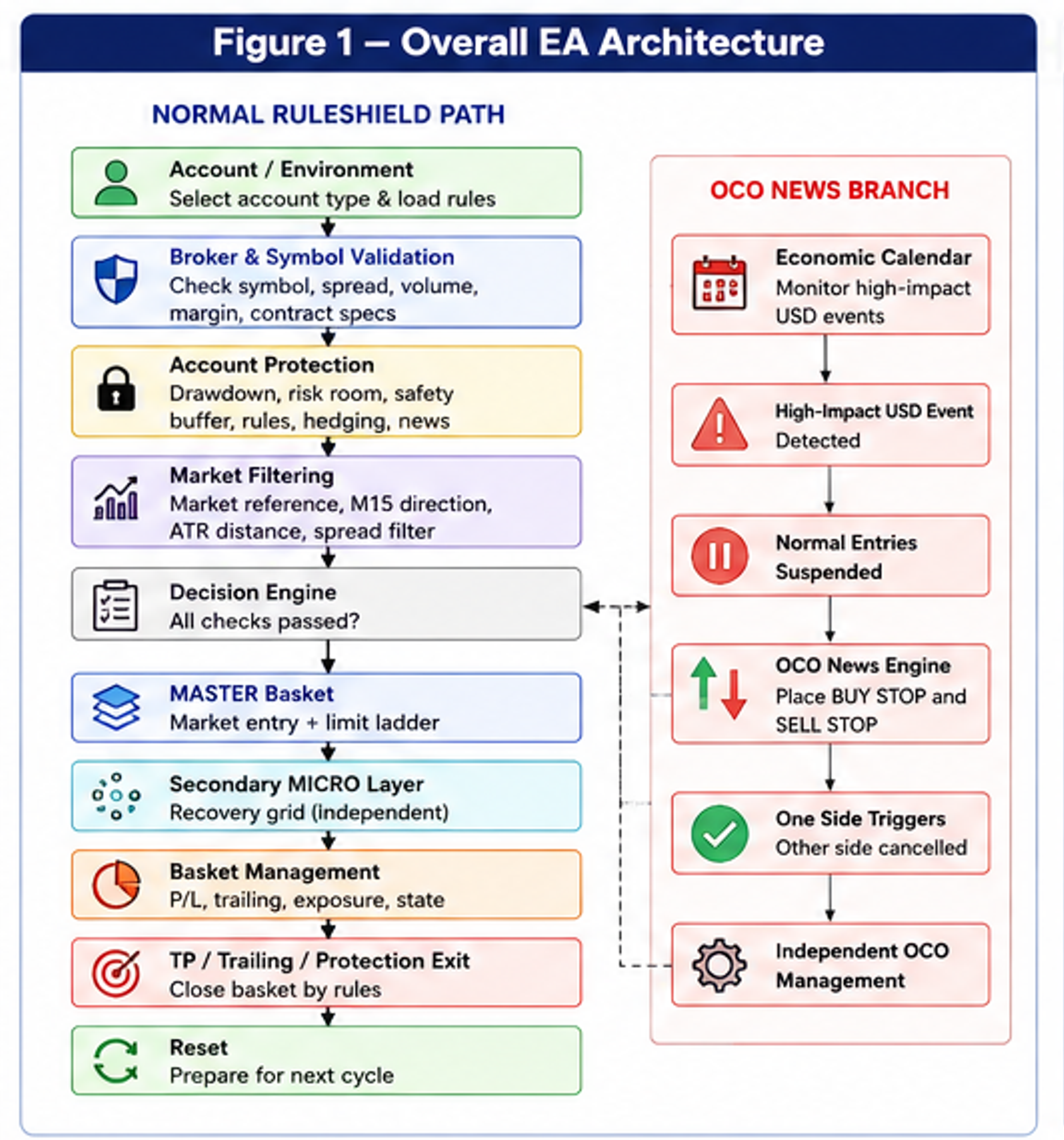
Their current performance and trading history can be independently observed through the MQL5 Signals platform. For us, public monitoring is important because it makes it possible to evaluate the actual trading history rather than relying only on statements made by the developer.
We are still testing
Perhaps the most important lesson from the last ten years is that development never really ends. Markets change. Trading costs change. Liquidity changes. Broker conditions change. And an approach that works well today should not automatically be assumed to work equally well forever. We continue to test new currency pairs, different execution environments and possible improvements to the existing methodology. Some ideas fail. Some look promising but don't survive live testing. And occasionally, something genuinely useful emerges. That process is what keeps the system evolving.
Final thoughts
If there is one thing I would emphasize after approximately ten years of working on automated Forex trading, it is this:
A trading robot is not a strategy in isolation.
The real system is: Strategy + instruments + execution + costs + infrastructure + risk management. Ignoring any one of these components can produce a very different result from what you see in a backtest.
That is probably the biggest lesson we have learned while developing SCR_EURAUD, SCR_EURAUD_advanced and the SCR_NightScalper technology behind them.
And after ten years, we are still learning.