User Guide : Visualization, Zone Fill, Signal Dashboard & Cancelled Signals User Guide


Visualization, Zone Fill, Signal Dashboard & Cancelled Signals User Guide
Table of Contents
- Visual Elements Overview
- VISUALIZATION Settings
- Zone Fill — Risk/Reward Areas
- Signal Dashboard — Stats Panel
- Cancelled Signals — Expired/Cancelled Display
- Preset Configurations
- Frequently Asked Questions (FAQ)
- Usage Tips
1. Visual Elements Overview
When you attach an indicator to a chart, the system renders the following visual components for each detected signal:
Core Components
| Component | Description |
|---|---|
| Signal candle | The pattern candle highlighted with a special color to stand out |
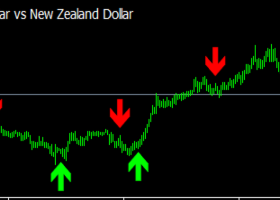
| BUY/SELL arrow | Green up arrow (BUY) or red down arrow (SELL) at the signal bar |
| Entry line | Horizontal line in neutral color — the trade entry price level |
| SL line | Horizontal red line — Stop Loss level |
| TP1–TP4 lines | Horizontal lines in green shades — Take Profit levels |
| Price labels | Exact price value displayed on each line |
| Pip labels | Pip distance from Entry shown on each line |
| P/L labels | Profit/Loss result displayed after a signal closes |
| Zone Fill | Colored rectangles between Entry↔SL (risk) and Entry↔TP4 (reward) |
| Tracking path | Dotted diagonal trail tracking price movement from entry |
| Quality score | Quality label near the arrow (e.g., "Q: 0.72") |
2. VISUALIZATION Settings
This group contains 10 options that control what appears on the chart.
Full Settings Table
| Input name | Type | Default | Function |
|---|---|---|---|
| Color pattern candles | bool | true | Highlight signal candles with special colors |
| Show Entry/SL/TP Lines | bool | true | Draw horizontal Entry, SL, and TP1–TP4 lines |
| Show Price Labels on Lines | bool | true | Show price value label on each line |
| Show Pip Distance Labels | bool | true | Show pip distance from Entry on each line |
| Show Signal Arrows (BUY/SELL) | bool | true | Show BUY/SELL directional arrows |
| Show Profit/Loss Labels | bool | true | Show P/L result label after signal closes |
| Hide Expired Signals | bool | false | Hide signals that have finished (hit TP or SL) |
| Line Width | int | 1 | Thickness of all lines (1–5) |
| Show Tracking Path (diagonal trail) | bool | false | Show dotted trail of price path from entry |
| Show Quality Score | bool | false | Show quality score label near arrow |
Detailed Explanation of Each Option
Color pattern candles
When enabled, the candle where the pattern was detected is colored differently from surrounding candles. This works best with the Dark Muted theme. Disable if you want to preserve the original candle colors from your chart theme.
Show Entry/SL/TP Lines
Draws the key horizontal levels on the chart:
- Entry: trade entry level (neutral color)
- SL: Stop Loss (red)
- TP1 through TP4: Take Profit levels (progressively stronger green shades)
Disable to declutter the chart when you only need the arrows to identify signal location.
Show Price Labels on Lines
Displays the exact numeric price (e.g., "2345.50") directly on each line. Useful for monitoring precise levels without hovering a cursor over each line.
Show Pip Distance Labels
Shows the pip distance from Entry to each level (e.g., "SL: -25 pips", "TP1: +50 pips"). Lets you evaluate the R:R ratio at a glance without manual calculation.
Show Signal Arrows (BUY/SELL)
Green up arrow = BUY signal. Red down arrow = SELL signal. Arrows appear at the signal bar position. This is typically the first visual element the eye finds when scanning a chart.
Show Profit/Loss Labels
After a signal concludes — either by hitting TP or SL — a label displays the outcome. Example: "+125 pips" (green) for a win, "-30 pips" (red) for a loss. Useful for visual performance review directly on the chart without opening a separate report.
Hide Expired Signals
Default: false — all historical signals remain visible. Set to true to hide finished signals and show only currently active ones. Recommended when the chart has accumulated many historical signals and feels cluttered.
Line Width
Values from 1 to 5. Default 1 (thin). Increase to 2 or 3 on smaller monitors or when you want lines to stand out more clearly. Values of 4–5 can start to obscure price action beneath the lines.
Show Tracking Path (diagonal trail)
Draws a dotted diagonal path from the Entry level tracking where price moved after the signal appeared. Disabled by default because it adds more chart objects per signal. Enable it for post-session analysis to understand how price behaved after each signal — whether it reached TP, reversed, or stopped out.
Show Quality Score
Displays a "Q: 0.XX" label near the signal arrow. The score ranges from 0 to 1 — higher is better. Disabled by default. Enable when you want to manually filter and focus only on high-quality signals (e.g., only trade when Q > 0.65).
3. Zone Fill — Risk/Reward Areas
Zone Fill renders colored rectangles that make the risk and reward areas of a trade immediately visible — no mental math required.
How It Works
- Risk Zone (Entry to SL): A dark gray rectangle between the Entry line and the SL line. This is the danger zone — if price enters here, the trade stops out.
- Reward Zone (Entry to TP4): A neutral green-gray rectangle between Entry and TP4. This is the target zone — price must reach here for maximum profit.
The relative size of these two rectangles gives you an instant visual read of the R:R ratio. A tall reward zone versus a small risk zone indicates a favorable setup.
Zone Fill Settings Table
| Input name | Type | Default | Function |
|---|---|---|---|
| Enable Zone Fill for Active Signals | bool | true | Enable or disable all zone fill |
| Zone Duration (bars from entry) | int | 50 | How many bars the zone extends to the right |
| Risk Zone Color (Entry→SL) | color | Dark gray C'70,65,65' | Color of the risk rectangle |
| Reward Zone Color (Entry→TP4) | color | Neutral gray C'55,60,55' | Color of the reward rectangle |
| Entry Line Color | color | Medium gray C'90,90,85' | Color of the Entry horizontal line |
Zone Duration
Zone Duration is the number of bars the colored rectangles extend to the right from the signal bar. Default is 50 bars.
- Short (20–30 bars): Compact zones, suitable for scalping and fast timeframes
- Medium (50 bars): Balanced — works well for short swing trades
- Long (100+ bars): Extended zones, suitable for positions held across multiple sessions
When a signal hits TP or SL before the duration expires, the zone rendering updates to reflect the closed state.
Color Customization
The default colors are intentionally low-contrast — visible enough to understand the setup, but dark enough not to obscure candles underneath. If you use a light chart background, increase the darkness of both zone colors via the MT5 color picker to maintain legibility.
4. Signal Dashboard — Stats Panel
The Signal Dashboard is a compact statistics panel that displays on the chart, giving you a running view of system performance without leaving the price action.
Information Displayed
- Win/Loss count: Number of completed winning and losing signals
- Net Pips: Running total of pips gained minus pips lost across all closed signals
- Open Signals: Number of signals currently active (price between Entry and TP/SL)
- Last Signal: Direction and pip result of the most recently closed signal
Dashboard Settings Table
| Input name | Type | Default | Function |
|---|---|---|---|
| Show Signal Dashboard (stats panel) | bool | true | Enable or disable the dashboard |
| Dashboard X Position (pixels) | int | 20 | Horizontal position from left edge |
| Dashboard Y Position (pixels) | int | 150 | Vertical position from top edge |
| Font Size (8-24 pixels) | int | 20 | Text size for all dashboard labels |
| Row Height (18-40 pixels) | int | 28 | Vertical spacing between rows |
Positioning the Dashboard
The default position places the dashboard in the upper-left area of the chart (X=20, Y=150). Adjust to avoid overlapping price action:
- Move right: Increase Dashboard X Position (e.g., 900 to push it near the right edge)
- Move down: Increase Dashboard Y Position (e.g., 400 to place it mid-chart)
Font and Row Height Sizing
The Font Size and Row Height settings should be adjusted together. If you increase font size without increasing row height, text rows will overlap.
| Monitor / Use Case | Font Size | Row Height |
|---|---|---|
| Small monitor / tight layout | 14 | 22 |
| Standard (default) | 20 | 28 |
| 4K monitor / viewing from distance | 24 | 36 |
5. Cancelled Signals — Expired/Cancelled Display
A signal is "cancelled" or "expired" when price never reached the Entry level after the signal appeared, or when the system determined the signal setup was no longer valid. These signals never became active trades.
Cancelled Signals Settings Table
| Input name | Type | Default | Function |
|---|---|---|---|
| Show Cancelled/Expired Signals | bool | false | Show or hide cancelled/expired signals |
| Cancelled Signal Color | color | Gray C'128,128,128' | Display color for cancelled signals |
Why Hidden by Default
A single session can produce more cancelled signals than actual active trades, depending on market conditions and filter settings. Showing all of them makes the chart visually noisy. The default hides cancelled signals so only meaningful (active or completed) signals are visible during live trading.
When to Enable
- Backtest analysis: Reviewing all signals including cancelled ones to assess signal frequency
- Filter optimization: Comparing accepted vs. rejected signals to understand how filters behave
- Pattern research: Studying why certain setups were detected but never triggered
Signal Color
The default gray (128, 128, 128) is intentionally muted — cancelled signals appear visually faded compared to the vivid green/red of active signals. Avoid changing this color to something bright, as it will create confusion between cancelled and active signals at a glance.
6. Preset Configurations
Configuration 1: Minimalist
For traders who only need signals and directional lines, no extra information.
Color pattern candles = true
Show Entry/SL/TP Lines = true
Show Price Labels on Lines = false
Show Pip Distance Labels = false
Show Signal Arrows = true
Show Profit/Loss Labels = false
Hide Expired Signals = true
Line Width = 1
Show Tracking Path = false
Show Quality Score = false
Enable Zone Fill = false
Show Signal Dashboard = false
Show Cancelled Signals = false
Result: Only arrows and three lines (Entry/SL/TP) visible. Maximum chart clarity.
Configuration 2: Full Analysis
For traders who want all available information on the chart.
Color pattern candles = true
Show Entry/SL/TP Lines = true
Show Price Labels on Lines = true
Show Pip Distance Labels = true
Show Signal Arrows = true
Show Profit/Loss Labels = true
Hide Expired Signals = false
Line Width = 2
Show Tracking Path = true
Show Quality Score = true
Enable Zone Fill = true
Zone Duration = 50
Show Signal Dashboard = true
Show Cancelled Signals = false
Result: Every visual component active. Best for strategy research and optimization.
Configuration 3: Research / Backtest Mode
For reviewing full signal history including cancelled setups.
Hide Expired Signals = false
Show Profit/Loss Labels = true
Show Tracking Path = true
Show Quality Score = true
Show Signal Dashboard = true
Show Cancelled Signals = true
Enable Zone Fill = true
Zone Duration = 30
Result: All signals visible including cancelled — full picture for system evaluation.
Configuration 4: Scalping / Small Monitor
For fast timeframes and compact screen layouts.
Show Price Labels on Lines = false
Show Pip Distance Labels = false
Show Tracking Path = false
Show Quality Score = false
Line Width = 2
Enable Zone Fill = true
Zone Duration = 20
Font Size = 14
Row Height = 22
7. Frequently Asked Questions (FAQ)
Q1: Too many lines on my chart — how do I reduce clutter?
Disable Show Price Labels on Lines , Show Pip Distance Labels , and Show Tracking Path . Set Hide Expired Signals = true to remove historical signals. These three changes alone make the chart significantly cleaner while preserving the core entry/exit information.
Q2: Zone Fill is covering price candles. How do I fix this?
Set Enable Zone Fill = false to remove it entirely, or reduce Zone Duration to 20–30 bars so zones only extend a short distance from the signal. Alternatively, adjust the zone colors to darker shades with lower opacity using the MT5 color picker.
Q3: Entry/SL/TP lines disappeared after several candles. Is this a bug?
No — this is expected behavior when a signal expires or hits TP/SL. To keep historical lines visible, set Hide Expired Signals = false . If lines disappear too quickly on pending signals, check the Pending Expiry setting in the trading configuration group (default: 50 bars after the signal appears without price reaching Entry).
Q4: The Signal Dashboard shows incorrect numbers.
The dashboard calculates across all historical data loaded on the chart. If you just attached the indicator, wait for the full historical scan to complete — this takes a few seconds depending on how much history is loaded. Numbers update automatically as signals are processed.
Q5: What does the Quality Score mean and how should I use it?
The score ranges from 0 to 1. Higher scores (>0.7) indicate signals that meet more quality criteria — pattern size, market context, trend alignment, and other factors specific to each indicator. A practical approach: only consider trading signals with Q > 0.65 to filter out marginal setups. The exact criteria differ by indicator (Mirage, PinBar, Inverted Hammer each has its own quality assessment model).
Q6: The Signal Dashboard looks too small on my 4K monitor. How do I resize it?
Increase Font Size to 22–24 and Row Height to 34–38. Then adjust Dashboard X Position and Dashboard Y Position to place it where you want. At 4K resolution, the default Font Size 20 appears small relative to the chart.
8. Usage Tips
Tip 1: Combine Quality Score with Zone Fill for instant signal assessment
Enable both Show Quality Score and Enable Zone Fill . A signal with Q > 0.7 where the reward zone (green area) is visually larger than the risk zone (gray area) is your highest-probability setup. Your eye processes the geometry faster than you can read numbers — use this to scan quickly.
Tip 2: Toggle Hide Expired Signals based on session phase
During live trading hours: set Hide Expired Signals = true for a clean chart focused on current signals. After the session closes: set it to false to review the full day's signals and assess performance. Switching between modes takes two seconds in the indicator properties.
Tip 3: Reserve Tracking Path for post-session analysis
Show Tracking Path is disabled by default because each signal adds extra chart objects (the diagonal trail). During live trading this adds noise. Enable it only for post-session review — watching how price moved after each signal reveals patterns about TP/SL efficiency and optimal exit timing. Disable before the next trading session.
Tip 4: Match Dashboard sizing to your actual monitor setup
Every monitor and resolution is different. Start at Font Size 14 if you have a dense chart with many indicators. Increase in steps (14 → 18 → 20 → 24) until you find a size you can read at a glance without squinting. Always adjust Row Height proportionally (Font 14 = Row 22, Font 20 = Row 28, Font 24 = Row 36) to keep rows from overlapping.
This guide applies to all indicators in the system. Input names and functionality are identical across Mirage, PinBar, and Inverted Hammer Trading System.
Version 1.15 — Ich Khiem Nguyen — https://www.mql5.com/en/users/khiemni/seller