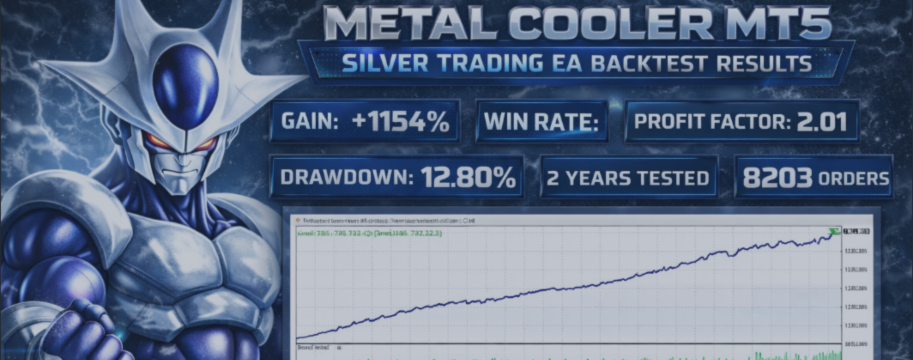
Metal Cooler MT5 (XAGUSD) – Why Proper Optimization Is Critical for Real Performance

Metal Cooler MT5 (XAGUSD) – Why Proper Optimization Is Critical for Real Performance
Metal Cooler MT5 for XAGUSD (H1) is a professional-grade automated silver trading system designed to operate with structure, discipline, and controlled risk. While the system is highly effective out of the box, relying solely on default parameters is one of the most common mistakes traders make with advanced Expert Advisors. True performance comes from optimizing the system for your specific broker environment, account size, leverage, and trading objectives.
This article explains why optimization matters, which parameters to focus on, and how to optimize Metal Cooler MT5 correctly without overfitting, ensuring realistic results and long-term stability—especially for prop firm trading.
Why Optimization Matters in Automated Silver Trading
No two brokers execute XAGUSD in exactly the same way. Differences in:
-
spread structure
-
execution speed
-
contract specifications
-
leverage and margin requirements
all have a direct impact on how an automated system performs.
Metal Cooler MT5 is intentionally built with flexible inputs so it can be dialed in for your broker, rather than forcing one-size-fits-all settings. Optimization allows the system to:
-
adapt to real market conditions
-
control drawdown more effectively
-
improve consistency across market phases
-
align with prop firm rules and limits
Skipping this step often leads to unrealistic expectations and suboptimal performance.

Core Parameters You Should Always Optimize
To unlock the full potential of Metal Cooler MT5, focus on the parameters that directly influence risk, reward, and trade behavior.
1. Stop Loss (SL) and Take Profit (TP)
These two inputs are the foundation of the system’s risk-reward structure.
Recommended optimization range:
-
Stop Loss: 100 – 10,000 points
-
Take Profit: 100 – 10,000 points
-
Step size: 100 points
Using a step of 100 ensures:
-
meaningful variations are tested
-
optimization remains fast
-
overfitting is avoided
This range allows the strategy tester to find values that align with your broker’s volatility profile while maintaining realistic trade behavior.
2. Trailing Take Profit (Trailing TP)
Trailing TP plays a major role in profit protection and equity curve smoothness.
Recommended optimization range:
-
Trailing TP: 100 – 1,000 points
-
Step size: 100 points
This approach helps identify a trailing distance that:
-
locks in profits efficiently
-
avoids premature exits
-
adapts to silver’s volatility
Avoid overly small steps, as they increase the risk of curve-fitting without improving real-world performance.
3. Maximum Open Positions
This parameter directly affects drawdown control and capital exposure.
Recommended optimization range:
-
Max Open Positions: 1 – 10
-
Step size: 1
This input should be optimized together with Trailing TP, as both influence risk stacking and equity stability. The ideal value depends on:
-
account size
-
leverage
-
prop firm rules
-
personal drawdown tolerance
Optimizing Without Overfitting
Overfitting occurs when optimization becomes too granular and tailored to past data. Metal Cooler MT5 avoids this risk by:
-
using broad, realistic ranges
-
encouraging larger step sizes
-
relying on structured trade logic
Stick to the recommended ranges and steps. You are looking for robust parameter zones, not perfect historical equity curves.
Use the Strategy Tester Correctly
Metal Cooler MT5 is fully compatible with the MT5 Strategy Tester and has been engineered for:
-
accurate backtesting
-
fast optimization cycles
-
consistent results across brokers
Modeling Methods
You can safely use:
-
Open prices only
-
OHLC modeling
-
Every tick
The system’s signal logic scans once per new bar, which keeps backtests fast and reliable while making all modeling methods valid. This design dramatically reduces optimization time without sacrificing accuracy.

Important Note on Tick-Based Signal Processing
Metal Cooler MT5 does include an option for tick-based signal processing. However:
-
this mode is not recommended unless you fully understand its implications
-
tick processing increases complexity and noise
-
backtest results can become misleading if misused
For most users, new-bar signal processing delivers the best balance of realism, speed, and consistency.
Prop Firm Drawdown and Protection Inputs (Critical Information)
To improve backtesting speed, prop firm drawdown and account protection inputs do not calculate during strategy testing. These protections:
-
only function in live trading environments
-
calculate all trades for the current day, including both manual and automated trades
-
activate only when their values are set above zero
What This Means in Practice
If you:
-
hit a daily drawdown limit earlier in the day with a manual trade
-
then attach Metal Cooler MT5
the EA will not trade until:
-
a new trading day is detected, or
-
you adjust the protection input that is being triggered
This behavior is intentional and designed to protect capital in live conditions.
Always monitor:
-
EA inputs
-
the terminal journal
-
protection messages
when optimizing and deploying the system.
Optimize Using the Last 12 Months of Data
For best results, optimize Metal Cooler MT5 using:
-
the last 12 months of historical data
-
your broker’s real execution conditions
This timeframe captures:
-
multiple volatility regimes
-
trend and range phases
-
realistic drawdown behavior
Final Thoughts: Do Not Skip Optimization
Metal Cooler MT5 is a powerful and flexible silver trading system with over 120 integrated strategies, but its strength lies in adaptability—not fixed defaults.
Spending 20 minutes in the Strategy Tester to optimize:
-
Stop Loss
-
Take Profit
-
Trailing Take Profit
-
Max Open Positions
can dramatically improve:
-
performance consistency
-
drawdown control
-
prop firm compliance
The tools are already built into the system. Use them intelligently, pay attention to your inputs and journal logs, and configure Metal Cooler MT5 to trade your broker, your account, and your risk rules—not someone else’s.